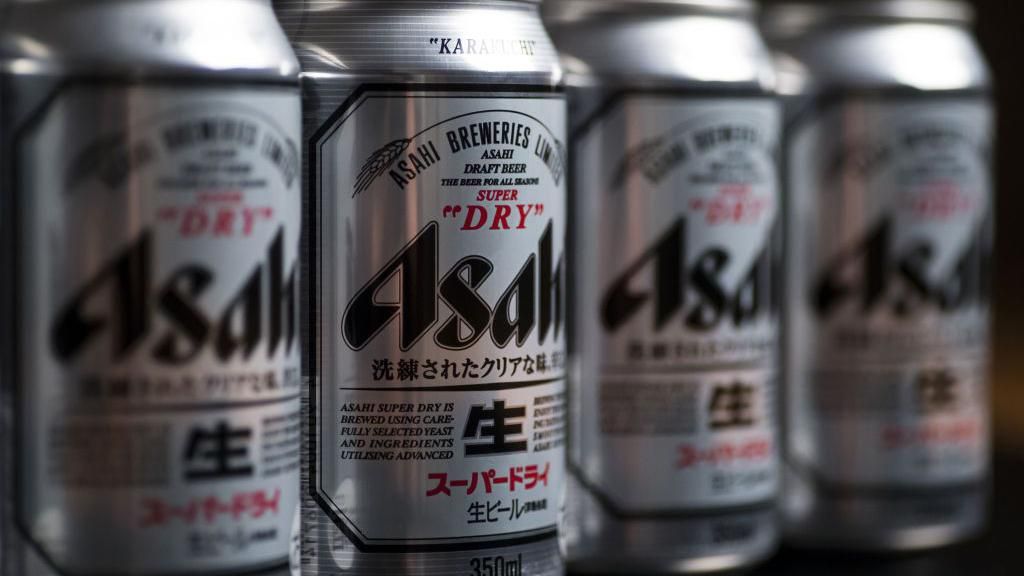
Japan is currently experiencing a significant shortage of Asahi products, including beer and bottled tea, as the global beverage giant struggles with the aftermath of a severe cyber-attack. The attack has disrupted Asahi’s ordering and delivery systems, forcing most of its factories in Japan to halt operations since Monday. This disruption has led to widespread supply chain issues, affecting both consumers and retailers across the country. Major convenience store chains, including FamilyMart and Lawson, have issued warnings to customers about potential shortages of Asahi products. FamilyMart, one of Japan’s largest convenience store chains, announced on Thursday that it has temporarily suspended orders and shipments of Asahi products, with no clear timeline for resumption. The retailer also expressed regret for the inconvenience caused and assured customers that it is collaborating with Asahi to restore product availability. Lawson, another prominent Japanese retailer, has similarly anticipated shortages and is preparing to stock alternative products to mitigate the impact on consumers. Asahi, Japan’s largest brewer and owner of international brands such as Peroni, Pilsner Urquell, and Grolsch, has confirmed that the cyber-attack has primarily affected its domestic operations. The company has assured that there is no evidence of a data breach involving customer information. However, the timeline for restoring normal operations remains uncertain as investigations into the cause of the attack continue. Japan accounts for approximately half of Asahi’s total sales, making the disruption particularly significant for the company. The incident underscores the growing vulnerability of global businesses to cyber threats and the potential impact on supply chains and consumer markets.
博客
-
Texas megachurch pastor pleads guilty to child abuse
Robert Morris, the 64-year-old founder of one of the largest megachurch congregations in the United States, pleaded guilty on Thursday to sexually abusing a 12-year-old girl in Oklahoma during the 1980s. The former leader of Gateway Church admitted to felony charges of lewd or indecent acts with a child during a hearing in Pawhuska, Oklahoma. As part of a plea agreement, Morris was sentenced to 10 years but will serve only six months in jail, with the remainder on probation. He must also register as a sex offender and pay $250,000 in restitution. The victim, Cindy Clemishire, now 55, emotionally addressed Morris in court, stating that the abuse had profoundly impacted every aspect of her life. The abuse occurred over four years while Morris was living with Clemishire’s family in Hominy, Oklahoma, and working as a traveling evangelist. Clemishire first publicly accused Morris in 2024, prompting his resignation from Gateway Church. Morris, who founded the church in 2000 and once served as a spiritual adviser to former President Donald Trump, acknowledged his actions as a ‘moral failure’ in a public statement. The case highlights systemic failures, as Clemishire revealed she had reported the abuse to her parents and church leaders in 1987, but no legal action was taken at the time.
-
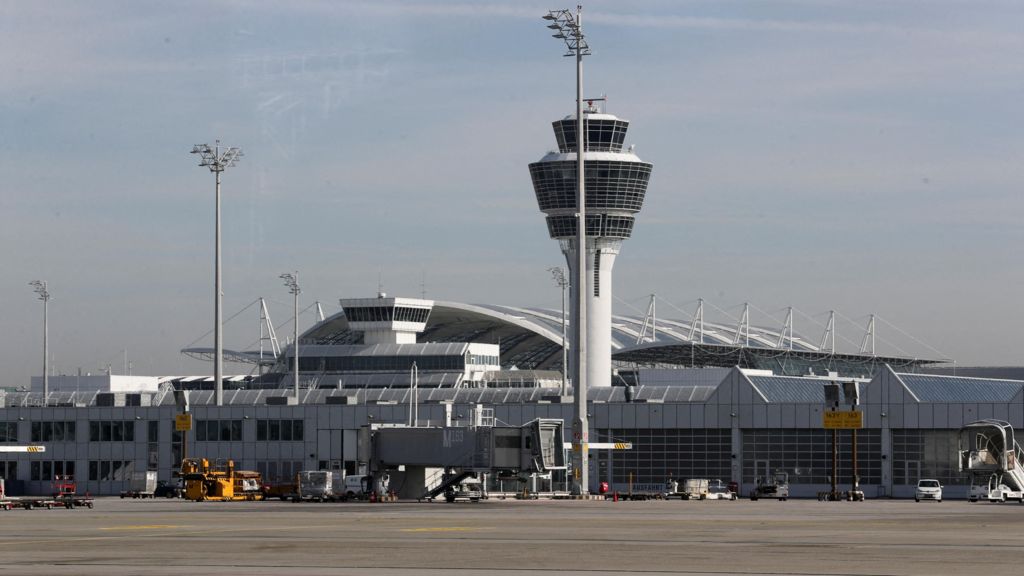
Munich airport closes after drones spotted nearby
Munich Airport faced significant disruptions as unidentified drones were spotted near its airspace, leading to the cancellation of at least 17 flights and impacting nearly 3,000 passengers. The airport authorities swiftly diverted an additional 15 flights to nearby cities such as Stuttgart, Nuremberg, Vienna, and Frankfurt. The Federal Police spokesperson, Stefan Bayer, informed the Bild Newspaper that due to the darkness, details about the drones’ type, size, or origins remain unclear. The drones were first detected at 21:30 local time (19:30 GMT) and reappeared an hour later, prompting the airport to suspend all outgoing flights. This incident adds to a series of drone-related disruptions across Europe, including recent closures of Copenhagen and Oslo airports. Russian President Vladimir Putin, speaking at a summit in Sochi, humorously dismissed allegations of Russian involvement in the Danish drone incidents, stating, ‘I won’t do it again – not to France or Denmark or Copenhagen.’ Meanwhile, stranded passengers at Munich Airport were provided with camp beds, blankets, drinks, and snacks overnight. The disruptions coincide with Munich’s annual Oktoberfest, which attracts over six million visitors and is set to conclude on October 5.
-
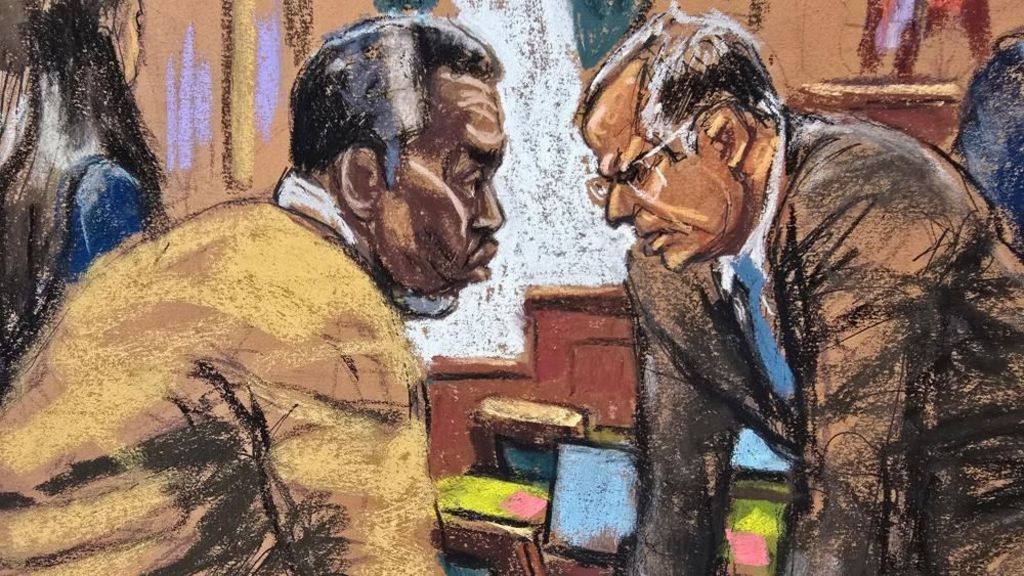
What has Sean ‘Diddy’ Combs been convicted of?
Sean ‘Diddy’ Combs, the renowned American music mogul, is set to learn his fate as he faces sentencing following his conviction on two counts of transportation for prostitution. The verdict, delivered in July 2025, marked the culmination of an eight-week federal trial that began in May. Combs, 55, was accused of orchestrating a sprawling sex-trafficking operation involving his ex-girlfriend, singer Cassie Ventura, and an anonymous victim referred to as ‘Jane.’ Despite being acquitted of the most severe charge—racketeering conspiracy, which could have resulted in a life sentence—Combs was found guilty of transporting both women for the purpose of prostitution, a felony under the Mann Act of 1910. Each count carries a maximum sentence of 10 years, and prosecutors have requested a minimum of 11 years. Combs’ legal team has argued for leniency, citing his time served since his arrest in September 2024 and his contributions to the music industry. In a heartfelt letter to the judge, Combs expressed remorse, stating, ‘I lost my way. My downfall was rooted in my selfishness.’ However, his accusers have urged the judge to keep him incarcerated, fearing retaliation if he is released. The case has drawn widespread attention, shedding light on Combs’ controversial past and the broader issue of sexual exploitation in the entertainment industry.
-
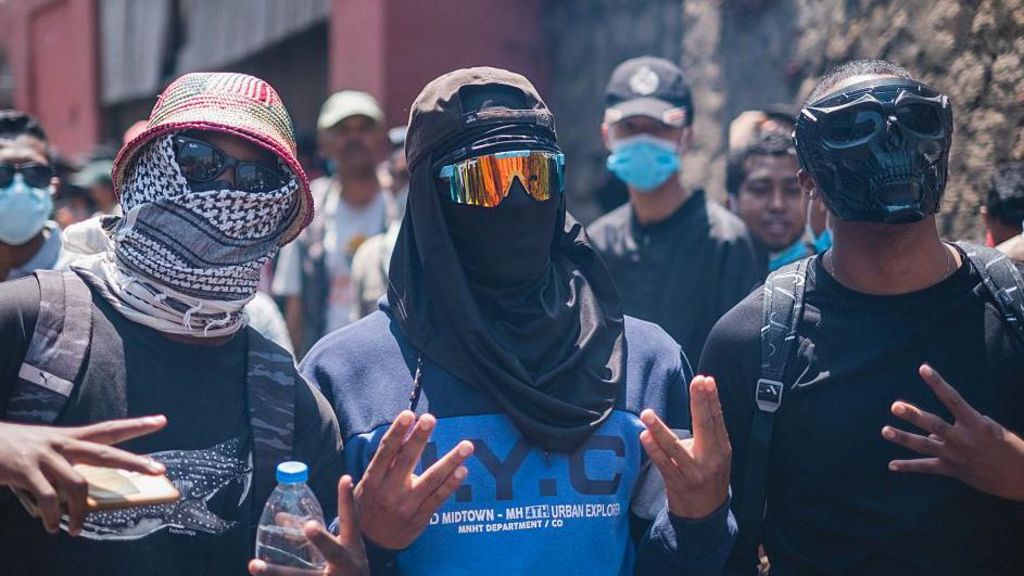
Behind the Gen Z protests that forced Madagascar’s president to sack his government
Madagascar is witnessing its largest wave of protests in over 15 years, with thousands taking to the streets across the country. What began as frustration over shortages of basic necessities has rapidly escalated into a significant political crisis for President Andry Rajoelina, who has been in power since 2018. Despite dismissing his government in response to the unrest, Rajoelina has failed to quell the growing dissent. The protests, which have claimed at least 22 lives and injured over 100, according to the UN, have been met with heavy-handed security measures, including tear gas and water cannons. The Malagasy government disputes the UN’s casualty figures, labeling them as ‘rumors and misinformation.’ The unrest was sparked by the arrest of two city politicians on September 19, who had planned a peaceful demonstration over chronic power and water outages. This move was seen as an attempt to stifle legitimate dissent, fueling public outrage. The protests, initially organized by the youth-led movement Gen Z Mada, have since spread to eight cities, with demonstrators demanding political change and Rajoelina’s resignation. Civil society groups, labor unions, and opposition leaders have joined the movement, calling for dialogue to prevent the nation from descending into chaos. Rajoelina has promised World Bank-funded solutions to the power crisis and dialogue with protesters, but his efforts have done little to ease tensions. Analysts warn that reliance on repression could lead to prolonged unrest, political fragmentation, and economic fallout. The situation remains volatile, with curfews imposed in the capital and fears of escalating violence.
-

‘I lost my way’ – Diddy begs judge for leniency on eve of sentencing
Sean ‘Diddy’ Combs, the convicted rap mogul, has penned a heartfelt letter to Judge Arun Subramanian, pleading for leniency ahead of his sentencing on Friday. In the four-page letter, Combs attributes his past behavior to drug addiction and expresses deep remorse for the pain he has caused. He claims to have undergone a transformation during his 13-month incarceration in a Brooklyn jail, stating, ‘The old me died in jail, and a new version of me was reborn.’ Combs was found guilty in July on two counts of transportation to engage in prostitution, charges that could result in up to 20 years in prison. Prosecutors are pushing for a minimum sentence of 11 years, while his defense team is advocating for his release later this month. In his letter, Combs apologizes to his ex-girlfriend, singer Casandra Ventura, and an anonymous woman who testified under the name ‘Jane,’ acknowledging his past mistakes and the impact of his actions. He writes, ‘I literally lost my mind,’ and describes his downfall as rooted in selfishness. Combs also highlights his efforts to reform, including teaching a class to fellow inmates on how to achieve business success, and emphasizes his newfound sobriety after 25 years. He appeals to the judge for mercy, citing his seven children and his 84-year-old mother, who recently underwent brain surgery. However, his accusers have also written to the judge, expressing fears of retaliation if Combs is released. Ventura wrote, ‘I am so scared that if he walks free, his first actions will be swift retribution towards me and others who spoke up.’ She believes Combs deserves a long sentence, stating, ‘He has no interest in changing or becoming better.’ Combs is expected to address the court on Friday, with his defense team planning to present a 15-minute video. The content of the video remains undisclosed. In July, Combs was acquitted of the most severe charges, including racketeering and sex trafficking, which could have resulted in a life sentence. Prosecutors argue that Combs remains unrepentant, describing his attempts to reframe his actions as the result of ‘mutually toxic relationships’ as disingenuous. They wrote, ‘There is nothing mutual about a relationship where one person holds all the power and the other ends up bloodied and bruised.’
-

Sleeping in fields and struggling for basics: Filipinos contend with quake aftermath
A devastating magnitude 6.9 earthquake struck the northern coast of Cebu, one of the Philippines’ most populous islands, on the night of September 30, leaving at least 72 people dead and 300 injured. The quake, which occurred in a region already grappling with the aftermath of a fierce typhoon season, has displaced approximately 40,000 people, forcing many to seek temporary shelter in tents and under the open sky. Among the survivors is Arguel Estalicas, a 35-year-old tourism officer from Medellin town, who described the overwhelming fear and dizziness she continues to experience. ‘I still couldn’t process what has happened to us,’ she told the BBC. The earthquake caused widespread destruction, collapsing homes, buildings, and churches, and cracking roads. Social media images showed residents huddled under plastic bags for shelter during light rain, while others slept outdoors, clinging to whatever resources they had. Lourenze Pareja, a 25-year-old community journalist from San Remigio, recounted the chaos he witnessed during the quake, describing his once-vibrant town as now resembling a ‘ghost town.’ The Philippines, located on the geologically unstable ‘Ring of Fire,’ is no stranger to natural disasters. This earthquake is among the deadliest in recent years, following the 2013 Bohol quake that killed over 200 people. Rescue operations are ongoing, with authorities working to deliver food, restore power and communication lines, and clear debris. The Philippine military has been deployed to assist in relief efforts, but daily necessities remain scarce. Survivors like Ms. Estalicas and Mr. Pareja remain hopeful, drawing strength from the Filipino spirit of bayanihan, or community cooperation. ‘My only prayer is that help won’t be delayed,’ Mr. Pareja said, urging relief efforts to extend to neighboring municipalities.
-
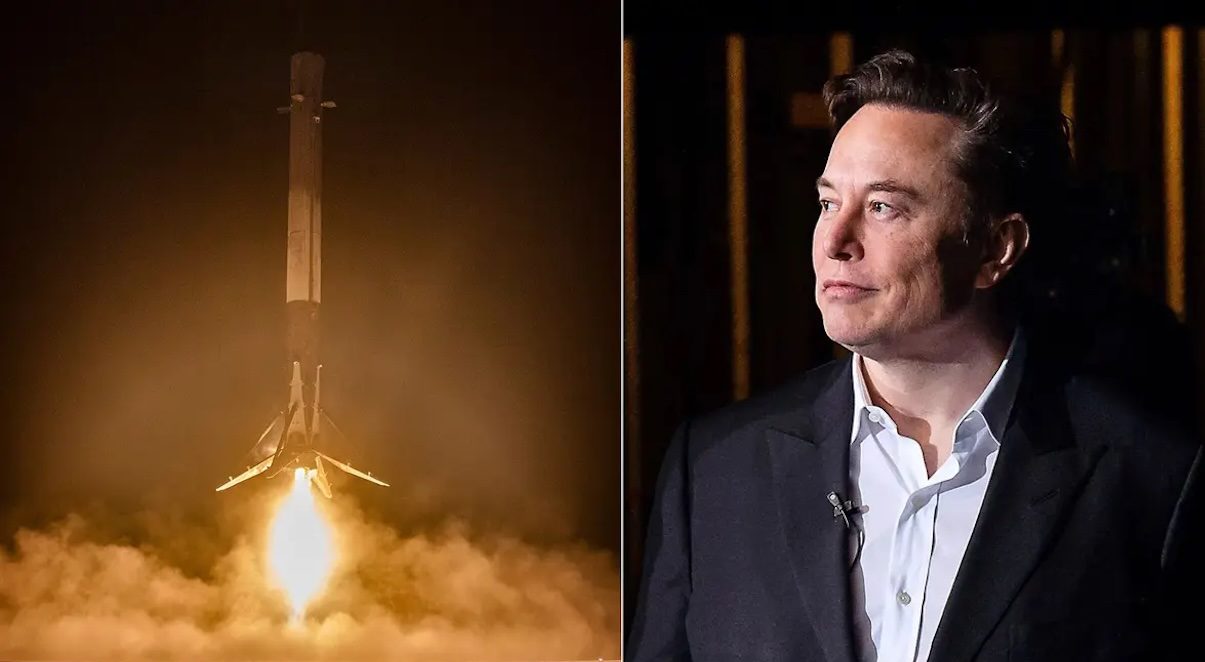
Chinese invested directly in Musk’s SpaceX, insider testifies
Elon Musk’s SpaceX, a cornerstone of U.S. aerospace and defense, has reportedly accepted direct investments from Chinese investors, according to recently unsealed court testimony. This revelation, disclosed during a legal case involving a major SpaceX investor, Iqbaljit Kahlon, has ignited fresh debates over foreign ownership in one of America’s most critical military contractors. While Chinese investment in U.S. defense contractors is not prohibited, it is tightly regulated due to national security implications. Kahlon’s testimony, though not detailing the extent or identities of the Chinese investors, confirms their presence on SpaceX’s capitalization table, a list of shareholders. This marks the first acknowledgment of direct Chinese investment in the privately held company, which has long kept its ownership structure under wraps. Previously, Chinese investors were known to hold indirect stakes in SpaceX through intermediary funds. The disclosure has raised alarms among national security experts, who warn that such investments could provide China with access to sensitive information, potentially compromising U.S. security. SpaceX, which has secured significant government contracts, including those with NASA and the Pentagon, has not commented on the matter. The testimony emerged from a Delaware court case involving Kahlon, who has facilitated investments in SpaceX for wealthy individuals worldwide, including those from China. The U.S. government’s growing concerns over Chinese investments in sensitive industries have led to increased scrutiny, with House Democrats urging the Department of Defense to investigate SpaceX’s investment practices. Despite these concerns, SpaceX’s valuation continues to soar, with Musk’s 42% stake estimated at $168 billion, solidifying his position among the world’s wealthiest individuals.
-
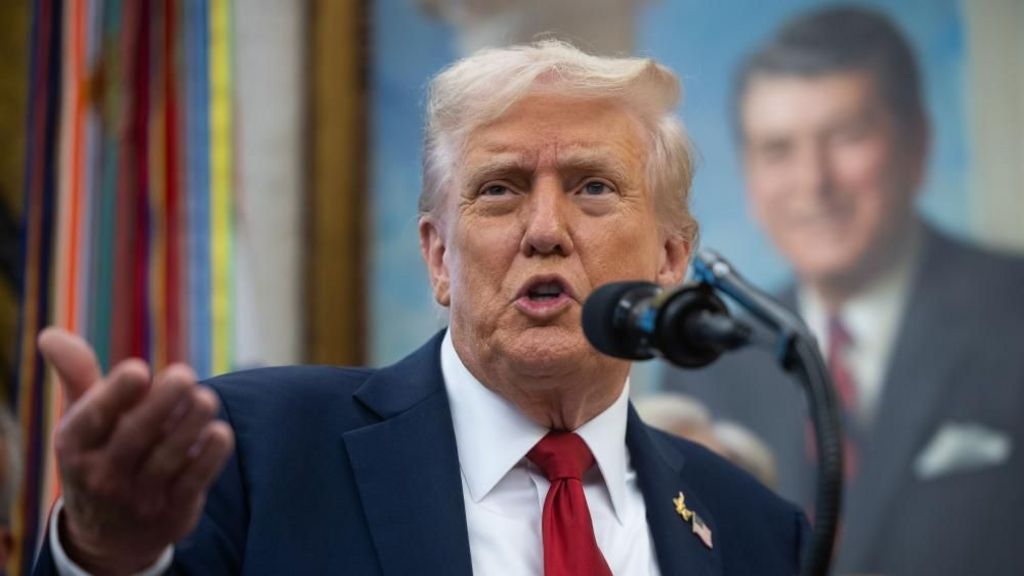
Trump wields axe over ‘Democrat Agencies’ as blame game rages on Capitol Hill
As the US government shutdown entered its third day, President Donald Trump announced plans to collaborate with his budget director to identify and cut funding for what he termed ‘Democrat Agencies.’ Trump urged Republicans to use the opportunity to ‘clear out dead wood,’ dismissing Democratic demands to include healthcare insurance subsidies in the government funding legislation. The impasse has left hundreds of thousands of federal workers at home or working without pay, while some federal attractions closed their doors. The Statue of Liberty, however, remained open, with the Department of the Interior crediting Trump’s leadership. On Capitol Hill, Republicans and Democrats continued to blame each other for the shutdown. House Speaker Mike Johnson accused Democrats of being ‘selfish,’ while House Minority Leader Hakeem Jeffries criticized Republicans for neglecting working-class Americans’ healthcare needs. Analysts predict that neither side will compromise until public pressure mounts. The Congressional Budget Office estimates that 750,000 federal workers are on unpaid leave, though essential employees, including law enforcement officers, continue to work without pay. Air travel remains unaffected for now, but past shutdowns have seen delays due to sick calls among air traffic controllers and TSA workers. Tourists faced closures at several federal sites, including Federal Hall in Manhattan, a historic landmark where George Washington was inaugurated. Meanwhile, the Smithsonian museums remain open for a week due to reserve funds. The political deadlock shows no signs of easing, with both parties entrenched in their positions and public opinion divided along party lines.
-
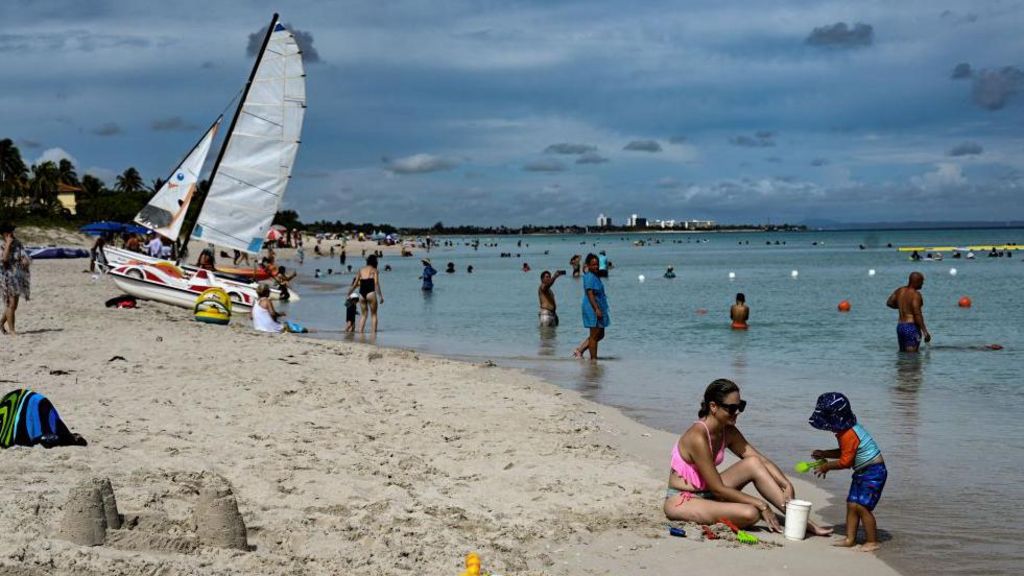
Cuba’s tourism minister insists sector ‘alive and kicking’ amid crisis
Tourism has long been a cornerstone of Cuba’s economy, but recent years have seen a dramatic decline in visitor numbers. The industry, which reached a peak of nearly five million tourists in 2018, has been severely impacted by the COVID-19 pandemic and stringent travel restrictions imposed by the Trump administration. Last year marked one of the worst for Cuban tourism this century, exacerbating the island’s economic woes. With traditional industries like sugar, tobacco, and nickel in decline, tourism remains Cuba’s primary source of foreign currency after remittances. However, fewer tourists mean less revenue for the state, hindering investments in crumbling energy infrastructure and essential goods like food and medicine. Cuba’s traditional allies, Venezuela and Russia, are grappling with their own economic challenges, while China’s focus on larger geopolitical issues limits its support. Cuban Tourism Minister Juan Carlos García Granda acknowledges the industry’s struggles but remains optimistic, claiming that the government has halted the decline and expects improved statistics in the second quarter of this year. He attributes the ongoing challenges to the ‘economic war’ waged by the United States, which has implemented measures specifically designed to harm Cuba’s tourism sector. These include banning US cruise ships from docking in Cuban ports and reclassifying Cuba as a State Sponsor of Terrorism, which complicates travel for UK and European tourists. Despite these obstacles, García Granda insists that Cuban tourism is ‘alive and kicking,’ with over 70% of the industry supported by foreign investment. However, the government’s ambitious hotel-building program, including the controversial Torre K in Havana, has drawn criticism for its extravagance amid widespread economic hardship. While García Granda defends the projects as necessary for attracting tourists, many Cubans question the prioritization of luxury hotels over urgent public needs. As Cuba navigates its deepest economic crisis since the Cold War, the future of its tourism industry remains uncertain, with García Granda hopeful that better times lie ahead.