
England Women’s cricket team delivered a masterclass performance in their ICC Women’s World Cup opener, thrashing South Africa by 10 wickets in Guwahati. South Africa, opting to bat first, were bowled out for a paltry 69 runs in just 20.4 overs, marking their third-lowest ODI total. Left-arm spinner Linsey Smith was the standout performer, claiming 3-7, including the prized wickets of Laura Wolvaardt, Tazmin Brits, and Marizanne Kapp. Captain Nat Sciver-Brunt, returning to competitive bowling, took 2-5, while spinners Sophie Ecclestone and Charlie Dean chipped in with two wickets each. England’s openers, Amy Jones (40*) and Tammy Beaumont (21*), chased down the target effortlessly in 14.1 overs, showcasing patience and discipline on a tricky pitch. This emphatic win not only boosts England’s confidence but also significantly enhances their net run rate early in the tournament. South Africa’s batting woes were evident as they struggled against England’s spin-heavy attack, managing only six boundaries throughout their innings. The match highlighted England’s strategic brilliance and South Africa’s inability to adapt to the conditions. With this victory, England have sent a strong message to their competitors, positioning themselves as serious contenders for the title.
博客
-

Blackout in Spain and Portugal ‘first of its kind’, report finds
A recent report has revealed that a massive power surge in April, which led to a widespread blackout across Spain and Portugal, was the most severe incident of its kind in Europe over the past two decades. This unprecedented event, caused by overvoltage—a condition where electrical voltage exceeds normal levels—resulted in significant disruptions, including the loss of internet and telephone connections, halted transport systems, and widespread darkness for nearly a day. The blackout also briefly affected southwestern France. Damian Cortinas, president of the association of electricity grid operators Entso-e, described the incident as uncharted territory, emphasizing that the organization’s role was not to assign blame but to analyze the event. The report, released on Friday, identified a series of cascading overvoltages as the primary cause of the outage. Overvoltage can result from network surges due to oversupply, lightning strikes, or insufficient protective equipment. Although automatic defense mechanisms were activated, they failed to prevent the system shutdown. The Spanish government has welcomed the Entso-e report, stating that it aligns with its own findings, which concluded that both the national grid provider Red Eléctrica and private electricity companies were at fault. However, Red Eléctrica and private firms have denied responsibility, with Redeia, the owner of Red Eléctrica, attributing the blackout to the failure of some coal, gas, and nuclear power plants to maintain appropriate voltage. The incident has sparked a broader political debate in Spain about the country’s energy model, with critics suggesting that the government’s heavy reliance on renewable energy and reduced nuclear capacity may have contributed to the crisis. The government has dismissed these claims, and the Entso-e report has refrained from taking sides. The blackout had far-reaching consequences, including the suspension of a Madrid Open tennis match, the shutdown of Spain’s nuclear power plants, and the halting of operations at oil refineries. Emergency services were called to rescue people trapped in elevators, and hospitals implemented emergency plans, postponing routine procedures. A final report, expected in the first quarter of next year, will delve deeper into the root causes of the overvoltage and the measures taken to control voltage in the system.
-
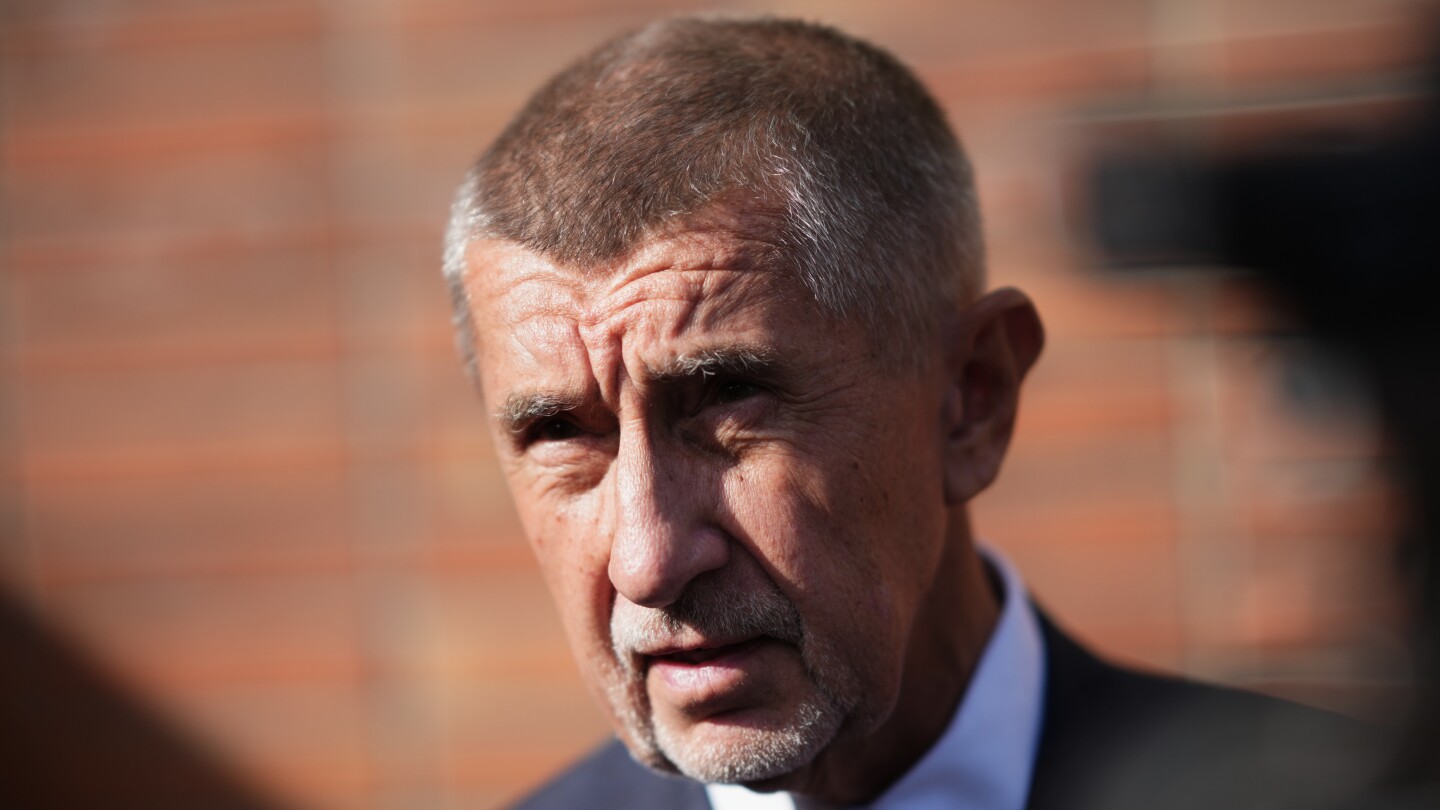
Czechs vote in election that could return populist and weaken support for Ukraine
The Czech Republic is currently in the midst of a pivotal two-day general election, with the potential to reshape its foreign policy trajectory. The outcome could steer the nation away from its pro-Western stance, particularly in its support for Ukraine, and align it more closely with Hungary and Slovakia. This shift could exacerbate divisions within the European Union and NATO. Billionaire Andrej Babiš, a former prime minister and populist leader, is poised for a political comeback, according to opinion polls. His victory would mark a significant shift from the pro-Western coalition led by Petr Fiala, which defeated him in 2021. Babiš, speaking outside a polling station in Ostrava, expressed confidence in forming a one-party government if victorious. A win for Babiš would bolster the positions of Hungary’s Viktor Orbán and Slovakia’s Robert Fico, both of whom have resisted military aid to Ukraine, continued importing Russian oil, and opposed sanctions on Russia. Fiala, after voting in Brno, warned that a shift towards the East would lead to economic decline. Last year, Babiš and Orbán co-founded the ‘Patriots for Europe’ alliance in the European Parliament, signaling a departure from the liberal Renew group. This new alliance reflects Babiš’s rejection of EU policies on migration and climate change, emphasizing national sovereignty. Despite denying a pro-Russian stance, Babiš has questioned Czech initiatives to acquire artillery shells for Ukraine and has not fully endorsed NATO’s defense spending commitments. Babiš, a divisive figure since entering Czech politics in 2013, has faced fraud charges but remains popular. His ANO movement, which lost the 2021 election, is predicted to win around 30% of the vote, though not enough for a majority government. Babiš has ruled out cooperation with the current government parties, potentially aligning with pro-Russian coalitions or the right-wing Motorists group, which opposes EU environmental policies. Polls close on Saturday, with results expected later in the day.
-

U.N. food agency to suspend food aid for 750,000 people in Somalia next month
The United Nations food agency has announced a significant reduction in food assistance for hundreds of thousands of people in Somalia, where millions are grappling with the catastrophic effects of climate change and severe hunger. The World Food Program (WFP) revealed that the number of individuals receiving emergency food aid will plummet from 1.1 million in August to just 350,000 by November, citing ‘critical funding shortfalls’ as the primary cause. Ross Smith, the agency’s director of emergency preparedness and response, warned of a ‘dangerous rise in emergency levels of hunger,’ emphasizing that the ability to respond is diminishing daily. ‘Without urgent funding, families already pushed to the edge will be left with nothing at a time when they need it most,’ he stated. Recent U.N. reports indicate that 4.6 million Somalis are experiencing crisis-level hunger, with 1.8 million children projected to suffer from acute malnutrition this year. Among these, 421,000 children face severe malnutrition, yet the WFP has only managed to assist approximately 180,000. Somalia’s plight is exacerbated by decades of conflict and insecurity, with the al-Qaida-linked militant group al-Shabab controlling several regions. Additionally, U.S. foreign aid cuts have further strained humanitarian agencies already struggling to meet the needs of the vulnerable population. The WFP has urgently requested $98 million to sustain life-saving operations for 800,000 people through the lean season until March 2026.
-

Personal items found at mass burial site
Archaeologists working at the site of the former St Mary’s mother-and-baby institution in Tuam, County Galway, have unearthed significant findings that offer a glimpse into the institution’s troubled history. The excavation, led by the Office of the Director of Authorised Intervention, Tuam (ODAIT), has revealed five sets of skeletal human remains believed to predate the institution’s operation. These remains were discovered near a 19th-century boundary wall during meticulous hand excavations. Additionally, the team has recovered a variety of personal and medicinal items from the ‘institutional era,’ including shoes, spectacles, and baby glass bottles. Notably, a window frame, a pathway, two drains, and an underground vaulted structure comprising at least three chambers were also uncovered. This structure, however, is distinct from the one where human remains were found in 2017. ODAIT, in collaboration with the National Museum of Ireland, continues its efforts to identify and honor the remains of children and babies believed to be buried in a mass grave at the site. The institution, which operated from 1925 to 1961 under the management of the Bon Secours Sisters and Galway County Council, gained international attention in 2014 when local historian Catherine Corless uncovered evidence of 796 death certificates for children and babies who died there, with no corresponding burial records. The ongoing excavation aims to bring closure to the families affected by this tragic chapter in Ireland’s history.
-

‘A trailblazer’: Broadcaster Manchán Magan dies aged 55
Manchán Magan, a celebrated writer and broadcaster known for his profound explorations of the Irish language, culture, and landscape, has passed away at the age of 55. His family confirmed that he died in Dublin on Thursday evening. Magan, who was born in 1970 and raised in Donnybrook, Dublin, had a prolific career that spanned books, documentaries, TV shows, and radio programs. He was a passionate advocate for the Irish language and culture, as highlighted by Taoiseach Micheál Martin, who praised Magan for illuminating the richness of Ireland’s heritage. In September, Magan revealed he had been diagnosed with terminal prostate cancer. His work included the TV series *No Béarla*, which documented his travels across Ireland speaking only Irish, and the podcast *The Almanac of Ireland*, which delved into the quirks and wonders of Irish traditions and placenames. Magan also authored several books, including *Thirty-Two Words for Field: Lost Words of the Irish Landscape* and his most recent publication, *Ninety-Nine Words for Rain (and One for Sun)*. Tributes poured in from across Ireland, with University College Dublin, his alma mater, calling him ‘one of Ireland’s foremost voices on language, culture, and landscape.’ Irish artist Blindboy Boatclub expressed his heartbreak, while Dee Mulrooney hailed Magan as a ‘trailblazer’ and ‘a man on a mission.’ RTÉ broadcaster Fiachna Ó Braonáin described Magan’s work as a ‘portal into enlightenment,’ emphasizing his deep love for the Irish language and his unique approach to exploring the world. Magan is survived by his wife Aisling, his mother Cróine, and his three siblings.
-
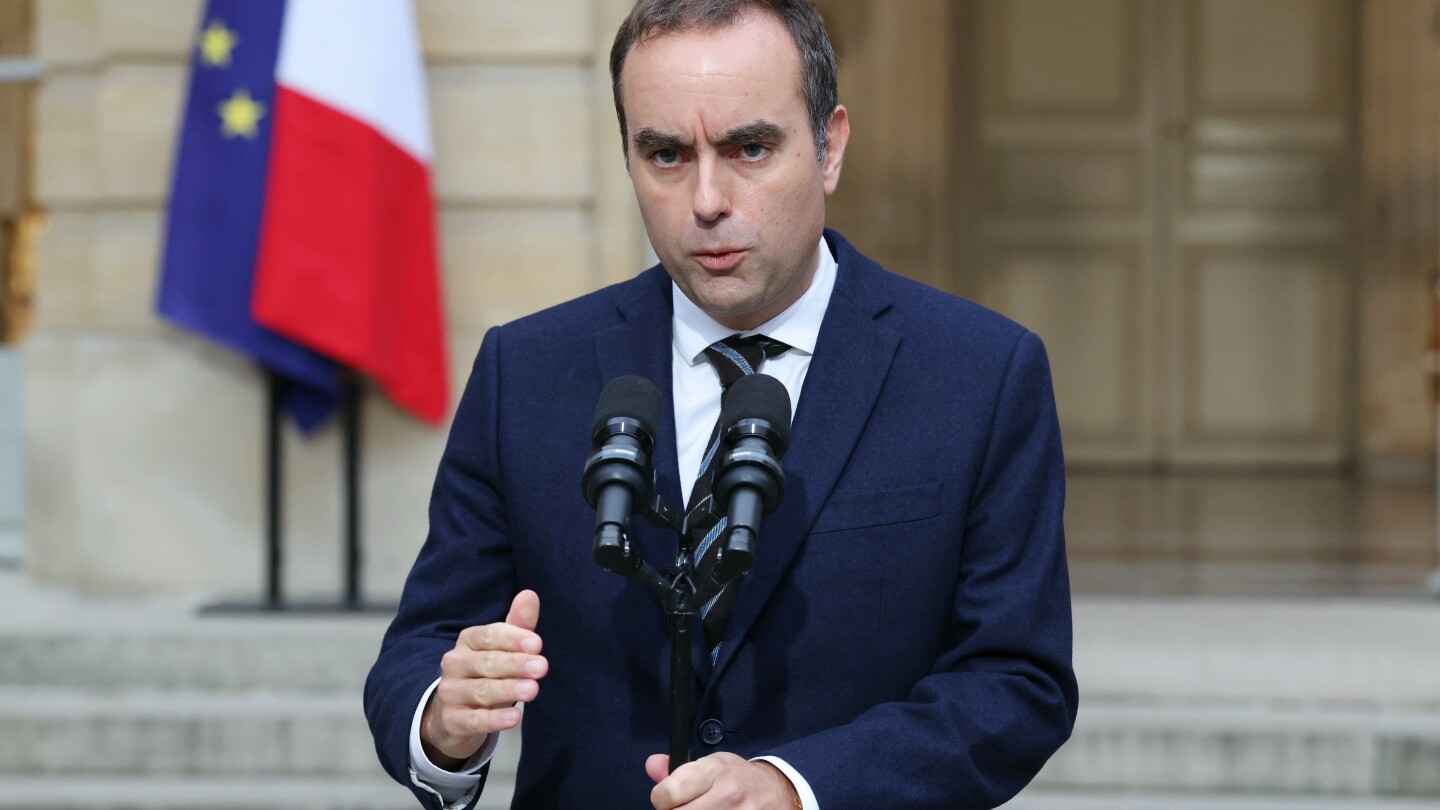
France’s new PM renounces using special powers at parliament to seek compromise instead
In a significant shift in strategy, France’s newly appointed Prime Minister Sébastien Lecornu announced on Friday that he would refrain from invoking Article 49.3 of the Constitution, a controversial provision that allows the government to bypass parliamentary votes to pass legislation. Instead, Lecornu emphasized the need for compromise and collaboration with lawmakers from across the political spectrum. This decision comes amid a deeply fragmented legislature and mounting political tensions following the fall of his predecessor, François Bayrou, who had used the same constitutional tool to push through this year’s budget. Lecornu, a 39-year-old centrist appointed by President Emmanuel Macron last month, faces the urgent task of passing the 2026 budget bill by year-end. His move aims to prevent a potential no-confidence motion in parliament, where his government lacks a majority. Lecornu outlined key priorities, including improving pensions for women, fairer taxation, boosting purchasing power, and addressing immigration issues. He also signaled that the appointment of his government ministers would be finalized in the coming days, ahead of a general policy speech scheduled for next week at the National Assembly. France’s political landscape has been in turmoil since Macron’s call for early parliamentary elections in June 2023, which resulted in a fractured legislature. As the European Union’s second-largest economy, France’s ballooning deficit and mounting debt have raised concerns among investors. Lecornu’s decision to abandon Article 49.3 marks a departure from his predecessor’s approach and underscores his commitment to fostering dialogue and consensus in a challenging political environment.
-

Thai killer of Cambodian opposition politician sentenced to life in prison
A Thai court has handed down a life sentence to Ekkalak Paenoi, a Thai national, for the assassination of Lim Kimya, a prominent Cambodian opposition politician, in Bangkok earlier this year. The killing, which occurred in January shortly after Lim’s arrival in the Thai capital with his wife, has sparked widespread speculation of political motives. Ekkalak, who fled to Cambodia post-assassination, was arrested and extradited back to Thailand. Initially facing the death penalty, his sentence was reduced to life imprisonment following his confession, as announced by the court on Friday. Lim Kimya, a former parliamentarian with dual Cambodian and French nationality, was a member of the Cambodia National Rescue Party (CNRP), which was banned in 2017 after being accused of treason by former Cambodian leader Hun Sen. The CNRP had nearly defeated Hun Sen’s long-ruling party in the 2013 elections. Cambodian Prime Minister Hun Manet, who succeeded his father in 2023, has denied any government involvement in Lim’s killing. Security footage from the incident shows Ekkalak calmly parking his motorbike, removing his helmet, and crossing the road before the fatal shots were fired. In addition to the life sentence, Ekkalak was ordered to pay approximately $55,000 in compensation to Lim’s family. The court acquitted another Thai national accused of aiding Ekkalak’s escape, ruling that he was merely a driver unaware of the crime. Lim’s widow, while reportedly satisfied with the verdict, continues to seek answers about who orchestrated the assassination, urging authorities to uncover the truth. This case highlights the ongoing repression faced by opposition figures in Cambodia and neighboring countries, with human rights groups alleging a tacit agreement among regional governments to suppress dissent.
-

Exchange programs encourage positive ties
China has welcomed over 36,000 young Americans through exchange programs in the past two years, driven by President Xi Jinping’s ambitious ‘50,000 in Five Years’ initiative. This program, announced during a 2023 dinner hosted by US-friendly organizations, aims to strengthen ties between the peoples of China and the US, particularly among the younger generation. Vice-Minister of Education Xiong Sihao highlighted this achievement at a State Council Information Office press conference, emphasizing the program’s success in fostering cross-cultural friendships. For instance, a pickleball cultural exchange delegation from Maryland bonded with Chinese peers during a visit in April 2024. Beyond the US, China has established educational partnerships with 183 countries, signed academic degree recognition agreements with 61 nations, and launched joint education programs with 42. Over 190 countries have students pursuing education in China, and 86 nations have integrated Chinese language into their national curricula. These efforts create a platform for global youth to connect, inspire one another, and contribute to a shared future. Minister of Education Huai Jinpeng underscored China’s strides in building the world’s largest high-quality education system, ensuring equal access for all children. Higher education enrollment has surged from 30% in 2012 to 60.8%, reaching international standards. During the 14th Five-Year Plan (2021-25), China produced 55 million higher education graduates—equivalent to the population of many developed countries. While China does not rely solely on global rankings, its universities and disciplines have emerged as a significant global force. These advancements support national strategies for self-reliance in science and technology and the cultivation of innovative talent. China’s basic education system now matches the average level of high-income countries, further solidifying its position as a global education leader.
-

Animal bones found in search for girl who vanished 55 years ago
A recent volunteer-led search for the remains of Cheryl Grimmer, a British girl who vanished in Australia 55 years ago, has ended in disappointment. New South Wales Police confirmed that the ‘area of interest’ flagged during the search turned out to be a false alarm. The search, conducted in Balgownie, involved cadaver detection dogs and was based on a confession made by a teenage boy. However, bones discovered in the area were identified as belonging to an animal, bringing the operation to a close. Cheryl Grimmer, who emigrated from Bristol with her family, disappeared from Fairy Meadow beach in Wollongong in January 1970 at the age of three. Authorities suspect she was abducted and murdered, but the case has remained unsolved despite numerous investigations. In 2019, a trial of a suspect, known by the codename Mercury, collapsed after a judge disallowed his confession made as a minor. Prosecutors subsequently dropped the charges. Cheryl’s brother, Ricki Nash, has publicly criticized the police investigation, citing errors dating back to the day she vanished. A petition calling for a parliamentary inquiry into missing persons cases, including Cheryl’s, garnered over 10,000 signatures but has yet to result in any commitment from state authorities. A A$1 million reward remains on offer for information leading to a resolution in the case.