
Dubai is poised to introduce a groundbreaking trackless tram system, designed to alleviate road congestion and enhance the city’s public transportation network. The project, spearheaded by Dubai’s Roads and Transport Authority (RTA), is expected to be fully operational by the first quarter of 2026. This innovative system will integrate seamlessly with the existing Dubai Metro, marking a significant step towards Dubai’s ambitious goal of making 25% of its transportation smart and driverless by 2030. Dawood Alrais, Director of Rail Maintenance at RTA’s Rail Agency, emphasized the system’s potential to support the city’s growing population and reduce environmental impact. Unlike traditional trams, the trackless variant operates on rubber tires and utilizes advanced navigation technologies such as optical sensors, GPS, and LiDAR to follow virtual tracks. This eliminates the need for fixed rails, reducing both construction costs and environmental footprint. Each tram, capable of carrying up to 300 passengers across three carriages, will operate on dedicated lanes to ensure safety and efficiency. With a top speed of 70 km/h and a range of 100 km per charge, the trackless trams promise faster and more flexible travel compared to conventional trams. Initially planned for eight locations, the project may expand to additional areas, further enhancing Dubai’s public transport infrastructure.
博客
-
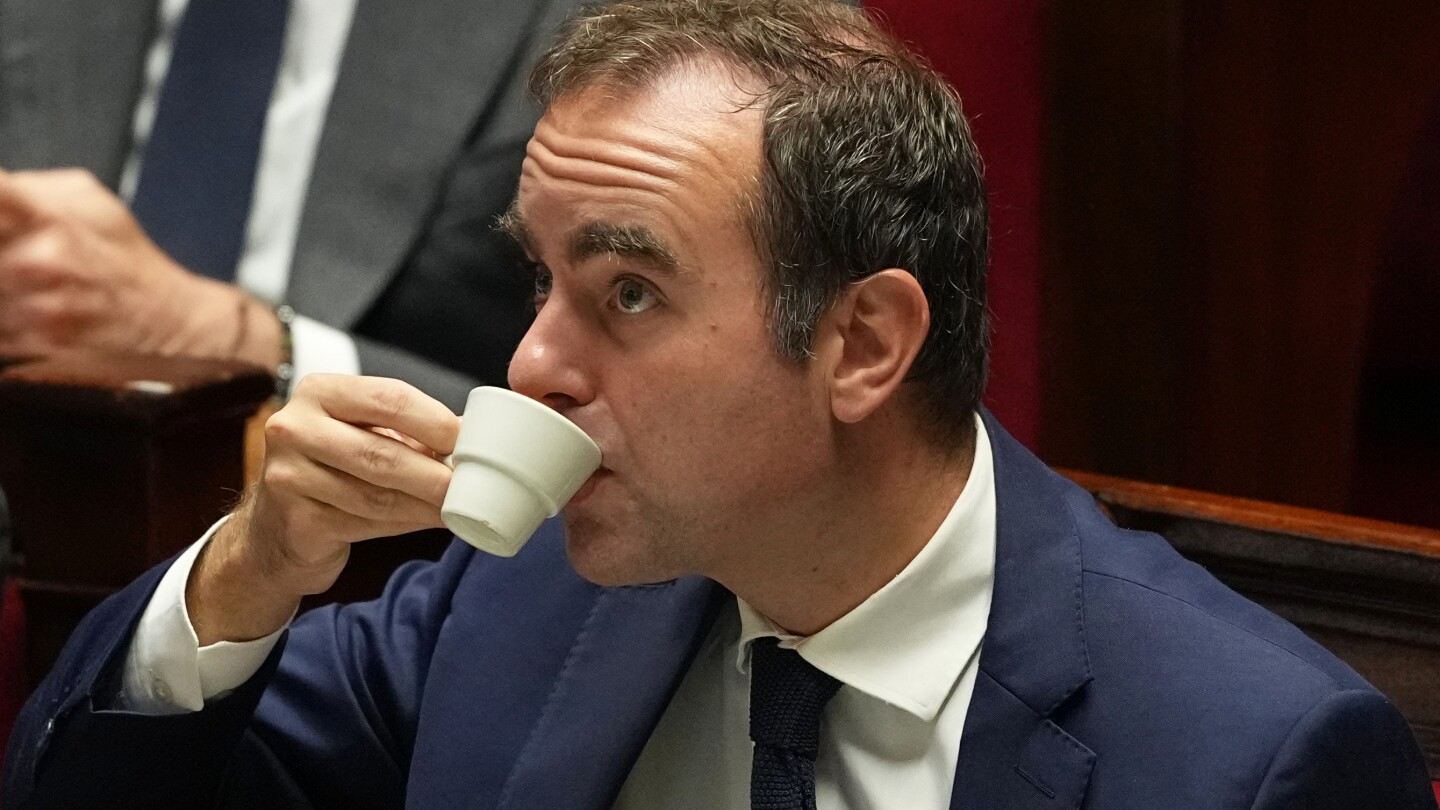
Embattled French PM Sébastien Lecornu survives no-confidence vote in Parliament
In a critical political showdown, French Prime Minister Sébastien Lecornu narrowly survived a no-confidence vote on Thursday, averting the collapse of his fragile government and preventing further political instability in France. The National Assembly’s decision allows Lecornu to focus on the daunting task of passing the 2026 budget for the European Union’s second-largest economy through a deeply divided Parliament. The vote also spared President Emmanuel Macron from the risky prospect of dissolving the National Assembly and calling snap elections, a move he had hinted at if Lecornu’s government fell. Two no-confidence motions were filed by Macron’s staunch opponents: the hard-left France Unbowed party and Marine Le Pen’s far-right National Rally. The first motion, led by France Unbowed, failed with 271 votes, falling short of the 289 required for a majority. The second motion, initiated by Le Pen, is also expected to fail, as left-wing lawmakers are unlikely to support it. Despite his survival, Lecornu remains in a precarious position. To secure votes, he offered to suspend the highly contentious pension reform, which raises the retirement age from 62 to 64. This concession swayed some opposition lawmakers to withhold support for his ouster, at least temporarily. However, future no-confidence motions could gain traction if budget negotiations—expected to be fraught with conflict—fail to meet opposition demands. Lecornu has pledged not to use constitutional powers to bypass Parliament, a tactic employed by Macron’s government to enforce the pension reform despite widespread protests. Achieving consensus on tax hikes, spending cuts, and other measures to address France’s soaring deficit and debt will prove exceptionally challenging.
-

Russian barrage causes blackouts in Ukraine as Zelenskyy seeks Trump’s help
In a significant escalation of hostilities, Russia launched a massive assault on Ukraine’s energy infrastructure, deploying hundreds of drones and dozens of missiles in a targeted bombardment. Ukrainian authorities reported widespread blackouts across eight regions, including the capital, Kyiv. The attacks forced DTEK, Ukraine’s largest private energy company, to halt natural gas extraction in the central Poltava region. Ukrainian President Volodymyr Zelenskyy condemned the strikes, accusing Russia of using cluster munitions and repeatedly targeting emergency repair crews. He emphasized that Russia’s strategy of attacking energy facilities aims to cripple Ukraine’s resilience as winter approaches. Zelenskyy is scheduled to meet with U.S. President Donald Trump to request advanced air defense systems and long-range missiles to counter the ongoing aerial assaults. The Ukrainian power grid has been a primary target since Russia’s invasion over three years ago, with attacks intensifying as colder months near. Despite Ukraine’s resistance, the country’s vast territory makes it challenging to defend against aerial attacks. Zelenskyy’s visit to the U.S. also seeks to secure tougher international economic sanctions on Moscow and joint drone production agreements. Meanwhile, U.S. Defense Secretary Pete Hegseth warned that Washington will impose costs on Russia if it continues its aggression. Trump, frustrated by the prolonged conflict, has expressed impatience with Russian President Vladimir Putin, whom he views as the main obstacle to peace. The U.S. has hesitated to provide long-range missiles, fearing escalation, but Trump’s administration is exploring ways to increase pressure on Russia to end the war.
-

Uruguay legalises euthanasia after 10-hour debate
Uruguay has taken a groundbreaking step by legalizing euthanasia, marking a historic moment as the first Latin American nation to enact such legislation. The ‘Dignified Death’ bill was approved by the Senate on Wednesday, with 20 out of 31 present legislators voting in favor. This law permits mentally competent adults suffering from terminal and irreversible illnesses to opt for assisted suicide, administered by healthcare professionals. Uruguay, known for its progressive stance on social issues, has previously legalized marijuana, same-sex marriage, and abortion, setting a precedent for liberal reforms. The 10-hour Senate debate, though largely respectful, saw emotional outbursts from opponents, with some labeling the decision as ‘murder.’ Senator Patricia Kramer of the ruling leftist coalition emphasized that public opinion strongly supports the law, with 62% of Uruguayans favoring euthanasia legalization, according to a Cifra poll. The Catholic Church, a vocal opponent, criticized the bill, with Archbishop Daniel Sturla of Montevideo stating it devalues life. Under the law, individuals must personally and formally request euthanasia, ensuring the process is painless and dignified. Beatriz Gelós, a 71-year-old ALS patient, hailed the law as ‘compassionate and humane,’ highlighting the struggles of those living with debilitating conditions. While Uruguay leads in legislative approval, Colombia and Ecuador have decriminalized euthanasia through judicial rulings.
-
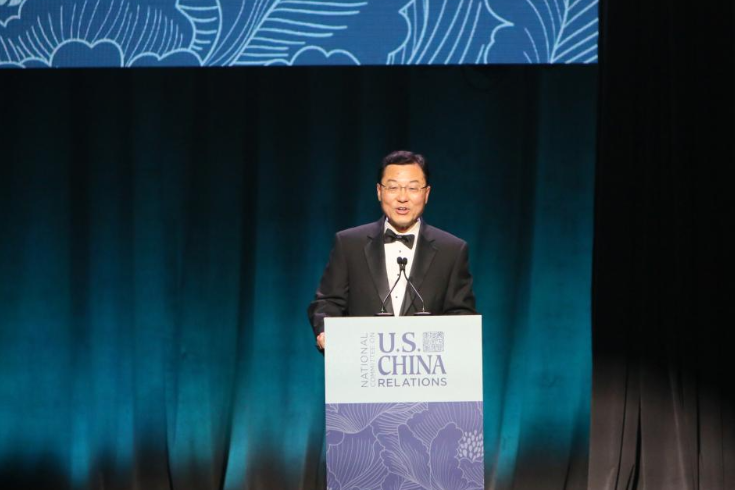
Ambassador urges healthier bilateral ties
In a pivotal address at the annual gala dinner of the National Committee on US-China Relations in New York, Chinese Ambassador to the United States Xie Feng emphasized the critical need for a healthier and more cooperative bilateral relationship between the two global powers. Speaking on October 14, 2025, Ambassador Xie highlighted the profound impact of US-China relations on global stability and prosperity, urging both nations to move beyond trade wars and tariffs, which he described as detrimental to all parties involved. He stressed the importance of mutual respect, peaceful coexistence, and collaboration as the foundation for resolving differences and fostering a constructive partnership. Xie underscored the shared responsibilities of China and the US as permanent members of the UN Security Council, major nuclear powers, and the world’s largest economies. He called for a focus on common interests rather than allowing historical and cultural differences to fuel suspicion and conflict. The ambassador also highlighted the strategic value of business collaboration between the two nations, encouraging more US businesses to invest in China, which offers vast opportunities in industrial transformation, technological innovation, and infrastructure development. Xie concluded by emphasizing the importance of people-to-people ties as the cornerstone of a strong bilateral relationship, asserting that the world has ‘a thousand reasons to get the China-US relationship right, and no single one to mess it up.’
-

‘Large scale’ Chinese spying in UK, says witness in collapsed trial
The UK government is under intense scrutiny following the collapse of a high-profile espionage case involving two individuals accused of spying for China. Christopher Berry, an academic, and Christopher Cash, a former parliamentary researcher, were charged under the Official Secrets Act in April 2024. The case was dropped by the Crown Prosecution Service (CPS) due to insufficient evidence that China posed a national security threat at the time of the alleged offenses. Deputy National Security Adviser Matthew Collins, in his witness statements, asserted that China was engaged in ‘large-scale espionage’ against the UK, describing it as the ‘biggest state-based threat to the country’s economic security.’ However, the CPS determined that the evidence fell short of the threshold required for prosecution. The controversy has sparked accusations from the Conservative Party that the Labour government allowed the case to collapse to protect economic ties with China. The government denies these claims, attributing the case’s failure to the previous Conservative administration. MPs have questioned the CPS’s decision, with some suggesting there was enough evidence to proceed to trial. The case has reignited debates about the UK’s relationship with China and the adequacy of its national security measures.
-
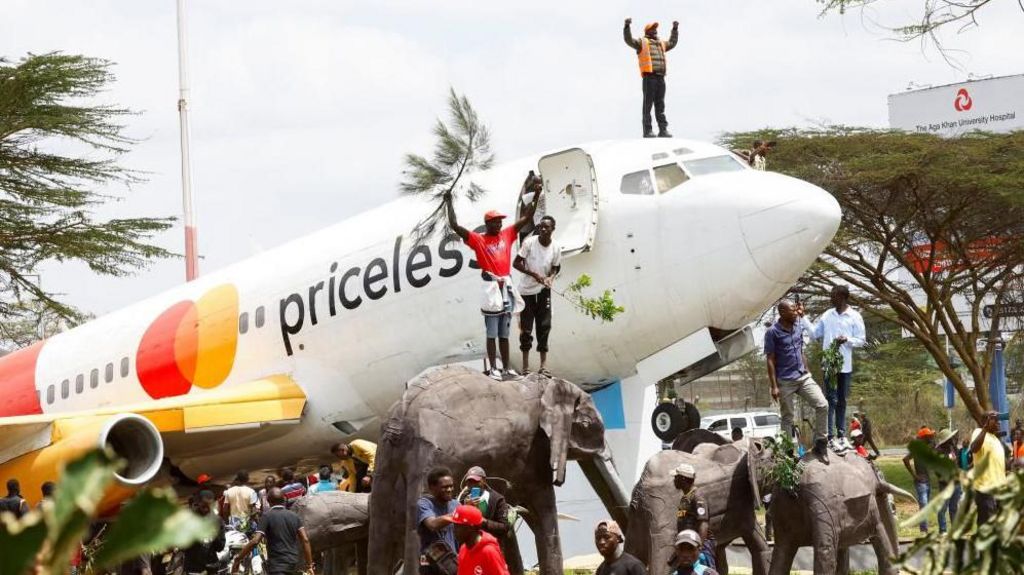
Flights halted at Kenyan airport as thousands turn out to receive Odinga’s body
Kenya’s Jomo Kenyatta International Airport (JKIA) temporarily halted operations on Thursday following a massive influx of mourners who breached security to pay their respects to the late former Prime Minister Raila Odinga. Odinga, a pivotal figure in Kenya’s multi-party democracy, passed away in India on Wednesday after suffering a cardiac arrest. His body was flown back to Kenya, where thousands of grieving citizens, carrying twigs and palm branches, overwhelmed airport security, gaining access to restricted areas. Authorities declared a ‘precautionary closure’ to restore order and ensure safety, advising the public to avoid the airport until further notice. The unexpected turnout has also led to the relocation of the public viewing ceremony from Parliament to Nairobi’s Moi International Sports Centre. Kenyan President William Ruto announced a seven-day mourning period and a state funeral with full military honors, honoring Odinga as a ‘beacon of courage’ and ‘father of our democracy.’ Tributes poured in from global leaders, including Indian Prime Minister Narendra Modi, who hailed Odinga as a ‘towering statesman.’ Odinga, who contested five presidential elections, leaves behind a legacy of resilience and democratic advocacy.
-

Diane Keaton’s family thank public for ‘love and support’ after actress’s death
The entertainment world is in mourning following the passing of legendary actress Diane Keaton, who died at the age of 79 due to pneumonia. Her family expressed profound gratitude for the overwhelming outpouring of love and support from fans and colleagues alike. In a heartfelt statement to People magazine, the Keaton family shared, ‘We are deeply touched by the extraordinary messages of love and support we have received in memory of our beloved Diane, who passed away on October 11.’ Keaton’s illustrious career spanned over five decades, during which she became a household name for her iconic roles in films such as ‘The Godfather,’ ‘Annie Hall’—for which she won an Academy Award in 1978—’Father of the Bride,’ ‘Something’s Gotta Give,’ and ‘The First Wives Club.’ Her death has prompted tributes from Hollywood luminaries, including co-stars Goldie Hawn and Bette Midler, who praised her brilliance, beauty, and enduring legacy. Steve Martin, her co-star in ‘Father of the Bride,’ fondly recalled their playful camaraderie, sharing a humorous exchange that encapsulated their bond. Beyond her acting prowess, Keaton was celebrated for her distinctive fashion sense, often seen in turtlenecks, hats, and thick-rimmed glasses—a style that became synonymous with her persona. The family has requested that donations in her memory be directed to causes close to her heart, such as local food banks and animal shelters. As the world reflects on her remarkable contributions to cinema, Diane Keaton’s legacy as a trailblazing actress and style icon remains indelible.
-

Flying cars and AI dazzle at Dubai expo
China’s cutting-edge low-altitude technology and innovative flying vehicles took center stage at the 45th edition of GITEX Global in Dubai, one of the world’s most influential technology and AI exhibitions. Over 300 Chinese enterprises showcased their latest advancements in AI robotics, intelligent solutions, flying cars, and 5G technologies at the event, which ran from October 13 to 17 and attracted 6,800 tech companies and 2,000 startups from 180 countries and regions. Among the highlights was Xpeng AeroHT’s two-seater electric vertical takeoff and landing (eVTOL) aircraft, part of the world’s first mass-produced modular flying car, the ‘Land Aircraft Carrier.’ The aircraft completed its first overseas manned flight in Dubai, securing 600 orders across the Middle East, marking the largest overseas order volume for a Chinese eVTOL manufacturer. Deliveries are set to begin in 2027. GOVY, a flying vehicle brand under Chinese automaker GAC Group, also made its Middle East debut with the Govy AirCar, featuring aviation-grade carbon fiber composites and gull-wing doors for vertical takeoff and landing. The event underscored China’s efforts to build a low-altitude economy ecosystem, utilizing airspace below 3,000 meters for applications in manufacturing, logistics, entertainment, and emergency services. Ou Boqian, China’s consul-general in Dubai, emphasized the significance of this progress, calling it a crucial step in the internationalization of China’s low-altitude electric manned flight technology. The Boston Consulting Group forecasts that China’s eVTOL market will be worth $41 billion by 2040, with the Middle East market expected to reach $11 billion. As the UAE and Saudi Arabia pivot toward technology-driven economies, low-altitude transportation has emerged as a key sector, with Chinese solutions poised to play a pivotal role in shaping the future of air commuting in the region.
-

Australia reaches semifinals after thrashing Bangladesh in Women’s Cricket World Cup
In a commanding display of skill and strategy, Australia secured their place in the semifinals of the Women’s Cricket World Cup with a resounding 10-wicket victory over Bangladesh on Thursday. The match, held in Visakhapatnam, India, saw Australia effortlessly chase down Bangladesh’s total of 198-9 in just 24.5 overs, finishing at 202 without loss. Captain Alyssa Healy led the charge with an unbeaten 113 off 77 balls, while Phoebe Litchfield contributed a solid 84 not out off 72 deliveries. Healy’s innings, marked by 20 boundaries, was the fastest century of the tournament, showcasing her exceptional form following her 142-run performance against India earlier in the week. Litchfield also impressed with 12 fours and a six. The Australian spinners, particularly Alana King who took 2-18 in 10 overs, played a pivotal role in restricting Bangladesh’s batting lineup. King’s performance earned her the Player of the Match award. Despite a steady start by Bangladesh’s opener Rubya Haider, who scored 44, and Sobhana Mostary’s resilient 66 not out, the team struggled to build momentum, with none of the last six batters reaching double figures. Australia’s victory extends their unbeaten streak in the World Cup to 13 consecutive games, solidifying their status as seven-time champions. The team now looks ahead to their next match against England in Indore, while Bangladesh prepares to face Sri Lanka in Navi Mumbai.