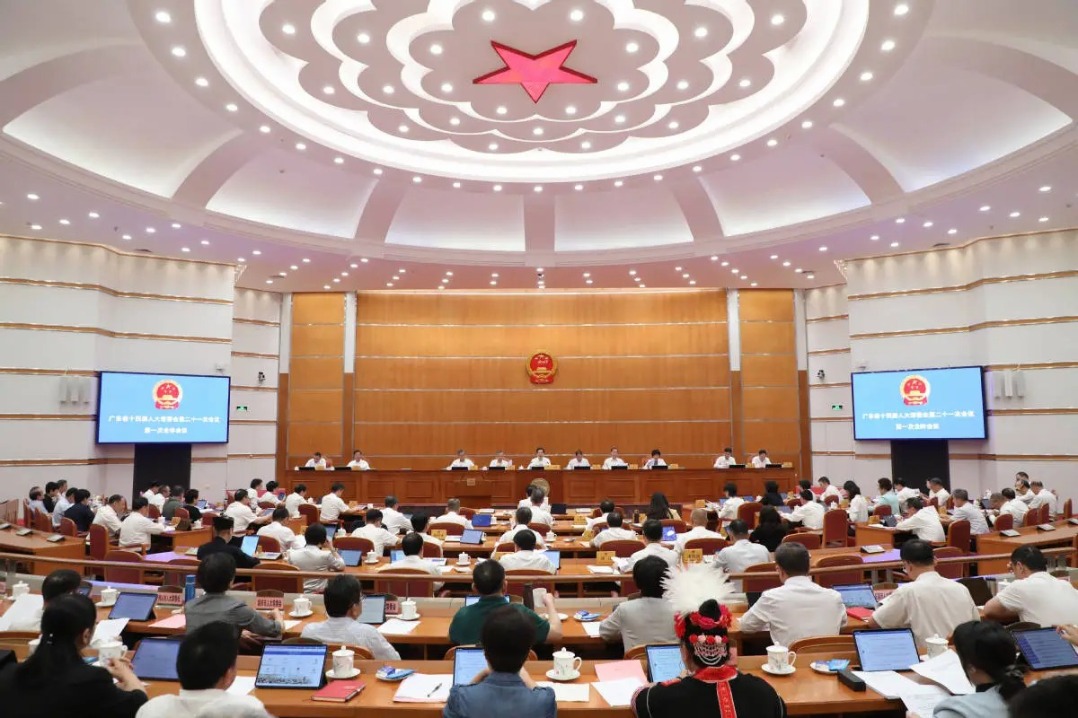
Guangdong province has emerged as a trailblazer in advancing gender equality within the digital landscape through the adoption of revised measures for women’s rights protection. The Standing Committee of the 14th Guangdong Provincial People’s Congress approved these measures on October 11, 2025, with implementation set for January 1, 2026. The updated legislation, expanded from nine chapters and 46 articles to nine chapters and 59 articles, addresses critical challenges in safeguarding women’s rights, institutionalizes effective practices, and introduces groundbreaking provisions for the digital era. Article 30 of the measures emphasizes enhancing women’s digital literacy, empowering them to critically evaluate and utilize media information effectively. It also mandates state departments, enterprises, and organizations to promote gender equality in digital domains such as data processing, automated decision-making, and algorithmic services. This marks China’s first systematic legal framework for gender equality in the digital sphere. The measures also require internet platforms to eliminate gender bias in algorithms, particularly in areas like order distribution and compensation calculations, and to provide digital skills training to bridge the ‘digital divide’. Additionally, the legislation prohibits the use of the internet to infringe upon women’s rights and grants women the authority to demand cessation of such acts. Guangdong, a hub for the internet industry, aims to address emerging challenges posed by algorithmic technology through proactive legal provisions. A notable case cited involved a female programmer in Hangzhou who sued a tech company for algorithmic discrimination, leading to a court ruling that mandated the removal of gender-biased parameters and a public apology. Experts, including Wang Tianyu of the Chinese Academy of Social Sciences, emphasize the need for platforms to recognize women as a distinct group with specific protection needs and to invest in areas like childcare and welfare. The measures also foster institutional innovation in the Guangdong-Hong Kong-Macao Greater Bay Area, promoting cross-regional cooperation and integrated development in women’s affairs.
博客
-

Rawal and Mandhana hit centuries to propel India into semifinals at Women’s Cricket World Cup
In a thrilling display of batting prowess, India’s women’s cricket team triumphed over New Zealand by 53 runs (DLS) on Thursday, securing their place in the semifinals of the Women’s Cricket World Cup. The match, held in Navi Mumbai, saw openers Smriti Mandhana and Pratika Rawal deliver stellar performances, both scoring centuries to set the tone for India’s commanding total. Rawal, making her maiden World Cup century, top-scored with 122 runs, while Mandhana contributed a crucial 109. Jemimah Rodrigues further bolstered the innings with an unbeaten 76 off 55 balls, propelling India to a formidable 340-3 in 49 overs. Rain interruptions later reduced the game to 44 overs, with New Zealand tasked with chasing 325. Despite Brooke Halliday’s valiant 81 runs, the White Ferns faltered, ending their campaign with three defeats and two no-results in six games. India, on the other hand, broke their three-match losing streak to notch their third win in six matches. The semifinal lineup now includes South Africa, England, and defending champions Australia, setting the stage for an exciting conclusion to the tournament.
-

Where the jewels stolen from the Louvre Museum might end up
In a dramatic turn of events, seven individuals have been apprehended in connection with the audacious theft of priceless royal jewels from the Louvre Museum in Paris. However, the stolen artifacts, valued at over $100 million, remain elusive. Experts warn that the jewels, which once adorned French royalty, could be dismantled or melted down to evade detection. This tactic, increasingly common among art thieves, allows the fragmented pieces to be sold discreetly in jewelry stores or through illicit channels. Erin Thompson, an art crime professor, emphasized that such items could be sold openly without raising suspicion, given their altered state. Christopher Marinello, founder of Art Recovery International, noted the challenges of selling intact high-profile artifacts, suggesting that breaking them down might be the thieves’ best option. French prosecutor Laure Beccuau has urged the culprits to return the jewels, warning that buyers would face legal consequences. Despite the arrests, the likelihood of recovering the jewels intact appears slim. Experts like Robert Wittman, a former FBI art crime investigator, remain skeptical about the thieves’ ability to monetize the stolen items, given their historical significance and unique characteristics. The case highlights the growing trend of museum thefts and the complexities of recovering stolen artifacts. As time passes, the chances of retrieving the jewels diminish, leaving their fate uncertain.
-
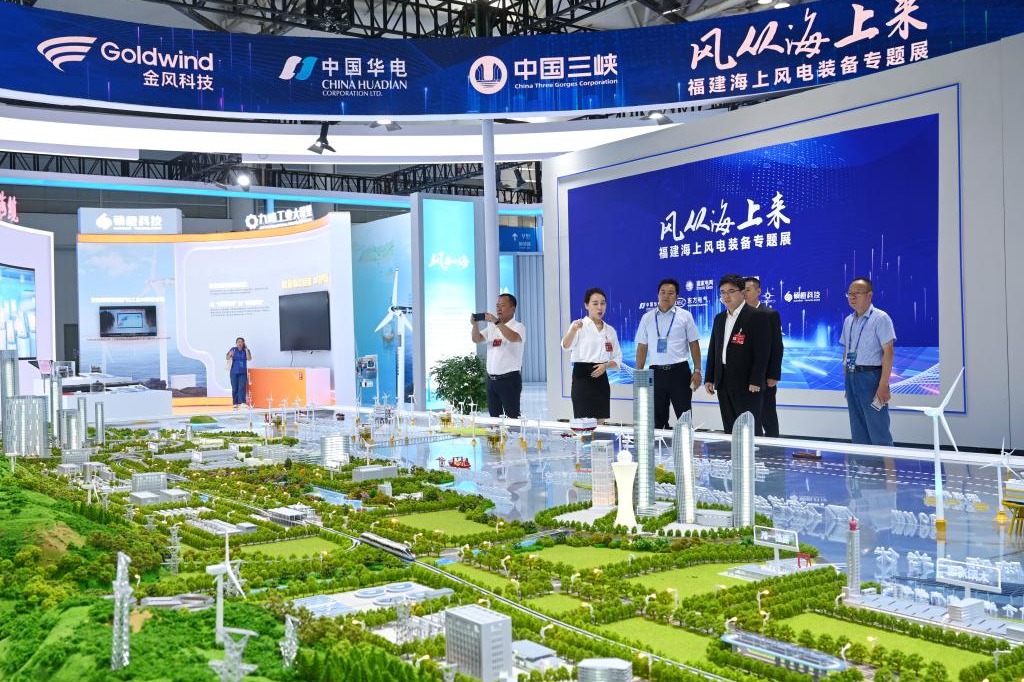
Greener maritime equipment key to industry’s future, experts say
The future of the maritime industry hinges on the development of green and intelligent maritime equipment, according to experts at the World Maritime Equipment Conference 2025, held in Fuzhou, Fujian Province. The event, themed ‘Setting Sail Towards Green Development,’ emphasized the critical role of technological innovation in driving the maritime sector’s low-carbon transformation and sustainable growth. Yu Qing, Deputy Director of the Marine Technology Innovation Center-Yangtze Delta, highlighted that green and intelligent maritime equipment is essential for reducing emissions and energy consumption, which are significant challenges in the industry. Liu Feng, Chairman of Fujian Baofan New Energy Technology, pointed out the limitations of traditional diesel-powered vessels and the potential of electric and hybrid solutions, such as the company’s methanol-lithium battery hybrid fishing vessel, which combines efficiency, low costs, and rapid energy replenishment. International cooperation was also underscored as a key driver for decarbonization and intelligent upgrades in global shipping systems. Lou Luobing, Business Director of RINA’s Greater China and Vietnam regional branch, emphasized the complementary strengths of China and Italy in advancing maritime technology. Additionally, Lin Jian, a member of the European Academy of Sciences, stressed the importance of deep-sea engineering and the opportunities in unmanned maritime exploration equipment. The conference showcased China’s leadership in intelligent unmanned vessel technology, with products from Zhuhai Yunzhou Intelligence Technology being exported to over 50 countries, demonstrating advanced capabilities in autonomous navigation and cooperative control.
-
Putin-Trump summit on hold, says White House
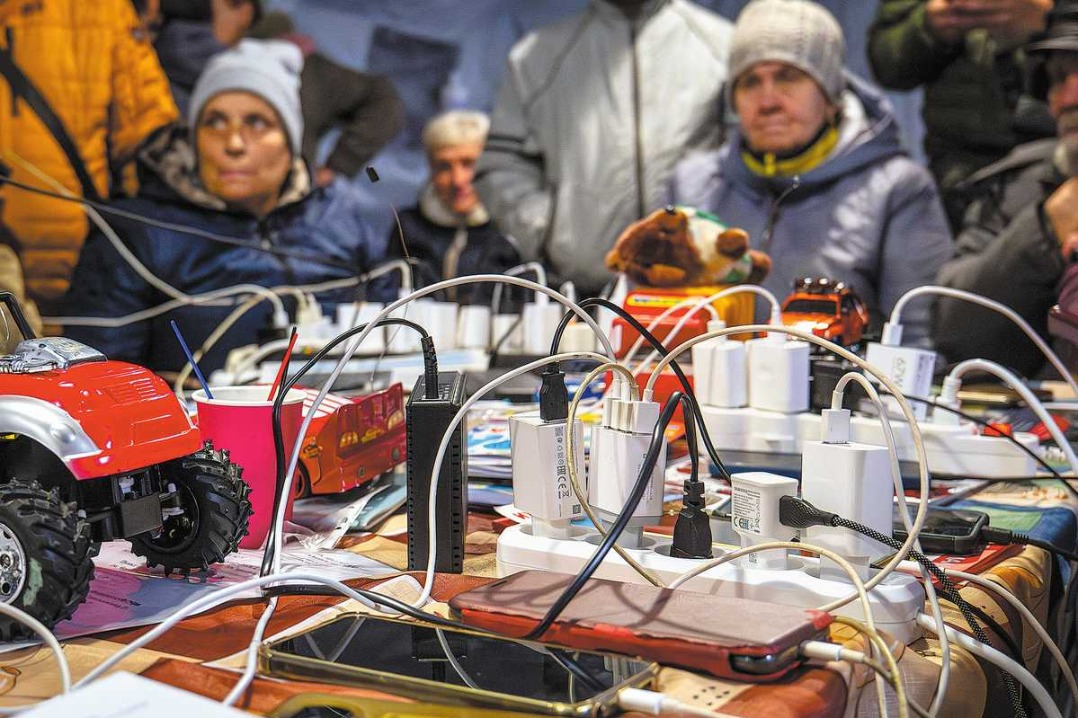
The highly anticipated summit between U.S. President Donald Trump and Russian President Vladimir Putin has been indefinitely postponed, according to a senior White House official. The decision comes as Moscow continues to reject calls for an immediate ceasefire in Ukraine, complicating diplomatic efforts to resolve the ongoing conflict. Last week, Trump had announced plans to meet Putin in Hungary to broker peace, but Russia’s insistence on territorial concessions from Ukraine has stalled negotiations. Kremlin spokesman Dmitry Peskov stated that no specific dates for the summit had been finalized, emphasizing that both leaders had not committed to a timeline. Russia reiterated its demands for control over the Donbas region in a private communique sent to the U.S., effectively dismissing Trump’s proposal for a ceasefire based on current frontlines. Ukrainian President Volodymyr Zelensky expressed cautious optimism about Trump’s compromise but doubted Putin’s willingness to support it. Meanwhile, European leaders have urged Washington to maintain a firm stance on an immediate ceasefire, with NATO Secretary-General Mark Rutte scheduled to meet Trump to discuss European perspectives on the crisis. The EU is set to reinforce its support for Ukraine at an upcoming summit in Brussels, followed by a meeting of European leaders in London to strategize next steps.
-
Japan’s new Cabinet marks conservative turn in politics
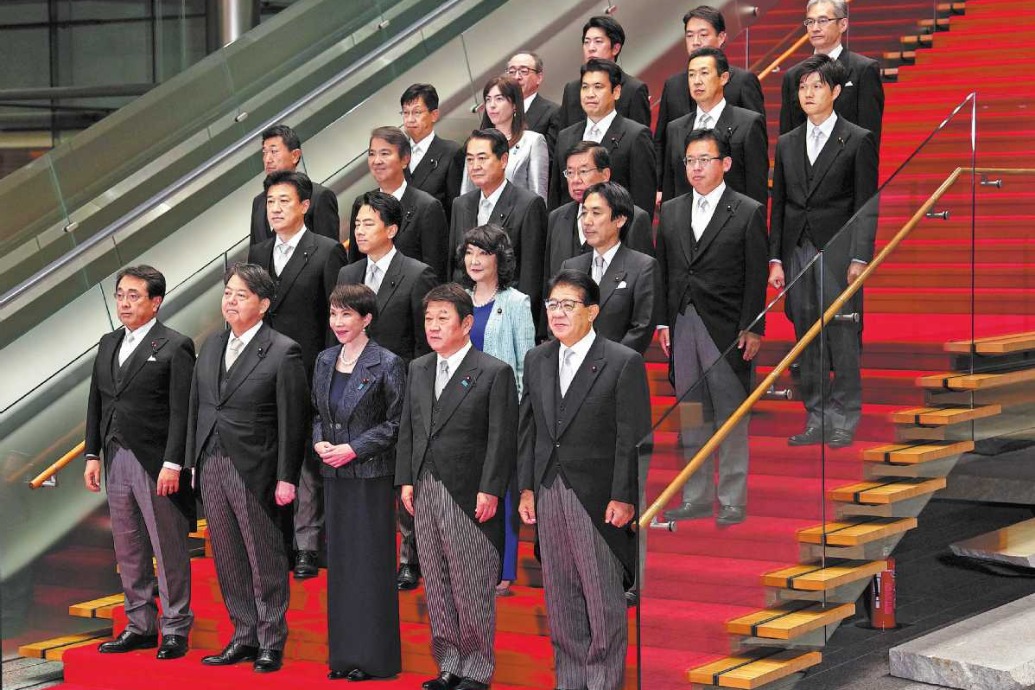
Japan’s political landscape has taken a decisive turn with the formation of Prime Minister Sanae Takaichi’s new Cabinet, marking a significant shift toward conservative policies. The alliance between Takaichi’s Liberal Democratic Party (LDP) and the Japan Innovation Party (JIP) underscores a shared focus on economic and security priorities, signaling a departure from the centrist stance of previous administrations.
At her inaugural press conference, Takaichi emphasized the coalition’s commitment to key policy areas, including cost-of-living measures, social security reform, and constitutional revision. Experts note that the LDP-JIP partnership is more right-leaning than the LDP’s previous coalition with the Komeito party, which withdrew earlier this month citing dissatisfaction with the LDP’s handling of a political funding scandal.
Kumiko Haba, a professor at Josai International University, highlighted that the dissolution of the LDP-Komeito alliance has freed Takaichi’s administration to pursue more conservative policies. This shift could have significant implications for Japan’s defense posture and its relations with China, particularly if Takaichi adopts a hard-line stance on historical issues.
Noriyuki Kawamura, an emeritus professor at Nagoya University of Foreign Studies, warned that the JIP’s advocacy for constitutional revision and stronger defense capabilities could act as an ‘accelerator,’ pushing the government further to the right. The Komeito, which previously served as a moderating force, is no longer in a position to restrain the LDP’s security policies.
Takaichi’s Cabinet appointments reflect a strategic effort to consolidate power and foster party unity. Key positions were assigned to her former leadership rivals, including Shinjiro Koizumi as defense minister and Toshimitsu Motegi as foreign minister. The absence of JIP members in the Cabinet aligns with the coalition agreement, which positions the JIP as an extra-cabinet partner rather than a formal coalition member.
While the LDP-JIP alliance strengthens Takaichi’s ability to advance conservative policies, it also introduces uncertainties. The JIP’s support for government legislation may vary depending on the issue, and the party has maintained a ‘disengagement strategy’ to distance itself from the LDP if policy differences arise.
As Japan’s new administration takes shape, its conservative orientation and potential for constitutional and military reforms are likely to shape the country’s domestic and international trajectory in the coming years.
-

A 51-year-old Maasai with a thirst for knowledge
In the heart of Tanzania, a 51-year-old Maasai named Orkotete Lesongoyo has become a symbol of resilience and the transformative power of education. His story began in 2024 when he approached a geopark training course, led by the Tianjin Center of the China Geological Survey, with a simple yet profound question: ‘Can I join?’ Despite the course already exceeding its planned capacity, Orkotete was welcomed as the 40th participant, marking the start of a remarkable journey. The training was part of a three-year technical assistance project aimed at reviving the Ngorongoro-Lengai Global Geopark, which was at risk of being removed from the UNESCO Global Geoparks Network. Orkotete’s dedication was evident from the outset. Each day, he embarked on a grueling 150-kilometer motorcycle ride across treacherous dirt roads to attend the course. His passion for learning was unmatched; he sat in the front row, meticulously taking notes and actively engaging with the material. One particularly memorable moment was when the course delved into the geological features of the Ol Doinyo Lengai volcano, a landmark Orkotete had grown up with but only truly understood through the training. ‘Our ancestors have long known the importance of these stones and mountains,’ he shared, highlighting the deep cultural connection to the land. Orkotete’s participation not only enriched his own understanding but also provided the project with invaluable local insights, aiding in more considerate planning. Post-training, Orkotete applied his newfound knowledge to become one of the most popular geological tour guides in the area, blending professional expertise with the unique wisdom of the Maasai people. His success is a testament to the broader impact of the Chinese-led initiative, which has significantly enhanced Tanzania’s capacity in geoheritage conservation and management. The Chinese Embassy in Tanzania recently received a letter of thanks from the Ngorongoro Conservation Area Authority, acknowledging the project’s contributions. Orkotete’s story underscores the real significance of technical assistance: it’s not merely about transferring knowledge but about empowering local communities. When given the opportunity, individuals like Orkotete demonstrate an extraordinary capacity for learning and practical application, driven by a deep love for their homeland. This narrative is a vivid portrayal of the enduring friendship between China and Tanzania, a partnership that continues to empower local people and foster sustainable development. As the Ngorongoro-Lengai Global Geopark thrives, it stands as a beacon of natural wonder, sustainable development, and cross-border collaboration.
-

Global geopark in Tanzania revived with Chinese aid
In a remarkable display of international collaboration, Tanzania’s Ngorongoro-Lengai Global Geopark has been revitalized with the assistance of Chinese expertise, showcasing the transformative power of green development and advanced technology. This project, spearheaded by engineers from the Tianjin Center of the China Geological Survey, marks a significant milestone in the geopark’s journey from near exclusion from the UNESCO Global Geoparks Network to full recognition of its progress. The geopark, Tanzania’s first and only global geopark, has become a symbol of China’s commitment to sustainable development and the harmonious coexistence of humans and nature. The reconstruction project involved a meticulous geoheritage survey of the Ol Doinyo Lengai volcano, a task that required Chinese and Tanzanian teams to undertake a grueling seven-hour climb to the crater. The survey, conducted under the cover of darkness to capture the molten lava’s golden hue before it turned gray in daylight, provided crucial data for planning sightseeing and scientific expedition routes. This endeavor not only highlights the technical prowess of Chinese engineers but also underscores the potential of international partnerships in promoting environmental conservation and sustainable tourism.
-
Nation boosts mineral resources, boosts supply
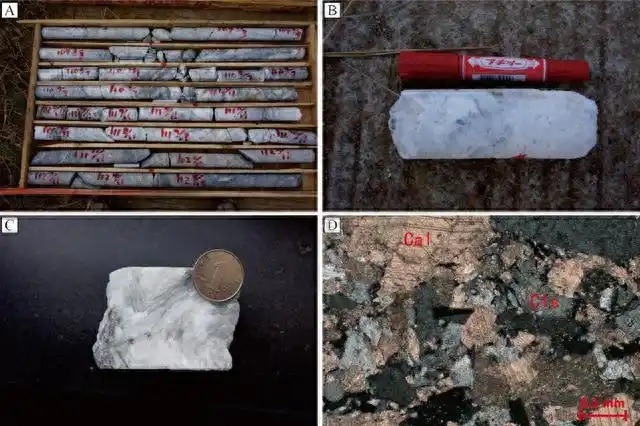
China has achieved remarkable progress in securing its mineral resources and enhancing domestic supply, as highlighted by the Ministry of Natural Resources. The nation has conducted comprehensive evaluations of 163 mineral resources with confirmed reserves, focusing on their quantity, distribution, and development status. Minister Guan Zhiou announced significant breakthroughs in the exploration of strategic resources such as oil, gas, copper, and lithium during a September news conference in Beijing. Additionally, China has established over 1,000 national-level green mines, underscoring its commitment to sustainable development. Vice-Minister Xu Dachun revealed that the discovery of 10 large oilfields and 19 large gas fields during the 14th Five-Year Plan period (2021-25) marks a major milestone. The Ordos Basin in northwestern China has seen a substantial increase in proven geological reserves, exceeding 300 billion cubic meters of methane. China has also revitalized old resource bases, such as the Xiaoyi bauxite mine in Shanxi and the Jiaodong gold mine in Shandong, while new large resource bases for gold, phosphorus, and sylvite are emerging. The Dadonggou gold mine in Liaoning, with an estimated additional reserve of nearly 1,500 metric tons of gold, is poised to become a world-class mine. The newly discovered Asian Lithium Belt, spanning 2,800 kilometers across multiple provinces and autonomous regions, has revealed significant lithium deposits. China’s global lithium reserve share has surged from 6% in 2021 to 16.5%, elevating the country to the second position worldwide. The China Geological Survey (CGS) has identified over 20 million tons of new copper reserves, with potential resources estimated at 150 million tons, positioning the Qinghai-Tibet Plateau as a world-class copper hub. Technological advancements have further improved resource utilization, including the efficient recovery of ultra-fine-grained ilmenite, increasing titanium recovery rates to over 40%. In the Panxi region of Sichuan, more than 87 million tons of titanium resources have been leveraged. CGS and the Hubei provincial government have also made strides in utilizing the superlarge niobium-rare earth deposit in northwestern Hubei, unlocking 929,000 tons of niobium.
-

EU set to endorse deal to turn frozen Russian assets into support for Ukraine
European leaders are poised to approve a groundbreaking proposal to utilize €140bn (£121bn) of frozen Russian state assets to support Ukraine’s reconstruction and defense efforts. The plan, set for discussion at a Brussels summit on Thursday, marks a significant escalation in the EU’s response to Russia’s ongoing aggression. The funds, currently held by Belgium-based financial institution Euroclear, would be redirected as a zero-interest “reparations loan” to Kyiv, with repayment expected through future reparations from Moscow. This move, however, faces legal and geopolitical hurdles, including concerns over global financial stability and potential Russian retaliation. The EU has already been using the interest from these frozen assets—amounting to €3bn annually—for Ukraine’s defense since 2024. The proposal, months in the making, seeks to address Ukraine’s urgent financial needs amid dwindling U.S. support and the approaching fifth year of the war. Ukraine’s reconstruction and recovery costs are estimated by the UN and World Bank to exceed $486bn (£365bn; €420bn). While countries like Poland and Finland have lauded the plan as “ingenious,” others, including Hungary and Slovakia, remain skeptical. The EU must also navigate internal disagreements on how Ukraine should allocate the funds, with some nations advocating for military spending and others prioritizing budgetary support. The plan’s success hinges on Ukraine’s victory and Russia’s willingness to pay reparations—a scenario with no guarantees. If Russia refuses, the financial burden could fall on European taxpayers, raising concerns about the proposal’s long-term viability.