博客

  • Seoul spy agency says it’s fair to view teen daughter of North Korean leader Kim as his heir

    Seoul spy agency says it’s fair to view teen daughter of North Korean leader Kim as his heir

    After years of gradual public observations and incremental official assessments, South Korea’s top intelligence body has delivered its most definitive judgment to date on the North Korean succession: Kim Jong Un’s teenage daughter is being groomed to extend the Kim family’s dynastic rule into a fourth generation.

    The confirmation came during a closed-door policy briefing to South Korea’s National Assembly on Monday, according to multiple lawmakers who attended the session. National Intelligence Service Director Lee Jong-seok told lawmakers that it is now reasonable to identify the girl, widely believed to be 13-year-old Kim Ju Ae, as the designated future leader of North Korea, lawmaker Lee Seong Kweun told reporters after the meeting.

    This latest statement marks a clear escalation of the NIS’s public assessments of Kim Ju Ae’s status. Early in 2024, the agency first labeled her as the likely heir, and just months ago in February, it concluded she was nearing an official designation as successor. Monday’s briefing solidified that positioning into a clear, formal confirmation.

    In a striking secondary finding that upends long-held outside assumptions about North Korea’s power structure, the NIS also dismissed the long-circulated narrative that Kim Jong Un’s sister, Kim Yo Jong, would pose a challenge to her niece’s rise. Citing unspecified but reliable intelligence, the agency told lawmakers Kim Yo Jong — long viewed by many foreign analysts as North Korea’s second-most powerful figure — holds no substantive governing authority, leaving her no pathway to block the younger Kim’s succession.

    Kim Ju Ae first began appearing at high-profile state events alongside her father in late 2022, and North Korean state media has repeatedly referred to her as Kim Jong Un’s “most beloved” and “respected” child, a framing that sparked widespread international speculation about her future role. In recent months, she has taken on an increasingly public portfolio tied to the country’s powerful military: she has been photographed driving a tank during military drills supervised by her father and firing pistols during a visit to a light weapons factory. According to lawmakers who received the briefing, North Korean authorities arranged these public military appearances to establish Kim Ju Ae’s credentials among the country’s military elite and dampen existing skepticism about the prospect of a female leader.

    North Korea has been ruled exclusively by male members of the Kim dynasty since the country’s founding in 1948. Kim Il Sung, the state’s founder, passed power to his son Kim Jong Il in 1994, who in turn transferred control to his son Kim Jong Un following his death in 2011. While the NIS’s assessment is the most definitive official foreign judgment on the succession to date, not all outside observers agree with the conclusion. Critics note that North Korea operates as an extremely patriarchal society, arguing that elite and public acceptance of a female leader remains unlikely. They also point out that Kim Jong Un is just 42 years old, and naming an heir so early in his rule could risk eroding his own hold on power, making a formal designation premature.

    Details about Kim Ju Ae’s personal life remain tightly guarded by Pyongyang. North Korean state media has never confirmed her name or exact age; the widely used name Kim Ju Ae stems from a 2013 account by former NBA star Dennis Rodman, who met the Kim family during a visit to Pyongyang and recalled holding Kim Jong Un’s infant daughter.

  • China-built engine fueled by hydrogen test-flown

    China-built engine fueled by hydrogen test-flown

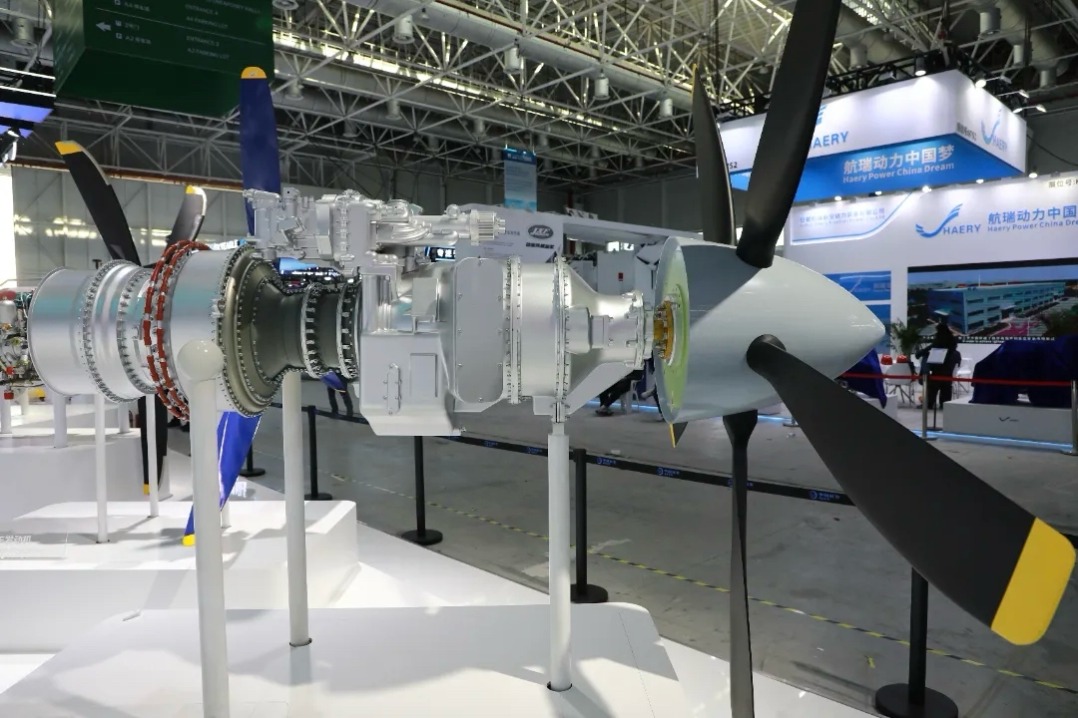
    In a historic milestone for global green aviation development, an independently developed Chinese megawatt-class hydrogen-fueled turboprop engine has completed the world’s first successful maiden test flight. The 7.5-tonne unmanned cargo aircraft fitted with the AEP100 engine completed the 16-minute flight at an airport in Zhuzhou, Hunan Province on Saturday, marking a new chapter for carbon-free aviation technology.

    According to the Aero Engine Corporation of China (AECC), the developer of the engine, the AEP100 system operated stably and reliably throughout the entire flight. The aircraft traveled 36 kilometers, holding a steady cruising speed of 220 kilometers per hour at an altitude of 300 meters, before returning safely to base after completing all pre-planned test missions. AECC experts noted that this successful maiden flight represents a transformative breakthrough, moving China’s domestic hydrogen-powered aviation engine program from purely conceptual technological development to practical engineering application.

    The achievement also confirms that China has built a fully self-contained, end-to-end technical supply chain for hydrogen-fueled aviation engines, spanning from the manufacturing of core specialized components to full system integration. The successful test verified that integrating hydrogen-powered propulsion systems with aircraft flight platforms is engineeringly feasible and reliable, creating a solid foundation for future mass industrial deployment of hydrogen energy in the aviation sector. This milestone also signals that China’s green aviation power development has crossed a key threshold, shifting from early technological exploration to hands-on engineering practice.

    Beyond the technical breakthrough itself, experts project that the advancement of hydrogen-powered aviation technology will drive coordinated upgrades across the entire hydrogen energy industrial chain. This spans upstream green hydrogen production, midstream hydrogen storage and refueling infrastructure construction, and downstream development of high-end equipment and advanced new material clusters. These linked developments will in turn accelerate the shift toward green, low-carbon, high-quality growth across China’s whole aviation industry.

    Looking ahead, as production costs for green hydrogen continue to fall globally, the economic and energy security benefits of hydrogen-powered aviation will become increasingly prominent. Industry planners expect the technology to first enter early commercial use in low-altitude aviation segments, such as unmanned cargo delivery and inter-island logistics transport, before gradually expanding to serve regional passenger routes and eventually long-haul mainline passenger aircraft.

  • Tomb tributes bridge gap between centuries

    Tomb tributes bridge gap between centuries

    As the Qingming Festival, China’s traditional occasion for honoring ancestors and departed heroes, approaches in 2026, a growing trend of spontaneous tribute-paying by young people at the graves of historical figures has emerged, bridging the gap between centuries and bringing centuries-old revolutionary spirits to life for modern generations.

    Twenty-one-year-old Wu Yutong, a university student hailing from Dalian, Liaoning province, stumbled upon an unexpected connection during a recent trip to Hangzhou, Zhejiang. While checking her location in her hotel room, she discovered she was staying just hundreds of meters away from the final resting place of Qiu Jin — a pioneering 20th-century Chinese revolutionary and feminist who was executed by Qing Dynasty (1644–1911) authorities in 1907 at just 31 years old, a heroine Wu has admired since her middle school years.

    The following morning, on a clear January day, Wu set off across Gushan Hill, which sits along the scenic shoreline of Hangzhou’s iconic West Lake. Winding past crowds of casual tourists and street vendors selling local handicrafts and souvenirs, she followed a quiet path to a secluded clearing ringed with tall pine and camphor trees. There, a white marble statue of Qiu Jin, holding a sword in hand, stands in quiet tribute to her legacy.

    Wu came prepared with two carefully chosen offerings: a bouquet of chrysanthemums, selected to honor a poem Qiu wrote about the resilient flower, and a bright red silk scarf, placed to symbolize the blood Qiu shed fighting for her radical beliefs of gender equality and national liberation. “The fire in her heart never went out,” Wu shared reflecting on the moment. She spent an entire hour standing quietly before the statue, and when passing tourists mistakenly identified Qiu as other famous figures from Chinese history or folklore — such as the legendary snake spirit Bai Suzhen, or 20th-century Communist martyr Jiang Zhujun — Wu took the time to share Qiu Jin’s true story with them.

    For Wu, the visit marked the end of a long journey to connect with the heroine she had first encountered as a one-dimensional name in middle school textbooks, where Qiu was reduced to just a few lines describing her as a revolutionary patriot and martyr. It was only after Wu sought out Qiu’s own writing — including the poetry and essays Qiu published in *Chinese Women’s Journal*, the groundbreaking feminist periodical she founded in 1907 — that she came to see Qiu as a fully realized person, not just a historical footnote.

    “I no longer saw just a name but a girl trapped by her era, one who fought desperately to break free,” Wu explained. When she shared the story of her visit to the grave on Xiaohongshu (RedNote), China’s popular lifestyle and social sharing platform, the overwhelming public response took her by surprise. To date, her post has earned more than 35,000 likes, and in the comment section, she found a thriving community of other young people who share this quiet hobby of paying respects to historical heroes.

    Commenters asked for directions to the site, while one young artist even shared an original New Year portrait of Qiu Jin, painted with mountains and rivers across her robes — a visual tribute to the nation Qiu gave her life to improve. For Wu, this trend of visiting historical graves is far from the modern celebrity culture many young people engage in; it is a deeply personal practice that allows her and other young Chinese to draw strength from the past to navigate modern challenges.

    Qiu Jin has become a mirror for Wu’s own life choices: “I remind myself to stand tall like her, to be the master of my own fate,” she said. “I don’t see it as chasing celebrities, but rather drawing strength from history. When we face challenges or feel lost in our own lives, thinking about the spirit of historical figures gives us courage to move forward. In the quiet of an ancient tomb, we can find in history the direction and confidence to keep going.”

    This grassroots movement of tribute-paying ahead of the 2026 Qingming Festival highlights a growing desire among young people in China to connect with their history beyond formal education, building intimate, cross-temporal bonds with the figures who shaped modern China.

  • Middle East conflict drives record fuel price hikes across Africa

    Middle East conflict drives record fuel price hikes across Africa

    The ongoing conflict in the Middle East has triggered an unprecedented ripple effect across African economies, most of which depend entirely on imported petroleum products, pushing fuel prices to historic levels that leave ordinary consumers bearing the full brunt of rising global energy costs. In Southern and East Africa in particular, two nations have rolled out the steepest monthly fuel price adjustments recorded in modern history, according to regional energy officials.

    South Africa’s Department of Mineral and Petroleum Resources confirmed that new price hikes took effect Wednesday: gasoline rates rose by 3.06 South African rand (roughly $0.18) per liter, while diesel prices increased between 7.37 and 7.51 rand per liter. Even more dramatic increases hit illuminating paraffin, a critical off-grid energy source for millions of low-income South African households, which jumped 11.67 rand per liter. To offset some of this strain for consumers while maintaining broader economic stability, South Africa’s finance ministry implemented a temporary 3-rand-per-liter cut to the general fuel levy, running from April 1 to May 5, department spokesperson Lerato Ntsoko confirmed.

    Neighboring Malawi followed with an even larger proportional adjustment, rolling out a maximum 35 percent increase for core petroleum products that also took effect Wednesday. Lucas Kondowe, chair of the Malawi Energy Regulatory Authority, explained that the persistent upward pressure from Middle East conflict-driven volatility has upended longstanding industry pricing norms. Where suppliers traditionally use the prior month’s average global price to set local rates, today’s volatile market has led all suppliers to switch to a far shorter two-week average from the current month, accelerating price jumps for end users. Under the new rates, Malawi’s gasoline and diesel now hit 6,672 kwacha ($3.86) per liter, ranking among the highest fuel prices on the entire African continent.

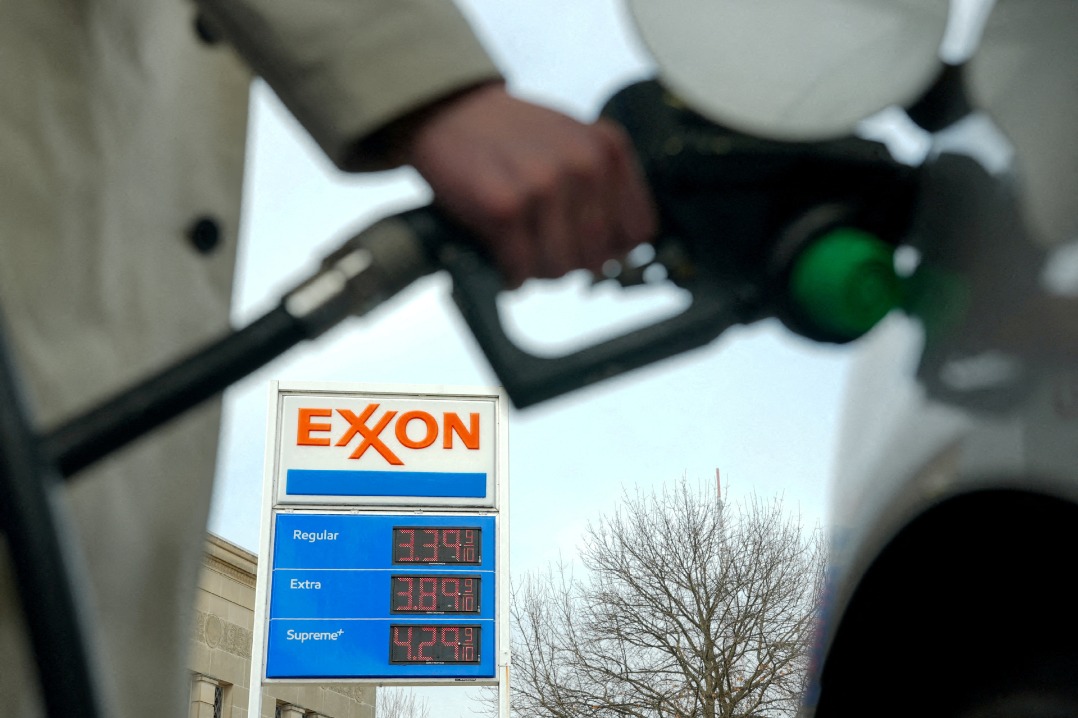
    South Africa and Malawi are far from isolated cases: energy regulators across the continent have hiked pump prices to pass along soaring import costs to consumers. Tanzania has raised fuel prices by roughly 33 percent, while Ghana increased gasoline by 15 percent and diesel by nearly 19 percent. Even in Nigeria, Africa’s largest crude oil producer, the continent’s biggest refinery operated by Dangote Petroleum announced a fresh price hike in late March, lifting Premium Motor Spirit costs from 1,175 to 1,245 Nigerian naira ($0.85 to $0.90) per liter. The conflict has pushed global Brent crude prices above $100 per barrel, forcing the local adjustment. Other nations that have rolled out significant fuel price increases in recent weeks include Mauritania, the Gambia, Mali, Botswana, Ethiopia and Zimbabwe.

    To buffer low-income and vulnerable households from the growing impact of the conflict, a small number of governments have rolled out targeted support measures beyond South Africa’s fuel levy cut. Kenya for instance has reiterated that its existing fuel stabilization fund and longstanding government-to-government fuel import deal continue to work to moderate extreme price spikes and maintain consistent domestic supply. But even with these localized interventions, global bodies warn the damage extends far beyond energy markets. The United Nations Conference on Trade and Development (UNCTAD) has issued an urgent alarm that disruption to critical global energy shipping routes has amplified economic pressure across every region, including Africa. A rapid UNCTAD assessment found ship traffic through the Strait of Hormuz, one of the world’s most vital energy chokepoints, has dropped to near a standstill, with transits plummeting nearly 95 percent. The International Energy Agency estimates that between 25 and 30 percent of global crude oil production and 20 percent of global liquefied natural gas supplies normally pass through the narrow waterway. “This has disrupted a large share of global energy supplies, driving fuel and transport costs higher and feeding inflationary pressures across economies worldwide,” the UN body noted in its latest update.

  • US warns of ‘hell’ in Iran amid strikes

    US warns of ‘hell’ in Iran amid strikes

    As a self-imposed 48-hour deadline for a negotiated peace with Iran ticks down, former U.S. President Donald Trump has issued a stark warning that “all hell will break loose” across the country if no agreement is reached, with the broader 10-day ultimatum for Iran to fully reopen the Strait of Hormuz also approaching.

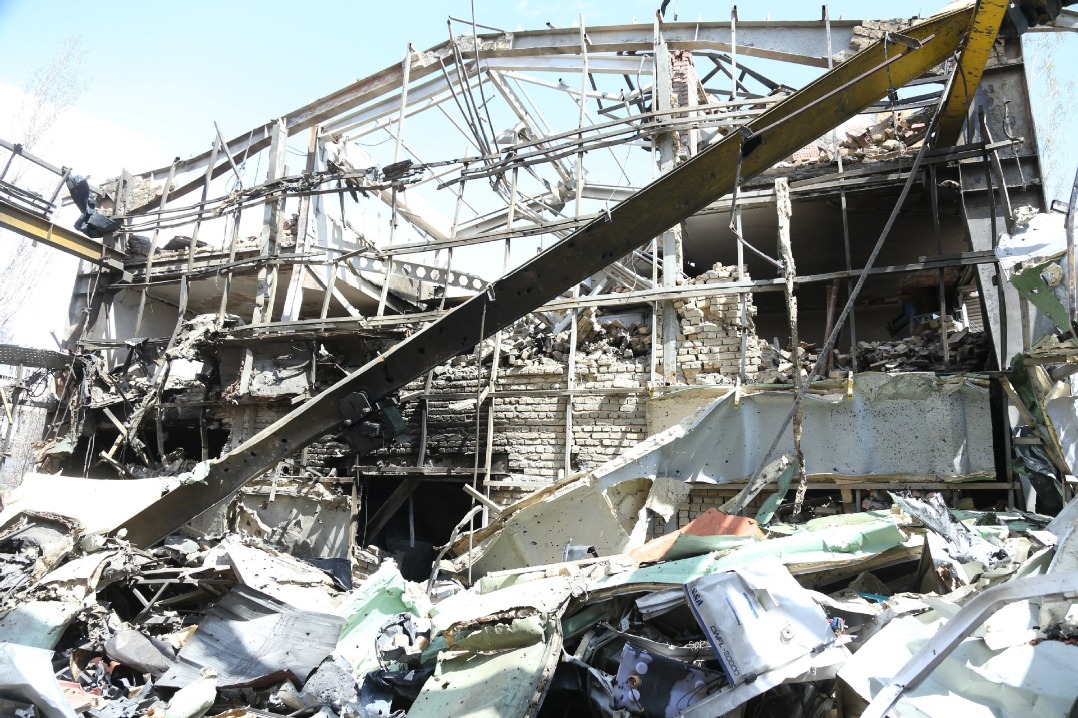
    The escalating threat landed amid a sharp surge in cross-border strikes across the Middle East over the Easter weekend, which left critical energy infrastructure in Gulf Cooperation Council (GCC) states and civilian sites across Iran — including universities, research facilities and areas near nuclear infrastructure — heavily damaged.

    On Friday, warplanes targeted and destroyed a research facility affiliated with Shahid Beheshti University, one of Iran’s most prestigious higher education institutions, located in northern Tehran. The strike on the university’s Laser and Plasma Research Institute marks the latest in a growing pattern of civilian site targeting by U.S. and Israeli forces in their ongoing military campaign against Iran, which launched on February 28.

    During an on-site press briefing Saturday, Iranian Minister of Science, Research and Technology Hossein Simaei Saraf confirmed that at least 30 Iranian universities have sustained damage from U.S. and Israeli strikes since the conflict began.

    In Sunday’s most high-profile development, Trump announced on his Truth Social platform that U.S. military forces had completed what he called “one of the most daring search and rescue operations in U.S. history,” recovering a “highly respected colonel” whose plane was downed over Iranian territory. The colonel was the second of two crew members aboard an F-15E Strike Eagle fighter jet shot down Friday; the first service member was extracted earlier.

    Iranian military officials pushed back sharply on the U.S. rescue claim hours later. A spokesperson for Iran’s Khatam al-Anbiya Central Headquarters announced that Iranian forces intercepted and destroyed multiple U.S. aircraft attempting to infiltrate southern Isfahan province to extract the downed aircrew, fully foiling the operation. According to the spokesperson, the destroyed aircraft included two Black Hawk helicopters and two C-130 military transport planes, all of which were left burning after the strike.

    Al Jazeera reported Sunday that multiple civilian fatalities occurred during search operations for the downed F-15E crew in Iran’s southwestern Kohgiluyeh and Boyer-Ahmad Province. Iran’s state-run Fars News Agency confirmed the casualties: five people killed and eight wounded in an attack on the Koh Siah area of Kohgiluyeh County, with an additional four fatalities recorded in the Vazg and Kakan districts of Boyer-Ahmad County.

    The previous day, the International Atomic Energy Agency (IAEA) confirmed one person was killed by projectile fragments after a U.S.-Israeli strike hit a site near Iran’s Bushehr nuclear power plant, the fourth strike near the facility to date.

    The Israel Defense Forces (IDF) also released a statement confirming it had conducted airstrikes on more than 120 targets across central and western Iran over the weekend, with planned targets including ballistic missile stockpiles, drone production facilities and Iranian air defense installations.

    Global and regional officials have raised urgent alarms over the growing humanitarian and nuclear risks of the escalating conflict. On April 4, Iranian Foreign Minister Abbas Araghchi took to X to warn that radioactive fallout from a strike on Bushehr would devastate capital cities across the GCC, not just Tehran. He also accused U.S. media of misrepresenting Iran’s negotiating position, reiterating that Iran’s core demand is a permanent end to what he called the “illegal war” imposed on the country.

    World Health Organization Director-General Tedros Adhanom Ghebreyesus joined the IAEA in sounding the alarm on Sunday over nuclear facility safety in Iran. “The latest incident involving the Bushehr nuclear power plant is a stark reminder: a strike could trigger a nuclear accident, with health impacts that would devastate generations,” he wrote on X. “With every passing day of this escalating conflict, the stakes and threats are raised higher and higher. We must de-escalate now. Peace is the best medicine.”

    Former IAEA Director General Mohamed ElBaradei also issued a public appeal, urging GCC member states and the United Nations to intervene to stop Trump from turning the entire region into an inferno.

  • US motorists warm up to China’s electric vehicles

    US motorists warm up to China’s electric vehicles

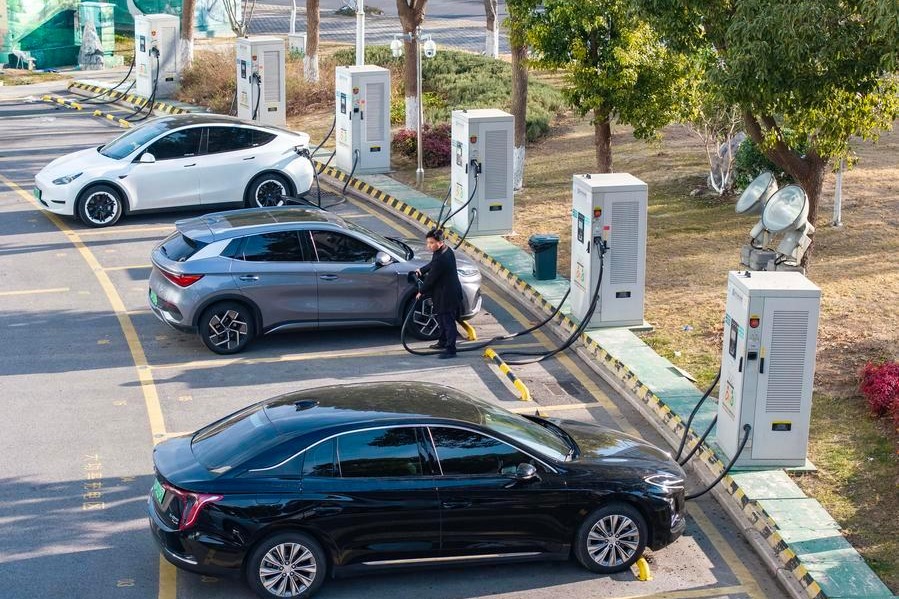
    Despite steep tariffs and regulatory restrictions that currently bar Chinese-made electric vehicles from the mainstream US market, a new consumer survey reveals that a large and growing share of American drivers — particularly younger generations — are increasingly willing to consider purchasing these vehicles, drawn to their competitive pricing, innovative design and advanced digital features.

    A poll conducted between December 29, 2025 and January 2, 2026 by Cox Automotive, a leading industry research and forecasting firm for new and used vehicle markets, found that 69 percent of Generation Z car shoppers (defined as those aged 14 to 29) said they are more likely to consider Chinese EV brands than competing international or domestic options. This growing positive perception has been fueled in large part by viral positive reviews of Chinese EVs on major social platforms including YouTube and TikTok, which have introduced American consumers to the vehicles’ attractive value proposition.

    Shifting economic conditions have further amplified consumer interest: soaring fuel prices tied to regional tensions linked to the US-Israel-Iran conflict have boosted demand for electric alternatives, while the persistently high cost of domestic EVs has pushed shoppers to seek more affordable options. Data from Kelley Blue Book shows the average transaction price for a new electric vehicle in the US hit $57,245 by August 2025, pricing many middle-income buyers out of the market.

    Sarano LaGrande, a 72-year-old New York resident, shared his positive outlook with China Daily, noting that he has seen Chinese EVs featured across social media and is attracted to their aesthetic design and potential fuel savings. “Why shouldn’t Americans have access to these cars? They’re beautiful, reasonably priced, and offer something new for city driving. American-made cars often start at $30,000 and up — that’s far too expensive for many buyers,” LaGrande said.

    Bill Russo, founder and CEO of Shanghai-based automotive investment advisory firm Automobility Limited, broke down the key competitive advantages that set Chinese EVs apart from global competitors. “Chinese electric vehicles differentiate themselves primarily through rapid development cycles, unrivaled cost competitiveness, and seamless integration of cutting-edge digital technologies,” Russo explained. “Major brands each have unique strengths: BYD stands out for its vertical integration and massive production scale, Geely (including its premium brand Zeekr) for its global strategic positioning, Xiaomi for its integrated consumer digital ecosystem, and NIO for its premium user experience and after-sales services.”

    Russo added that while Chinese EVs are technically competitive enough to capture significant market share in the US, near-term large-scale market entry remains out of reach due to steep geopolitical and regulatory hurdles. The Biden administration previously imposed a punitive tariff of over 100 percent on Chinese-made EVs, a policy designed to effectively price the vehicles out of the market under the guise of protecting American manufacturing jobs. Additional federal restrictions also block Chinese vehicle technology from the US market.

    The Cox Automotive survey confirms that openness to Chinese EV brands splits sharply along demographic lines, with age being a key dividing factor. While younger, EV-curious shoppers demonstrate clear willingness to purchase Chinese brands, older consumers and buyers loyal to domestic automakers remain largely reluctant.

    China’s EV industry has expanded rapidly over the past decades, backed by significant sustained investment, with more than 100 domestic manufacturers competing for market share at home. As the world’s largest producer and exporter of motor vehicles, China has already successfully built a strong foothold for its EVs in European and Latin American markets, and most recently gained access to Canada, which cut tariffs to 6.1 percent for an initial annual quota of 49,000 Chinese-made EVs.

    In the US, where Tesla dominates the domestic EV market, established domestic auto trade groups have pushed for continued restrictions. In a March 12 letter, the groups called on the second Trump administration to maintain barriers blocking Chinese automakers from entering the US market. Still, President Donald Trump has signaled potential flexibility: during a January speech at the Detroit Economic Club, he hinted that he would be open to allowing Chinese automakers to enter the US market within the next two years, on the condition that they manufacture vehicles in US factories using American workers.

    Another New York resident, 68-year-old Tony Jackson who originally hails from Missouri, echoed the view that the US should open its market to Chinese EVs that meet consumer quality standards. “For me, the top priorities are build quality, strong structural safety features, and adequate charging infrastructure. If Chinese vehicles deliver on these points and come at a fair price, that’s a win for American consumers,” Jackson said.

    Among US auto dealerships, the Cox survey found that 15 percent of respondents already support allowing Chinese auto brands to enter the domestic market. Russo reiterated that policy constraints will almost certainly keep Chinese EVs from widespread availability at US dealerships in the near term. “That said, if regulatory and tariff barriers were reduced, Chinese EVs would almost certainly be well received by American consumers thanks to their clear value: a long list of premium features offered at highly competitive price points,” he noted.

  • Tourism enjoys robust growth

    Tourism enjoys robust growth

    This spring, China’s inbound tourism sector is seeing sharp, sustained growth, powered largely by the ongoing dividends of expanded visa-free policies that have opened the door for longer, deeper trips across the country for international travelers. Unlike the decades-long trend that saw most international visitors stick exclusively to China’s top-tier megacities and iconic landmarks, today’s foreign travelers are increasingly venturing into smaller second- and third-tier destinations, and prioritizing hands-on, culturally immersive experiences over routine sightseeing.

    Gone are the days when most international itineraries were limited to checking off bucket-list sites like the Great Wall or the Terracotta Army. Today’s visitors are stepping into local workshops to learn about China’s centuries-old intangible cultural heritage, try on traditional Hanfu clothing, hand-make dumplings from scratch, and even participate in the traditional process of porcelain firing. What began as a casual goal to “see China” has evolved into a widespread desire to “live like a local for a day,” turning deep cultural engagement into the fastest-growing new engine of the country’s inbound tourism market.

    One striking example of this new trend can be found at Zhangjiajie’s Tianmen Mountain, a stunning scenic spot in Hunan Province that blends breathtaking natural landscapes with one-of-a-kind adventure and cultural offerings. A recent viral short film posted by a foreign blogger on Instagram captured Asia’s first wingsuit pilot, Zhang Shupeng, leaping from Yuhu Peak and speeding through Tianmen Mountain Square at over 200 kilometers per hour. Within days, the clip racked up more than 100 million views and nearly 5 million likes, with comments from users across the globe expressing awe at the location and the stunt.

    Ding Yunjuan, deputy marketing manager for the Tianmen Mountain Scenic Area, explained that the site has long positioned itself as a hub for extreme sports fans, hosting world-class international events including the annual World Wingsuit League Championship, downhill stair bicycle races, and international parkour competitions that draw spectators and participants from around the world. Beyond adventure sports, the area has also invested heavily in high-quality cultural tourism offerings, most notably *Tianmen Fox Fairy*, the world’s first large-scale live musical performance staged in a high-mountain canyon. Adapted from the classic Xiangxi folk tale *The Legend of Woodcutter Liu Hai*, the production centers on traditional Oriental concepts of love and beauty.

    Between 2024 and 2025, international tourists made up 60 to 70 percent of *Tianmen Fox Fairy*’s total audience. In 2025 alone, the show drew 250,000 overseas visitors from more than 120 countries and regions, marking a 45 percent year-on-year increase. During the first run of shows in 2026, international visitors accounted for 70 percent of the audience. Overall, Tianmen Mountain welcomed 162,100 international tourists in the first quarter of 2026, a 26 percent jump compared to the same period last year, with the top four source markets being South Korea, Taiwan (China), Indonesia, and Malaysia. To better serve this growing international audience, the scenic area has rolled out a range of upgrades: it has mandated English language training for all customer-facing staff, distributed portable translation devices to front-line teams, and launched guided tour services in Mandarin, English, and Korean.

    In Lijiang, a historic scenic city in southwest China’s Yunnan Province, international visitors are similarly flocking to experience the region’s unique ethnic culture and well-preserved ancient town. During this year’s Sanduo Festival, a traditional Naxi ethnic celebration honoring the group’s guardian deity, two American travelers from New York and Los Angeles, Iren Helperin and Soheila Halimi, shared that they were drawn to Lijiang specifically for its blend of ancient culture and welcoming, safe travel environment.

    “As a tourist who doesn’t know the city or the culture, safety is always my top priority,” Helperin said. “Back in Europe, we have to tie our phones to our bodies with a string to prevent theft. Here, we never have to worry — I can carry my phone out freely and take photos whenever I want.” A German couple visiting Lijiang, Evgeni Knispel and Denise Nagel, echoed that praise, noting they discovered the city while researching China trips online. Nagel highlighted the area’s exceptional cleanliness and mild, pleasant weather, while Knispel added that while Lijiang is a popular tourist spot, it feels far less crowded than popular Southeast Asian destinations like Thailand, and he plans to recommend it to all his friends and family back home.

    Industry experts say the shift toward smaller destinations and immersive experiences is no accident. Lyu Ning, dean of the School of Tourism Sciences at Beijing International Studies University, explained that smaller tier cities across China often retain far more authentic natural landscapes and intact folk customs, which perfectly aligns with growing international demand for unique, genuine travel experiences that can’t be found in crowded megacities.

    At the same time, China’s expanded investment in transport and service infrastructure has made it far easier for international travelers to reach these off-the-beaten-path destinations. High-speed rail now connects most third- and fourth-tier cities, including popular scenic spots like Wuyishan in Fujian and Huangshan in Anhui. Regional air travel networks have also been expanded, while upgraded rural tourist roads and dedicated scenic area shuttle services have solved the longstanding “last mile” accessibility issue that once kept small destinations out of reach for most international visitors.

    Another key driver of the boom is the shift in how China’s tourism is promoted to international audiences. “Gone are the days when most international exposure came from official government promotion,” Lyu noted. “Today, most new outreach happens through authentic experience sharing on global social platforms like TikTok, Instagram, and YouTube. Real-life posts from actual foreign visitors are far more relatable and influential than any traditional advertising campaign.”

    The evolution from casual sightseeing to immersive “day in the life” experiences also marks a deeper shift in how international visitors engage with Chinese culture, Lyu added. Young international travelers, especially those from Generation Z, no longer want to just check famous landmarks off a bucket list — they want to participate in ordinary daily life in China. “This change in demand is essentially a shift from just ‘knowing about China’ to actually ‘understanding China,’” Lyu explained. “Immersive experiences turn Chinese culture from abstract symbols into tangible, shareable moments, creating a natural word-of-mouth cycle that goes from personal experience to emotional connection to social sharing.”

    Today, experiential travel products have become the core competitive advantage of China’s inbound tourism market, driving a broader industry shift from a resource-dependent model to a creativity-driven model. These offerings don’t just expand the range of products available to visitors — they also increase the added value of tourism and encourage repeat visits, as travelers who form an emotional connection to a destination often return to pursue more specific experiences in the future.
  • Hamas backs Iran and says disarmament is not on the table while Israel continues genocide

    Hamas backs Iran and says disarmament is not on the table while Israel continues genocide

    In a pre-recorded video address released Sunday, Abu Obaida, the newly named military spokesman of Hamas’s Izz al-Din al-Qassam Brigades, has laid out the group’s stance on escalating regional tensions, criticized international ceasefire brokers, and issued a broad call for armed resistance against Israeli actions across the Middle East.

    Abu Obaida took up the well-known nom de guerre in December, after Hamas confirmed the previous holder of the alias, Huthaifa Samir al-Kahlout, was killed in an Israeli airstrike on Gaza City last August. The new spokesman’s full identity remains undisclosed.

    Opening his remarks, Abu Obaida expressed unwavering backing for recent Iranian strikes targeting Israeli territory, framing the exchange of hostilities between Tehran and Tel Aviv as a direct extension of the conflict that began with Hamas’s October 7 Al-Aqsa Flood operation out of Gaza. He described the ongoing US-backed Israeli campaign against Iran as a continuation of the same war that has devastated Gaza for months, arguing that attacks by what he called “Zionist-American aggression” against Iranian citizens mirror the genocidal actions Israeli forces have carried out in Gaza.

    “ The heinous crimes committed by the Zionist-American aggression against our brothers in the Islamic Republic remind the world of the genocidal crimes in Gaza,” he stated in the address, which aired across multiple Arab media outlets. Abu Obaida also claimed to mourn the passing of Iranian Supreme Leader Ali Khamenei, naming him as a “great martyr” alongside other fallen Iranian figures. He added that the Qassam Brigades viewed the Islamic Revolutionary Guard Corps’ strikes on Israel “with immense pride and admiration.”

    The spokesman also acknowledged a message of solidarity from Iran’s Khatam al-Anbiya Headquarters, which recently dedicated part of its military operations to slain senior Palestinian leaders, including Hamas co-founder Sheikh Ahmed Yassin and late Hamas chief in Gaza Yahya Sinwar.

    Turning to ongoing ceasefire talks for Gaza, Abu Obaida issued sharp criticism of international mediators working to broker a truce, accusing them of applying asymmetric pressure exclusively on Palestinian resistance groups while ignoring repeated Israeli violations of existing truce commitments. He argued that brokers have continued to demand new concessions from Hamas without holding Israel accountable for failing to uphold its end of preliminary agreements, rejecting all calls to disarm Hamas before Israel is made to answer for its breaches.

    “What the enemy is trying to pass today on the Palestinian resistance and the people of Gaza through the mediators is extremely dangerous,” he said. “What is required is to pressure the entity [Israel] to complete its commitments in the first stage, before talking about the terms of the second stage.”

    Abu Obaida listed ongoing Israeli actions he said violate implicit and explicit truce terms: continued targeting of civilian populations in Gaza, severe restrictions on humanitarian aid entering the enclave, closure of the Rafah border crossing that prevents wounded Palestinians from seeking emergency medical care, and the full closure of Jerusalem’s Al-Aqsa Mosque to Muslim worshippers during the holy month of Ramadan. All of these actions, he emphasized, have taken place while the international community directs all its pressure at Hamas.

    He went on to issue a direct call to arms, urging resistance factions across the Muslim world to make Israel “pay a heavy price” for its closure of Al-Aqsa Mosque, and calling on Palestinians living in the occupied West Bank, East Jerusalem, and within Israel’s pre-1967 borders to launch offensive attacks against Israeli targets. He warned that Israel’s provocative actions will not remain unpunished, noting that any attempt to disarm Hamas is equivalent to an effort to continue the genocide of the Palestinian people.

    “Let the enemy know that touching Al-Aqsa and the prisoners will not pass without consequence, no matter the cost to our people, and it will have repercussions upon the occupation state,” he warned. “Indeed, it will be an additional detonator for the entire region.”

    Closing his address, Abu Obaida turned to Syria, which he called “the beating heart of Al-Sham” and the birthplace of Izz ad-Din al-Qassam, the namesake of the Qassam Brigades. He praised the Syrian people for hosting Palestinian refugees for decades and for continuing to show public solidarity with the Palestinian cause.

    His remarks aligned with recent public demonstrations across Syria: following Friday prayers this week, hundreds of protesters gathered in central Damascus to wave Palestinian flags, chant slogans calling for the liberation of Al-Aqsa, condemn Israel’s policies toward Palestinian detainees, and protest the ongoing closure of the holy site. The Damascus rally was part of a broader wave of pro-Palestinian protests across the country, as public anger grows over Israel’s military campaigns and policies targeting Palestinians across the region.

    This report draws from independent on-the-ground and regional reporting by Middle East Eye, which specializes in original coverage of the Middle East and North Africa.

  • White House pushed satellite firm to withhold images of Iran war

    White House pushed satellite firm to withhold images of Iran war

    Leading commercial satellite imagery provider Planet Labs has announced it will implement an indefinite hold on all new satellite imagery covering Iran and neighboring regions where the escalating conflict involving the United States and Israel is unfolding, in direct compliance with a request from the Trump administration. The move restricts access to a critical source of visual intelligence that has been relied on by major news organizations, independent journalists, and human rights monitors to document conflict developments on the ground.

    In an email notification sent to journalists who regularly use Planet Labs’ imagery to cover tit-for-tat strikes between US, Israeli and Iranian forces Saturday, the firm confirmed it is shifting to a heavily restricted managed access framework going forward. Under the new policy, any imagery release will be evaluated on a case-by-case basis, with approval only granted for what the company defines as urgent, mission-critical needs or explicit cases of public interest.

    The censorship order applies to all imagery and data collected from March 9 onward. This is not the first restriction the company has imposed on coverage of the region: previously, Planet Labs implemented a mandatory 14-day delay on imagery releases, framed as a measure to prevent the data from being “leveraged by adversarial actors.”

    The restriction has drawn immediate criticism from media and transparency advocates, who warn it will severely limit independent coverage of the conflict. Evan Hill, a veteran reporter with The Washington Post, noted that Planet Labs ranks among the most important US-based commercial satellite providers, with its imagery serving as a core information source for the vast majority of global media outlets covering the conflict. The new indefinite hold will cut off that vital flow of visual information for independent observers.

    The policy change comes at a sensitive moment for US military operations: recent US intelligence assessments have concluded that Iran’s military capabilities have exceeded initial American expectations, contradicting public claims from the Pentagon that joint US-Israeli bombing has severely degraded Iran’s missile stockpiles. Multiple intelligence assessments indicate Iran has retained a large share of its operational missiles and mobile launch platforms, undercutting official US narratives of military progress.

    Human rights and campaign groups have framed the imagery restriction as a deliberate effort to cover up civilian harm and military setbacks. Sarah Wilkinson, a United Kingdom-based human rights campaigner, argued that the censorship of war imagery is explicitly intended to hide the truth of what is happening on the ground from the global public. Mark Ames, a podcast host and independent commentator, sardonically framed the White House request as a telling indication that the Trump administration’s conflict in Iran is facing significant challenges.

    The policy change coincided with a series of escalatory threats from former President Donald Trump over the weekend. Trump warned that this coming Tuesday would be what he called “Power Plant Day, and Bridge Day, all wrapped up in one,” announcing expanded strikes on Iran’s civilian infrastructure unless Tehran agreed to meet US demands for a negotiated settlement by Monday.

    Already, recent joint strikes have caused significant civilian and infrastructure damage. A major Iranian bridge was destroyed in US strikes Saturday, while Israeli forces bombed a large petrochemical complex, sending toxic pollution into the adjacent populated city and killing at least 13 people across the two attacks. A projectile that landed near the Bushehr Nuclear Power Plant also killed one person, sparking widespread alarm over the risk of a catastrophic nuclear incident. World Health Organization Director-General Tedros Adhanom Ghebreyesus warned that a large-scale attack on the facility could trigger a nuclear accident with generational devastating public health consequences.

    Kenneth Roth, former executive director of Human Rights Watch, pointed out that the restriction of satellite imagery directly serves the goal of hiding the full scale of US and Israeli bombing campaigns from independent scrutiny, saying “will make it much more difficult to monitor US-Israeli bombing there, which seems to be the point.”

    In a separate related development over the weekend, Al Jazeera reported that Israeli forces had destroyed all closed-circuit security cameras surrounding the United Nations Interim Force in Lebanon (UNIFIL) headquarters in southern Lebanon. The incident comes amid rising tensions for UN peacekeepers in the region: three UNIFIL personnel were wounded in a blast Friday, and multiple peacekeepers have been killed since early March, with several of those deaths attributed to Israeli fire.

  • Hungary’s Orbán has long annoyed the European Union. Now some hope he faces defeat

    Hungary’s Orbán has long annoyed the European Union. Now some hope he faces defeat

    As Hungarians prepare to head to the polls for national elections on April 12, the outcome carries far-reaching consequences that extend well beyond Budapest’s borders, with much of the European Union holding its breath for a shift away from the nationalist agenda of long-serving Prime Minister Viktor Orbán. Widely framed as a test of the bloc’s institutional resilience, the vote comes as Orbán — the EU’s longest-tenured national leader — has consistently trailed his challenger Péter Magyar in pre-election opinion polling, ending what has been a 16-year unbroken grip on power that has repeatedly strained the EU’s post-WWII governance framework.
    Magyar, Orbán’s main opposition candidate, has already told the Associated Press that a victory for his campaign would immediately prioritize repairing the fractured relationship between Hungary and the 27-nation bloc, a stark departure from the current administration’s approach that has gridlocked EU decision-making for years.
    The bloc currently faces a cascade of unprecedented threats: the growing momentum of right-wing populism across member states, ongoing conflicts in Ukraine and the Middle East, covert Russian sabotage operations, expanding Chinese economic influence, and a shifting U.S. administration that has upended decades of established transatlantic cooperation. Against this volatile backdrop, Orbán’s repeated use of national veto power has emerged as one of the most significant barriers to collective EU action.
    Political analysts and lawmakers argue that Orbán has leveraged his veto authority and deep institutional knowledge of the EU’s funding distribution system to entrench his domestic power, extract major concessions from the bloc, and wield outsize influence disproportionate to Hungary’s size. “He entered a club, read the rules, figured out how he can rig the rules, and then started to be a free rider and blackmail all of the other club members,” explained Dániel Hegedűs, deputy director of the Berlin-based Institute for European Politics. “The question is, how long will the club members tolerate it?”
    The current tension between Budapest and Brussels was not inevitable. When Hungary joined the EU in 2004 as part of the bloc’s largest single expansion in history, alongside nine other post-Cold War Central and Eastern European nations, widespread optimism surrounded its integration into the European project. “It didn’t start that way,” noted Jim Townsend, a fellow at the Center for a New American Security.
    But following a series of economic crises, Orbán rose to power by promising broad-based prosperity for all Hungarians, while building strategic alliances with conservative political forces across the bloc. Gábor Scheiring, a former Hungarian lawmaker now teaching at Georgetown University in Qatar, explained that for years Orbán maintained a contradictory position: he regularly vilified EU leadership in Brussels, often drawing unflattering comparisons to the former Soviet Union, while simultaneously collecting billions in EU development funding and resisting widespread international pressure to reverse democratic backsliding within Hungary’s borders.
    From 2014 to 2022, “Hungary was one of the biggest beneficiaries of EU funds,” Scheiring said. “Orbán could navigate the EU system really well: get all the money and get away with his political shenanigans.”
    By 2022, growing frustration over Orbán’s failure to uphold EU standards of judicial independence, press freedom, and anti-corruption safeguards prompted Brussels to freeze nearly €10 billion in allocated funding to Budapest. The rift deepened dramatically after Russia’s full-scale invasion of Ukraine in 2022: Orbán, who has long maintained close personal ties to Russian President Vladimir Putin, has repeatedly used his veto to block EU-wide efforts to provide military and financial support to Kyiv and impose harsh economic sanctions on Moscow.
    The most high-profile standoff came in early 2024, when Orbán backed out of a December 2023 agreement to approve a €90 billion ($104 billion) support package for Ukraine, prompting a rare public rebuke from European Council President Antonio Costa, who told reporters: “Nobody can blackmail the European Union institutions.”
    Beyond the immediate standoff over Ukraine, Orbán’s persistent use of the veto has laid bare a fundamental structural flaw in the EU’s governing framework: the requirement of unanimous member state approval for all major policy decisions. Critics note that this rule has already blocked stronger collective action on other critical global issues, including the ongoing conflict in Gaza.
    German MEP Daniel Freund pointed to an internal European Parliament analysis showing that Orbán has issued more vetoes than any other national leader in the EU’s history. “It’s staggering. No one else even comes close,” Freund said. “This is the biggest design flaw in the EU that he has exposed.”
    The crisis sparked by Orbán’s governance has reignited calls for sweeping reform of the EU’s foundational treaties to build greater protections against authoritarian member states, regardless of whether Orbán wins or loses the April election. Multiple reform pathways have been proposed, but each carries significant limitations.
    The most widely discussed change would reduce the number of policy areas that require unanimous voting, allowing major measures to pass with a qualified majority of the 27 member states representing at least two-thirds of the bloc’s total population. Other proposals include tougher targeted sanctions from the European Commission against member states that violate core EU rules, and even invoking Article 7 of the Treaty on European Union — a rarely used legal mechanism that would revoke Hungary’s voting rights within bloc institutions. Invoking Article 7 requires unanimous approval from all other EU leaders, however, and Slovak Prime Minister Robert Fico has already publicly stated he would veto such a move.
    Brussels also holds an existing bargaining chip in the form of €16 billion ($18.4 billion) in allocated defense capability funding, part of a bloc-wide program to boost national defense infrastructure. Every other member state that has submitted a funding request has received approval, but Hungary’s bid remains stalled in Brussels. If Orbán secures a new term, Hegedűs argues that the EU could use this funding to extract concessions, such as lifting his veto on the Ukrainian support package. But he also warns that the strategy carries risks: “What will the EU offer in two to three or four months when the next strategic decision will come and Orbán will block again?” Hegedűs asked.
    Beyond institutional reform, Orbán’s confrontational approach has prompted a full re-evaluation of the EU’s processes for accepting new member states and monitoring compliance from existing members. Ongoing accession negotiations with Moldova, Montenegro, and Ukraine are already being reshaped by the bloc’s turbulent experience with Hungary.
    In February, European Enlargement Commissioner Marta Kos noted that the 2004-2007 expansion that brought Hungary and 11 other nations into the bloc “led to a new era of stability for our continent and an impressive level of economic convergence.” But without naming Hungary specifically, she acknowledged that the experience has revealed critical gaps in oversight. “A lesson learned from 2004 is that we need to have safeguards that ensure new members stick to the rules,” Kos said. “If countries go backwards on our fundamentals, such as democracy and rule of law, the safeguards must bite. No Trojan horses.”