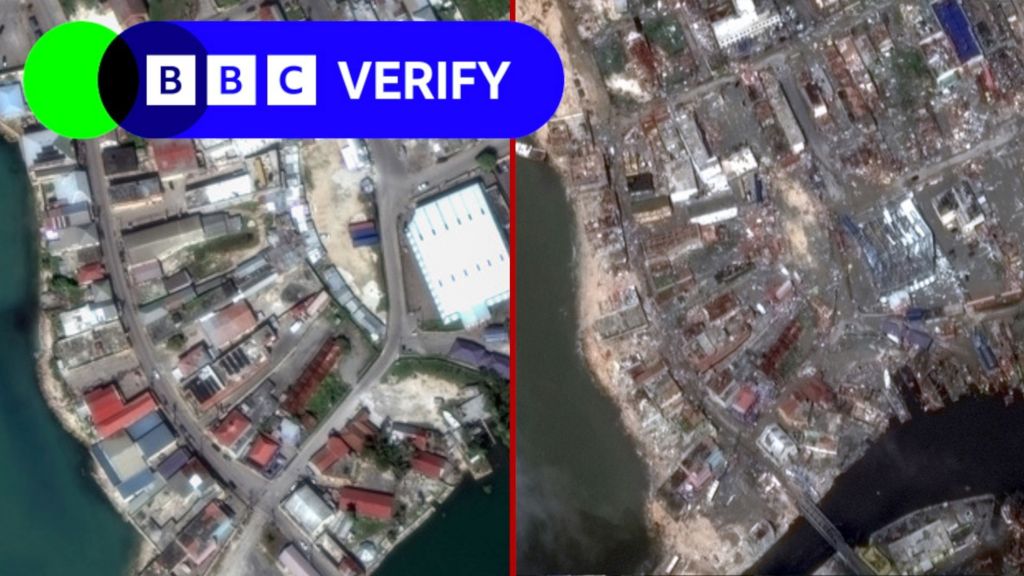
The southwestern region of Jamaica, particularly the town of Black River, has been declared ‘ground zero’ following the catastrophic impact of Hurricane Melissa. On Tuesday, the area endured the brunt of the storm’s ferocious 185 mph (295 km/h) winds, leaving behind a trail of destruction. The hurricane’s unprecedented intensity has caused widespread damage to infrastructure, homes, and natural landscapes, with Black River emerging as the epicenter of the devastation. Emergency response teams are currently assessing the extent of the damage, while local authorities are mobilizing resources to aid affected communities. The resilience of Jamaica’s residents is being tested as they begin the arduous process of recovery and rebuilding in the aftermath of one of the most powerful hurricanes to hit the island in recent history.
博客
-
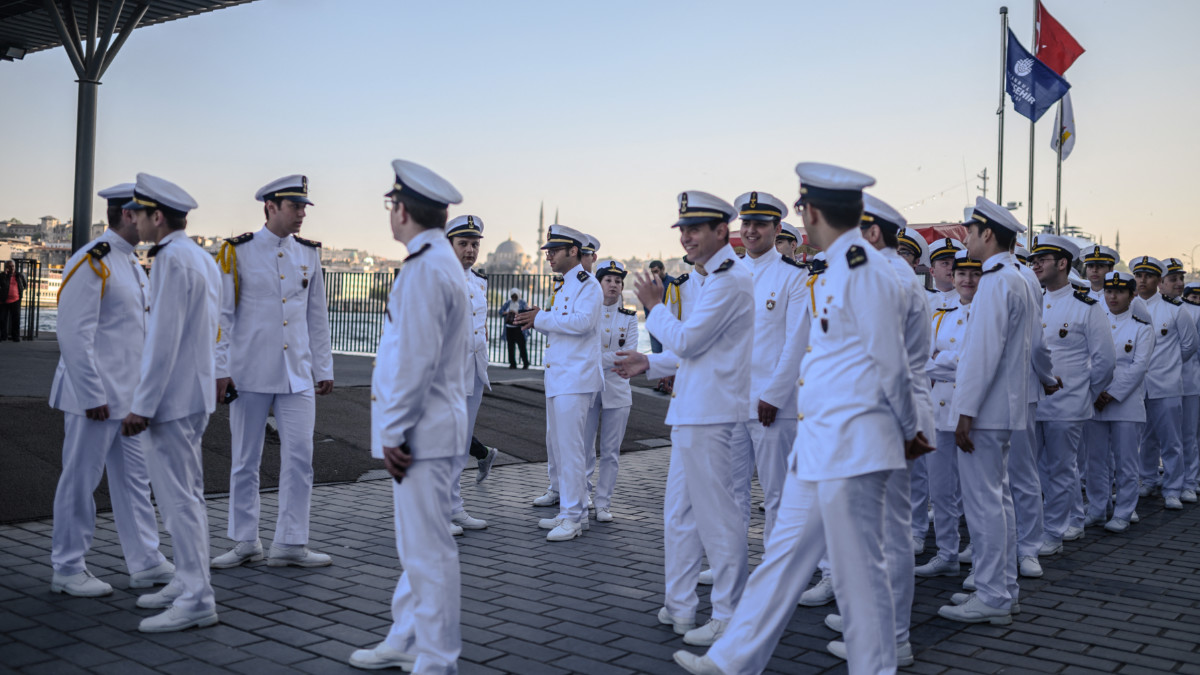
Syrian military cadets to begin schooling in Turkey
In a significant development for regional defense cooperation, Turkish military academies are set to commence training for 49 Syrian military cadets starting this Friday. This initiative underscores the deepening military ties between Turkey and Syria, following the signing of a bilateral military accord in August. According to Middle East Eye, Turkey has already begun training approximately 300 Syrian troops, including soldiers and police officers, at bases in central and eastern Turkey. Ankara’s broader plan aims to train up to 5,000 Syrian personnel in the short term, with a long-term goal of reaching 20,000. The Syrian cadets will receive education in air, land, and naval academies, marking a prestigious aspect of this collaboration. Upon completion, they will return to serve in the Syrian military. The Turkish Defense Ministry confirmed the training, stating that certain Syrian army units are utilizing Turkish military facilities. This cooperation comes amid Syria’s efforts to rebuild after a decade of civil war, with President Ahmed al-Sharaa seeking Turkish assistance following Israeli air strikes on Damascus and Sweida. Turkey, which maintains around 20,000 troops in northern Syria, has emerged as a key regional power. The U.S. has also recognized Turkey’s influence, lifting sanctions on Syria earlier this year. While discussions on a broader defense pact continue, the current agreement focuses on training and consultancy, with no immediate framework for Turkish troop deployments to Syrian bases.
-
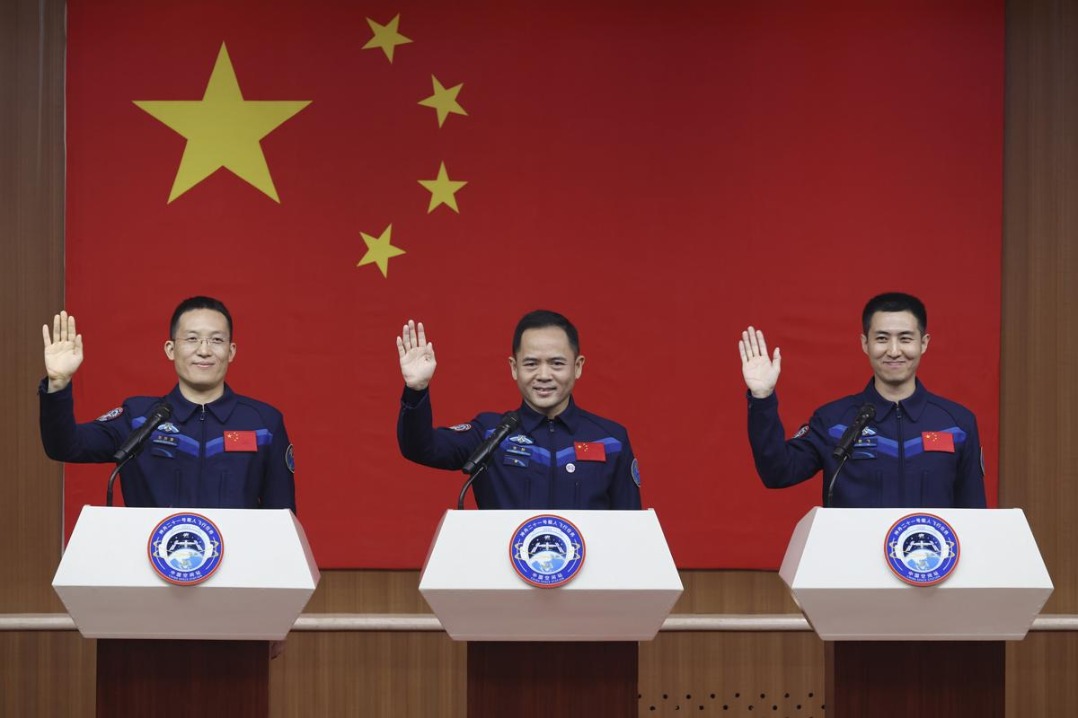
Crew members ready for Shenzhou XXI mission
China is poised to launch the Shenzhou XXI mission, marking another significant milestone in its space exploration endeavors. The mission, scheduled for Friday night, will send three astronauts to the Tiangong space station for a six-month stay. The crew, led by mission commander Senior Colonel Zhang Lu, includes spaceflight engineer Major Wu Fei and payload specialist Zhang Hongzhang. Their primary objectives include conducting 27 scientific projects, performing spacewalks, and undertaking China’s first in-orbit experimentation on rodents. The launch will take place at the Jiuquan Satellite Launch Center in northwestern China, with the Long March 2F rocket propelling the Shenzhou XXI spacecraft into low-Earth orbit. The mission will also involve a crew shift, replacing the Shenzhou XX astronauts who have been aboard the space station for over six months. The Tiangong space station, completed in late 2022, remains the only independently operated space station in orbit. The Shenzhou XXI astronauts will focus on research in space life sciences, biotechnology, space medicine, and new spacecraft technologies. Additionally, the mission will observe the behavioral and physiological impacts of space on four mice, which will return to Earth for further analysis. This mission underscores China’s growing capabilities in space exploration and scientific innovation.
-

Trump hosts White House Halloween bash with superheroes and presidential lookalikes amid shutdown
President Donald Trump and First Lady Melania Trump hosted a festive Halloween celebration at the White House on Thursday evening, welcoming hundreds of costumed guests, including children dressed as superheroes, dinosaurs, and even the first couple themselves. The event took place on the South Lawn, where the Trumps emerged to the orchestral rendition of Michael Jackson’s “Thriller.” While neither donned costumes, the president sported his signature blue suit, red tie, and “USA” cap, while Melania wore a brown coat over an orange dress. The couple distributed full-sized Hershey bars and Twizzlers in boxes adorned with the presidential seal to a long line of children and parents. The festivities proceeded despite the ongoing 30-day government shutdown and Trump’s recent return from a six-day Asia trip. Temporary walls obscured the construction of the new White House ballroom, which has led to the demolition of the East Wing, though a bulldozer was visible nearby. The White House exterior was decorated with autumn leaves and fall flowers, and carved pumpkins adorned the balcony stairs. Attendees included children of military members and White House staffers, with costumes ranging from Spider-Man to ballerinas. Despite the political tensions, the event provided a moment of lighthearted celebration.
-

Pumpkins, princesses and a mini Trump trick-or-treat at the White House
The White House transformed into a festive Halloween haven as President Donald Trump and First Lady Melania Trump welcomed children from Washington, D.C., for the annual trick-or-treat event. The iconic residence was adorned with seasonal decorations, creating a lively atmosphere for the young visitors. Children dressed in creative costumes, ranging from pumpkins to princesses, and even a mini Donald Trump, roamed the grounds, collecting candies and enjoying the festivities. The President and First Lady personally greeted the attendees, sharing smiles and warm interactions. This cherished tradition not only brought joy to the local community but also highlighted the White House’s role in fostering a sense of unity and celebration during the holiday season.
-
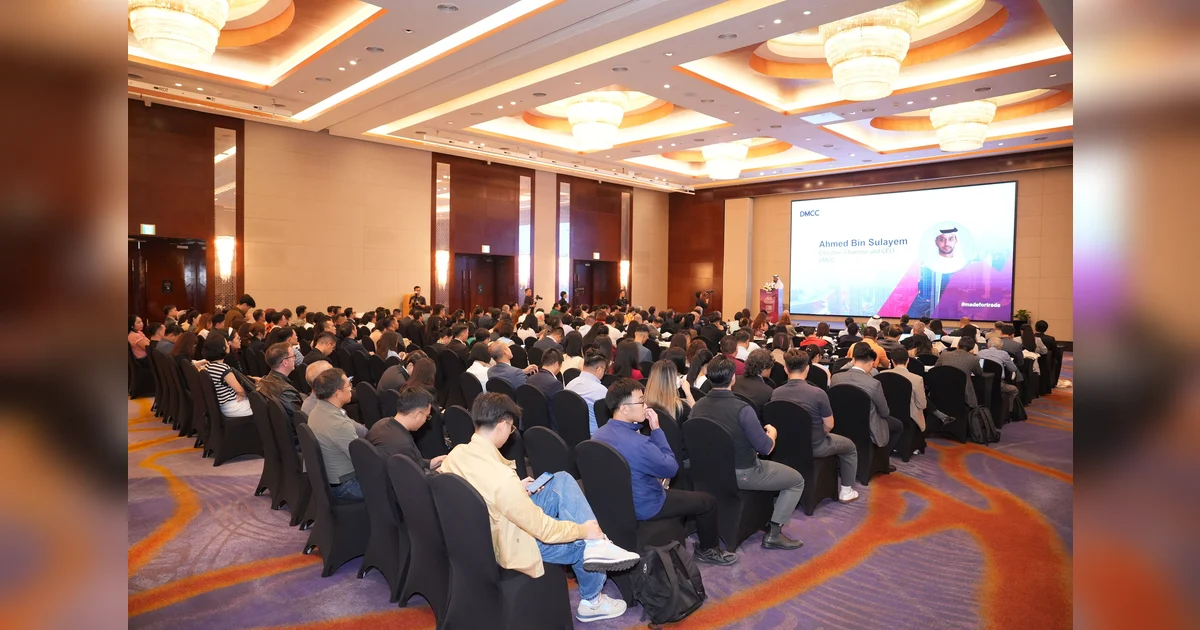
Dubai unveils plan for new financial centre in DMCC
Dubai is set to redefine its role in the global financial landscape with the unveiling of a new financial centre within the Dubai Multi Commodities Centre (DMCC). This strategic move marks a significant evolution for the city, transitioning from a global gateway hub to a seamless convergence point for trade, finance, technology, and capital. The announcement was made during DMCC’s Made For Trade Live roadshow in Vietnam, where over 550 Vietnamese business leaders explored Dubai’s potential as a platform for international expansion. The event also highlighted the strengthening economic ties between the UAE and Vietnam under the Comprehensive Economic Partnership Agreement (CEPA).
The upcoming financial centre will serve as a financial engine for DMCC’s thriving business ecosystem, integrating banks, fintech innovation labs, digital asset platforms, venture capital firms, and specialized financial service providers into one cohesive district. This initiative aims to create a robust financial backbone that supports Dubai’s trade flows, entrepreneurial growth, commodity networks, and digital economy. Companies within DMCC’s 26,000-strong community will gain streamlined access to capital, structured finance, risk solutions, cross-border settlement frameworks, and investment partnerships.
Ahmed bin Sulayem, DMCC’s Executive Chairman and CEO, described the project as transformative, emphasizing its role in connecting member companies directly to the global financial system. The centre will focus on trade finance, fintech innovation, and digital-asset solutions, aligning with the UAE’s ambition to position Dubai among the world’s most influential financial hubs. The new centre is expected to complement the Dubai International Financial Centre (DIFC), with DMCC focusing on trade-related financial services such as commodity finance, supply-chain financing, and blockchain-enabled settlement systems.
The timing of this development coincides with Dubai’s growing appeal as a global wealth hub. Independent research projects that the UAE will attract 9,800 high-net-worth individuals in 2025, the largest net inflow globally. Additionally, trade connectivity between the UAE and Southeast Asia is rapidly expanding, with the UAE-Vietnam CEPA driving bilateral non-oil trade to $7 billion in the first half of 2025. The new financial centre will further enhance Dubai’s position as a command centre where global capital meets global trade, shaping the next generation of financial systems.
-
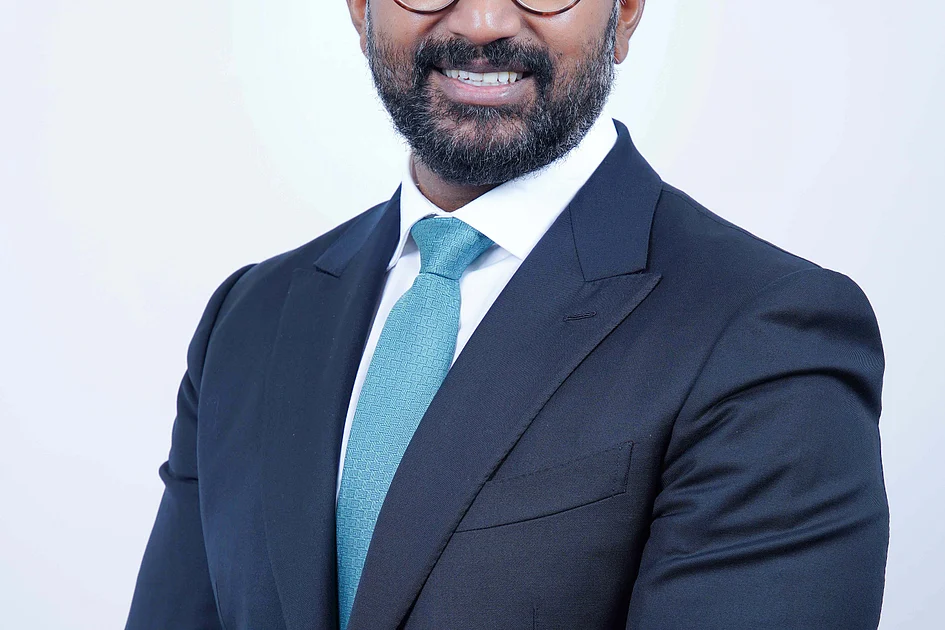
Agentic AI emerges as key driver of enterprise transformation
The emergence of Agentic AI is transforming the landscape of enterprise automation, decision-making, and operational efficiency. Unlike traditional AI systems that merely execute commands, Agentic AI interprets intent, retains memory across interactions, and collaborates with humans and other agents to achieve outcomes. This shift from reactive to proactive intelligence is enabling businesses to tackle complexity with unprecedented agility. Leading this transformation is Inception, a UAE-based AI product company that has gained significant traction with its enterprise-ready solutions. Celebrating its first anniversary at GITEX Global 2025, Inception unveiled a suite of products under the theme “Authentic Intelligence. Real Impact,” including domain-specific and sector-agnostic tools like (In)Procurement, (In)Business Productivity, (In)Business Process, and (In)Sight. These tools are designed to integrate Agentic AI into core business functions, ensuring intelligent delegation and escalation when necessary. Inception’s approach emphasizes augmentation over replacement, particularly in regulated sectors such as finance and healthcare, where ethical, legal, or reputational risks are high. The company’s systems are built to escalate decisions in ambiguous scenarios, ensuring human oversight remains central while AI agents handle low-risk tasks with precision. One of the key challenges in scaling Agentic AI is data fluency, as many enterprises operate with fragmented systems that hinder real-time intelligence. Inception addresses this through coordination layers that manage agent behavior and ensure seamless collaboration across departments. Products like (In)Procurement not only automate workflows but also identify sustainable suppliers, accelerate sourcing cycles, and ensure compliance, delivering measurable savings and operational efficiency. Inception’s presence at GITEX also marked the announcement of strategic partnerships with global consulting firms such as Bain & Company and McKinsey, reinforcing its commitment to enterprise transformation and supporting the UAE’s ambition to become an AI-native nation. “Our goal is to deliver AI that is explainable, secure, and scalable,” said Ashish Koshy, CEO of Inception. “Agentic AI is not just a technology—it’s a new way of thinking about intelligence in the enterprise.”
-
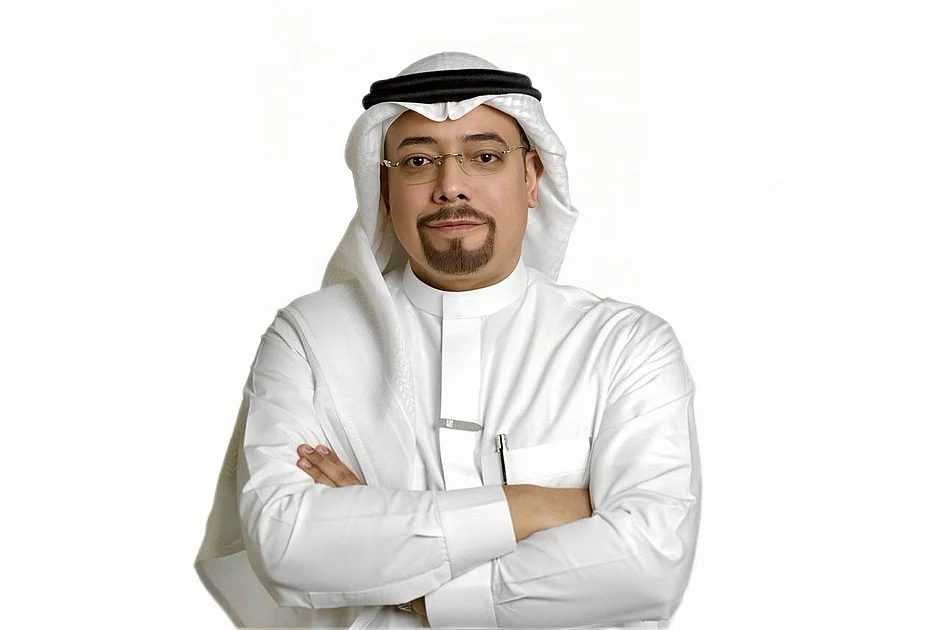
Enterprise AI moves beyond pilots as Magna AI seeks to set new benchmark
As artificial intelligence (AI) transitions from experimental pilots to full-scale enterprise deployments, organizations worldwide are facing significant challenges in scaling AI securely and effectively. A recent MIT report reveals that fewer than 10% of companies have successfully industrialized AI, citing fragmented systems, weak integration, and rising cybersecurity risks as major barriers. Addressing these challenges, Magna AI, a new venture supported by cybersecurity leader Trend Micro and global IT manufacturer Wistron, has emerged with a mission to redefine how AI is built, secured, and scaled across industries and governments. Dr. Moataz Bin Ali, CEO of Magna AI, emphasized the company’s goal to solve real-world challenges that hinder organizations from moving beyond AI pilots. Magna AI’s integrated platform combines infrastructure, intelligence, security, and operations into a seamless model, designed to make AI enterprise-ready from day one. The platform eliminates the need for disconnected tools and complex integrations, offering sovereign-ready AI factories, enterprise-grade applications, and robust security frameworks. This approach accelerates deployment, enhances trust, and ensures compliance with national data sovereignty laws. Magna AI is targeting strategic sectors such as government, finance, energy, healthcare, manufacturing, and smart cities, where secure and scalable AI can drive transformative change. Its systems enable predictive intelligence, intelligent automation, and operational efficiency tailored to each industry’s unique needs. To support global adoption, Magna AI has established a tri-continental presence with its corporate headquarters in Japan, R&D center in Taiwan, and operations hub in Saudi Arabia and the Middle East. Expansion plans are underway to strengthen its footprint in key markets. Security remains a cornerstone of Magna AI’s offering, with Trend Micro’s AI-secured architecture embedded across the platform to provide continuous protection against emerging threats like model integrity attacks and data leakage. Looking ahead, Magna AI anticipates generating over $10 billion in cumulative economic impact within five years, driven by productivity gains, faster time-to-value, and reduced transformation costs. The company aspires to become the default global partner for enterprise AI transformation, delivering secure, sovereign, and sustainable intelligence at scale. Dr. Bin Ali described AI as an industrial revolution, stating that Magna AI is committed to helping governments and enterprises harness its potential responsibly and with measurable impact.
-
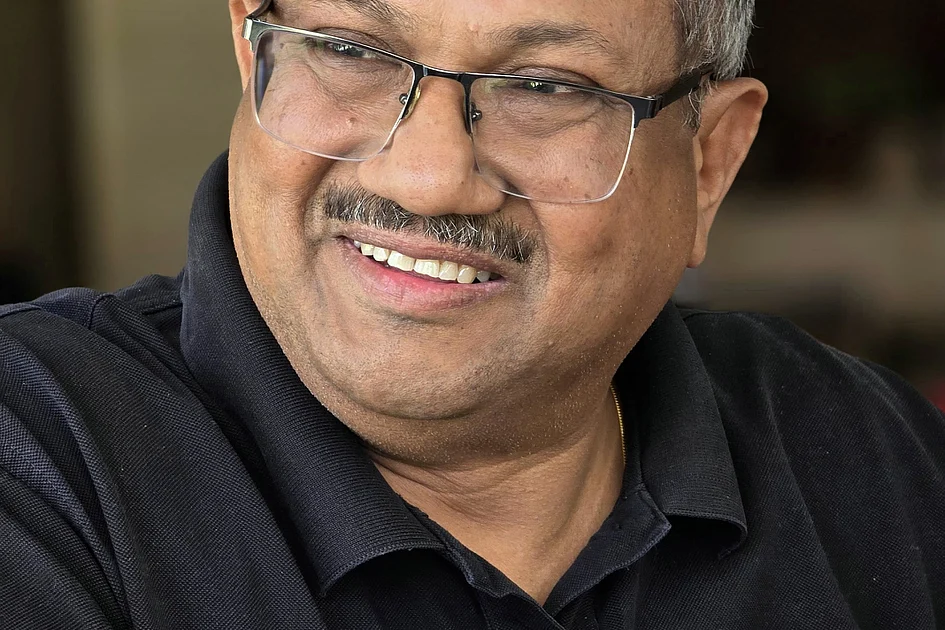
UAE students look east as India’s design industry powers global demand for creative talent
The global design industry is experiencing a seismic shift, propelled by advancements in artificial intelligence, digital experiences, and sustainability. At the forefront of this transformation is India, which is rapidly emerging as a hub for creative education and innovation. The World University of Design (WUD), India’s first university dedicated exclusively to creative disciplines, is attracting a growing number of students from the UAE and beyond, drawn by its forward-thinking programs and global relevance.
Dr. Sanjay Gupta, Vice Chancellor of WUD, highlights the evolving role of design in today’s world. “Design is no longer confined to aesthetics; it is driving industries ranging from technology and urban planning to fashion and digital experiences,” he explains. The global design industry, currently valued at $63 billion, is projected to reach $89 billion by 2033, with India playing a pivotal role in this growth.
India’s design sector is expanding at an impressive annual rate of 25%, fueled by innovations in digital products, gaming, animation, and user experience. Government initiatives like Make in India and Digital India, coupled with the rise of global R&D hubs, have positioned design at the core of the country’s economic engine. Design education, in particular, is shaping India’s trajectory toward becoming a $5 trillion economy, with design thinking bridging the gap between technology and human needs in sectors such as healthcare, fintech, and smart cities.
Dr. Gupta emphasizes the multidisciplinary nature of future careers in design. “Employers increasingly value professionals who can think across boundaries—engineers who understand aesthetics, entrepreneurs who think like designers, and coders who empathize with users,” he says. WUD’s curriculum integrates design, business, and technology, fostering creativity, collaboration, and real-world problem-solving.
For UAE students, India offers a unique blend of world-class education, cultural familiarity, and affordability. WUD’s multicultural campus and globally benchmarked programs prepare students for careers in Dubai, London, Mumbai, and beyond. With tuition and living costs significantly lower than in the West, India provides exceptional value for families seeking quality education.
As the UAE continues to invest in its creative industries, collaborations with India’s design education ecosystem are strengthening. Institutions like WUD are at the forefront of this partnership, shaping the future of design, innovation, and the creative economy in the Global South. Admissions for WUD’s 2026 intake are now open, with the WUD Design Aptitude Test (WUDAT 2026) scheduled for January 4, 2026.
-

Latvian Parliament votes to withdraw from domestic violence treaty
In a contentious decision, the Latvian Parliament voted on Thursday to withdraw from the Istanbul Convention, a landmark treaty designed to protect women from violence, including domestic abuse. The vote followed a grueling 13-hour debate, marking a significant shift in Latvia’s stance on gender-based violence. The treaty, which came into force in Latvia in 2024, aimed to standardize support for victims of violence across Europe. However, it has faced fierce opposition from ultra-conservative groups and political factions, who argue that it promotes ‘gender ideology,’ encourages sexual experimentation, and harms children. The push to withdraw began in September, spearheaded by opposition lawmakers and supported by the Union of Greens and Farmers, a member of the tripartite governing coalition. Prime Minister Evika Siliņa, whose government initially pledged to ratify the convention, condemned the move, calling it ‘cruel’ and a betrayal of victims seeking help. The decision has exposed fractures within the governing coalition ahead of the 2026 parliamentary elections. Critics, including international women’s rights organization Equality Now, warn that the withdrawal endangers women in Latvia and emboldens anti-human rights movements across Europe and Central Asia. Public reaction has been polarized, with around 5,000 people protesting against the withdrawal in Riga, while a smaller group rallied in support. The law now awaits review by President Edgars Rinkēvičs, who may return it to Parliament or, in rare cases, call for a referendum.