博客

  • No deal after US, Iran end marathon talks

    No deal after US, Iran end marathon talks

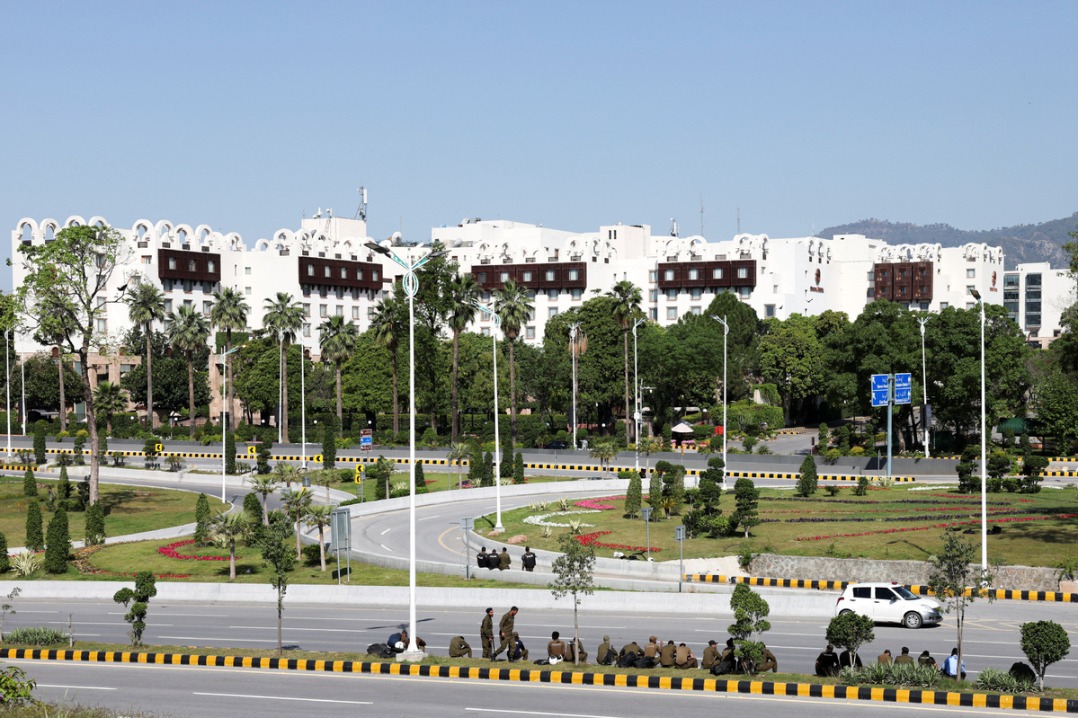
    After 21 hours of intensive, overnight diplomatic negotiations in Islamabad, Pakistan, the highest-level direct talks between the United States and Iran in more than a decade have concluded without a breakthrough, leaving a fragile two-week ceasefire in their six-week conflict on the brink of collapse. The war, which has already claimed thousands of lives, has roiled global energy markets and sent international oil prices soaring, casting deep uncertainty over regional stability.

    Hosted by Pakistani mediators, the April 12 talks marked the most senior official engagement between Washington and Tehran since the 1979 Islamic Revolution, raising cautious hopes across the international community for de-escalation. The conflict erupted in late February after the U.S. and its closest Middle East ally Israel launched pre-emptive military strikes against Iran during an ongoing round of nuclear negotiations that included former U.S. president Donald Trump’s special envoy Steve Witkoff and then-senior advisor Jared Kushner. Iran responded with widespread retaliatory action, dragging the entire Middle East into open conflict.

    Disagreements over core sticking points derailed any path to a final agreement, according to officials and media reports from both sides. Iran’s semi-official Tasnim News Agency blamed what it described as “excessive American demands” for the collapsed talks, while other Iranian outlets noted that while incremental progress was made on secondary issues, two major flashpoints—the future of the strategic Strait of Hormuz and Iran’s nuclear program—proved impossible to reconcile. Iranian Foreign Ministry spokesperson Esmaeil Baghaei framed the negotiations as having taken place against a backdrop of deep long-standing distrust between the two nations, adding that a comprehensive deal was never a realistic outcome for a single round of talks. Still, he emphasized that diplomatic channels would remain open, noting that “Diplomacy never ends.”

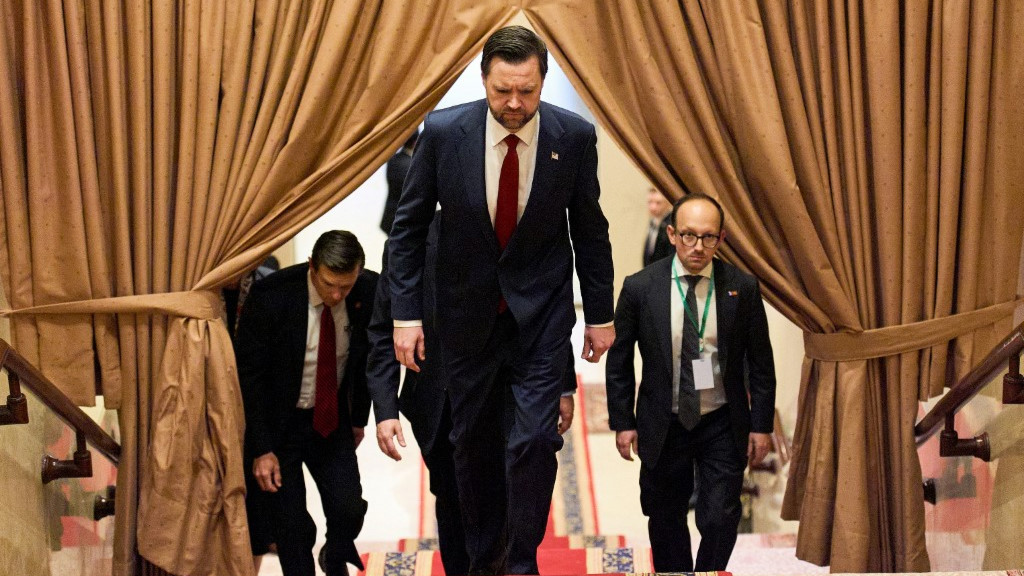
    JD Vance, U.S. Vice President and leader of the American delegation, told reporters that Iran had rejected Washington’s “final and best offer” during the discussions. “The bad news is that we have not reached an agreement, and I think that’s bad news for Iran much more than it’s bad for the U.S,” Vance said, offering no clarity on how the U.S. would act once the 14-day Pakistan-brokered ceasefire expires. Iran’s delegation was led by Parliamentary Speaker Mohammad Bagher Ghalibaf and Foreign Minister Abbas Araghchi, a composition that analysts had previously viewed as a clear signal of Tehran’s seriousness about reaching a negotiated settlement. Trita Parsi, executive vice president of the Quincy Institute for Responsible Statecraft and a leading expert on US-Iran relations, noted ahead of the talks that the size and seniority of the Iranian delegation “signal both Tehran’s sincerity in these negotiations and its clear expectations and confidence.”

    Pakistani mediators, who spearheaded the efforts to bring the two adversaries to the table, have publicly urged both sides to extend the ceasefire and continue negotiating. “We hope that the two sides continue with a positive spirit to achieve durable peace and prosperity for the entire region and beyond,” Pakistani Foreign Minister Ishaq Dar said. A senior Pakistani source involved in the negotiations told Reuters that the talks saw sharp shifts in tone, with tensions rising and falling repeatedly across the marathon overnight session that began Saturday.

    Going into the negotiations, unconfirmed reports emerged that the U.S. had agreed to unfreeze billions of dollars in Iranian assets held in Qatar and other foreign banks, a claim a senior U.S. official quickly denied. Tehran has laid out clear non-negotiable demands in the talks: full sovereign control over the Strait of Hormuz, war reparations for American and Israeli strikes, and a region-wide ceasefire that includes an end to Israeli military operations in Lebanon. Israel has refused to include the Lebanon conflict in any truce with Iran, and new Israeli strikes on southern Lebanon on Saturday and Sunday killed 18 people, pushing the total death toll from Israel’s campaign in the country past 2,000 since the outbreak of the wider war.

    Control over the Strait of Hormuz, through which roughly one-fifth of the world’s daily seaborne oil trade passed before the conflict, has emerged as Iran’s most powerful strategic leverage in the negotiations. Since the war began, Iran has effectively restricted access to the waterway, with only 12 vessels recorded passing through since the ceasefire took effect, compared to more than 100 per day pre-war. Tensions over the strategic chokepoint flared even during the talks: the U.S. military announced that two American destroyers had transited the strait ahead of planned mine-clearing operations, marking the first U.S. military passage since the war began. Iran’s Revolutionary Guards Naval Force quickly rejected the U.S. claim and issued a stark warning. “Any attempt by military vessels to cross the Strait of Hormuz will be confronted firmly and decisively,” the command said in a statement.

  • De Zerbi suffers debut defeat as Spurs crisis deepens, City rampant

    De Zerbi suffers debut defeat as Spurs crisis deepens, City rampant

    The 2024-25 English Premier League season delivered another dramatic weekend of results that reshaped both the title race and the relegation battle, with two high-stakes stories dominating the headlines. For Tottenham Hotspur, what was meant to be a fresh start under new manager Roberto De Zerbi instead turned into another gut-wrenching setback that leaves their 48-year-long stretch in the top flight hanging by a thread.

    De Zerbi, the highly regarded former Brighton & Hove Albion and Olympique de Marseille boss, was appointed at the end of last month as Tottenham’s third manager of the campaign. The Italian was brought in as a last-ditch hire to pull the club out of a freefall that has them staring down the barrel of relegation – a scenario that would go down as one of the biggest shocks in English football history, given Tottenham’s status as the ninth-wealthiest club in the world per Deloitte’s latest football finance rankings. His first test came on the road against a stubborn Sunderland side, but the new manager could not spark an immediate turnaround.

    The only goal of the game came in the 60th minute, when Nordi Mukiele’s shot took a massive deflection off Tottenham defender Micky van de Ven, looping the ball over goalkeeper and into the net. Tottenham threw bodies forward in the final half-hour in search of an equalizer, but their attacks repeatedly broke down, and the scoreline held. The result leaves Tottenham stuck in the relegation zone, still winless in Premier League play since December. They now sit two points behind 17th-place West Ham United, with just six matches remaining to claw their way out of the drop.

    After the final whistle, De Zerbi pinpointed the root of his side’s struggles as a deep crisis of confidence, not a lack of technical quality. “I can be a big brother, father, they don’t need a coach,” he told the BBC. “They don’t need to improve football. They can play better and they will play better once we reach a different level of confidence.”

    At the opposite end of the table, Manchester City sent a clear warning to league leaders Arsenal, putting on a dominant second-half display to secure a 3-0 away win over Chelsea at Stamford Bridge. The result comes 24 hours after Arsenal suffered a surprise 2-1 home defeat to Bournemouth, opening the door for Pep Guardiola’s side to cut the Gunners’ lead at the top of the table to just six points – with City holding one game in hand, and a decisive head-to-head clash against Arsenal scheduled for next weekend at the Etihad Stadium.

    City, who saw their streak of five consecutive Premier League titles ended by Liverpool last season, made full use of Arsenal’s slip-up, turning a slow, cagey first half into a rout after the break. Young midfielder Nico O’Reilly opened the scoring with a header from a precise Rayan Cherki cross, before defender Marc Guehi doubled City’s advantage in the 57th minute, finishing off a perfectly weighted through ball from Cherki. Jeremy Doku put the result beyond doubt late on, drilling a shot past Chelsea’s goalkeeper after the Blues turned the ball over in their own defensive third.

    The result keeps City on track for a domestic treble this season: they have already lifted the League Cup, and are set to face Championship side Southampton in the FA Cup semi-finals. Speaking ahead of next week’s title decider against Arsenal, Guardiola stressed his full respect for the league leaders, who have led the table for most of the campaign. “They have been the best team in this country, in Europe, so far,” he told Sky Sports. “Beating Arsenal once (in the League Cup final) is so difficult, imagine beating them twice in a few weeks. We have to rest. I would like to say to my fans — respect Arsenal a lot, they are an extraordinary team. Come to join us from minute one because the players will do the maximum.”

    For Chelsea, the defeat marks their third consecutive Premier League loss, leaving them stuck in sixth place in the table. They now sit four points behind fifth-place Liverpool in the tight race for Champions League qualification next season.

    Other key results in the relegation and European races saw Nottingham Forest, one of Tottenham’s fellow relegation rivals, hold fourth-place Aston Villa to a 1-1 draw at the City Ground. Villa, who are also chasing a Champions League spot, took an early lead through an own goal from Forest defender Murillo, but Neco Williams equalized for the home side. The result leaves Forest one point above West Ham, outside the relegation zone by the thinnest of margins. At Selhurst Park, Crystal Palace scored two late goals, including a stoppage-time penalty from Jean-Philippe Mateta, to come from behind and beat Newcastle United 2-1.

  • Civilians feared killed after reports of air strike on Nigerian market

    Civilians feared killed after reports of air strike on Nigerian market

    Northeastern Nigeria is at the center of escalating controversy after an alleged accidental air strike by the Nigerian military on a busy weekly village market near the Yobe-Borno state border left scores of civilians feared dead, in what would be the latest in a string of deadly civilian casualties from counter-insurgency operations targeting Boko Haram militants.

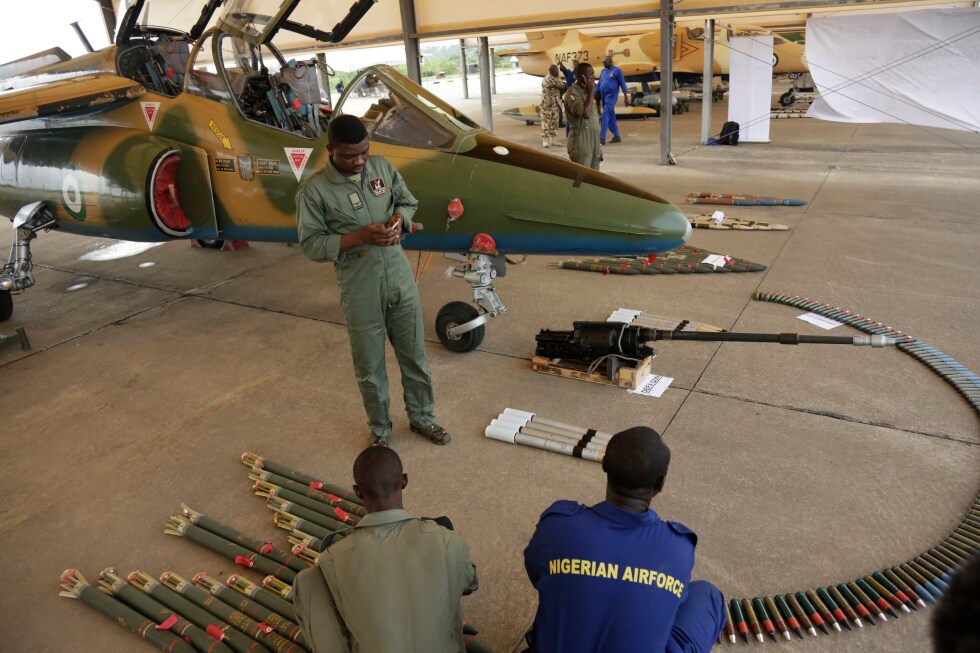
    The strike occurred Saturday on the Jilli market in Borno State’s Gubio local government area, during what the Nigerian Air Force (NAF) described as a “mop-up” operation against remaining terrorist factions. In an official statement, the NAF confirmed it carried out targeted strikes on what it labeled as “identified terrorist locations” in the Jilli axis, noting the mission was designed to eliminate fleeing insurgent remnants and regrouping cells that have taken advantage of the region’s rugged, hard-to-access terrain to rebuild their networks. The service has so far declined to confirm it hit the market or verify any civilian casualties from the operation.

    This zone of northeastern Nigeria has been the epicenter of a 15-year Boko Haram insurgency that has left more than 35,000 people dead and displaced over 2 million residents, with frequent military operations targeting insurgent strongholds near the Yobe-Borno border. The Jilli weekly market draws hundreds of traders and shoppers from cross-border communities in both states, making it a busy gathering point for local commerce at the time of the strike.

    As of Sunday, official casualty counts remain deeply conflicting across local and international sources. Citing multiple on-the-ground sources including a Yobe state councillor, three local residents, and an official from an international humanitarian organization, Reuters reported Saturday that at least 200 civilians were killed in the strike, with injured survivors transported to medical facilities in both Yobe and Borno states. Local councillor Lawan Zanna Nur Geidam called the event “a very devastating incident”. Two other major Nigerian national outlets, The Sun and Punch, have cited local sources putting the death toll at 10, with an unspecified number of additional people wounded. Abuja-based newspaper Daily Trust, meanwhile, cited an eyewitness account reporting at least 56 fatalities and 14 hospitalizations.

    Ahmed Ali, a 43-year-old trader who was at the market during the strike and sustained injuries, described the chaos of the attack to Reuters: “I became so scared and attempted to run away, but a friend dragged me and we all lay on the ground.”

    State emergency authorities have acknowledged the incident but have not confirmed a casualty count. In a Sunday Facebook post, the Yobe State Emergency Management Agency said it had received preliminary reports of an incident at Jilli Market that caused casualties among market participants, noting it had immediately activated emergency response protocols and deployed assessment teams to the remote area. The agency added that key details including the nature of the incident and the final number of casualties remain unverified as of Sunday. Brigadier General Dahiru Abdulsalam also confirmed via Facebook that residents from Yobe’s Geidam local government area, which borders the strike site in Borno, were among those affected.

    Amnesty International’s Nigeria branch has issued a sharp condemnation of the strike, putting the confirmed death toll at more than 100 people. In a post on the social platform X, the organization argued that “Launching air raids is not a legitimate law enforcement method by anyone’s standard. Such reckless use of deadly force is unlawful, outrageous and lays bare the Nigerian military’s shocking disregard for the lives of those it supposedly exists to protect.”

    This incident fits a documented pattern of repeated civilian casualties from Nigerian military counter-insurgency operations in the northeast over the past decade. Military air strikes targeting Islamist militants have previously mistakenly hit civilian sites including residential villages, camps for internally displaced persons, and public marketplaces, drawing ongoing criticism from human rights groups over inadequate safeguards to protect civilian populations.

  • Delays mar voting as crisis-hit Peru picks ninth president in decade

    Delays mar voting as crisis-hit Peru picks ninth president in decade

    On a scorching Sunday across Peru, long-delayed presidential and legislative elections kicked off, wrapping the Andean nation’s latest desperate bid to escape a decade of nonstop political chaos that has seen nine heads of state ousted or imprisoned. Nearly 27 million eligible voters, stretching from the Amazon rainforest lowlands to the high peaks of the Andes, cast ballots on an unprecedented half-meter-long ballot paper listing a record 35 presidential candidates from across the ideological spectrum.

    What was meant to be a routine democratic process quickly descended into public frustration, with dozens of polling stations in metropolitan Lima remaining shuttered hours after opening. Furious would-be voters queued for up to four hours under unforgiving equatorial sun, with many raising accusations of electoral fraud following a brutal, acrimonious campaign season. Peru’s national electoral commission quickly pinned the blame on a contracted logistics supplier that failed to deliver critical voting materials on time, and extended voting hours by one hour to accommodate disrupted voters.

    Decades of systemic corruption and backroom politicking have left most Peruvians deeply disillusioned with the country’s ruling political class. Public anger runs so deep that the nation has even built a purpose-built prison to house former presidents convicted of corruption. For many ordinary Peruvians, this election represents a last chance to turn the tide of rising crime, economic instability and political dysfunction that has eroded quality of life nationwide. “The people can’t take it anymore,” said Rosenda Lopez, a 47-year-old textile vendor in Lima. “I hope someone is elected who works for the community. The community needs it. They are killing us.”

    Over the past 10 years, Peru’s homicide rate has more than doubled, while reported annual extortion cases have skyrocketed from just 3,200 to more than 26,500. In response to widespread public anxiety over insecurity, candidates have leaned into increasingly hardline policy proposals: from ordering the extrajudicial killing of gang hitmen to mass deportations of irregular migrants, to detaining offenders in remote jungle jails surrounded by snakes.

    Pre-election opinion polls have been split, with conservative candidates leading the field amid a broader regional shift toward right-wing populist governments aligned with former U.S. President Donald Trump. No candidate has managed to poll above 15% support, far below the 50% majority required to win an outright victory, making a June runoff election all but certain. Alongside the presidency, voters are selecting a new 130-seat Congress, a body that has been central to the removal of every recent Peruvian president.

    The nominal frontrunner in the race is Keiko Fujimori, daughter of former Peruvian president Alberto Fujimori, who died in 2024 while serving a 16-year prison sentence for crimes against humanity, bribery and embezzlement. This marks Fujimori’s fourth run for the presidency, and she has leaned heavily on public nostalgia for her father’s authoritarian, tough-on-crime rule to court voters. In a pre-election interview, she outlined plans to restore public order within her first 100 days in office by deploying the military to manage overcrowded, violence-plagued prisons, strengthen border controls and deport all undocumented migrants. She also vowed to build a united conservative bloc with aligned right-wing leaders across the Americas, from the United States to neighboring Argentina, Chile, Ecuador and Bolivia. “I believe that time and history are giving my father the place he deserves,” Fujimori said of her father’s controversial legacy.

    Fujimori faces a surprise late surge from 80-year-old former Lima mayor Ricardo Belmont, who has built a massive grassroots following on the social media platform TikTok, drawing cross-ideological support from voters fed up with establishment politics. “He’s collecting votes from left to right, like Pac-Man,” explained Patricia Zarate, a political analyst with the Institute of Peruvian Studies. Other notable candidates include conservative television comedian Carlos Alvarez and far-right former mayor Rafael Lopez Aliaga, who has openly promised to “hunt” Venezuelan migrants and has rebranded himself with the nickname “Porky” after the iconic cartoon pig.

    Incumbent President Jose Maria Balcazar, who has held office for less than two months, is constitutionally barred from seeking re-election. Voting is compulsory for all eligible Peruvians, and polls were scheduled to close at 6 p.m. local time (2300 GMT), one hour later than originally planned to offset opening delays. Sociologist David Sulmont noted that the fragmented field and widespread voter anger reflects a “major disconnect” between the Peruvian electorate and the policy offerings of the country’s political elite, a rift that has fueled the decade-long cycle of political collapse that this election aims to end. Many voters share the sentiment of 60-year-old shopkeeper Anita Medrano, who says she will not back any traditional or establishment candidate: “They already had their chance.”

  • Argentina international Cristian Romero injured in Tottenham’s loss to Sunderland

    Argentina international Cristian Romero injured in Tottenham’s loss to Sunderland

    In a tense Premier League clash at Sunderland’s Stadium of Light on Sunday, Tottenham Hotspur suffered a double blow: a 1-0 defeat to the Black Cats and a worrying injury to star defender Cristian Romero that left the Argentine international visibly emotional as he exited the pitch.

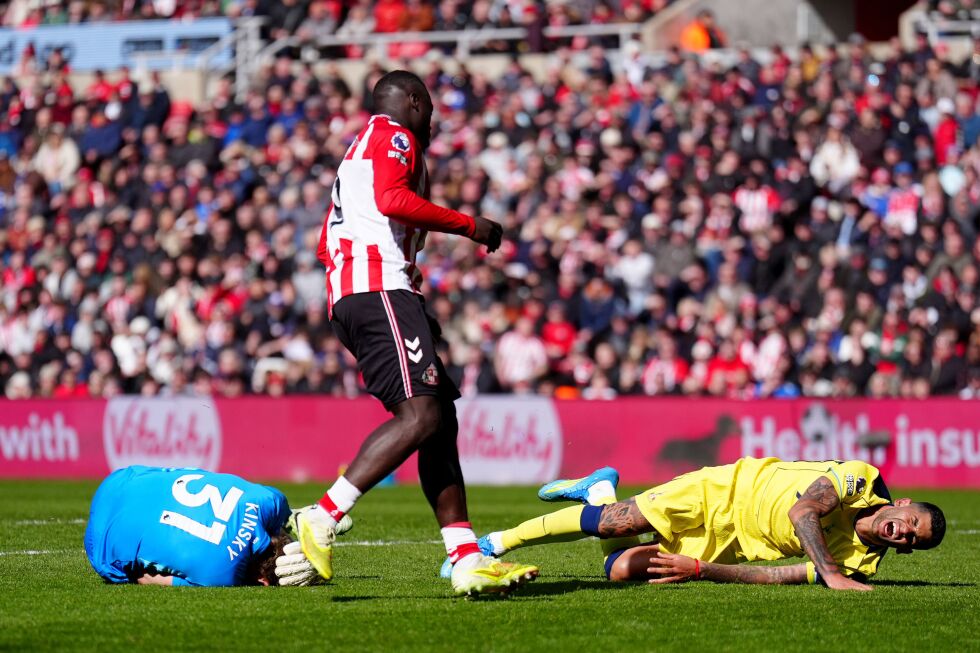
    The incident unfolded in the second half, when Romero collided with Spurs goalkeeper Antonin Kinsky during a sequence of play in the box. Immediately after the impact, the 27-year-old defender was seen limping heavily, and it quickly became clear he could not continue the match. Though Romero did not need a stretcher and walked off the pitch under his own power, he was openly distressed and in tears, with teammates stepping in to console him as he made his way to the sideline for medical assessment.

    As of Sunday evening, the full extent of Romero’s injury remains undisclosed, with club medical staff yet to release a formal diagnosis. The timing of the setback has already sparked widespread concern, however, coming just months before the 2026 FIFA World Cup, where Romero is expected to be a core contributor to the defending champion Argentina national team.

    For Tottenham, the injury is a major potential setback to the club’s remaining domestic season goals. Newly appointed Spurs head coach Roberto De Zerbi described the incident as “very bad” in his post-match comments, acknowledging the uncertainty around how severe the damage is.

    “We have to wait for assessments over the coming days to know more,” De Zerbi told reporters. “I hope for all of us that this is not a serious issue, because Cristian is a crucial player for this squad. We need him back to finish this season strong and hit the targets we’ve set for ourselves.”

    Kinsky, by contrast, escaped the collision relatively unscathed. The goalkeeper was able to remain on the pitch after receiving treatment, with medics only needing to wrap a bandage around a head wound he sustained in the impact.

  • Brazilian counsellor highlights Heze peonies’ cultural values

    Brazilian counsellor highlights Heze peonies’ cultural values

    Against a backdrop of growing global demand for cross-cultural people-to-people exchange, the 2026 Heze Peony International Communication Forum kicked off on April 11 in Heze, a city in East China’s Shandong Province long renowned as China’s “Peony Capital”. The event drew diplomatic representatives, cultural scholars and industry practitioners from across China and around the world, all gathering to explore how the iconic flower can act as a soft medium to strengthen cross-border connection and mutual understanding.

    Among the participating international guests was Rodrigo Mendes Araujo, Counsellor for Energy, Mines and Intellectual Property at the Embassy of Brazil in Beijing. In his remarks at the forum, Araujo centered his discussion on the evolving global role of Heze’s peony culture, focusing particular attention on China’s innovative approach to revitalizing traditional cultural heritage.

    Araujo emphasized that China has achieved a remarkable balance between cultural preservation and economic development, successfully transforming centuries-old peony heritage into a dynamic, thriving creative and commercial industry. Beyond domestic economic benefits, he noted, this development has also positioned peony culture as a powerful, approachable bridge for international cultural exchange. He added that forums focused on Heze peonies create a valuable, accessible entry point for Brazilian audiences and the broader Latin American public to dive into the deep historical roots of Chinese traditional culture, breaking down cultural barriers through shared appreciation for natural beauty and cultural tradition.

    As one of China’s most iconic traditional flowers, the peony has been embedded in Chinese art, literature and cultural identity for more than 1,500 years. Heze, which is home to over 1200 varieties of peony cultivated across more than 40,000 hectares of farmland, has built peony culture into a core part of its regional identity and international branding, hosting annual international exchange events to share the flower’s cultural significance with global audiences.

  • How talks broke down in Islamabad, with both sides blaming each other

    How talks broke down in Islamabad, with both sides blaming each other

    After nearly a full day of closed-door, high-stakes negotiations in Islamabad that marked the highest-level diplomatic encounter between Washington and Tehran in half a century, marathon ceasefire talks between the United States and Iran concluded Sunday morning without a final agreement, leaving core strategic disagreements unresolved and casting uncertainty over future diplomatic engagement.

    The negotiating teams brought unprecedented senior representation to the table: the U.S. delegation was led by Vice President JD Vance, with participation from special envoy Steve Witkoff and senior advisor Jared Kushner, while Iran was represented by parliamentary speaker Mohammad Bagher Ghalibaf and Foreign Minister Abbas Araghchi. Throughout the more than 21 hours of discussions, the U.S. team maintained continuous communication with President Donald Trump, who adopted a detached public posture ahead of the talks, telling reporters that a potential deal made “no difference” to him as he traveled to Miami for a Ultimate Fighting Championship event. Trump remained at the venue watching the fight as Vance addressed the press following the negotiation collapse.

    Speaking to reporters after the talks, Vance acknowledged that no consensus had been reached, framing the stalled outcome as far more detrimental to Iran than to the United States. He emphasized that Washington left the table with its final, best offer on the table, and would await Tehran’s response to the proposal. The core U.S. demand, Vance explained, remains a long-term, binding commitment from Iran that it will never pursue a nuclear weapon or the capabilities to rapidly develop one – a goal he said has not yet been met. While Vance noted that Iran’s pre-existing enrichment facilities and previous nuclear infrastructure had already been destroyed, he stressed that the remaining sticking point is a fundamental change in Iranian willingness to rule out nuclear weapons development permanently, not just for the near term. “We haven’t seen that yet. We hope that we will,” he added.

    Iran’s perspective on the stalemate differs sharply. According to a report from Iran’s Tasnim News Agency citing an anonymous informed source, Tehran claims the “ball is in America’s court”, noting that Iranian negotiators put forward multiple reasonable initiatives during the talks. The report also warned that the status of the Strait of Hormuz – a critical global oil chokepoint currently controlled by Iran – will remain unchanged unless Washington accepts a deal that aligns with Tehran’s definition of reasonable terms.

    In a post on the social platform X, Ghalibaf reinforced Iran’s position, saying that while Tehran entered the talks with good faith and a willingness to compromise, decades of historical trauma from two prior conflicts left the Iranian delegation deeply distrustful of U.S. intentions, and the U.S. side ultimately failed to earn that trust in this round of talks. Iranian foreign ministry spokesperson Esmaeil Baghaei noted that expecting a final, comprehensive deal from a single negotiating round was always unrealistic, given weeks of prior armed conflict and decades of deep mutual mistrust between the two nations. While he confirmed that the two sides reached preliminary understandings on a small number of issues, he said two to three core questions remain unaddressed, and any future progress will depend on the U.S. demonstrating genuine good faith and recognizing Iran’s legitimate rights and national interests. Baghaei also added that diplomatic channels remain open, and Iran will continue consultations with Pakistan and other regional partner states.

    Pakistan, which served as the host for the historic talks, has called on both sides to maintain the current ceasefire and return to dialogue with a constructive approach. Pakistani Deputy Prime Minister Ishaq Dar stressed that reaching a durable, long-term peace for the region must be the top priority for both parties, and confirmed that Pakistan will continue to act as a neutral facilitator for future negotiations if needed.

    Key U.S. allies have expressed disappointment over the lack of a breakthrough. Australian Foreign Minister Penny Wong called on both nations to uphold the existing ceasefire and resume negotiations to find common ground. British Health Secretary Wes Streeting echoed that sentiment, saying that while the lack of an immediate breakthrough is disappointing, diplomatic efforts should continue. “As ever in diplomacy, you’re failing until you succeed. So while these talks may not have ended in success, doesn’t mean there isn’t merit in continuing to try,” Streeting said.

    To date, no date or location has been scheduled for a potential second round of talks, leaving regional stability and nuclear non-proliferation efforts in limbo.

  • Crown prince of Abu Dhabi to begin three-day China visit

    Crown prince of Abu Dhabi to begin three-day China visit

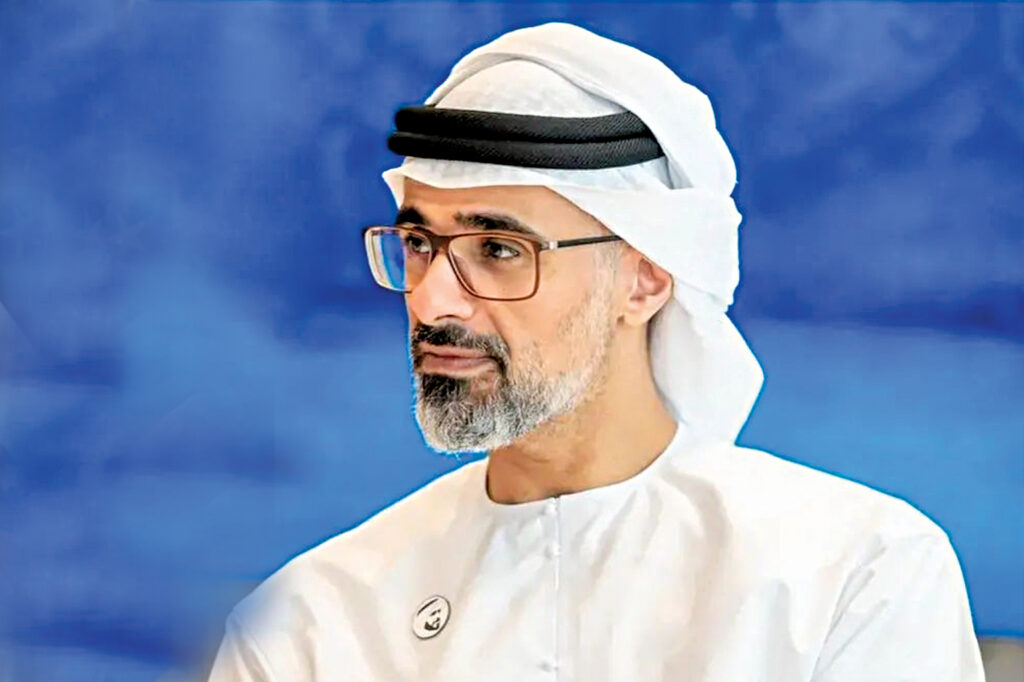
    The crown prince of Abu Dhabi, United Arab Emirates, Sheikh Khaled bin Mohamed bin Zayed Al Nahyan, is scheduled to launch a three-day official visit to China from April 13 to 15, 2026, at the formal invitation of Chinese Premier Li Qiang, according to an official announcement from China Daily updated on April 12.

    Per the Abu Dhabi Media Office, Sheikh Khaled will travel with a high-profile cross-sector delegation that includes top UAE ministers, senior government officials, and leading business figures from the Gulf nation. This visit is rooted in the mutual commitment shared by Beijing and Abu Dhabi to strengthen long-standing bilateral relations and expand collaborative projects that deliver shared benefits to both sides.

    The agenda of the visit centers on advancing existing cooperation and lifting the UAE-China comprehensive strategic partnership to new heights. The two sides are expected to exchange views on collaboration across multiple key priority sectors that have formed the foundation of their decades-long diplomatic and economic ties, aligning with the shared development goals of both nations.

  • At least 100 dead in Nigeria after air force ‘misfire’ on market, sources say

    At least 100 dead in Nigeria after air force ‘misfire’ on market, sources say

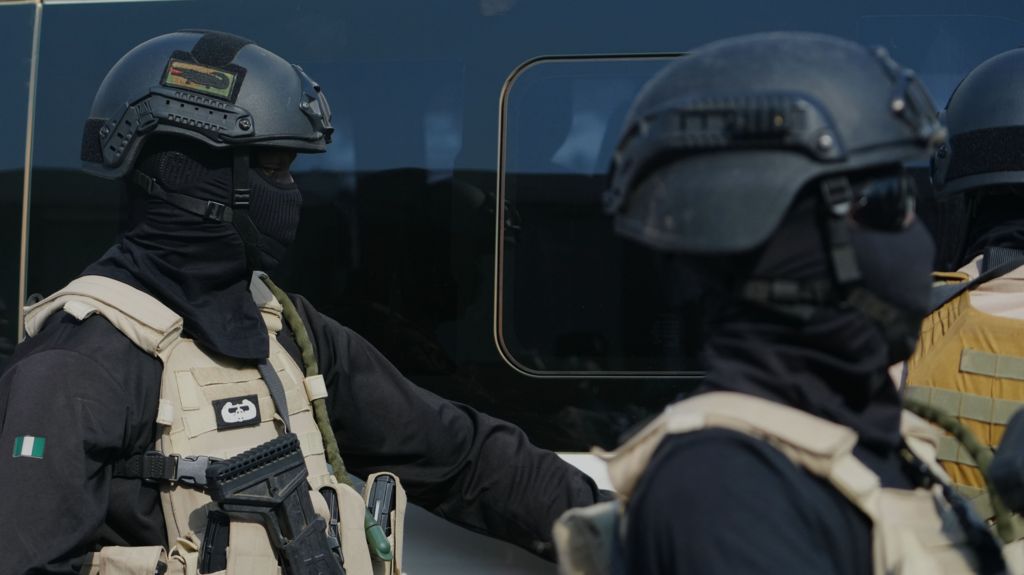
    MAIDUGURI, Nigeria — A tragic error in a Nigerian Air Force operation targeting extremist rebels has left more than 100 civilians, including children, dead after an airstrike hit an active weekly market in the country’s conflict-battered northeastern region, multiple sources including a leading global rights group and local media confirmed Sunday. The incident has reignited longstanding concerns about the heavy human cost of Nigeria’s 12-year counter-insurgency campaign in the Sahel.

  • KMT chairwoman applauds Zhongguancun’s boundless future

    KMT chairwoman applauds Zhongguancun’s boundless future

    On Saturday, Cheng Li-wun, chairperson of the Chinese Kuomintang (KMT), led a cross-strait delegation on a visit to the Zhongguancun National Innovation Demonstration Zone Exhibition Center in Beijing. Following an in-depth tour of the exhibition that showcased the zone’s decades-long development trajectory and cutting-edge technological breakthroughs, Cheng publicly praised the hub’s boundless growth prospects.
    Zhongguancun, located in Beijing’s Haidian District, has long been recognized as China’s primary cradle of scientific and technological innovation, home to hundreds of top-tier universities, research institutions, and global leading tech enterprises. During her visit, Cheng emphasized that the district, and Zhongguancun in particular, has evolved into a global magnet that attracts the most talented and innovative minds from across the world. She noted that the area’s vibrant ecosystem of entrepreneurship and collaboration has created unique opportunities for technological advancement that few other regions can match, a dynamic that positions it for exponential growth in the coming decades.
    The visit comes as part of ongoing cross-strait exchanges focused on innovation, economic cooperation, and people-to-people connectivity, offering a platform for both sides to explore shared opportunities in the fast-growing tech sector.