
In a groundbreaking electoral triumph, Zohran Mamdani has been elected as New York City’s first Muslim mayor, marking a significant shift in the city’s political landscape. Mamdani’s victory was fueled by overwhelming support across four of the city’s five boroughs, with Staten Island being the sole exception. He outperformed former New York Governor Andrew Cuomo by substantial margins, securing 10 percentage points in Manhattan, 20 in Brooklyn, 11 in the Bronx, and 5 in Queens. This win underscores Mamdani’s ability to bridge diverse communities and build a broad coalition of voters. Despite Cuomo’s efforts to appeal to traditional Democratic strongholds and his emphasis on his Italian-American heritage and Catholic faith, Mamdani’s progressive platform resonated strongly with younger voters and key demographic groups. Exit polls revealed a stark generational divide, with Mamdani capturing 78% of voters aged 18-29, compared to Cuomo’s 18%. Women in this age group overwhelmingly favored Mamdani, with 84% casting their ballots in his favor. Mamdani also made significant inroads among Black, Hispanic, and Asian communities, securing 61%, 57%, and 47% of their votes, respectively. While Cuomo maintained support among white voters and religious groups like Protestants, Catholics, and Jews, Mamdani dominated among those with no religious affiliation and other religious minorities. His success in traditionally underserved neighborhoods, such as Brooklyn’s Brownsville, further highlighted his ability to connect with economically disadvantaged communities. Despite Cuomo’s attempts to portray Mamdani as a threat to the city’s affluent residents, Mamdani performed well in affluent Manhattan neighborhoods like the West Village, Chelsea, and Greenwich Village. This historic victory, with over one million votes, marks the first time since 1969 that a mayoral candidate has achieved such widespread support.
博客
-
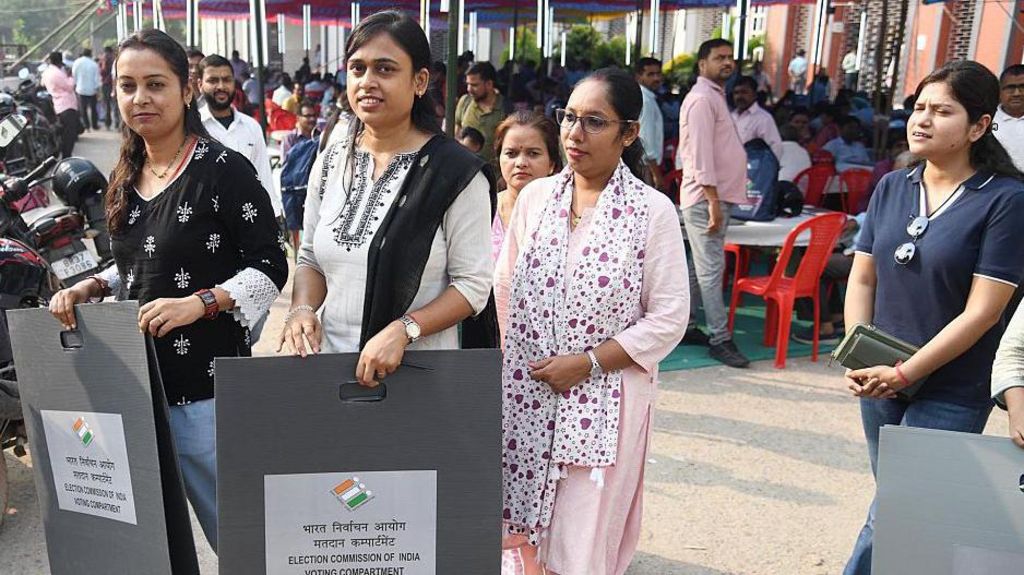
Modi’s party faces test in crucial Indian state election
The eastern Indian state of Bihar has commenced its highly anticipated election, with over 74 million eligible voters set to determine the composition of the next state government. This election, conducted in two phases for 243 legislative seats, is seen as a critical precursor to several other significant state polls across India. The results, to be announced on November 14, will shape Bihar’s political trajectory and have broader implications for national politics. The election follows a contentious revision of voter rolls, which the opposition claims was designed to exclude genuine voters, particularly Muslims, and favor Prime Minister Narendra Modi’s Bharatiya Janata Party (BJP). Both the BJP and the Election Commission have refuted these allegations. Bihar, one of India’s poorest and most populous states, has long been a battleground for political dominance. Despite its influence, Modi’s BJP has yet to form a government independently in the state. The outgoing government is a coalition between the BJP and the Janata Dal (United) (JD(U)), who are contesting the election together once again. Meanwhile, the main opposition Congress party has allied with the regional Rashtriya Janata Dal (RJD) and several smaller parties. Adding to the political drama is the entry of Prashant Kishor, a renowned political strategist, who has launched his own party, Jan Suraaj. This election is also notable as it may mark the final chapter for two veteran leaders who have dominated Bihar’s politics for nearly four decades: JD(U)’s Nitish Kumar and RJD’s Lalu Prasad Yadav. Both leaders, reportedly in poor health, have occasionally collaborated to maintain their political influence. Kumar, the incumbent chief minister, has been a pivotal figure in Bihar’s governance for much of the past two decades and a key ally of the BJP. Yadav, a charismatic leader known for championing marginalized caste groups, served as chief minister from 1990 to 1997 but has been embroiled in corruption scandals. His son, Tejashwi Yadav, is the opposition alliance’s chief ministerial candidate. The election is also being shaped by the rising influence of female voters, who constitute nearly half of the electorate. Political parties are actively courting women with welfare schemes and financial incentives, recognizing their potential to sway the outcome. As Bihar heads to the polls, the stakes could not be higher, with the results likely to reverberate across India’s political landscape.
-

From gas to groceries, has Trump kept his promise to tackle rising prices?
One year into his second term, President Donald Trump’s ambitious campaign promises to tackle inflation and reduce living costs are under scrutiny. Trump, who blamed his predecessor Joe Biden for the steep rise in prices, vowed to bring down costs for Americans ‘starting on day one.’ However, official data reveals a mixed picture of his efforts. While some grocery items like eggs have seen price drops, others such as coffee and ground beef have experienced significant increases. Food economics expert Professor David Ortega highlights that Trump’s tariffs and immigration policies have contributed to rising costs, particularly in sectors like agriculture where undocumented labor is prevalent. Additionally, energy prices have risen despite Trump’s pledge to slash electricity bills by half within 12 to 18 months. Professor James Sweeney of Stanford University attributes this to increased demand driven by data centers and AI, as well as cuts to renewable energy subsidies. Car prices have also surged, with tariffs playing a major inflationary role. While Trump has made some progress in reducing gas prices, they remain far from his campaign promise of below $2 per gallon. White House officials defend the administration’s policies, emphasizing efforts to expand energy production and reverse previous regulatory actions. As inflation pressures persist, the effectiveness of Trump’s economic strategies continues to be debated.
-

German nurse gets life in jail after murdering 10 to reduce workload
A German palliative care nurse has been sentenced to life imprisonment after being found guilty of murdering 10 patients and attempting to kill 27 others. The unnamed individual, who worked at a hospital in Wuerselen, western Germany, allegedly administered excessive doses of painkillers and sedatives to elderly patients to reduce his workload during night shifts. The crimes occurred between December 2023 and May 2024. Prosecutors revealed that the nurse displayed a lack of empathy and acted as a “master of life and death,” using drugs like morphine and midazolam to expedite his tasks. Arrested in 2024, the court emphasized the “particular severity of guilt” in his actions, ruling out early release after 15 years. Investigators are examining additional suspicious cases during his career, and exhumations are underway to identify further potential victims. This case echoes the infamous Niels Högel, a former nurse convicted in 2019 for murdering 85 patients, marking one of Germany’s darkest chapters in healthcare history.
-
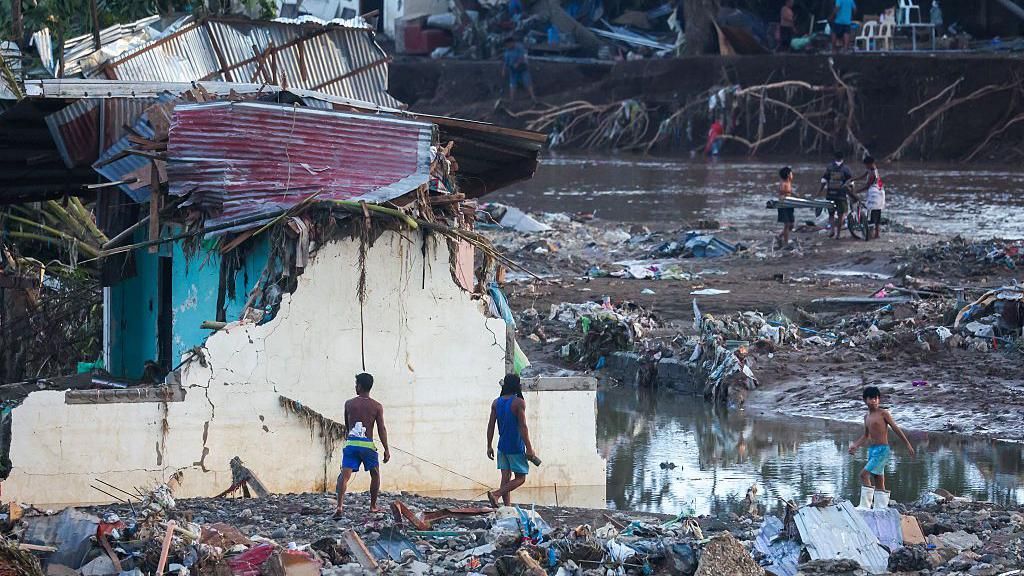
At least 114 dead as Philippines reels from Typhoon Kalmaegi
The Philippines is grappling with the aftermath of Typhoon Kalmaegi, one of the most powerful storms to hit the region this year. As of Thursday, the death toll has climbed to at least 114, with 127 people still missing and 82 injured, according to authorities. The typhoon caused catastrophic flooding across Cebu, the country’s most populous island, where 71 fatalities were reported. Provincial authorities in Cebu have confirmed an additional 28 deaths, which were not included in the national civil defense office’s initial tally. Kalmaegi has since exited the Philippines and is now heading toward central Vietnam, where residents are already dealing with severe flooding that has claimed dozens of lives. The storm unleashed torrents of muddy water, sweeping through towns and cities, leaving behind widespread destruction. Residential areas in Cebu were particularly hard-hit, with many small buildings destroyed and thick layers of mud covering the landscape. Local officials described the devastation as ‘unprecedented.’ Residents returning to their homes are struggling to cope with the aftermath. Jel-an Moira Servas, a business owner from Mandaue city, recounted her harrowing experience of being waist-deep in water within minutes and evacuating with her family. ‘Our houses are filled with mud, and everything is in shambles,’ she said. ‘We don’t even know where to start cleaning.’ The national disaster agency reported that over 400,000 people have been displaced in Cebu, home to 2.5 million residents. The death toll also includes six crew members of a military helicopter that crashed during relief operations on Mindanao island. Volunteer rescuer Carlos Jose Lañas described the situation as the worst flood he has ever witnessed, with emergency responders overwhelmed by the scale of the disaster. Kalmaegi, locally known as Tino, is the 20th tropical cyclone to strike the Philippines this year, a country frequently battered by powerful storms. This disaster follows closely on the heels of back-to-back typhoons in September that killed over a dozen people and caused significant damage to infrastructure and crops. The region has also faced an unusually wet monsoon season, exacerbating the crisis and sparking public outrage over inadequate flood control systems. As Kalmaegi strengthens, with winds reaching 155 km/h, it is expected to make landfall in central Vietnam on Friday, where more than 50 flights have already been canceled or rescheduled. Thailand is also preparing for potential impacts, including flash floods and landslides.
-

Great Barrier Reef may partially recover from ‘grim future’ if global warming stays below 2C
The Great Barrier Reef, one of the world’s most biodiverse ecosystems, is on track for a ‘grim future’ with a ‘rapid coral decline’ projected by 2050, according to a new study by researchers at the University of Queensland (UQ). However, the research offers a glimmer of hope, suggesting that parts of the reef may recover if global warming is kept below 2°C. The study utilized advanced modeling to simulate the lifecycles of various coral species, revealing that some corals are better equipped to adapt to warmer ocean temperatures, potentially aiding in the growth of new coral. Reefs situated near cooler-water currents were also found to be more resilient. The research underscores the critical importance of reducing carbon emissions to prevent a ‘near collapse’ of the reef. Dr. Yves-Marie Bozec, the lead researcher, emphasized that the study examined the ‘eco-evolutionary dynamics’ of over 3,800 individual reefs, including how corals interact and respond to warmer waters. ‘We forecast a rapid coral decline before the middle of this century regardless of the emissions scenario,’ he stated. The Great Barrier Reef, spanning over 2,300 km off Australia’s northeast coast, has endured four significant marine heatwaves between 2016 and 2022, leading to widespread coral bleaching—a process where corals expel the algae that provide them with life and color, often resulting in death. A recent report highlighted that parts of the reef experienced the largest annual decline in coral cover in nearly 40 years. Dr. Bozec noted that some reef areas ‘may partially recover after 2050, but only if ocean warming is sufficiently slow to allow natural adaptation to keep pace with temperature changes.’ He stressed that global action to reduce carbon emissions is essential to limit warming to below 2°C by 2100. Professor Peter Mumby, a co-author of the study, added that many reefs could persist under the Paris Agreement target of 2°C warming, but higher emissions would likely drive most reefs to near collapse. The study also identified more resilient areas of the reef network, suggesting that conservation efforts should focus on these strategic parts of the ecosystem.
-

NRIs in UAE: India’s fintech sector continues on strong growth path
India’s fintech sector is experiencing unprecedented growth, driven by technological innovation and strategic government initiatives. With over 10,000 companies and $40 billion in investments, the sector has become a cornerstone of India’s digital economy. The Reserve Bank of India (RBI) recently unveiled the Unified Market Interface, a groundbreaking platform enabling instant trading of financial assets as digital tokens, settled through the central bank’s digital currency. This development marks a pivotal moment in India’s digital finance ecosystem, which is further bolstered by advancements in data integration, asset tokenization, artificial intelligence (AI), and cybersecurity. The account aggregator framework currently serves 160 million accounts, enhancing financial inclusivity and transparency. Additionally, the Unified Lending Interface has bridged India’s credit gap, sanctioning 3.2 million loans worth Rs. 1.7 trillion since its launch. The retail digital e-rupee, adopted by 19 banks and 7 million users, has also emerged as a critical component of India’s digital public infrastructure. Despite lower R&D spending compared to the US and China, India is leveraging AI to accelerate innovation in life sciences, climate resilience, and space technology. The automotive sector is also thriving, with vehicle exports growing by 20% in the first half of 2025, driven by global demand for electric vehicles and SUVs manufactured in India. Companies like Suzuki, Hyundai, and Nissan are leading this export surge, positioning India as a global manufacturing hub.
-

China’s bet on self-reliance won’t fix an unbalanced economy
Since 1953, China has periodically introduced five-year plans to guide its economic transformation. The 15th five-year plan, unveiled in October 2025, aims to address sluggish domestic growth and intensifying geopolitical rivalry by emphasizing technological self-reliance, industrial modernization, and expanded domestic demand. President Xi Jinping and other leaders are betting on innovation-driven growth to secure China’s future, despite concerns about weak consumer spending and economic risks. The plan prioritizes advanced manufacturing, tech innovation, and green industries, such as aerospace, renewable energy, and quantum computing. Beijing’s focus on indigenizing critical technologies and military-civil fusion underscores its dual goals of economic and national security. However, the plan’s limited attention to boosting domestic demand and household consumption raises questions about its ability to rebalance the economy. While China’s push for high-tech industries could reshape global supply chains, it may also exacerbate trade frictions with advanced economies. The success of this ambitious plan will ultimately depend on whether it improves the lives of Chinese citizens by 2030.
-
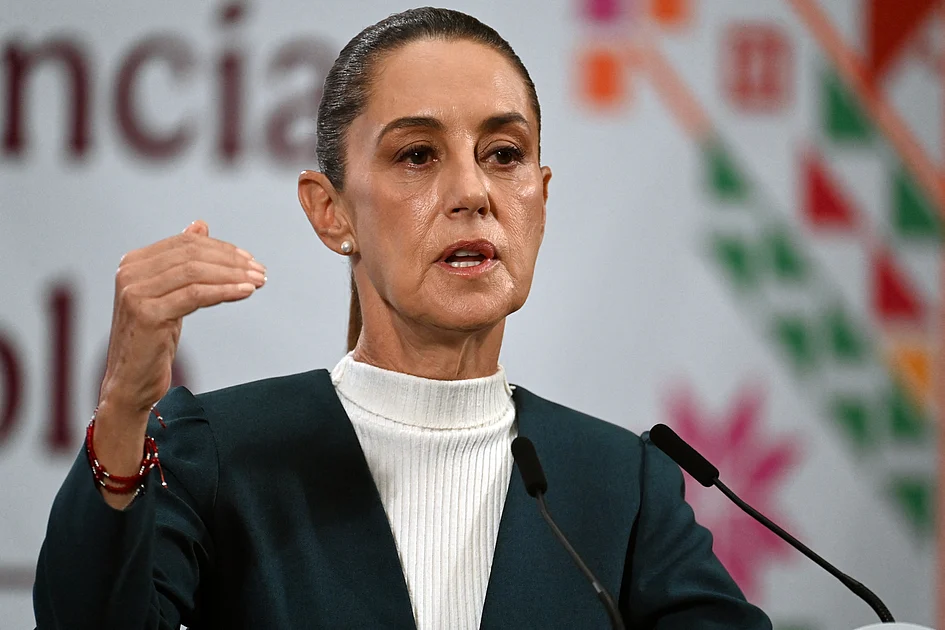
Man arrested after groping Mexican President Claudia Sheinbaum
Mexican President Claudia Sheinbaum has called for nationwide criminalization of sexual harassment following an unsettling incident where a man groped and attempted to kiss her. The event took place on Tuesday as Sheinbaum, Mexico’s first female president, was walking to an event near the presidential palace. Videos circulating on social media captured the moment when the man, appearing intoxicated, approached her from behind, placed his arm around her shoulder, and touched her inappropriately while trying to kiss her neck. A member of the presidential security detail swiftly intervened, removing the man from the scene. Despite the violation, Sheinbaum maintained her composure, agreeing to take a photo with the man and even patting him on the back. However, upon realizing that the man continued to harass other women, she decided to file a formal complaint with the police. Authorities later confirmed the man’s arrest. Sheinbaum emphasized the broader implications of the incident during her morning press conference, stating, ‘If they do this to the president, what will happen to all women in our country?’ She announced plans for a government review to ensure that such behavior is classified as a criminal offense across all 32 federal districts, as current laws vary. The incident has also drawn criticism of the president’s security team and highlighted pervasive ‘macho’ attitudes that normalize violations of women’s personal space. According to UN Women, approximately 70% of Mexican women aged 15 and over have experienced at least one incident of sexual harassment in their lives.
-

Brown leads Team Genesis 2 to victory in Abu Dhabi HSBC Pro-Ams
In a thrilling display of skill and teamwork, England’s Daniel Brown spearheaded Team Genesis 2 to a triumphant victory at the Abu Dhabi HSBC Championship Pro-Am held at Yas Links Abu Dhabi. The team, comprising Cahul Altman, Steven Hall, and Anish Malattari, achieved a remarkable score of 39 under par in the unique ‘Par is your Friend’ 18-hole format, which features one professional and three amateur players. The victory was secured through a back-nine countback, showcasing the team’s resilience and precision. Brown, currently ranked 11th in the Race to Dubai, is eyeing a strong finish to the season, with the top 10 players set to earn dual PGA Tour and DP World Tour cards for the 2026 season. The event saw participation from 13 teams, with another 25 teams competing in the Wednesday morning Pro-Am, won by Nicolai Hojgaard and his HSBC 9 Team. The tournament, featuring a $9 million prize fund, attracted top players from 21 countries, underscoring the DP World Tour’s global appeal. Notable players like Ludvig Aberg and Shane Lowry also participated through Ryder Cup exemptions. The competition continues with the first round scheduled for Thursday, featuring marquee tee times with golfing stars such as Rory McIlroy and Tommy Fleetwood.