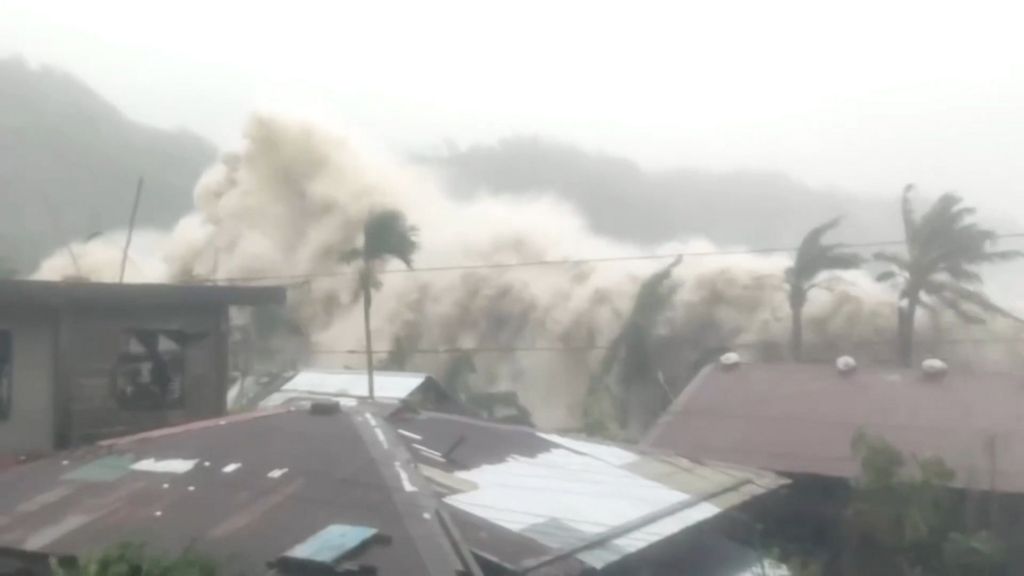
On 9 November, Typhoon Fung-wong unleashed its fury on the Philippines, with powerful waves crashing into the coastline and inundating residential areas. Dramatic footage captured the moment when towering swells surged over houses and palm trees, showcasing the sheer force of the storm. The typhoon, known for its intense winds and heavy rainfall, has caused significant damage to infrastructure and displaced numerous families. Local authorities have issued warnings and are coordinating emergency response efforts to assist affected communities. The event highlights the vulnerability of coastal regions to extreme weather conditions, emphasizing the urgent need for robust disaster preparedness and climate resilience strategies.
博客
-
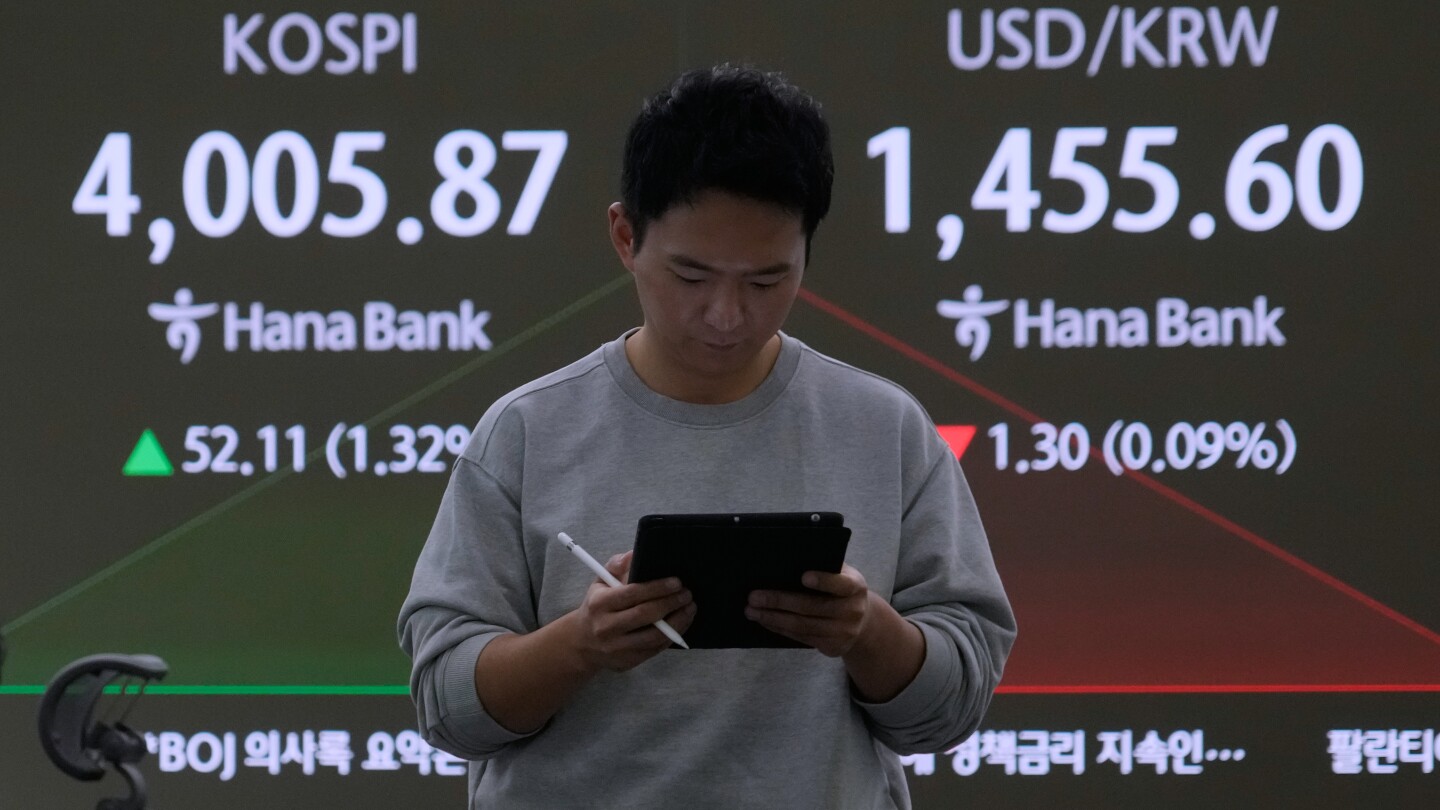
World shares advance as tech shares rebound and the Senate takes steps to end the shutdown
Global stock markets experienced a significant uptick on Monday, driven by optimism surrounding potential progress in ending the U.S. federal government shutdown and a resurgence in technology shares. The U.S. Senate’s procedural vote on Sunday to advance compromise legislation aimed at funding the government fueled hopes for a resolution, although final approval may still face delays due to potential Democratic objections. This development pushed U.S. futures higher, with the S&P 500 futures rising 0.7% and Dow Jones Industrial Average futures gaining 0.1%. European markets also saw robust gains, with Germany’s DAX climbing 1.4%, France’s CAC 40 jumping 0.9%, and Britain’s FTSE 100 rising 0.5%. In Asia, South Korea’s Kospi led the charge with a 3% surge, driven by strong performances from tech giants like SK Hynix and Samsung Electronics. Tokyo’s Nikkei 225 added 1.3%, while Hong Kong’s Hang Seng and China’s Shanghai Composite also posted gains. The rebound in technology stocks, particularly those tied to artificial intelligence, helped calm investor concerns over recent market volatility. Meanwhile, Wall Street remains focused on corporate earnings and the Federal Reserve’s cautious stance on interest rate cuts, with traders awaiting key economic data delayed by the shutdown. Oil prices and the U.S. dollar also saw modest increases early Monday.
-

Andrew Miller and Kiran Desai are favorites to win the Booker Prize for fiction
The literary world is abuzz as the Booker Prize 2024 ceremony approaches, with British novelist Andrew Miller and Indian author Kiran Desai emerging as the frontrunners. The prestigious award, which comes with a £50,000 ($66,000) prize and a significant boost to the winner’s literary career, will be announced in London on Monday. The six finalists, selected from 153 submissions, are being judged by a panel that includes acclaimed Irish writer Roddy Doyle and actress Sarah Jessica Parker.
-

Three years after liberation, Ukraine’s Kherson faces another kind of siege
KHERSON, Ukraine — Once a bustling southern Ukrainian port city, Kherson now lies eerily quiet, its streets largely deserted three years after its liberation from a nine-month Russian occupation. The joy that erupted on November 11, 2022, when residents waved blue-and-yellow flags and embraced their liberators, has faded into a tense stillness. Daily life now unfolds behind walls or underground, as Russian forces continue to strike from across the Dnipro River, and drones patrol the skies above a city scarred by broken windows and empty courtyards. Despite the constant threat, those who remain insist that life, even in a shuttered city, is preferable to living under Russian rule. A recent visit by Angelina Jolie provided a brief morale boost, highlighting the daily survival challenges faced by residents. Once home to nearly 280,000 people, Kherson has become a forgotten front line, where explosions echo daily beneath billboards proclaiming the city’s strength, freedom, and resilience. Amidst the ruins, 55-year-old florist Olha Komanytska tends to her small kiosk, a surreal burst of color in a bomb-scarred center. Her red and white roses spill from tall buckets, a poignant reminder of the city’s former vibrancy. For nearly 30 years, Komanytska and her husband grew flowers in Kherson’s countryside, but their greenhouses were destroyed in the war. Her husband died of a heart condition, which she believes was exacerbated by the stress of the conflict. She now wears a black headscarf in mourning, her eyes filling with tears as she speaks of him. The city’s new rules of survival are harsh: Komanytska can identify every weapon by its sound and has learned to close her kiosk early, walking home pressed against walls to avoid drones. The only time her somber face softens into a smile is when she recalls the city’s liberation. “That day was amazing,” she says, repeating the word as if to make it real again. Kherson’s residents have adapted to their new reality with ingenuity and resilience. Municipal workers stretch protective mesh over streets, repurposed from construction sites to shield civilians from drones. Hospitals are wrapped entirely in netting, with only narrow passages left for staff and patients. Post offices still operate, their entrances blocked by concrete slabs meant to absorb blasts. At bus stops, small cement bunkers stand ready, reminders that shelling can come at any moment. Above the nets, an invisible shield protects Kherson: electronic warfare systems that detect, jam, or disable enemy drones. Max, 28, who serves in the 310th Separate Marine Electronic Warfare Battalion, works tirelessly to intercept up to 250 FPV drones heading toward Kherson in just half a day. His unit intercepts more than 90% of these threats, a testament to the critical role of electronic warfare in the city’s defense. “When you see a strike hit a soldier or a civilian, it hurts you — it weighs on your soul,” Max says. “I think they simply want to destroy us as a nation — not just the military, but everyone — so that we cease to exist.” To preserve a sense of normalcy, some activities, especially for children, have moved underground. Former apartment basements are now cozy rooms where children gather to play chess and checkers, laugh, and make friends. Chess coach Oksana Khoroshavyna notes that the club has become a vital social outlet for children who study online and rarely leave their homes. In another basement, 16-year-old Artem Tsilynko practices boxing with his peers, finding unity and purpose amidst the limitations of life in Kherson. “For me, this place is about unity,” he says. “Even though life in Kherson is so limited — social life, sports life — we still have a chance to train.” Artem has spent nearly a quarter of his life in war, and while fear for his own life has dulled with time, it still returns at night during heavy shelling. “When you’re sitting in the basement, your heart races,” he says. “After that, it’s hard to fall asleep.”
-
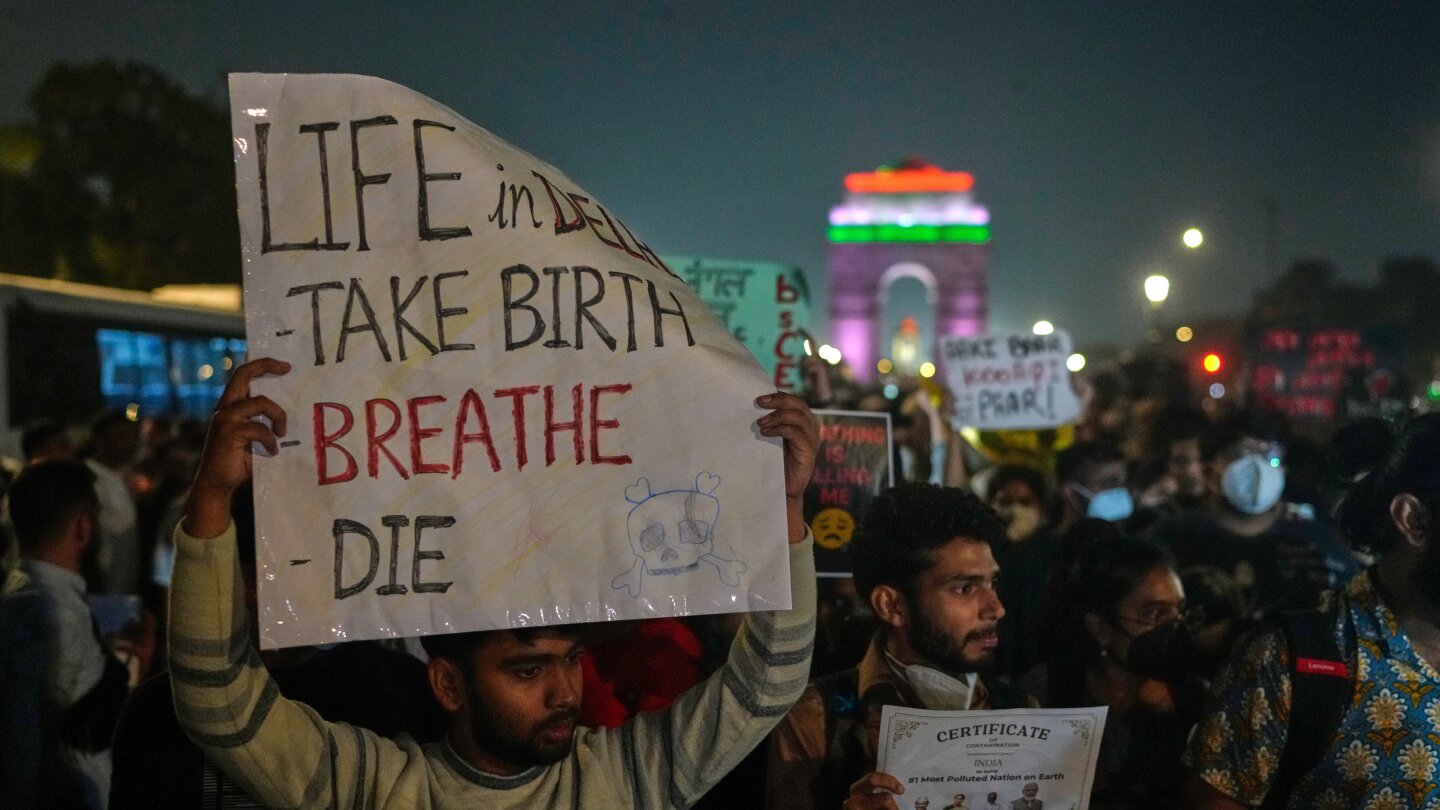
Air pollution levels surge in India’s capital, sparking rare protests
New Delhi, India’s capital, was shrouded in a dense layer of smog on Monday, with air pollution levels reaching hazardous heights and exacerbating an ongoing public health crisis. The air quality index (AQI) soared to 344, a level classified as ‘severe’ by the World Health Organization (WHO), posing significant risks to residents’ health. The acrid smell of pollution permeated the city, prompting widespread concern and frustration among its inhabitants. On Sunday evening, hundreds of protesters, including parents and environmental activists, gathered at India Gate in a rare demonstration, demanding immediate government action. Many participants wore masks and carried placards, with one reading, ‘I miss breathing.’ Meghna, a protester who only provided her first name, expressed her distress, stating, ‘I am here just as a citizen who cares and who is worried about the state of situation that we are in with respect to the lack of clean air to breathe.’ However, police intervened, confiscating banners and placards and dispersing the crowd, citing a lack of permission for the protest. The worsening air quality has led to a surge in health complaints, including headaches and persistent coughs, fueling public anger toward politicians accused of inaction and blame-shifting. New Delhi, home to over 30 million people, consistently ranks among the world’s most polluted cities, with India hosting six of the top 10 globally. The city’s air quality deteriorates further during winter due to crop residue burning in neighboring states, combined with vehicle and industrial emissions. Cool, dry, and windless conditions trap toxic particles, sometimes pushing pollution levels to 20 times the WHO’s safe limit. While authorities have implemented temporary measures such as construction bans, diesel generator restrictions, and cloud-seeding experiments, critics argue that only long-term emission reduction strategies can provide lasting relief.
-

Paris court is deciding whether to release former President Sarkozy from prison
A Paris court is set to deliberate on Monday whether to grant former French President Nicolas Sarkozy early release from prison. Sarkozy, 70, began serving a five-year sentence on October 21 for criminal conspiracy related to the illegal financing of his 2007 election campaign with Libyan funds. His conviction on September 25 marked him as the first former French head of state in modern history to be incarcerated. Sarkozy, who governed France from 2007 to 2012, has consistently denied any wrongdoing, claiming he is the victim of a ‘plot’ tied to the late Libyan leader Moammar Gadhafi. Under French law, pre-appeal detention is typically reserved for exceptional cases. The court will assess whether Sarkozy poses a flight risk, could influence witnesses, or obstruct justice. If approved, he could be released from Paris’ La Santé prison within hours under judicial supervision. Meanwhile, Sarkozy faces additional legal challenges, including a November 26 ruling by France’s highest court regarding illegal financing of his failed 2012 reelection campaign and an ongoing investigation into alleged witness tampering in the Libya case.
-

South Korea’s ousted leader Yoon indicted for flying drones over North Korea
Former South Korean President Yoon Suk Yeol is facing additional criminal charges as prosecutors allege he orchestrated drone flights over North Korea to escalate tensions and justify his controversial declaration of martial law. Yoon, who was impeached and removed from office in December 2024, is already standing trial for charges including masterminding a rebellion. His successor, President Lee Jae Myung, has approved independent investigations into Yoon’s actions, including the martial law declaration and other allegations involving his wife and administration. On Monday, Yoon and two top defense officials were charged with benefitting the enemy and abuse of power related to the alleged drone flights, which occurred two months before martial law was imposed. North Korea accused Seoul of flying drones over Pyongyang in October 2024 to drop propaganda leaflets, a claim initially denied by Yoon’s defense minister but later left unconfirmed by South Korea’s military. Tensions between the two Koreas spiked during this period, though no major military actions were taken. Investigators claim Yoon’s actions aimed to create a pretext for martial law, undermining South Korea’s military interests. Yoon’s defense team has previously denied his involvement in the drone flights. If convicted of rebellion, Yoon could face life imprisonment or the death penalty.
-
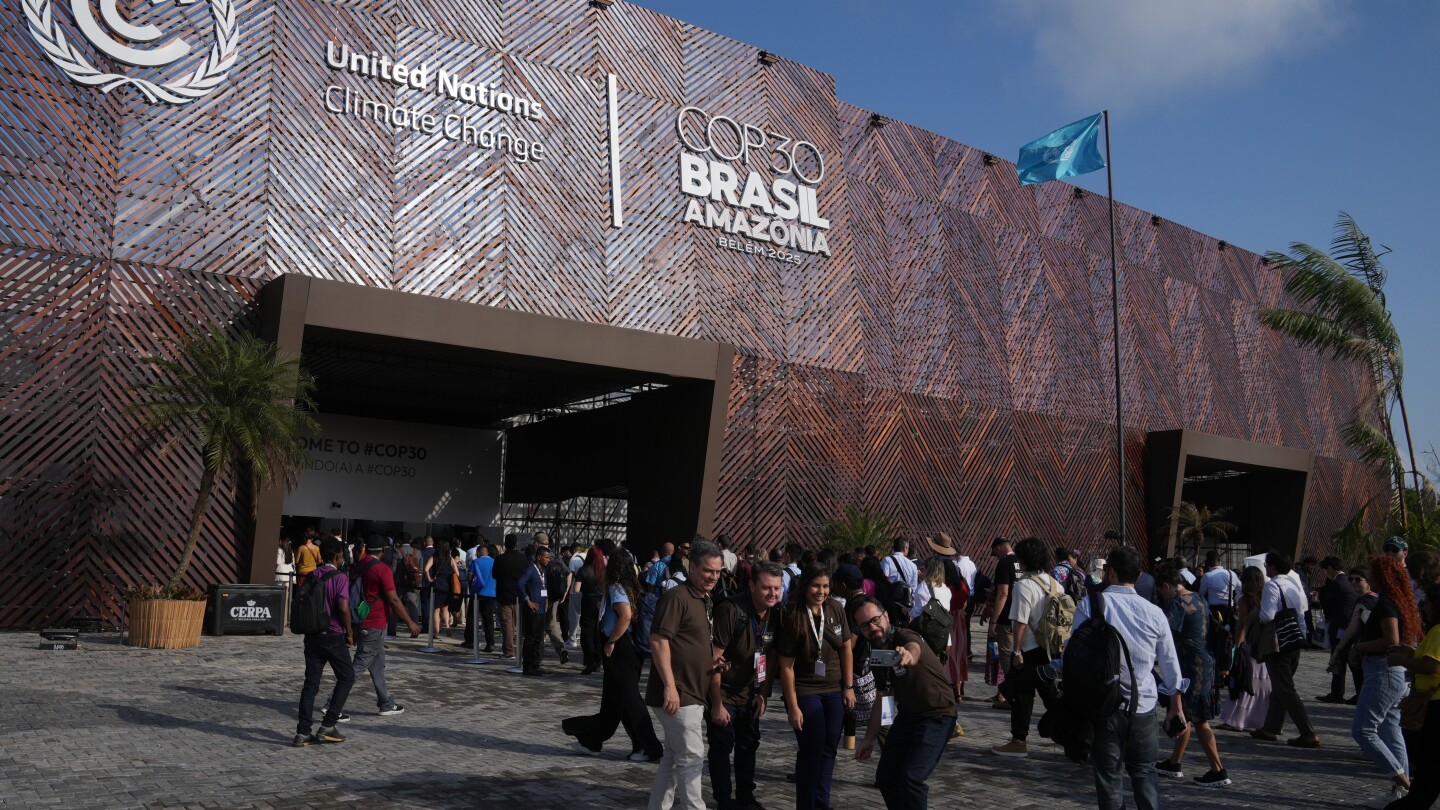
As US skips climate talks in Brazil, leaders plead for other nations to unite
The United Nations climate negotiations, COP30, commenced on Monday in Belem, Brazil, on the fringes of the Amazon rainforest. The conference, hosted by Brazilian President Luiz Inácio Lula da Silva, emphasized the urgent need to accelerate global efforts to combat climate change by significantly reducing carbon emissions. However, the absence of high-level U.S. negotiators cast a shadow over the proceedings, as the Trump administration continues to distance itself from international climate agreements. Lula chose Belem as the host city to highlight the devastating impact of global warming on the Amazon and vulnerable communities, stating, ‘The increase in global temperature is spreading pain and devastation, especially among the most vulnerable populations.’ This year’s talks, dubbed the ‘implementation COP,’ focus on ensuring countries fulfill their commitments under the Paris Agreement. Attendees stressed the importance of global cooperation, with U.N. climate secretary Simon Stiell urging negotiators to ‘fight this climate crisis together.’ Despite the U.S. withdrawal, former U.S. climate envoy Todd Stern noted that American cities, states, and businesses are stepping up to fill the void. The conference also addressed the increasing frequency of extreme weather events, with Lula declaring, ‘Climate change is not a threat of the future. It is already a tragedy of the present time.’
-
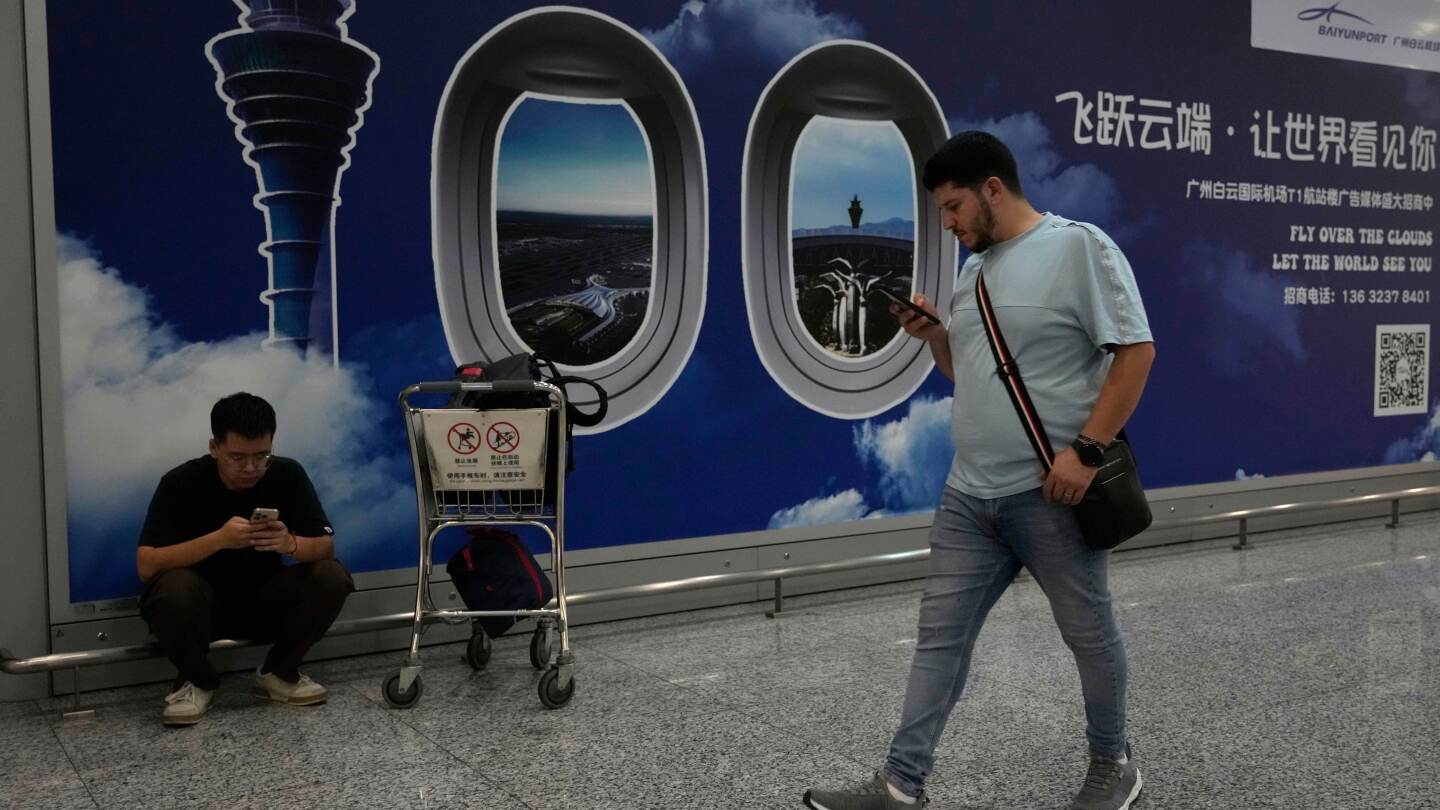
China creates a new visa, competing with the US in wooing global tech talent
In a strategic move to bolster its technological prowess, China has introduced the K-visa program, targeting skilled professionals in science and technology. This initiative comes at a time when the United States is tightening its immigration policies, particularly the H-1B visa program under the Trump administration, making it increasingly difficult for foreign workers to secure employment in the U.S.
-
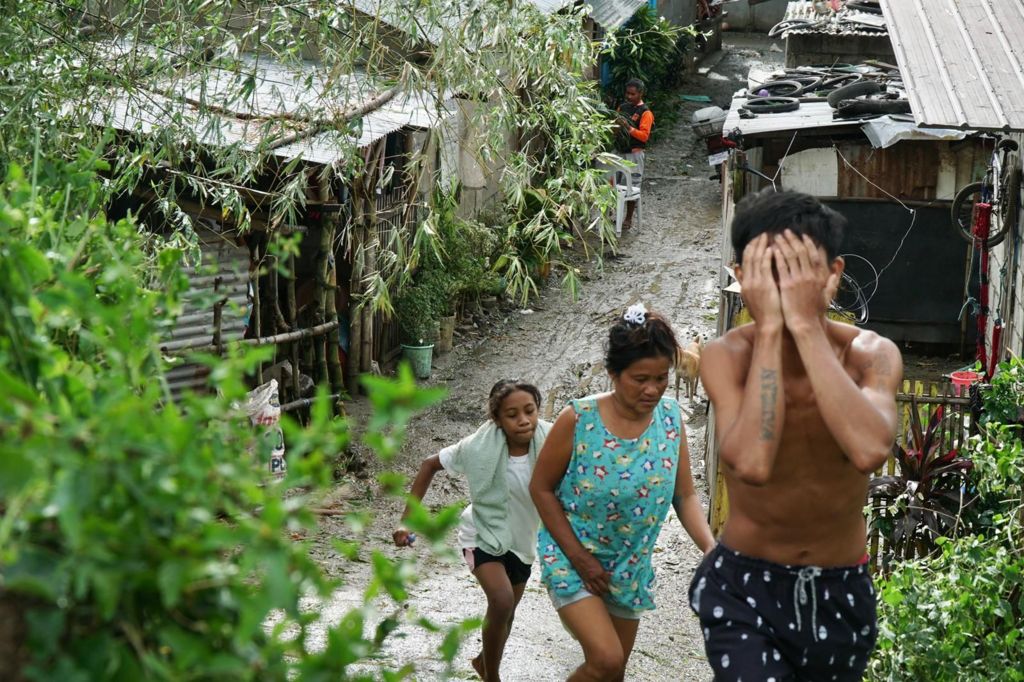
Typhoon moves away from Philippines after killing two
The Philippines has narrowly avoided a catastrophic disaster as Typhoon Fung-wong, once a super typhoon, weakened significantly after making landfall. The storm, which initially carried winds of 185 km/h (115 mph) and gusts of 230 km/h (143 mph), struck Aurora province in Luzon, the country’s most populous island, on Sunday evening. Despite the ferocity of the storm, the damage was less severe than anticipated, thanks to extensive preemptive measures. Approximately 1.4 million people were evacuated before the typhoon hit, and hundreds of flights were canceled. Buildings were secured, and residents in vulnerable areas were urged to move to higher ground. The Philippine government had declared a state of calamity nationwide, granting agencies enhanced powers to access emergency funds and expedite the delivery of essential goods and services. The storm’s impact was felt most acutely in low-lying and coastal areas, where flooding has isolated several communities. Power outages have affected much of Luzon, and roads and bridges have been rendered impassable by high water levels. The civil defense office reported two fatalities: one person drowned, and another woman was found dead under debris in Catbalogan City. Two others sustained injuries. The Philippines, located in a region prone to tropical cyclones, is no stranger to such natural disasters. About 20 tropical cyclones form in the area annually, with half directly affecting the country. While climate change is not believed to increase the number of cyclones, it is thought to intensify their severity, potentially leading to higher wind speeds, heavier rainfall, and increased coastal flooding. The recent back-to-back impacts of Typhoons Kalmaegi and Fung-wong have underscored the country’s vulnerability to such extreme weather events. Kalmaegi, one of the strongest typhoons this year, left at least 204 people dead in the Philippines and more than 100 missing. The storm also claimed five lives in Vietnam, where it caused widespread destruction. Despite the challenges, the Philippines’ proactive response to Typhoon Fung-wong has been credited with minimizing casualties and damage, offering a glimmer of hope in the face of increasingly unpredictable weather patterns.