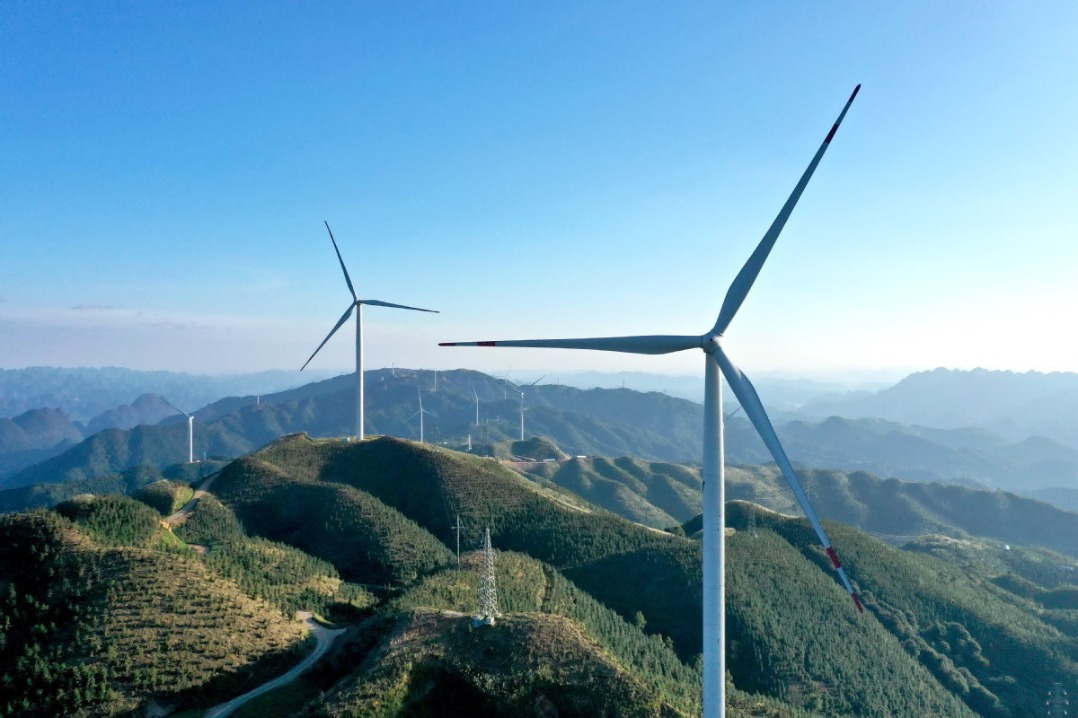
China is playing a pivotal role in driving the global energy transition by fostering green innovation and deepening international cooperation, as outlined in a recently published white paper. Titled ‘Carbon Peaking and Carbon Neutrality: China’s Plans and Solutions,’ the document, released by the State Council Information Office, underscores China’s unwavering commitment to climate multilateralism and its proactive engagement in global climate governance. The white paper highlights China’s efforts to promote green development under the Belt and Road Initiative (BRI) and its advancements in international cooperation on green and low-carbon development. Aligning with the Paris Agreement, China has demonstrated exceptional ambition in its Nationally Determined Contributions (NDCs), taking substantial actions to reduce emissions and adapt to climate impacts. The paper also emphasizes China’s expanding cooperation with BRI partner countries in green infrastructure, energy, and transportation. To date, China has established energy partnerships with 34 BRI countries and collaborated with over 100 nations on green energy projects. Adhering to the principle of ‘common but differentiated responsibilities,’ China has provided financial, technological, and capacity-building support to developing countries. As of October, China has signed 55 memorandums of understanding on South-South climate cooperation with 43 developing nations and conducted over 300 capacity-building sessions. Looking ahead, China is committed to working with the international community to address global climate challenges and promote sustainable development. Lyu Wenbin, director of the Academy of Macroeconomic Research’s Energy Research Institute, emphasized China’s significant contributions to wind and solar energy development, noting that the country supplies over 80% of the world’s photovoltaic modules and approximately 70% of wind power equipment. Over the past decade, China’s efforts have significantly reduced the global levelized cost of electricity for wind and solar power. With a robust clean energy production capacity and a complete new energy industry chain, China is well-positioned to provide high-quality clean energy products and services globally, fostering a secure, stable, and clean energy industry chain.
博客
-

Tariff-troubled US fears not-so-happy holidays
As the holiday season approaches, Americans are grappling with the economic fallout of escalating tariffs, which are driving up the cost of essential goods. The ongoing trade disputes between the United States and key partners, including China, have created a ripple effect that is now hitting consumers hard. With Thanksgiving and Christmas on the horizon, many are calling for swift resolution to these trade tensions to alleviate the financial strain. Kegan Bordeaux, a concessions worker in New York City, voiced concerns over the rising prices, stating, ‘New York is already expensive, but even basic items like rice are becoming unaffordable.’ According to Gary C. Hufbauer, a senior fellow at the Peterson Institute for International Economics, US businesses have absorbed 75% of the tariff costs so far, but consumers are bearing the remaining 25%. However, this balance is unsustainable, and by 2026, most of the burden is expected to shift to consumers. A Goldman Sachs report corroborates this, estimating that US consumers are already paying 55% of the tariff costs, a figure projected to rise to 70% by the end of 2026. The tariff landscape remains volatile, with rates varying widely across countries. For instance, India and Brazil face a 50% tariff, while the European Union is subject to a 15% levy. In a recent meeting between President Xi Jinping and US President Donald Trump, agreements were made to reduce tariffs on Chinese imports from 57% to 47%, offering a glimmer of hope for resolution. Nevertheless, the immediate impact on American households remains a pressing concern as the holiday season looms.
-
‘Looking China’ brings American youth closer to Chinese culture
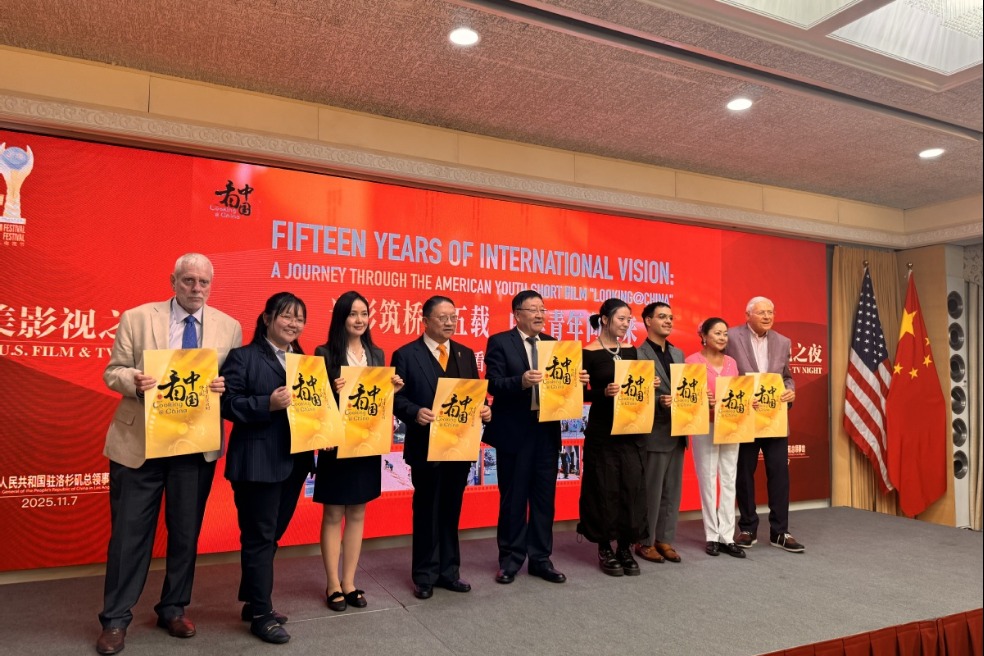
The Looking China — Foreign Youth Film Program has been a transformative cultural exchange initiative for over a decade, bringing young filmmakers from around the world closer to Chinese culture. Since its inception in 2011, the program has evolved into a significant platform for international youth to explore and document the diverse facets of Chinese society. Participants, many visiting China for the first time, have created over 1,150 short documentaries, capturing the essence of rural villages, heritage artisans, and emerging creative industries across 14 provincial-level regions. These films have garnered over 200 international awards and reached an estimated 600 million viewers worldwide. Christine Jiaqi An, a Chinese American filmmaker, shared her profound experience of reconnecting with her roots during her 2024 trip to Guizhou province, where she filmed ‘Timeless Voices,’ a documentary highlighting indigenous oral traditions. Similarly, Mateo Nikolav, a UCLA film student, directed ‘Sixty Seconds,’ which delves into the life of a young actor navigating China’s burgeoning creative industry. Sammi Su from the University of Southern California explored the cultural identity of Shaxian through its iconic snack culture in her film ‘Shaxian Snacks.’ The program’s founder, Huang Huilin, emphasized its role in sharing Chinese stories globally, allowing international audiences to experience the warmth of China through diverse and youthful perspectives. The recent China-US Film and TV Night in Los Angeles, themed ‘Recording Friendship Through Light and Shadow,’ showcased the program’s impact, featuring screenings and discussions on the enduring spirit of cultural exchange. Chinese Consul General Guo Shaochun highlighted the importance of storytelling in fostering mutual understanding, while Hollywood producer Andre Morgan underscored the power of shared experiences in overcoming misunderstandings and building cultural bridges.
-
South Korean foreign minister meets Cambodia’s leader to push effort to fight criminal cyberscams
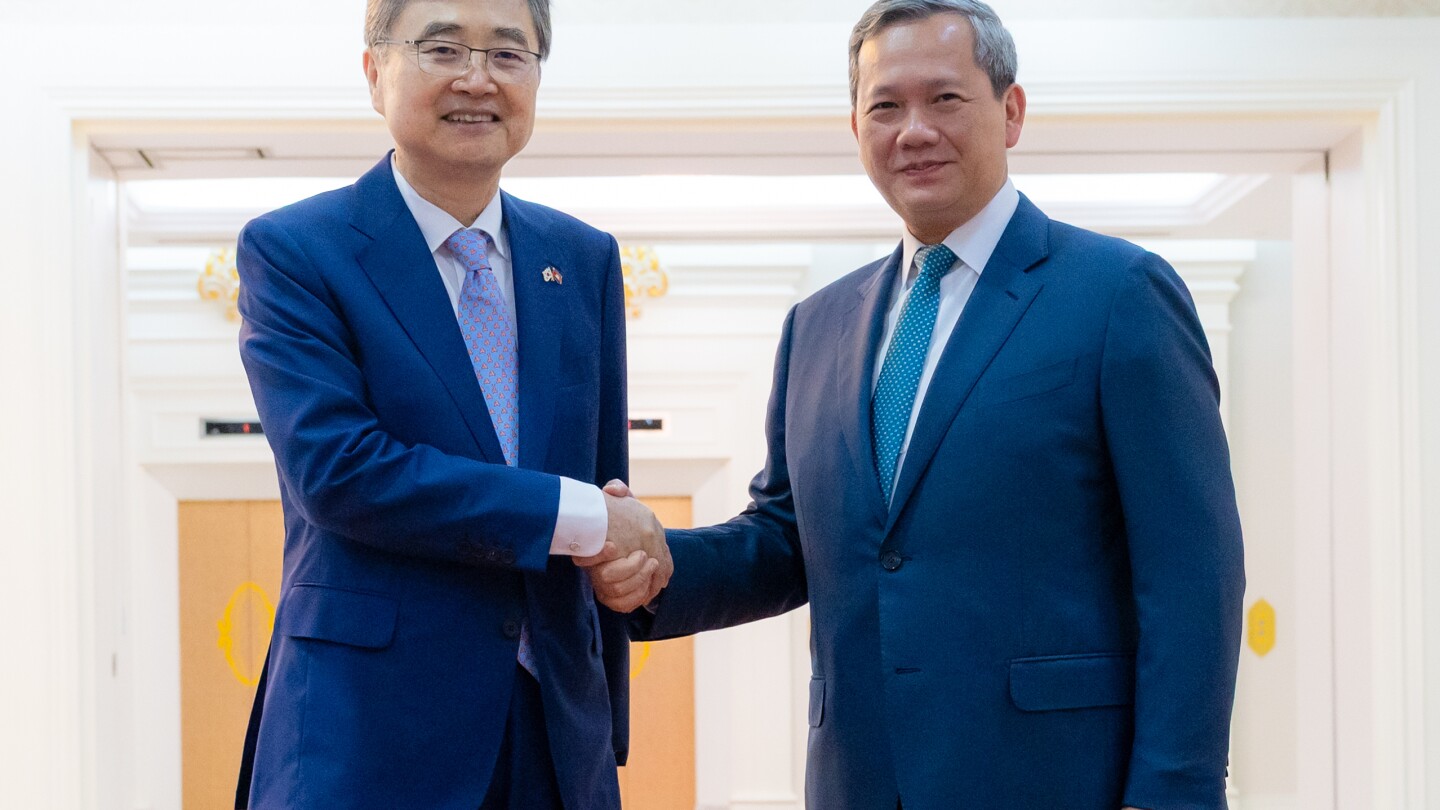
In a significant diplomatic move, South Korea’s Foreign Minister Cho Hyun met with Cambodian Prime Minister Hun Manet in Phnom Penh on Monday to address the escalating issue of large-scale online scam operations in Cambodia. The meeting, which was announced by Hun Manet on social media, focused on enhancing bilateral cooperation to combat these criminal activities, which have recently been linked to the tragic death of a South Korean student. The 22-year-old Park Min-ho was allegedly lured to Cambodia, forced to work in a scam center, and later found brutally tortured and beaten in August. His death has sparked widespread outrage in South Korea, prompting urgent governmental action. The South Korean foreign ministry revealed that discussions included the establishment of a joint police task force to tackle scam-related crimes. Minister Cho is set to conclude his visit on Tuesday. This initiative follows the repatriation of 64 South Koreans last month, 50 of whom were arrested upon arrival for their alleged involvement in online fraud. The United Nations estimates that international cybercriminals generate billions annually through these scams, which often involve kidnapping, coercion, and violence. Cambodian scam centers are believed to employ around 200,000 workers, including 1,000 South Koreans, highlighting the scale of the problem.
-

Dundee and US surgeons achieve world-first stroke surgery using robot
In a groundbreaking medical achievement, doctors from Scotland and the United States have successfully completed what is believed to be the world’s first remote stroke procedure using robotic technology. The pioneering procedure, known as a thrombectomy, involves the removal of blood clots from stroke patients. Led by Professor Iris Grunwald of the University of Dundee, the team performed the surgery on a human cadaver donated to medical science. Prof. Grunwald operated from Ninewells Hospital in Dundee, while the cadaver was located at the university’s facility across the city. Hours later, Dr. Ricardo Hanel, a neurosurgeon based in Jacksonville, Florida, replicated the procedure, performing the first-ever transatlantic thrombectomy on a body in Dundee, over 4,000 miles away. The team utilized robotics developed by Lithuanian firm Sentante, marking a significant leap in remote medical intervention. The procedure, described as a potential ‘game changer,’ could revolutionize stroke care by eliminating geographical barriers to accessing specialist treatment. Prof. Grunwald emphasized the transformative potential of the technology, stating, ‘It felt as if we were witnessing the first glimpse of the future.’ The University of Dundee, a global training center for stroke treatment, is the only UK facility where doctors can practice on cadavers with circulated human blood to simulate live procedures. The experiment involved four cadavers, with human blood used to mimic real-life conditions. The team now aims to proceed with clinical trials in 2026. Stroke treatment is highly time-sensitive, with delays significantly impacting recovery chances. Currently, only a small percentage of stroke patients in the UK receive thrombectomies due to limited access to specialists. This innovation could democratize access to life-saving treatment, particularly for those in remote areas. Juliet Bouverie of the Stroke Association hailed the development as ‘a remarkable innovation,’ highlighting its potential to address inequities in stroke care. The Sentante robotics system, supported by tech giants Nvidia and Ericsson, ensures minimal lag time, enabling precise real-time operations. Dr. Hanel described the 120-millisecond delay as ‘truly remarkable.’ Prof. Grunwald and Sentante CEO Edvardas Satkauskas expressed optimism about the technology’s future, with Satkauskas noting, ‘Sometimes, the future is way closer than we think.’
-

Amazon tree-felling blamed for polluting UK rivers
A groundbreaking report by environmental groups Size of Wales and WWF Cymru has uncovered a hidden connection between deforestation in the Amazon rainforest and pollution in UK rivers, particularly the River Wye. The study highlights the role of soy imported from Brazil, which is used as livestock feed in the UK. High in phosphorus, the soy becomes a pollutant when animal manure runs off into waterways, exacerbating phosphate pollution in rivers across Wales and beyond. The report calls for urgent action to halt the import of commodities linked to deforestation, emphasizing the profound impact of consumer choices on global ecosystems and indigenous communities. The Welsh government has acknowledged the issue, stating it is taking ‘ambitious steps’ to address the problem. The findings coincide with the COP30 climate talks in Belém, Brazil, where world leaders are discussing strategies to combat deforestation and climate change. The report also urges governments and local councils to adopt deforestation-free supply chains and promote sustainable diets. Positive examples of leadership in Wales include Caerphilly and Monmouthshire councils, which have implemented deforestation-free criteria for food procurement. Monmouthshire has even replaced chicken curry with a deforestation-free chickpea korma on school menus, following lobbying by local pupils. The report underscores the need for collective action to protect the planet for future generations.
-
Indonesia names ex-dictator Suharto a ‘national hero’
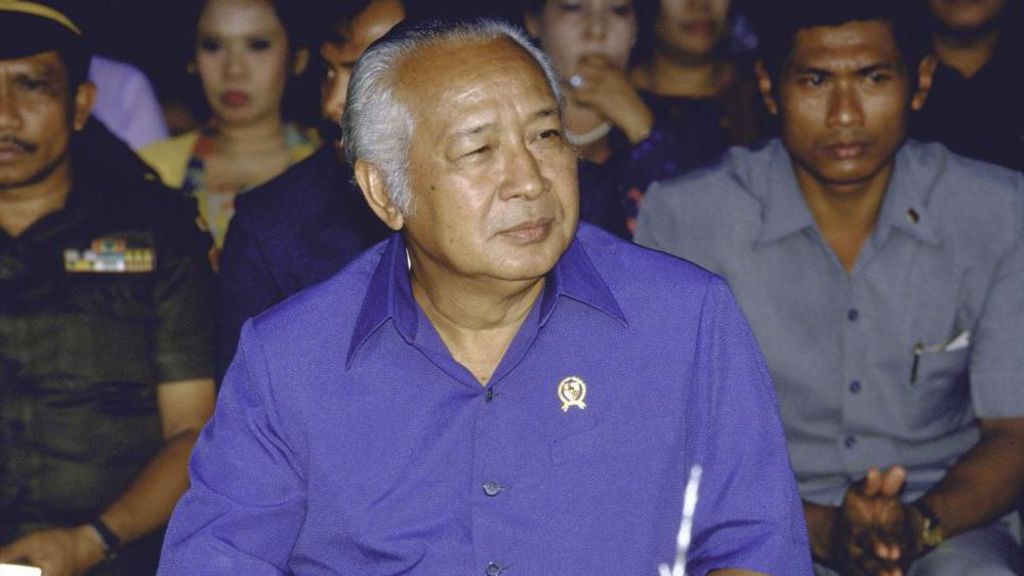
The Indonesian government’s decision to posthumously award former President Suharto the title of national hero has ignited widespread controversy and protests across the nation. Suharto, who ruled Indonesia from the 1960s to the 1990s under his New Order regime, is remembered for both his economic achievements and his authoritarian tactics, including political repression and human rights abuses. The award ceremony, presided over by current President Prabowo Subianto—Suharto’s former son-in-law—has further fueled the debate, given Prabowo’s own contentious human rights record. While Suharto is credited with stabilizing Indonesia’s economy and reducing inflation, his regime is also accused of orchestrating the deaths of hundreds of thousands of political dissenters and embezzling billions of dollars. Civil society groups and activists have vehemently opposed the decision, organizing protests and online petitions. Critics argue that the move is an attempt to whitewash Suharto’s legacy and distort history. Despite the backlash, some Indonesians view Suharto as a pivotal figure in the country’s development. The ceremony also honored other figures, including labor activist Marsinah and former President Abdurrahman Wahid, who were vocal critics of Suharto, in what some see as an effort to balance the narrative.
-

A jailed hacking kingpin reveals all about the gang that left a trail of destruction
Vyacheslav Penchukov, known in the cyber underworld as ‘Tank,’ has left a trail of devastation across the globe. After years of evading law enforcement, Penchukov was finally apprehended in a dramatic 2022 operation in Switzerland. Now serving concurrent nine-year sentences in a Colorado prison, the 39-year-old Ukrainian hacker reflects on his criminal journey in an exclusive interview with the BBC.
-
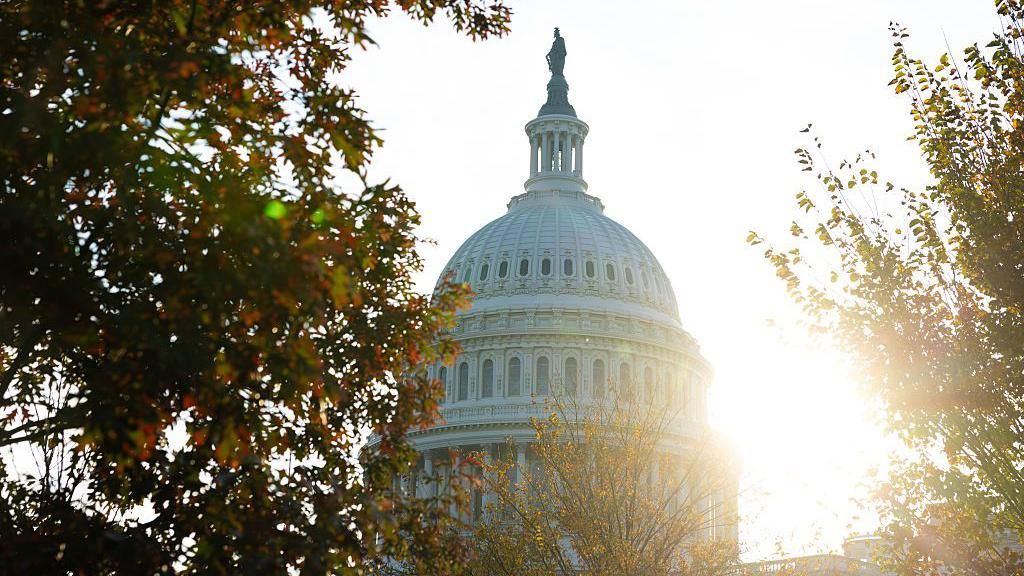
Three takeaways from the US shutdown deal
The longest government shutdown in U.S. history is finally approaching its conclusion following a bipartisan Senate vote to approve federal funding. This decision marks a significant turning point after weeks of political gridlock, which left hundreds of thousands of federal employees furloughed and disrupted essential services across the nation. With the government set to reopen, furloughed workers will return to their jobs and receive back pay, while national parks and food aid programs for low-income Americans will resume operations. Air travel, which had been severely impacted, is expected to stabilize. However, the political ramifications of this historic standoff are far from over. The shutdown exposed deep divisions within the Democratic Party, as centrists and at-risk senators broke ranks to support the Republican-led funding bill. This move has reignited tensions between the party’s progressive base and its centrist establishment, with many on the left viewing the compromise as a missed opportunity to challenge President Trump’s policies. Over the 40-day shutdown, Trump maintained a hardline stance, refusing to compromise with Democrats and instead focusing on international trips and personal engagements. While the White House agreed to roll back some workforce cuts and Senate Republicans promised a vote on health-insurance subsidies, critics argue that little was gained from the prolonged standoff. The temporary funding bill only extends government operations until the end of January, setting the stage for potential future clashes. As the midterm elections approach, both parties are likely to remain entrenched in their positions, ensuring that the political dynamics that fueled this shutdown will persist.
-
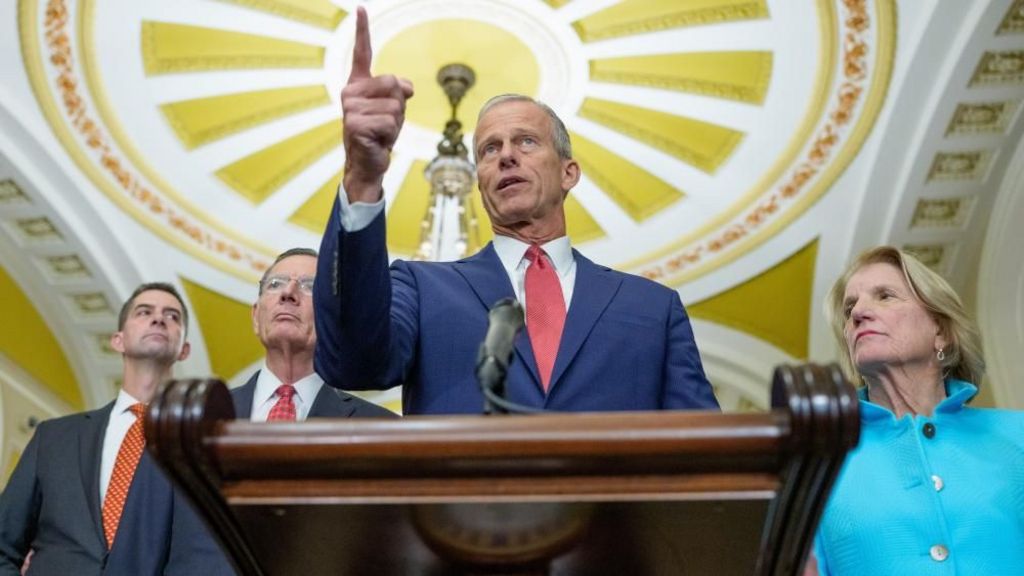
US Senate passes deal aimed at ending government shutdown
The US Senate has taken a significant step toward ending the longest government shutdown in American history, with a bipartisan deal passing procedural hurdles. After 40 days of political gridlock, a minority of Democrats joined Republicans to vote in favor of the agreement, which was negotiated by Senate Majority Leader John Thune and key Democratic senators. The deal aims to fund government operations and address critical issues such as healthcare subsidies and federal employee pay. However, it still faces challenges in the House of Representatives before it can be fully implemented. The shutdown, which began on October 1, has left 1.4 million federal employees either furloughed or working without pay, disrupted air travel, and threatened food benefits for 41 million low-income Americans. The agreement includes provisions for extending healthcare subsidies, funding essential agencies, and ensuring back pay for federal workers. Despite this progress, some Democrats have criticized the deal for lacking concrete guarantees on healthcare, with Senate Minority Leader Chuck Schumer vowing to vote against it. The measure also sets the stage for potential future budget battles, as it only funds the government until January 30.