
In a landmark move that highlights the escalating competition in the artificial intelligence (AI) sector, Microsoft and Nvidia have announced plans to invest in Anthropic, the creator of the Claude AI model. This partnership includes a staggering $30 billion commitment by Anthropic to utilize Microsoft’s Azure cloud services. Nvidia will contribute up to $10 billion, while Microsoft will invest up to $5 billion, according to statements released on Tuesday. Although specific details remain undisclosed, sources indicate that both companies are set to participate in Anthropic’s upcoming funding round. The collaboration underscores the AI industry’s relentless demand for computing power as companies vie to develop systems capable of rivaling or surpassing human intelligence. Microsoft CEO Satya Nadella emphasized the symbiotic nature of the partnership, stating, ‘We’re increasingly going to be customers of each other. We will use Anthropic models, they will use our infrastructure, and we’ll go to market together.’ He also reaffirmed Microsoft’s continued commitment to OpenAI, a key partner in its AI endeavors. This development follows OpenAI’s recent restructuring, which has seen the company pivot further from its non-profit origins, securing greater financial and operational flexibility. Anthropic, founded in 2021 by former OpenAI employees, has emerged as a formidable competitor, boasting a valuation of $183 billion and a rapidly expanding customer base of over 300,000 businesses. The company projects its annualized revenue run rate to potentially triple to $26 billion next year. As part of the deal, Anthropic will collaborate with Nvidia to enhance chip and model performance, committing up to 1 gigawatt of computing power using Nvidia’s Grace Blackwell and Vera Rubin hardware. Industry experts estimate that 1 gigawatt of AI computing could cost between $20 billion and $25 billion. Additionally, Microsoft will grant Azure AI Foundry customers access to the latest Claude models, positioning Claude as the only frontier model available across all three major cloud providers. Analysts view this partnership as a strategic move to diversify the AI economy’s reliance on OpenAI. ‘Microsoft has decided not to rely on one frontier model company,’ noted D.A. Davidson analyst Gil Luria. ‘Nvidia, which was somewhat dependent on OpenAI’s success, is now helping generate broader demand.’ The deal reflects the ongoing consolidation of the AI industry around a few dominant players, signaling a new era of collaboration and competition in the race to advance AI capabilities.
博客
-

Roblox blocks children from chatting to adult strangers
Roblox, one of the world’s most popular gaming platforms, is rolling out mandatory age verification for users accessing its chat features as part of a significant expansion of its safety measures. Starting in December, accounts in Australia, New Zealand, and the Netherlands will undergo age checks, with global implementation set for January. This move comes amid growing criticism and legal challenges in the U.S., where Roblox faces lawsuits in Texas, Kentucky, and Louisiana over child safety concerns. The platform, which averaged over 80 million daily players in 2024—40% of whom are under 13—has been accused of exposing young users to inappropriate content and interactions with adults. The new system uses facial estimation technology to estimate a user’s age through their device’s camera. Images are processed by an external provider and deleted immediately after verification. Users will be categorized into age groups, and chat access will be restricted to peers within similar age ranges, except for trusted connections. Under-13s will still require parental permission for private messages. Roblox’s Chief Safety Officer, Matt Kaufman, claims the technology is highly accurate, estimating ages within a one-to-two-year margin for users aged 5 to 25. The platform’s efforts have been welcomed by child safety advocates, though groups like ParentsTogether Action and UltraViolet are staging a virtual protest within Roblox, demanding stronger measures to protect children from online predators. The changes align with global regulatory trends, including the UK’s Online Safety Act, which mandates tech firms to prioritize child safety. Roblox’s initiative marks a significant step toward creating a safer digital environment for young users, with the company urging other platforms to adopt similar measures.
-
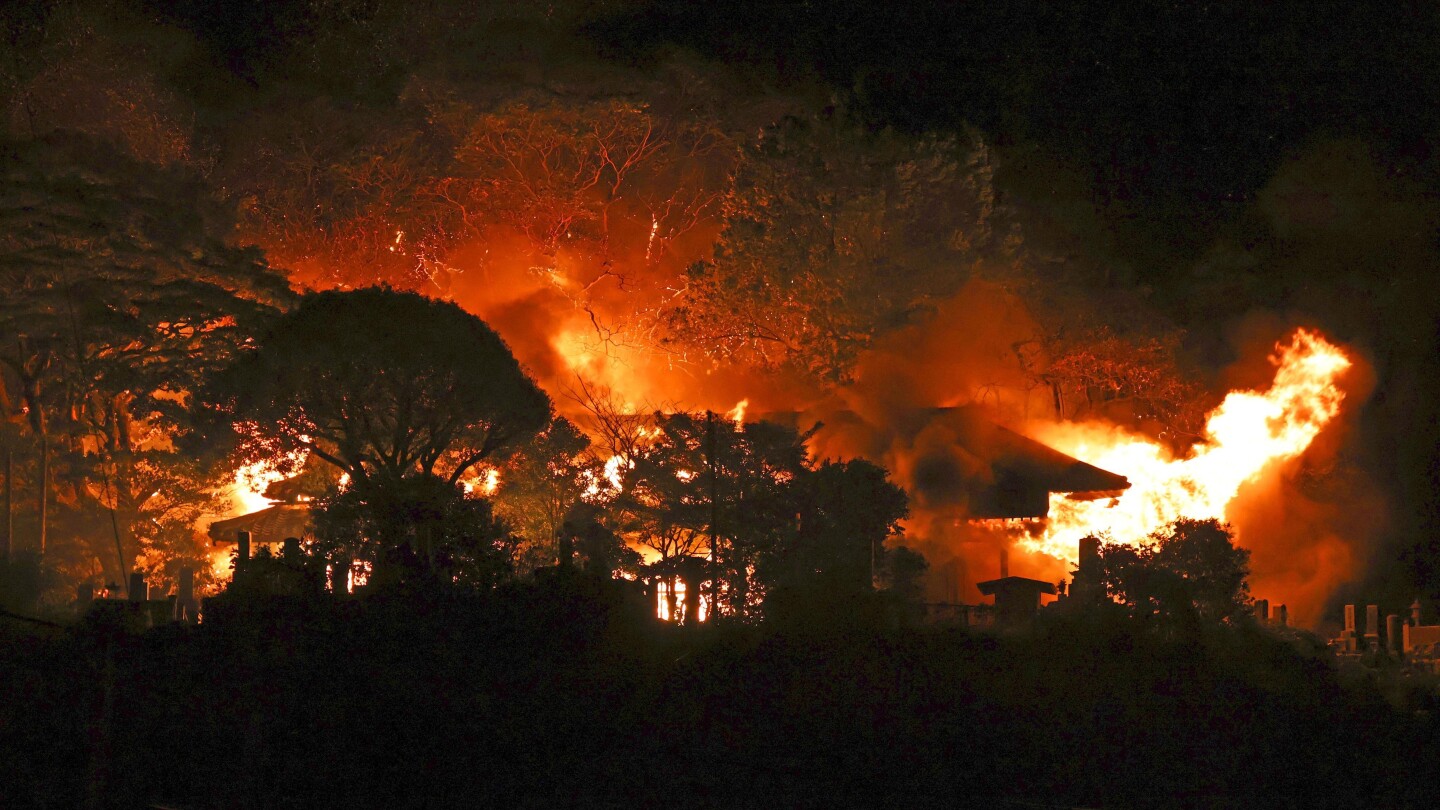
Fire burning in southwestern Japan damages 170 homes and forces evacuations
A devastating wildfire erupted in the city of Oita, located on Japan’s southern island of Kyushu, on Tuesday evening, rapidly engulfing a residential neighborhood and forcing over 170 people to evacuate. The blaze, which began near a fishing port amid strong winds, quickly spread to nearby forests and homes, causing widespread destruction. According to Japan’s Fire and Disaster Management Agency, at least 170 homes have been damaged, and a man in his 70s remains missing. Local residents described the fire as spreading uncontrollably, with one evacuee telling Kyodo News Agency that she fled in haste, leaving most of her belongings behind. Firefighters are still battling the flames, which remain uncontained as of Wednesday morning. The incident highlights the vulnerability of communities to natural disasters exacerbated by extreme weather conditions.
-
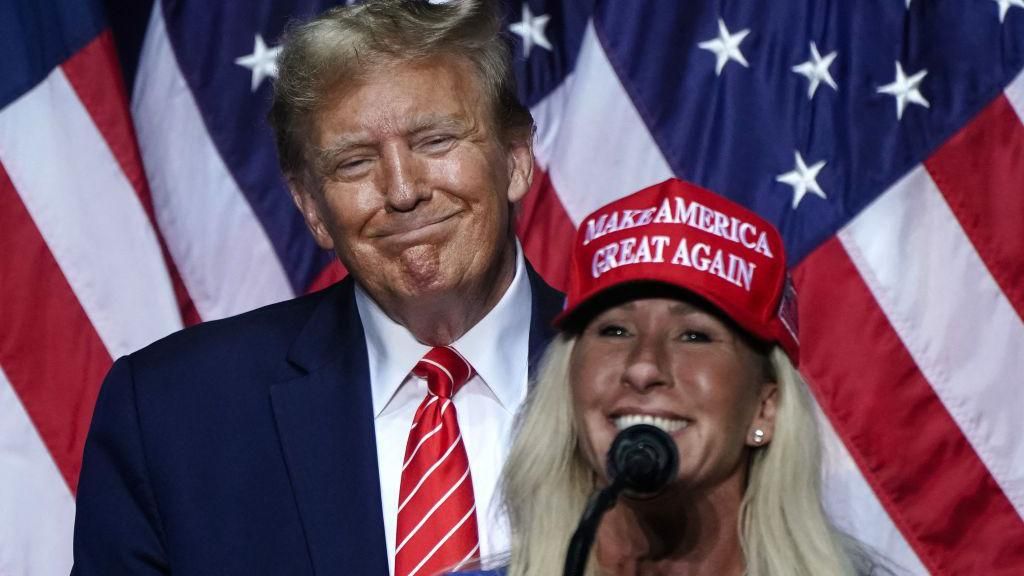
Epstein saga reveals Republican rifts – and the power of Trump’s base
The recent congressional vote to release the Jeffrey Epstein files has unveiled deep fractures within the Republican Party and tested President Donald Trump’s influence over his Make America Great Again (MAGA) base. After months of resistance, Trump reversed his stance, urging Republicans to support the release of the documents. This shift led to an overwhelming 427-1 vote in the House, marking a rare instance of Republican lawmakers pressuring the president into action. The saga has highlighted the growing power of the Republican grassroots, with many voters demanding transparency on the Epstein case. Congresswoman Marjorie Taylor Greene, a vocal critic of Trump’s initial opposition, claimed the issue had ‘ripped MAGA apart,’ signaling internal dissent within the movement. Despite Trump’s efforts to focus on other priorities, such as reducing tariffs on groceries, the Epstein controversy has overshadowed his agenda. The White House defended its actions, emphasizing its cooperation with investigations and support for victims. However, the episode has exposed potential rifts within the party, as seen in Trump’s failed attempt to influence Indiana’s redistricting process. While Trump remains the dominant figure in the GOP, the Epstein saga underscores the challenges he faces in maintaining unity and control.
-

UAE universities lead regional rise in new QS Global Rankings
The United Arab Emirates (UAE) has emerged as a regional leader in higher education sustainability, with its universities making significant strides in the latest QS World University Rankings: Sustainability 2026. Released on Tuesday, the rankings evaluated nearly 2,000 institutions across 106 locations, marking it as the most extensive sustainability-focused ranking to date. Among the UAE’s 13 ranked universities, seven improved their positions, reflecting a 54% rise in performance. The United Arab Emirates University led the national charge, climbing to 318th globally, while Khalifa University secured the 384th spot. Notably, UAE institutions excelled in the Social Impact category, with the United Arab Emirates University jumping 99 places to 263rd, driven by strong indicators in education impact and employability. The region-wide improvements align with national sustainability agendas, such as the UAE’s Net Zero 2050 Strategy and Egypt’s Vision 2030. Leigh Kamolins, QS Director of Analytics and Evaluation, highlighted the region’s commitment to aligning higher education with climate and development goals. The Arab Region saw 147 universities ranked, including 29 newcomers, with 68 institutions improving their positions. Lebanon recorded the highest proportion of rising institutions at 86%, while Bahrain, Qatar, and Kuwait achieved near-complete improvement rates. The American University of Beirut led the Arab Region, climbing to 176th globally, while King Abdulaziz University entered the global top 200 for the first time. Despite progress, governance metrics revealed uneven performance, with 79 universities declining in this category. Jessica Turner, CEO of QS Quacquarelli Symonds, emphasized the ranking’s role in driving innovation and addressing global sustainability challenges.
-
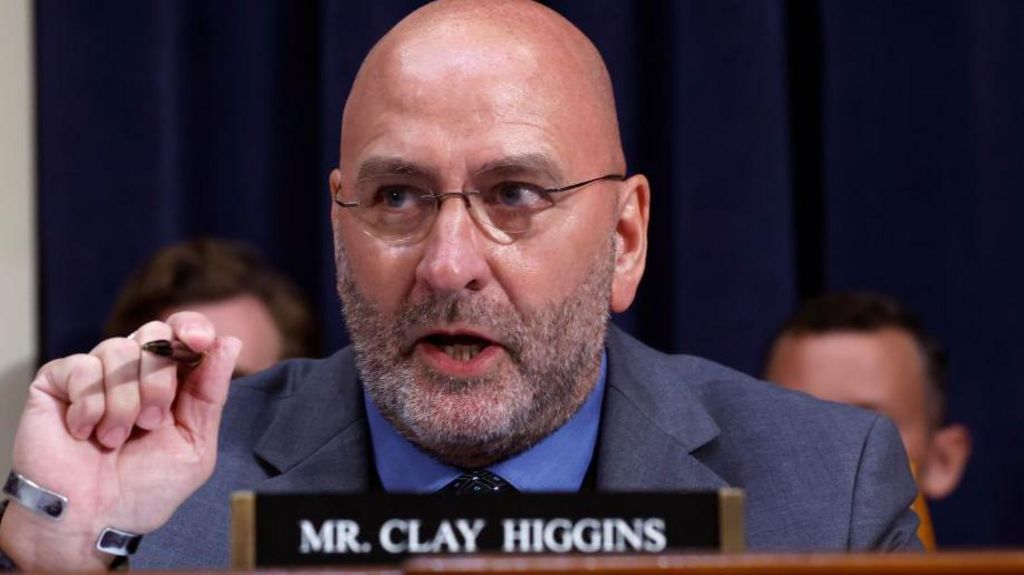
The only ‘no’ vote on releasing Epstein files
In a rare display of bipartisan unity, the US House of Representatives overwhelmingly passed a bill to release documents related to convicted sex offender Jeffrey Epstein. The legislation, which garnered a staggering 427-1 vote, saw nearly every Republican in the House voting in favor, with the sole dissenting vote coming from Louisiana Representative Clay Higgins. Higgins, a staunch conservative, argued that the bill compromised the privacy of Epstein’s victims and witnesses, stating on social media platform X that it ‘abandons 250 years of criminal justice procedure in America.’
The bill, which aims to shed light on the Epstein case, quickly gained momentum after President Donald Trump dropped his opposition to the vote. Hours after the House’s decision, the US Senate unanimously approved the legislation, paving the way for Trump’s signature. Higgins expressed willingness to support the bill if amended, but Senate Majority Leader John Thune indicated that changes were unlikely given the overwhelming support.
Higgins’ dissent is not unprecedented. Known for his controversial remarks and unorthodox stances, he has previously faced censure from his party for offensive comments about Haiti and its people. His career has been marked by controversy, including his resignation from the St. Landry’s Parish Sheriff’s Office in 2016 following backlash over an anti-crime video in which he threatened gang members while holding a rifle.
The passage of the Epstein bill represents a significant step toward transparency in a case that has captivated public attention for years. However, concerns remain about the potential impact on the privacy of individuals involved in the investigation. As the bill moves to the President’s desk, its implications for both justice and privacy continue to spark debate.
-

Abu Dhabi launches AI-powered autonomous e-commerce delivery vehicles
Abu Dhabi has taken a significant leap in smart mobility with the launch of a pilot project for AI-powered autonomous e-commerce delivery vehicles. Developed in collaboration with Noon and AutoGo, a subsidiary of K2, these vehicles are equipped with advanced smart sensors and artificial intelligence, enabling them to navigate city streets safely and efficiently without human intervention. The initiative is part of Abu Dhabi’s broader strategy to develop a smarter, more sustainable mobility system, aiming to have 25% of all trips in the emirate conducted through smart transport by 2040. The project integrates AutoGo’s self-driving delivery vehicles into Noon’s logistics network, enhancing the efficiency of mini-fulfilment centers across the city. Dr. Abdulla Hamad AlGhfeli, Acting Director General of the Integrated Transport Centre (Abu Dhabi Mobility), emphasized that this initiative underscores the role of innovative technologies in advancing sustainability and improving community quality of life. Faraz Khalid, CEO of Noon, highlighted that the partnership aims to redefine the future of e-commerce by improving logistics efficiency and sustainability. Following the initial launch, AutoGo plans to expand the pilot to more neighborhoods and include a wider range of products, with full commercial operations expected soon. This project not only positions Abu Dhabi as a regional leader in smart transport and digital transformation but also sets a new benchmark for innovation in the e-commerce sector.
-
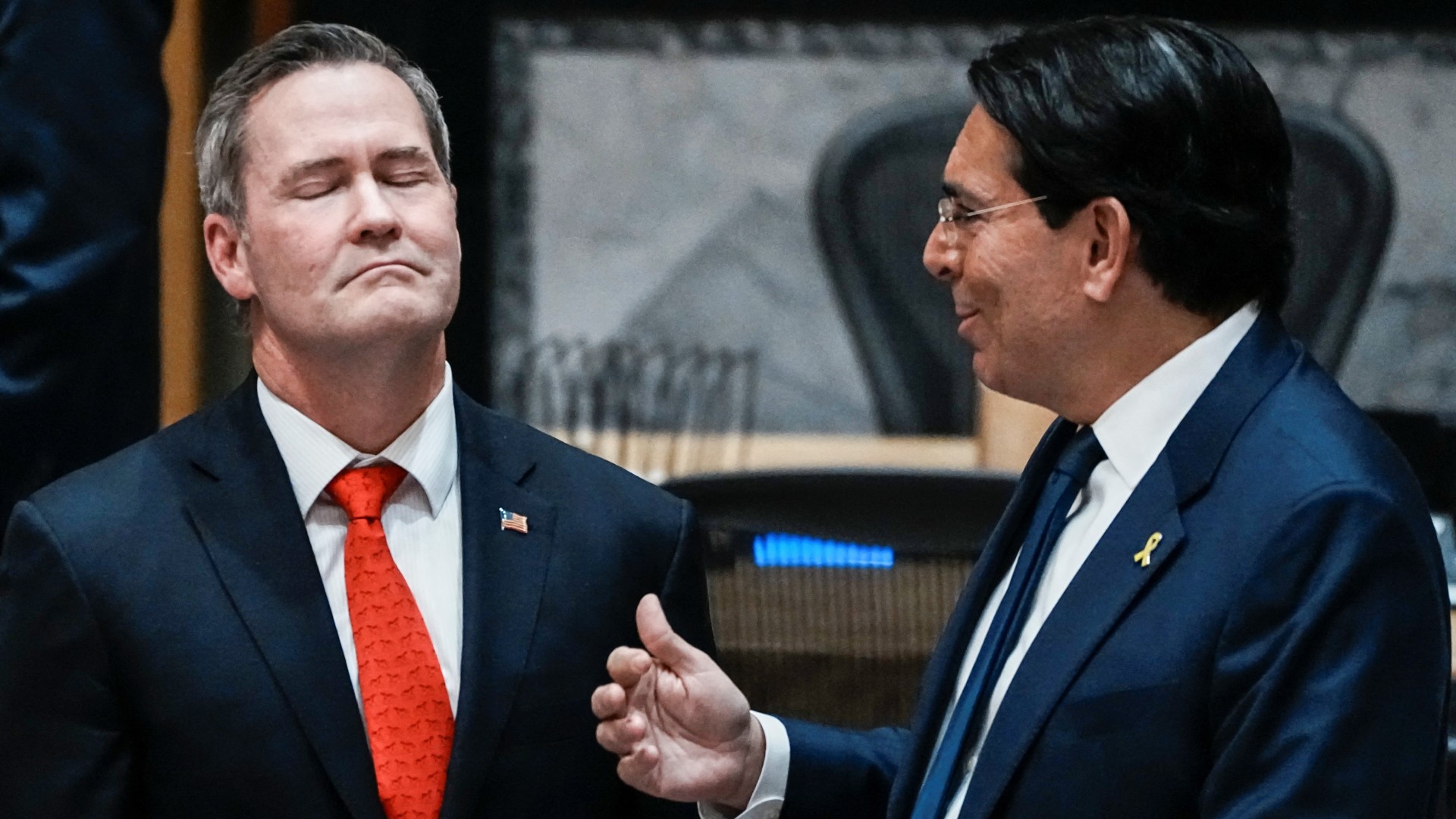
How the UN Gaza resolution creates new foreign ‘mandate’ over Palestinians
The United Nations Security Council has passed Resolution 2803, authorizing an International Stabilisation Force (ISF) to oversee a transitional period in Gaza. The resolution, approved with 13 votes in favor and two abstentions, places U.S. President Donald Trump at the helm of the Palestinian enclave, implementing his 20-point plan for its future. The term ‘mandate’ has sparked significant controversy, drawing parallels to colonial-era interventions in the region. Critics, including British-Israeli historian Avi Shlaim, argue that the resolution disregards the rights and aspirations of Palestinians, likening it to the British Mandate for Palestine post-World War I. The resolution outlines a two-year plan involving multinational troops, Palestinian technocrats, and a local police force, but has been met with resistance from Hamas and other Palestinian factions, though it is supported by the Palestinian Authority (PA). The resolution vaguely references Palestinian self-determination and statehood, contingent on certain conditions, which has been criticized as undermining international law. The plan has garnered backing from several Muslim-majority and Arab states, including Egypt, the UAE, Qatar, Saudi Arabia, Turkey, and Indonesia, while Russia and China abstained from the vote. The resolution’s implementation remains uncertain, particularly due to Hamas’s refusal to disarm, raising questions about the feasibility of international peacekeeping efforts in the region. Critics argue that the resolution perpetuates Israeli control over Gaza and represents a significant crisis for the United Nations, potentially damaging its credibility and effectiveness.
-

On the front line of Europe’s standoff with Russia’s sanction-busting shadow fleet
In the western Baltic Sea, a Swedish coastguard officer radios a sanctioned oil tanker, seeking details about its insurance, flag state, and last port of call. This exchange is emblematic of Europe’s tense confrontation with Russia’s ‘shadow fleet,’ a network of aging tankers used to circumvent Western sanctions on Russian oil exports. Since the Kremlin’s full-scale invasion of Ukraine, Western nations have imposed strict energy sanctions, prompting Moscow to rely on these vessels, often with obscure ownership and insurance, to maintain its oil trade. European coastguards and navies are increasingly encountering these ships, suspecting them of transporting oil illegally. Some are even accused of undersea sabotage, illicit drone launches, or falsifying location data. The International Maritime Organization (IMO) reports that the number of falsely flagged ships has more than doubled this year, surpassing 450 globally. Many of these vessels are stateless, operating without valid flags or proper insurance, raising concerns about environmental and security risks. For instance, the tanker Unity, previously known as Ocean Explorer, has changed names and flags multiple times, most recently claiming a false flag from Lesotho. Despite being sanctioned by the UK and EU, Unity continues to operate, highlighting the challenges of enforcing maritime laws. The rise of the shadow fleet has alarmed European nations, particularly in the Baltic region, where vessels frequently pass through en route to Russian oil terminals. Estonia’s navy chief, Commodore Ivo Värk, notes a significant increase in such traffic, emphasizing the brazen nature of these operations. While countries like France, Finland, and Estonia have detained some ships, the fear of escalation with Russia limits more aggressive actions. NATO officials stress the importance of monitoring these vessels to deter illegal activities, but the complexity of the situation underscores the fragility of the international rules-based order. As Europe intensifies its surveillance, the shadow fleet continues to grow, posing significant risks to global commerce, security, and the environment.
-
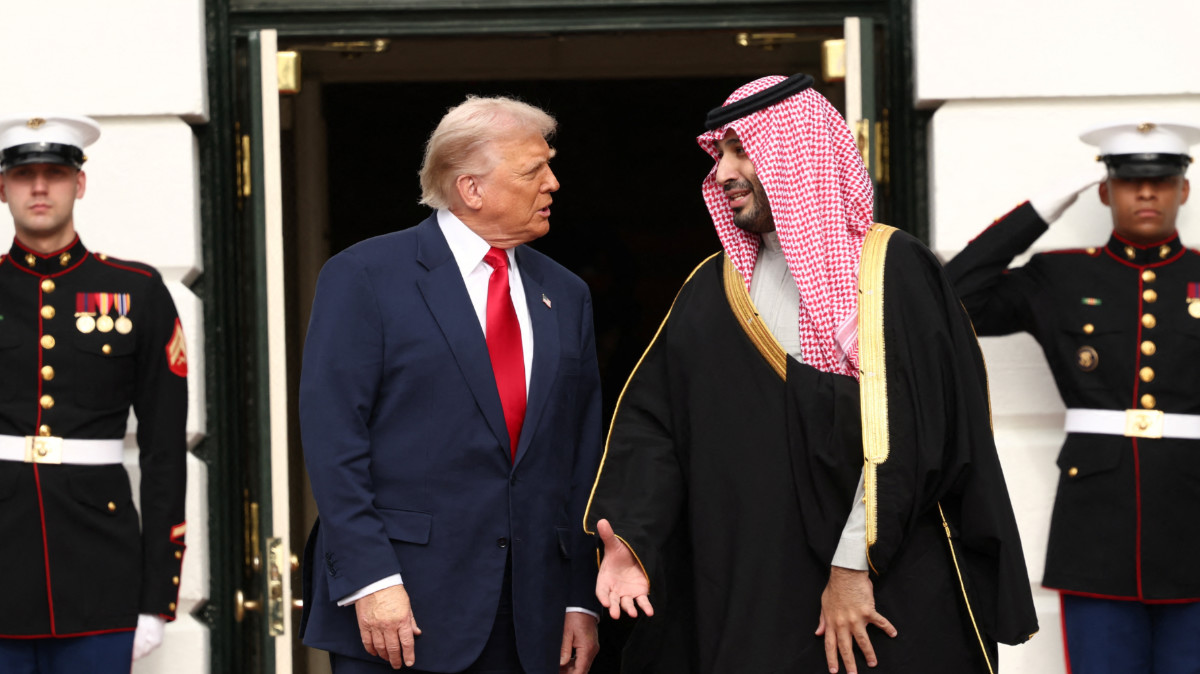
Saudi Crown Prince Mohammad bin Salman arrives at White House after seven-year hiatus
Saudi Arabia’s Crown Prince Mohammed bin Salman made a landmark visit to the White House on Tuesday, his first trip to the United States in seven years. The visit, marked by ceremonial grandeur including a color guard, military band, and fighter jet flyover, underscored the significance of the bilateral relationship. President Trump accompanied the Crown Prince on a televised tour of the newly inaugurated ‘Presidential Walk of Fame,’ highlighting the warmth of their engagement. This visit represents a dramatic shift in US-Saudi relations, particularly following the 2018 Jamal Khashoggi incident, which had strained ties. The Crown Prince’s agenda includes lobbying for US intervention in Sudan’s civil war and advancing Saudi Arabia’s Vision 2030 economic transformation. Key discussions revolve around defense deals, including the potential sale of F-35 fighter jets and AI-supported drones, as well as access to US civilian nuclear technology. Saudi Arabia aims to localize its defense industry with US assistance, moving beyond mere arms procurement. The visit also highlights Saudi Arabia’s ambition to position itself as a hub for AI and renewable energy, leveraging its vast fossil fuel and solar resources. Despite budgetary constraints from mega-projects like Neom, Saudi Arabia remains committed to securing cutting-edge US technology. The Crown Prince’s push for uranium enrichment, however, has raised concerns within the US government. The visit underscores Saudi Arabia’s strategic pivot to diversify its partnerships and assert itself as a regional power, while navigating complex geopolitical dynamics involving Israel, China, and Iran.