
A 35-year-old Russian national, suspected of orchestrating cyberattacks on U.S. and European government agencies, has been arrested in Phuket, Thailand, following a tip from the FBI. The suspect, identified as Denis Obrezko from Stavropol, entered Thailand on October 30 and was apprehended earlier this month at his hotel. Thai authorities seized laptops, mobile phones, and digital wallets during the arrest, with FBI officials present. Obrezko is now detained pending a potential extradition to the United States. Russian state media confirmed the arrest, and his relatives are reportedly planning to contest the extradition. The U.S. Department of Justice and State Department have declined to comment on the case. Russian diplomats have visited Obrezko in custody, and the Russian consulate in Phuket acknowledged the arrest but provided no further details. The extradition process is underway, though its duration remains uncertain.
博客
-
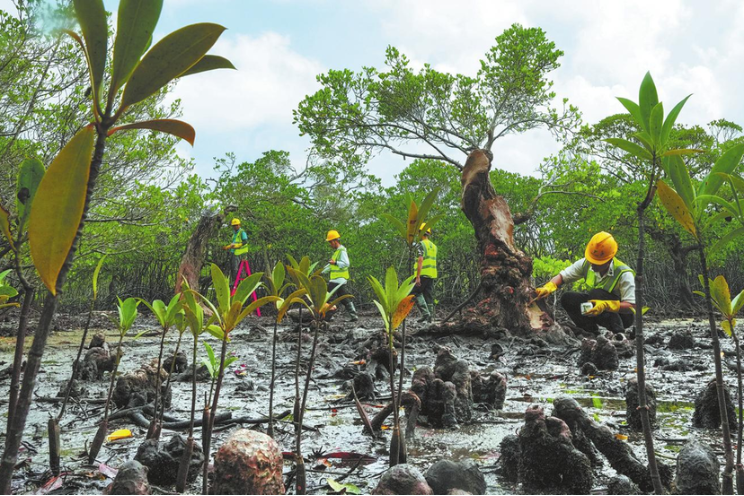
Resilience and recovery
In a remarkable display of resilience and scientific ingenuity, rare red-flowered black mangroves (Lumnitzera littorea) in Hainan province, China, are on the path to recovery following the devastating impact of Typhoon Kajiki. The storm, which struck on August 24, unleashed winds of up to 200 kilometers per hour, severely damaging the coastal regions of Hainan. Among the casualties were six of the only 14 known mother trees of this rare mangrove species in China.
-

Scientific study drives law to protect ecology of Qinghai-Tibet Plateau
The second Qinghai-Tibet scientific expedition has significantly influenced the formulation of ecological protection legislation for the Qinghai-Tibet Plateau, as highlighted by academicians during a recent news conference in Lhasa, the capital of the Xizang autonomous region. The expedition’s top 10 application achievements, unveiled at the event, span ecological conservation, disaster prevention, resource exploration, carbon accounting, traffic safety, and border area development. Yao Tandong, an academician with the Chinese Academy of Sciences, emphasized that the expedition’s core legislative recommendations—such as enhancing glacier change monitoring, protecting ecological barriers, and promoting integrated environmental management—were integrated into the new legislation. This led to the adoption of the ‘Measures for the Implementation of the Qinghai-Tibet Plateau Ecological Protection Law’ by the 15th meeting of the Standing Committee of the 12th People’s Congress of Xizang in March, which took effect on August 1. Beyond legislative impact, the expedition has deepened scientific understanding of the plateau’s unique ecological challenges, particularly concerning the Asian Water Tower, a vital water source for over 2 billion people. Research indicates a significant increase in water supply capacity, with runoff from major basins projected to rise by 49% by the century’s end. However, the region faces growing threats from cryosphere disasters, such as glacier avalanches and glacial lake outburst floods, which have increased in frequency and severity. To address these challenges, the expedition team has established a comprehensive Earth system multisphere observation platform and developed an intelligent monitoring and early warning system for cryosphere-related disasters. These innovations aim to provide precise solutions for disaster prevention and mitigation, safeguarding major projects and local communities.
-

JUNO yields first results, searches for ‘new physics’
The Jiangmen Underground Neutrino Observatory (JUNO), the world’s largest liquid scintillator neutrino detector, has unveiled its first set of experimental results, marking a significant milestone in particle physics. Located 700 meters underground in Guangdong, China, this state-of-the-art facility has achieved unprecedented precision in measuring neutrino properties, offering new insights into the fundamental nature of these elusive particles.
-
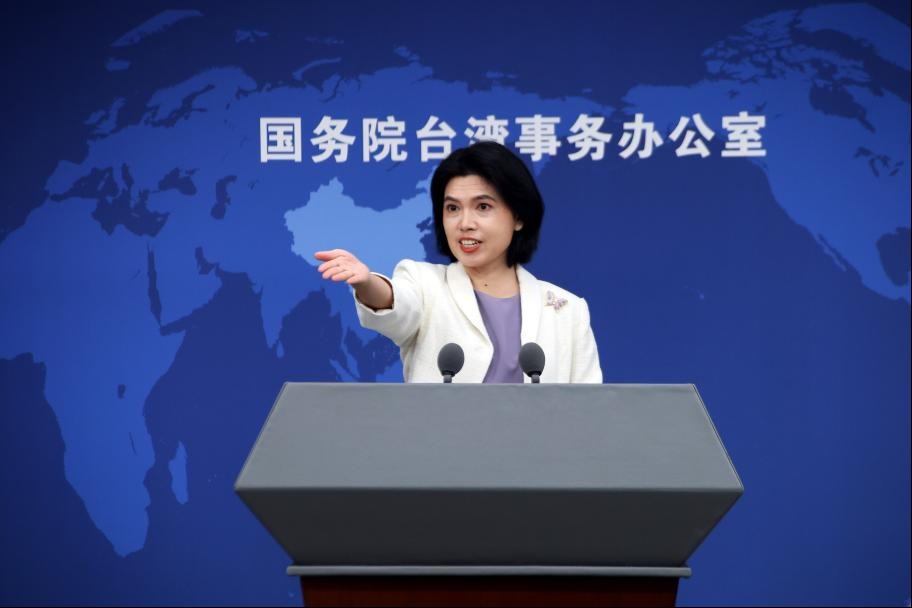
Japan’s meddling in Taiwan fiercely opposed
China has issued a stern warning against Japan’s recent comments on Taiwan, emphasizing that such interference in China’s internal affairs is unacceptable. Zhu Fenglian, spokesperson for the State Council Taiwan Affairs Office, addressed the media on Wednesday, condemning Japanese Prime Minister Sanae Takaichi’s remarks about the Taiwan Strait. Takaichi had suggested that China’s actions toward Taiwan could pose a ‘survival-threatening situation’ for Japan, hinting at potential military intervention. Zhu labeled these comments as an attempt to revive militarism and undermine the achievements of the Chinese People’s War of Resistance Against Japanese Aggression (1931-45). She reiterated that Taiwan is an inalienable part of China and called on Japan to cease its provocative actions. Zhu also criticized Taiwan’s Democratic Progressive Party (DPP) for colluding with external forces to pursue ‘independence,’ warning that such efforts are futile and will be met with firm countermeasures. Over 30 civil groups in Taiwan joined in condemning Takaichi’s remarks, rejecting any role as victims of Japanese militarism. Additionally, Zhu opposed Taiwan leader Lai Ching-te’s reported plans to transit through the United States, urging the U.S. to adhere to the one-China principle and avoid sending wrong signals to ‘Taiwan independence’ forces.
-

Philippine court convicts dismissed town mayor, allegedly a Chinese, of human trafficking charges
A Philippine court has handed down a life sentence to Alice Guo, a former mayor accused of being a Chinese national, for her involvement in a large-scale human trafficking and online scam operation. The Pasig City Regional Trial Court in metropolitan Manila convicted Guo and seven other Filipino and Chinese co-accused, imposing a fine of 2 million pesos ($34,000) each and ordering compensation for trafficking victims. Guo, who denies all allegations and claims Filipino citizenship, allegedly facilitated the establishment of an illegal online gaming complex in northern Tarlac province, where hundreds of foreign nationals were forced to conduct financial scams. The court revealed that the operation used parcels of land and buildings to house trafficked workers, coercing them into fraudulent activities. This case highlights the growing issue of online scam centers in Southeast Asia, particularly in border areas like Cambodia, Laos, and Myanmar, where hundreds of thousands have been trapped in virtual slavery. Philippine President Ferdinand Marcos Jr. has taken steps to combat these operations, banning hundreds of Chinese-run online gaming businesses linked to crimes such as financial scams, human trafficking, and kidnapping. While many centers have been raided and shut down, officials acknowledge that more remain operational. Senator Risa Hontiveros, who led Senate inquiries into the scam operations, hailed Guo’s conviction as a victory against transnational crimes but emphasized that the fight is far from over. Hontiveros also raised concerns about potential espionage activities linked to Chinese nationals operating these centers, amid escalating territorial conflicts between China and the Philippines in the South China Sea. Guo, dismissed from her mayoral post last year for grave misconduct, fled to Indonesia but was arrested and deported back to the Philippines, where she remains in detention.
-

Ethiopia receives historic artefacts held in Germany for 100 years
In a significant cultural restitution, twelve historical artefacts have been officially returned to Ethiopia after being held by a German family for over a century. The collection, which includes crowns, shields, and paintings of immense cultural and historical value, was originally gathered in the 1920s by Franz Weiss, Germany’s then-envoy to Ethiopia, and his wife Hedwig. The artefacts were ceremoniously handed over to the Institute of Ethiopian Studies at Addis Ababa University on Wednesday. Germany’s current envoy to Ethiopia, Ferdinand von Weyhe, emphasized that these items symbolize the enduring and amicable relationship between the two nations. Professor Ramon Wyss, whose father was born during the family’s diplomatic tenure in Ethiopia, facilitated the return, expressing the family’s desire to share these treasures with the public and preserve the cultural and historical legacy tied to his father’s birthplace. Ethiopia’s Tourism Minister, Selamawit Kassa, lauded the Weiss family for their dedication to preserving and returning these artefacts, marking this event as a pivotal moment in safeguarding Ethiopia’s cultural heritage. The artefacts will soon be accessible to the public for research and academic study. This repatriation aligns with broader efforts by African nations to reclaim looted cultural items, a movement that has seen some success in recent years, including Germany’s 2022 return of the Benin Bronzes to Nigeria as part of its reckoning with colonial history.
-

Australians worry markedly more about US interference: new poll
Australians continue to value their alliance with the United States, but a new poll reveals growing skepticism and critical views toward the relationship. Conducted by the Australia-China Relations Institute at the University of Technology Sydney, the survey of 2,045 respondents highlights a significant shift in public opinion. For the first time in five years, more Australians (57%) believe the US, rather than China (51%), would pressure Australia to take sides in their rivalry. This reflects a broader awareness that pressure can come from allies as well as adversaries. Concerns about US interference in Australia have surged to 54%, a nearly 20-point increase since 2021, narrowing the gap with concerns about interference from China and Russia, which remain steady at 64%. The poll also indicates that nearly two-thirds of Australians fear a second Trump presidency would heighten the likelihood of conflict with China. Economic perceptions have shifted dramatically, with 72% of respondents now viewing the US as using trade for political punishment, compared to 70% for China. Despite these concerns, Australians’ views of China have softened since 2021. While mistrust of the Chinese government persists, it has declined from 76% to 64%, and two-thirds of Australians now see China as a security concern, the lowest level in five years. Regional tensions, particularly in the South China Sea, remain a focal point, with 72% of respondents viewing China’s actions there as a threat to Australia’s interests. Support for defense spending has reached a record high of 72%, though this drops to 55% when trade-offs with health or education are considered. The AUKUS defense pact, which includes plans to acquire nuclear-powered submarines, is supported by half of Australians as a means to enhance national security. On Taiwan, opinions are divided: 37% would support sending troops if China attacked, while most prefer neutrality or non-military engagement. In a hypothetical US-China conflict over Taiwan, 50% of Australians would favor neutrality, and 47% would back supporting the US. The survey also reveals that China policy is increasingly influencing Australian voters, with 37% citing it as a factor in the 2025 federal election, up 10 points from 2022. Overall, Australians are adopting a more nuanced approach to managing their relationships with both China and the US, balancing economic interests with strategic concerns.
-

Hong Kong aims to capitalize on National Games
Hong Kong is positioning itself as a key player in the sports economy by leveraging its role in co-hosting the 15th National Games. Experts believe the city has the potential to extend its influence beyond the sporting arena, shaping long-term strategies and driving momentum for future events. The successful hosting of the Games has showcased Hong Kong’s capabilities in vision, capacity, and connectivity to the broader sports economy, according to Steve Dainton, CEO of World Table Tennis. Dainton emphasized that Hong Kong’s event capability, international appeal, and experience in hosting large-scale events make it an ideal location for major tournaments like the upcoming WTT Finals in December. He stressed the importance of host cities fostering collaboration among stakeholders and focusing on delivering exceptional fan experiences to generate lasting economic and social value. Kenny Shui, vice-president of Our Hong Kong Foundation, highlighted the need for strategic coordination by the SAR government to align sports events with art and MICE (meetings, incentives, conferences, and exhibitions) activities. He suggested transforming the National Games Coordination Office into a permanent entity to manage large-scale multi-sports events and introducing sports-related financial products, such as event rights trading and sports bonds, to attract mainland investors. Shui also proposed leveraging Hong Kong’s status as a financial hub to facilitate international sponsorship agreements and intellectual property licensing, thereby lowering barriers for Chinese brands entering global leagues. Chi Sum Li of KPMG China noted Hong Kong’s unique strengths in ‘soft infrastructure,’ including international standards and IP protection, which can drive the regional sports economy and promote the Greater Bay Area’s sports brand globally. As the Chinese sports industry expands internationally, Hong Kong’s robust IPO market and private equity channels are seen as valuable platforms for raising capital to support overseas acquisitions and marketing efforts. Leading brands like Anta and Li-Ning have already utilized Hong Kong as a springboard for international growth, demonstrating the city’s potential as a gateway for global sports expansion.
-
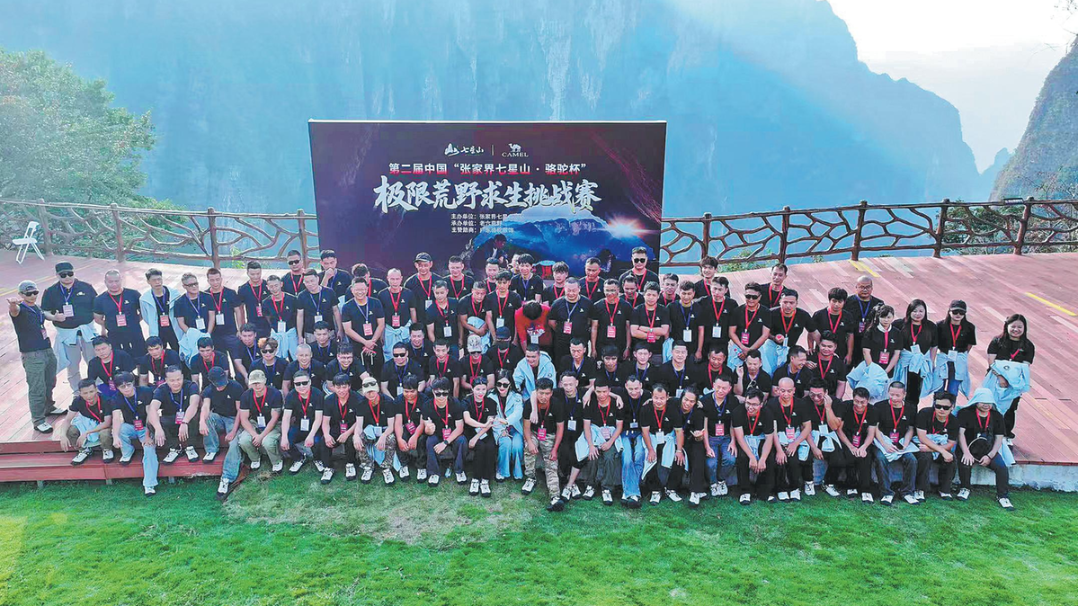
Woman with pink nail polish versus wild — and both win
In a striking juxtaposition of glamour and grit, Yang Chaoqin, a 29-year-old engineering graduate, recently captivated audiences by participating in the Zhangjiajie Qixing Mountain Wilderness Survival Challenge. Known as ‘Leng Meiren’ (Cold Beauty), Yang arrived at the rugged Qixing Mountain in early October with pink nail polish and full makeup, including false eyelashes. Over the course of 30 days, she transformed into a seasoned survivalist, living in a mountain cave and enduring the harsh autumn chill of the forest. Her journey, marked by moments like eating a locust whole and calmly declaring it a source of protein, has become a sensation on Chinese social media. The challenge, which began on October 9 with 100 contestants, emphasizes harmony with nature, requiring participants to build shelters, make fires, and forage for food. The event has garnered unprecedented attention, with official channels on platforms like Douyin and Kuaishou amassing millions of followers and over 12 billion views by mid-November. Even Bear Grylls, host of the global hit ‘Man vs. Wild,’ praised the challenge on the organizers’ Douyin channel, calling it ‘epic’ and commending the contestants. The Zhangjiajie Qixing Mountain Wilderness Survival Challenge has carved out a unique niche, blending traditional survival skills with a distinctly Chinese cultural perspective.