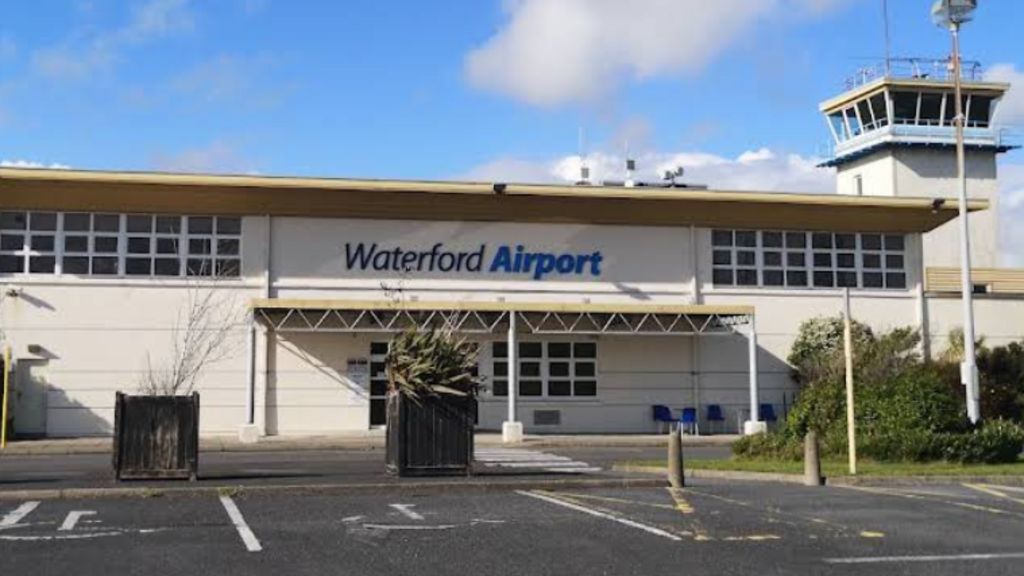
A tragic aviation incident occurred near Tramore in County Waterford, Republic of Ireland, on Thursday at approximately 12:50 local time. The small aircraft, a privately-owned Vulcanair P68C, crashed during its approach to Waterford Airport, resulting in the death of the sole pilot on board. Irish police, known as gardaí, confirmed that the pilot was alone in the plane at the time of the accident. Emergency services, including Coast Guard Rescue 117, swiftly responded to the scene. The pilot’s body was later transported to University Hospital Waterford, as reported by Irish broadcaster RTÉ. The aircraft was en route from Sligo, Ireland, to Beziers, France, when it abruptly turned around off the south coast of Ireland and headed back towards Waterford Airport. The Air Accident Investigation Unit conducted an initial examination of the crash site on Thursday and announced that four inspectors would return for further investigation on Friday morning. This incident has raised concerns about aviation safety in the region, and further details are awaited as the investigation progresses.
博客
-
Canada eyes talent amid US curbs on immigration
As the United States tightens immigration policies and reduces research funding, Canada is emerging as a potential beneficiary in the global competition for skilled talent. Experts suggest that the shifting landscape in the US is prompting many highly skilled workers to reconsider their options, with Canada increasingly seen as a viable alternative. Rupa Banerjee, a Canada Research Chair and professor at Toronto Metropolitan University, noted that the US administration’s policies are driving talent to explore opportunities elsewhere. ‘Many individuals who either reside in the US or aspired to move there are now looking at other destinations,’ she told China Daily. The Canadian federal government recently passed a budget that includes a C$1.7 billion commitment over the next decade to attract top international researchers, including scholars from US universities and H-1B visa holders. Banerjee emphasized that this move reflects Canada’s recognition of a unique opportunity to address its long-standing challenges in innovation and productivity. ‘Policymakers understand that this is a great chance for Canada to leverage the turbulence in the US,’ she said. While Canada has traditionally been a second choice for many immigrants, Banerjee believes this perception is changing. ‘Canada is becoming a better and better choice, and it’s up to policymakers to ensure it remains a top destination,’ she added. However, she cautioned that Canada’s research infrastructure and policy framework may not yet be equipped to attract talent at scale. Mikal Skuterud, an economics professor at the University of Waterloo, noted that Canada’s efforts are part of a broader global competition for human capital. ‘Human capital is scarce, and there’s a constant global war for talent,’ he said. Skuterud suggested that Canada could benefit if US policies restrict certain foreign applicants, but he emphasized that the federal funding is more of a political signal than a transformative policy. ‘If the US is closing the door on some people, maybe Canada can open its door,’ he said. Despite the potential advantages, both experts agree that Canada must focus on long-term strategies to fully capitalize on this opportunity.
-
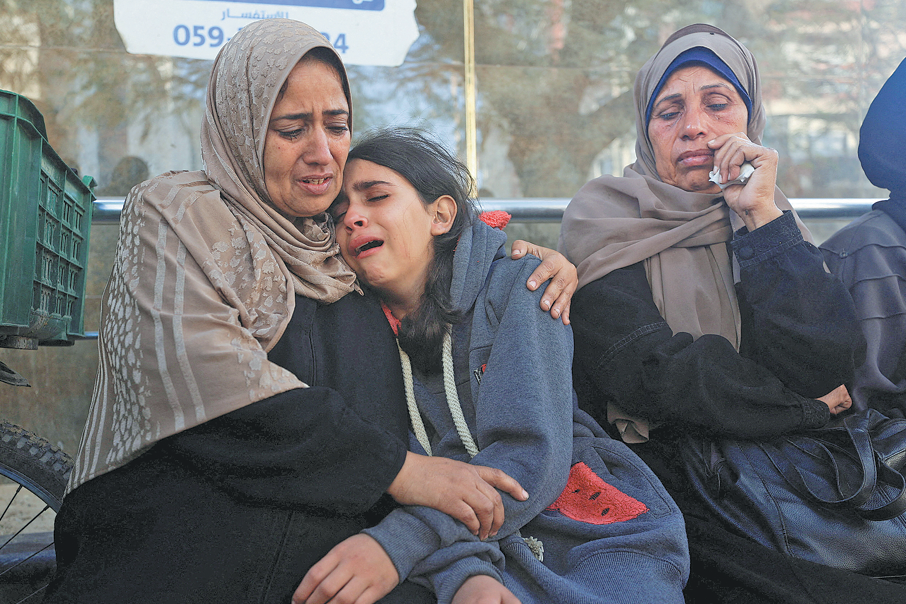
Deadly Israeli strikes test fragile Gaza truce
The fragile truce in Gaza has been severely tested following a series of deadly Israeli strikes on Wednesday, resulting in one of the bloodiest days since a US-brokered ceasefire was established last month. According to Gaza’s health authority, 32 Palestinians, including 12 children and eight women, were killed, with 88 others injured. Concurrently, in the occupied West Bank, Israeli forces detained 100 Palestinians. These developments occurred just two days after the United Nations Security Council adopted a resolution to establish an International Stabilization Force in Gaza. The Israel Defense Forces (IDF) confirmed the attacks, stating they targeted terrorists who posed an immediate threat. However, Hamas dismissed these claims as attempts to justify Israeli crimes. Meanwhile, US Ambassador to Israel Mike Huckabee labeled the surge in settler violence in the West Bank as ‘terrorism.’ UN Secretary-General Antonio Guterres emphasized the need for all parties to respect the ceasefire and work towards a two-state solution. Analysts warn that the current situation resembles a pause in conflict rather than a functioning ceasefire, with ongoing violence and deteriorating humanitarian conditions in Gaza.
-
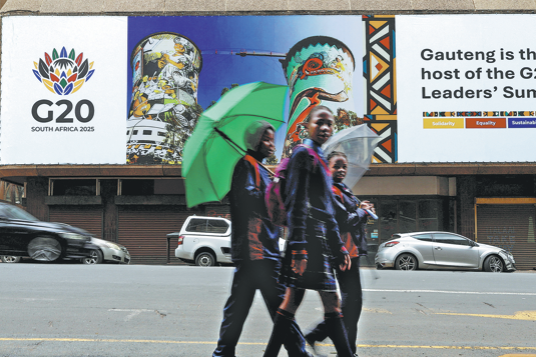
Summit to help Africa reinforce its reforms
The inaugural G20 summit on African soil, hosted in South Africa, represents a pivotal moment for the continent to harness support from Global South nations in driving transformative reforms. This historic event aims to address systemic inequalities in global governance, foster equitable development, and strengthen genuine international cooperation. Scholars and diplomats have long criticized the marginalization of Africa in global affairs, attributing it to the dominance of a few powerful nations that have consistently sidelined the voices and interests of developing countries. David Monyae, director of the Centre for Africa-China Studies at the University of Johannesburg, emphasized that this structural imbalance has perpetuated inequality and restricted meaningful participation in global governance. Despite these challenges, developing economies are increasingly shaping global outcomes, as noted by Wu Peng, China’s ambassador to South Africa. Wu highlighted China’s zero-tariff treatment for products from 53 African countries as a practical step toward fairer trade systems. He also criticized the U.S.-led tariff wars for undermining the modernization efforts of the Global South. The summit underscores the need for unity and leadership from the Global South to reform global governance. China has reaffirmed its support for South Africa’s G20 presidency, emphasizing mutual respect and shared prosperity. Paul Frimpong, an economic analyst, described the summit as an opportunity to recalibrate global engagement, moving beyond aid dependency to genuine partnerships and investment. He stressed that hosting the G20 in Africa allows the continent to reframe global priorities through its lens of justice, sustainability, and shared prosperity. Frimpong also highlighted China’s expanding engagement with Africa as a model for inclusive global cooperation, citing initiatives like the Belt and Road Initiative and green financing as evidence of mutual benefit rather than charity.
-
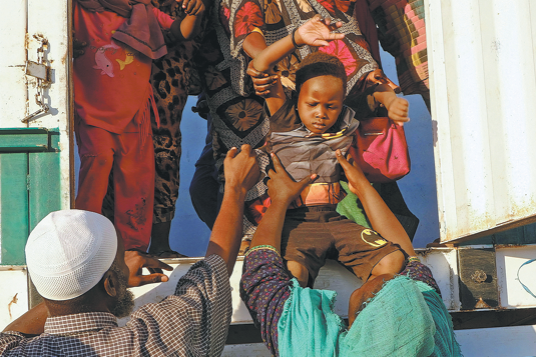
AU criticizes external interference in security issues
The African Union (AU) has issued a strong condemnation of external interference in African nations grappling with security crises, particularly highlighting the ongoing conflict in Sudan. Bankole Adeoye, AU Commissioner for Political Affairs, Peace, and Security, emphasized that the AU must spearhead peace negotiations across the continent, adhering to the principle of ‘African solutions to African problems.’ Speaking in Addis Ababa, Ethiopia, Adeoye stated, ‘We unequivocally condemn all forms of external interference in Sudan or any part of our continent. The AU must lead efforts to identify structural solutions and secure sustainable peace.’ The AU is actively working to end the conflict in Sudan by facilitating political dialogue among all parties, aiming for a comprehensive and unconditional ceasefire. Meanwhile, UN Humanitarian Chief Tom Fletcher expressed concern over the ‘complete impunity’ surrounding atrocities in Sudan’s Darfur region, criticizing global indifference to the crisis. The AU also noted progress in Madagascar, where its Panel of the Wise is assisting in restoring constitutional order, and welcomed the Doha Framework for a Comprehensive Peace Agreement in the Democratic Republic of Congo.
-
Over 50 new foreign academicians elected to China’s top academic institutions
In a significant move highlighting China’s commitment to global scientific collaboration, the Chinese Academy of Sciences (CAS) and the Chinese Academy of Engineering (CAE) have elected a total of 51 foreign academicians in 2025. Among these, 27 were elected to the CAS, while 24 joined the CAE. This election underscores China’s growing influence in the global scientific community and its efforts to foster international partnerships in research and innovation. The newly elected academicians represent a diverse range of expertise and nationalities, reflecting China’s strategy to integrate global talent into its scientific endeavors. This development also aligns with China’s broader goals of advancing technological innovation and addressing global challenges through collaborative research. The election process, known for its rigor and selectivity, ensures that only the most distinguished scholars and engineers are chosen. This initiative not only strengthens China’s academic institutions but also enhances its reputation as a hub for cutting-edge research and development.
-

Fugees rapper Pras Michel sentenced to 14 years in prison for illegal lobbying
Prakazrel ‘Pras’ Michel, a former member of the Grammy Award-winning group Fugees, has been sentenced to 14 years in prison for his involvement in a high-profile political corruption case. The 53-year-old musician was convicted in April 2023 on multiple charges, including acting as an unregistered foreign agent, witness tampering, campaign finance violations, and lying to banks. U.S. District Judge Colleen Kollar-Kotelly delivered the sentence in a Washington, D.C., court on Thursday, despite prosecutors’ recommendation of a life sentence. Michel, who testified in his own defense during the trial, chose not to address the court during sentencing. His attorney, Peter Zeidenberg, criticized the verdict as ‘unsupported by the evidence’ and vowed to appeal, calling the sentence ‘completely disproportionate to the offense.’ The case centered on Michel’s alleged role in funneling over $100 million from Malaysian billionaire Jho Low to influence U.S. politics between 2012 and 2017, spanning the administrations of Barack Obama and Donald Trump. Michel was also accused of lobbying on behalf of the Chinese government. Prosecutors argued that Michel ‘betrayed his country for money,’ exploiting and deceiving various U.S. government entities, including the White House and FBI. The trial featured testimony from Hollywood star Leonardo DiCaprio and former U.S. Attorney General Jeff Sessions. Michel’s co-defendants received significantly lighter sentences, with Elliott Broidy pardoned, George Higginbotham receiving three months of probation, and Nicki Lum Davis sentenced to 24 months. The case also highlighted the broader 1MDB scandal, in which Low allegedly embezzled $4 billion from Malaysia’s sovereign wealth fund. In June 2024, the U.S. Justice Department reached an agreement with Low to return over $100 million to Malaysia. Michel’s case has raised questions about the enforcement of the Foreign Agents Registration Act (FARA), which has seen narrowed prosecutorial scope under Attorney General Pam Bondi’s recent memorandum.
-
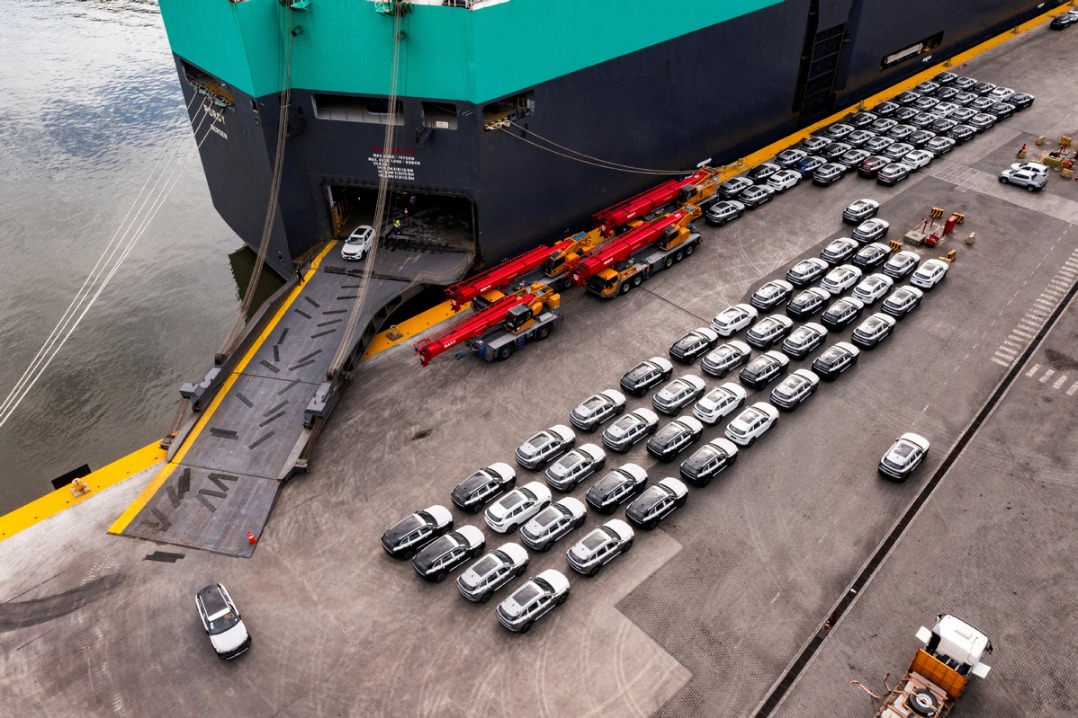
Brazil hit by tariff uncertainty
Brazil, a key player in South American trade, is facing significant economic uncertainties due to the unpredictable tariff policies of the United States. Despite recent efforts to ease trade tensions between China and the US, the lingering effects of the US-initiated trade war continue to disrupt global markets and undermine investor confidence. Raquel Nadal, Deputy Secretary for Macroeconomic Policy at Brazil’s Ministry of Finance, emphasized the lack of predictability in trade conditions, which is stifling investment and growth. ‘If you cannot foresee the terms and conditions of your exports, you hesitate to invest. These tariffs are highly detrimental,’ Nadal stated. She highlighted the risks posed to Brazil’s trade surplus with China, particularly concerning soybean exports, which could suffer if China leverages soybean sales in negotiations with the US. Vivian Fraga, a regulatory affairs expert at TozziniFreire, noted that the US tariffs have far-reaching consequences, reshaping global supply chains and increasing costs across industries. Even companies not directly involved with the US are affected as the ripple effects spread worldwide. Evandro Menezes de Carvalho, an international law professor at Fluminense Federal University, criticized the US trade war for contradicting the principles of the World Trade Organization, which promotes tariff reduction to boost international trade. Carvalho pointed out China’s resilience in handling the tariff wars, forcing the US to reckon with the economic costs of its policies. He also predicted ongoing fluctuations in US-China relations, driven by competition for technological dominance and contrasting approaches to globalization. ‘We are witnessing a US-driven deglobalization and a China-led re-globalization through multilateralism,’ Carvalho remarked. As Brazil navigates these challenges, the broader implications for global trade and economic stability remain a pressing concern.
-
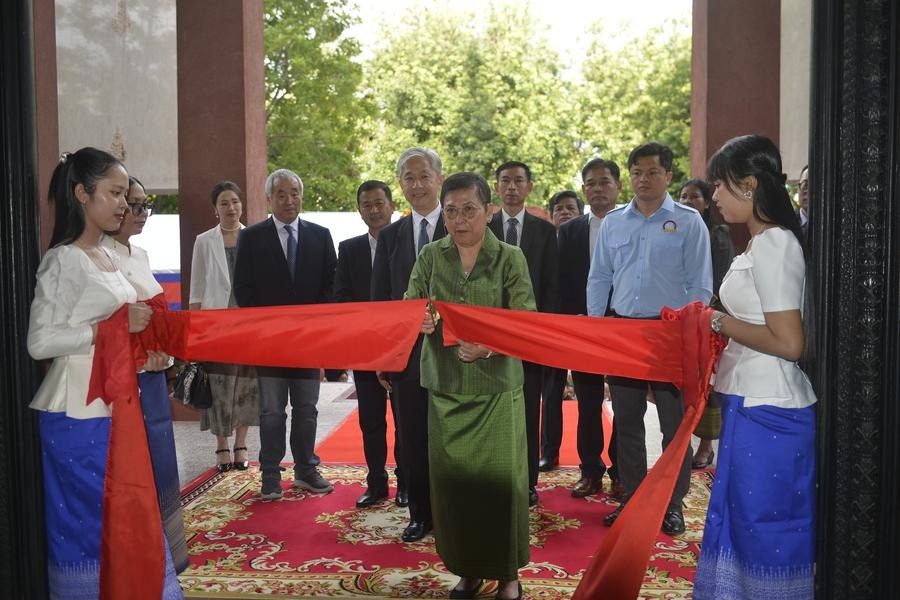
Exhibition celebrates millennial civilizations
A groundbreaking exhibition highlighting the millennia-old cultural connections between China and Cambodia was inaugurated in Phnom Penh on November 19, 2025. Organized by the National Museum of Cambodia in partnership with the China Academy of Cultural Heritage, the event marked the first of its kind, showcasing a rich collection of Chinese artifacts, including bronze statues, ceramics, coins, and representations in Angkorian art. The exhibition also emphasized China’s contributions to the conservation and restoration of Cambodian heritage, particularly in the Angkor Archaeological Park. Cambodian Minister of Culture and Fine Arts Phoeurng Sackona and Chinese Ambassador to Cambodia Wang Wenbin presided over the opening ceremony. Sackona highlighted the enduring cultural exchanges between the two nations, spanning trade, diplomacy, religion, and art. She expressed gratitude for China’s ongoing efforts in preserving Cambodia’s cultural treasures. The exhibition aims to celebrate the shared history and friendship between the two countries, while inspiring future research into Chinese material culture in Cambodia. Chhay Visoth, director of the National Museum of Cambodia, noted that the event would attract both national and international visitors, offering a unique opportunity to explore the ancient ties between the two civilizations. Visitors, including Ros Kunthy, praised the exhibition for its fascinating display of centuries-old artifacts, underscoring the deep-rooted connections between Cambodia and China.
-
Retailer lauded for ‘moral-damage’ compensation
Pangdonglai, a prominent supermarket chain in Henan Province, China, has garnered widespread acclaim for its innovative approach to employee welfare by introducing a moral-damage compensation system. The company recently disclosed detailed records of payments made to employees whose personal dignity was compromised at work, highlighting its commitment to fostering a respectful and fair workplace environment.