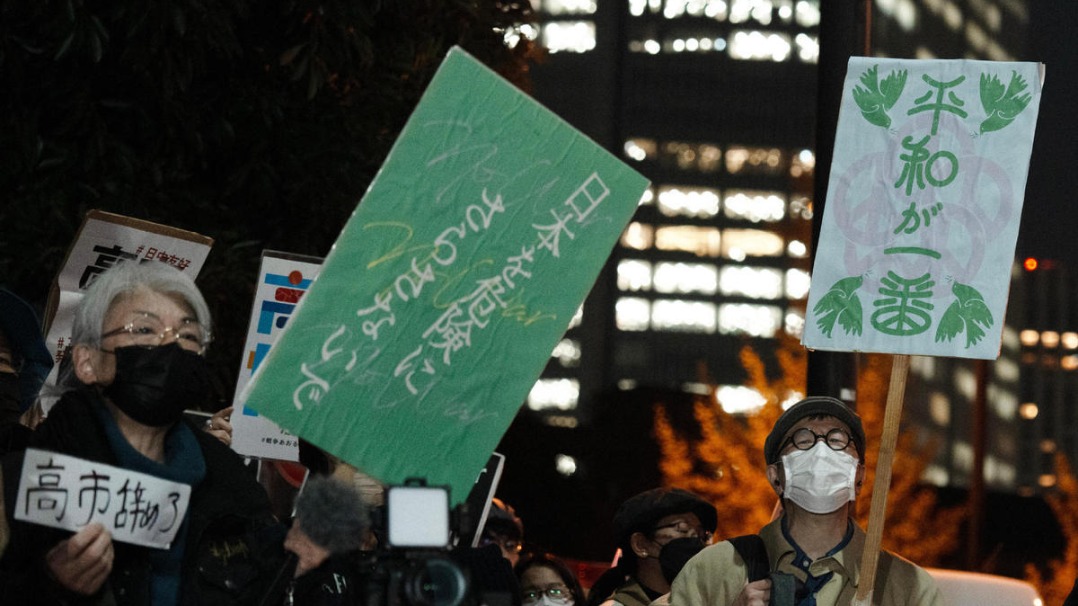
Japanese Prime Minister Sanae Takaichi’s recent remarks suggesting potential military intervention in the Taiwan Strait have ignited widespread condemnation and economic repercussions. Speaking in parliament earlier this month, Takaichi labeled any Chinese military action against Taiwan as a ‘survival-threatening situation’ for Japan, marking the first time a Japanese leader has publicly entertained such a possibility. Her comments, made during the 80th anniversary of the end of World War II, have drawn sharp criticism from U.S. peace activists and Chinese officials alike. Julie Tang, co-founder of Pivot to Peace and a retired judge, accused Takaichi of reviving militarism and fascism, stating, ‘She’s clearly not ready for the world stage.’ The backlash has already impacted Japan’s tourism sector, with major Chinese airlines offering full refunds for flights to Japan following Beijing’s advisory against travel to the country. Chinese tourists, a vital component of Japan’s tourism economy, have been urged to reconsider their plans. Economically, Japan is already grappling with a 1.8% contraction in third-quarter GDP and a staggering debt-to-GDP ratio of 230-260%, raising questions about the feasibility of Takaichi’s stance. Retired judge Lillian Sing, co-founder of the ‘Comfort Women’ Justice Coalition, criticized Takaichi’s judgment, noting Japan’s weak economic position and declining population. China’s permanent representative to the UN, Fu Cong, emphasized that any Japanese military involvement in the Taiwan Strait would be deemed an act of aggression. The timing of Takaichi’s remarks, coinciding with the 80th anniversary of the end of World War II, has intensified the backlash, with critics accusing her of ignorance about Japan’s wartime history and its implications for regional stability.
博客
-

Aerial view of China’s Huangyan Island in South China Sea
China Daily Information Co (CDIC) holds exclusive rights to all content published on its platform, including text, photos, and multimedia materials. Unauthorized reproduction or use of this content in any form is strictly prohibited without prior written consent from CDIC. The website recommends using browsers with a resolution of 1024*768 or higher for optimal viewing. Additionally, the site provides various services such as advertising opportunities, contact information, job offers, and expatriate employment resources. Users can also follow China Daily through its social media channels for updates and news.
-
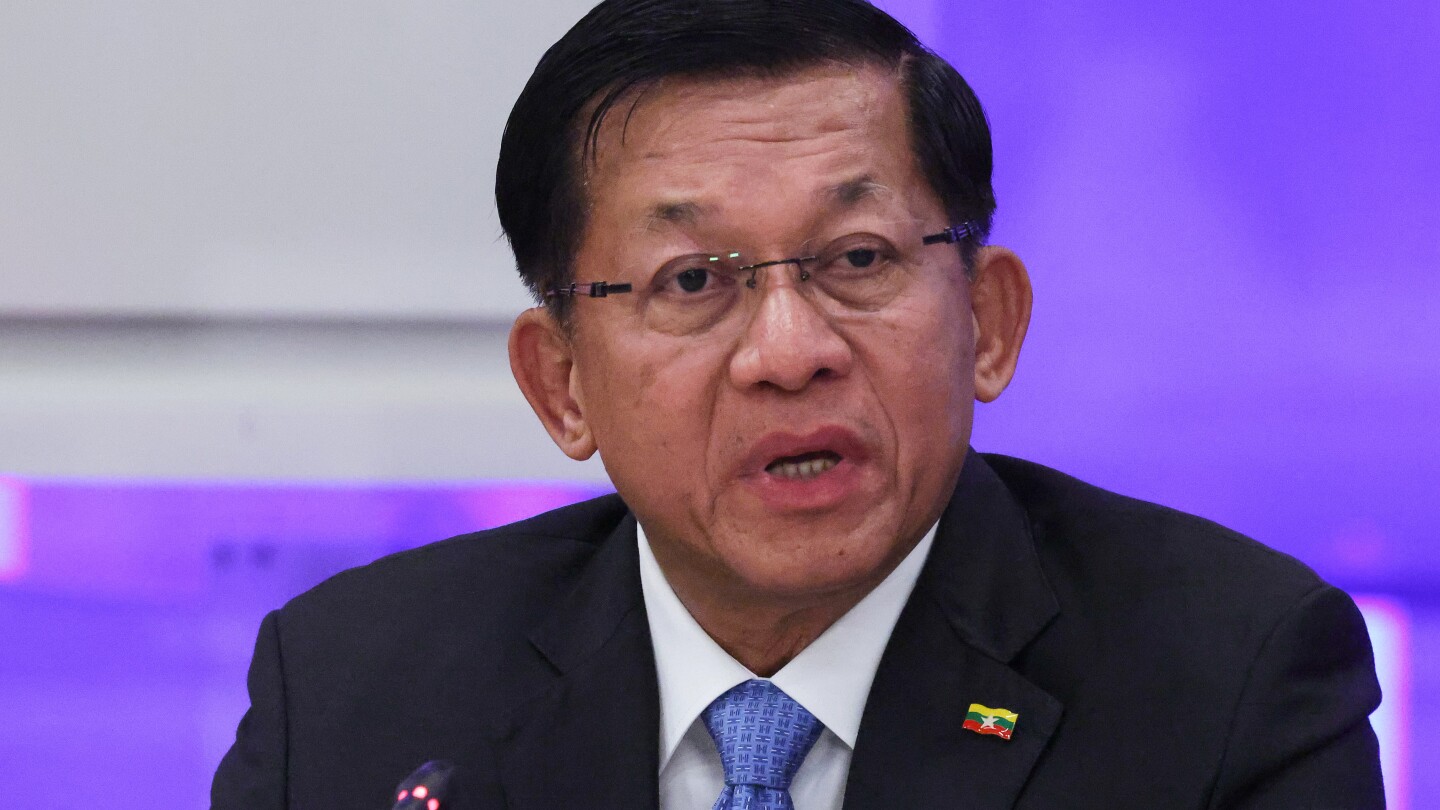
Rights groups slam Trump administration for ending Myanmar deportation protection as civil war rages
The Trump administration’s decision to revoke Temporary Protected Status (TPS) for Myanmar citizens has drawn sharp criticism from human rights groups, who argue that the move disregards the ongoing civil war and widespread human rights abuses in the country. Homeland Security Secretary Kristi Noem justified the decision by citing Myanmar’s “notable progress in governance and stability,” including plans for “free and fair elections” and “successful ceasefire agreements.” However, critics have dismissed these claims as baseless, given the military junta’s brutal crackdown on dissent and the imprisonment of democratically-elected leader Aung San Suu Kyi. Phil Robertson of Asia Human Rights and Labor Advocates likened the decision to Noem’s infamous act of shooting her family’s dog, stating that it would send Myanmar citizens back to “prisons, brutal torture, and death.” The military, led by Senior Gen. Min Aung Hlaing, seized power in 2021 and has since been accused of war crimes, including the indiscriminate use of landmines, targeting of civilians, and forced conscription. The upcoming elections, which exclude Suu Kyi’s party, have been widely condemned as a sham. The National Unity Government (NUG), formed by ousted lawmakers, expressed dismay at the decision, emphasizing that the reasons for revoking TPS do not reflect the dire reality in Myanmar. The State Department’s own human rights report and travel advisory highlight the country’s ongoing violence and instability, further undermining Noem’s claims. Human Rights Watch’s John Sifton called the decision “egregious,” noting that it could affect up to 4,000 people and is based on assertions contradicted by extensive reporting.
-

Tanzania cancels independence day celebrations after election unrest
Tanzania has decided to cancel its upcoming independence celebrations, redirecting funds to rebuild infrastructure damaged during recent election-related unrest. Prime Minister Mwigulu Nchemba announced the decision amidst growing calls from opposition groups for mass demonstrations on December 9, the country’s independence day, to protest alleged killings following last month’s disputed election. The opposition claims hundreds died in a government crackdown, though no official death toll has been released. A commission of inquiry has been established to investigate the incidents. President Samia Suluhu Hassan secured a landslide victory with 98% of the vote, a result the opposition has labeled a ‘mockery of democracy.’ Key opposition leaders, Tundu Lissu and Luhaga Mpina, were barred from contesting the election—Lissu remains detained on treason charges, while Mpina’s candidacy was rejected on technical grounds. Election observers have raised concerns about vote manipulation and the election’s failure to meet democratic standards. The government imposed a five-day internet blackout starting on election day, October 29, and warned against sharing protest-related images. Despite this, graphic footage of the unrest has circulated widely online, with international media verifying its authenticity. The government has dismissed these portrayals as attempts to tarnish Tanzania’s image, maintaining that the country remains safe. Government spokesman Gerson Msigwa stated that the inquiry commission would clarify the events, though concerns about its independence persist. Over 240 individuals were charged with treason following the protests, but President Samia later urged prosecutors to show leniency, leading to some releases. In his announcement, Nchemba appealed for unity and dialogue, urging Tanzanians to avoid violence. President Samia, Tanzania’s first female president, initially gained praise for easing political repression, but critics argue that the political environment has since tightened.
-

Fact box: The development of the under-forest economy in China
China’s under-forest economy is emerging as a significant driver of sustainable development and rural prosperity. According to the National Forestry and Grassland Administration, the country boasts a forest area of 231 million hectares, with economic forests covering approximately 46.67 million hectares. These forests contribute an impressive output value of around 2.2 trillion yuan ($309.43 billion). The under-forest economy, which utilizes over 40 million hectares of land, encompasses diverse industrial models such as under-forest planting, farming, product collection and processing, and forest landscape utilization. This sector employs approximately 34 million people and supports 950,000 business entities, generating an annual output value exceeding 1 trillion yuan. Notably, 14 provincial-level regions have dedicated over 1.33 million hectares to under-forest economic activities, with nine regions reporting an output value surpassing 50 billion yuan. The under-forest economy offers a unique advantage by not competing with agricultural land used for grain and other crops, thus creating new income opportunities for farmers. It also provides a sustainable pathway for achieving green development and wealth creation. The significance of this sector is underscored in the recommendations for the 15th Five-Year Plan (2026-30), adopted at the fourth plenary session of the 20th Central Committee of the Communist Party of China in October. The plan highlights the under-forest economy and forestry industries as key ‘green engines’ that can drive rural vitalization and advance the goal of common prosperity.
-

Spacecraft to launch with full cargo load
China is gearing up for the launch of the unmanned Shenzhou XXII spacecraft on Tuesday from the Jiuquan Satellite Launch Center in Northwest China, as announced by the China Manned Space Agency. The agency confirmed that the propellant injection for the Long March 2F carrier rocket, which will propel the spacecraft, has been successfully completed. The Shenzhou XXI crew aboard the Tiangong space station remains in good health, according to the agency’s statement released on Monday afternoon. Zhou Yaqiang, from the agency’s general technical bureau, revealed that Shenzhou XXII will be fully loaded with cargo, including essential provisions for astronauts and equipment necessary for the operations of the Tiangong space station. Originally slated to transport the Shenzhou XXII crew to Tiangong in April 2026, the spacecraft’s mission was adjusted due to the discovery of tiny cracks on the viewport window of the Shenzhou XX return capsule, likely caused by space debris. This rendered the capsule unsafe for use, prompting the need for Shenzhou XXII as a standby crew ship. The Shenzhou XX astronauts, who spent a record-breaking 204 days in orbit, returned safely to Earth on November 14 using the Shenzhou XXI spacecraft, nine days later than planned. Their successful return was facilitated by preplanned contingency measures, including the maintenance of a backup rocket and crew spacecraft, ensuring a rapid response in case of in-orbit emergencies.
-

Innovation crucial to agri development
China is intensifying its efforts to achieve comprehensive agricultural and rural modernization during the 15th Five-Year Plan (2026-30), addressing critical issues such as self-reliance, sustainability, and food security. The nation’s strategy emphasizes technological innovation, mechanization, and infrastructure development to transform the agricultural sector while reducing urban-rural disparities in public services, income, and governance.
-
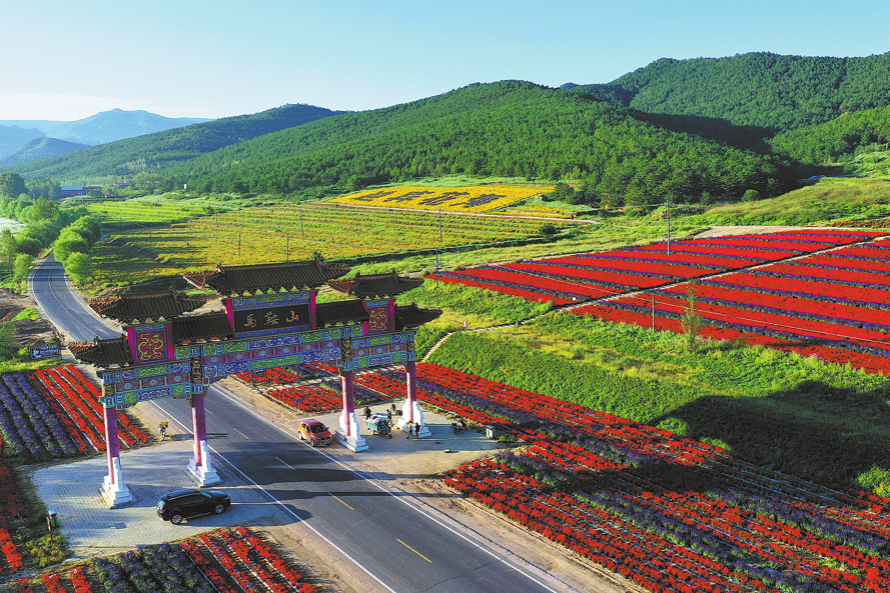
Money grown on trees
Two decades after President Xi Jinping introduced the visionary concept that ‘lucid waters and lush mountains are invaluable assets,’ China’s forests have undergone a remarkable transformation. Once valued primarily for timber, these natural resources have evolved into multifaceted assets that enrich soil, combat desertification, generate income, and attract tourism. This shift underscores a broader commitment to sustainable development, where protection and conservation are prioritized over exploitation. Today, forests cover more than 25% of China’s landmass, with a stock exceeding 20 billion cubic meters. In northern regions, the Three-North Shelterbelt Program has created a vast man-made forest shelterbelt, serving as a green barrier against wind and sand while fostering local industries like forest-based agriculture and ecotourism. This initiative not only safeguards the environment but also bolsters local economies, demonstrating how ecological preservation can drive prosperity.
-
Traditional treatments soothe patients’ pains
Southwest China’s Guizhou province, home to 48 of the country’s 56 ethnic groups, has long been a hub of cultural and medicinal diversity. In Tongren, a city in Guizhou, Bai Yutao, a rehabilitation physician and acupuncturist, employs traditional Qiang ethnic techniques to treat patients. His method, known as ‘white-stone therapy,’ involves immersing polished stones in herbal broth, wrapping them in cloth, and rolling them across a patient’s back to release muscle tension. This fusion of ancient practices and modern medical care exemplifies Guizhou’s unique approach to traditional Chinese medicine (TCM).
Guizhou’s rich ethnic heritage has become a cornerstone of its TCM industry. At Jiangkou County Hospital of Traditional Chinese Medicine, Bai and his team have adapted Qiang manual techniques to meet clinical standards, ensuring safety and efficacy. Historically, ethnic healing systems like Miao and Qiang medicine included shamanistic elements and were passed down orally. However, as younger generations pursue formal education and urban jobs, the number of traditional healers is dwindling. Bai emphasizes the need to preserve these cultural roots while making them accessible to a broader audience.
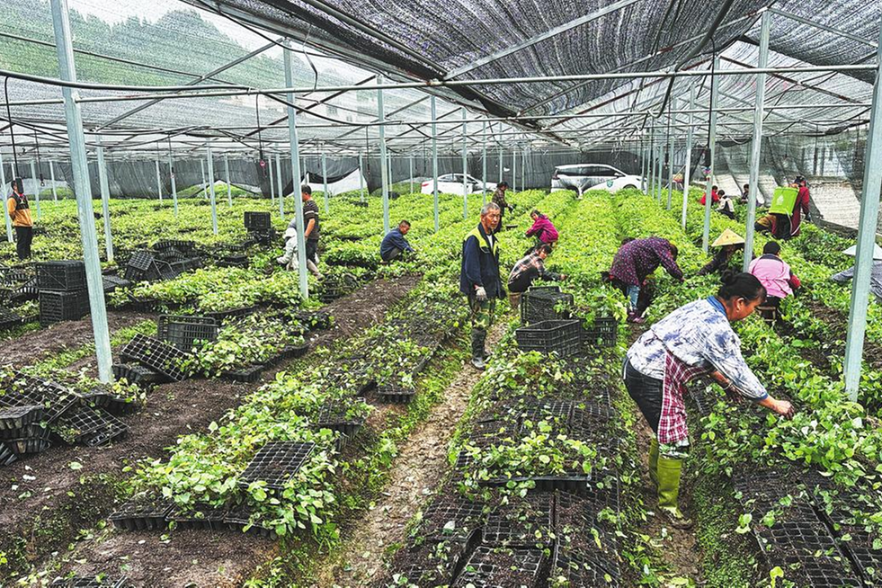
In 2024, Tongren was designated a national pilot zone for the inheritance and innovative development of TCM. Efforts include standardizing treatments, regulating medicinal materials, and establishing quality control centers. The region is also leveraging its unique plant resources for economic growth. For instance, barrenwort, a herb known for strengthening tendons and bones, is cultivated in Jiangkou county and has become a staple in medicines and supplements. State-owned China National Pharmaceutical Group has partnered with local cooperatives to build the country’s largest barrenwort breeding base, providing technical guidance and purchase guarantees to farmers.
Guizhou’s aromatic and medicinal raw materials are also gaining international recognition. Companies like Guizhou Miaoyao Biotech Co export essential oils and plant extracts, with valerian oil being a major product. The company supports over 3,000 cooperative households and plans to expand its branded wellness products. This blend of tradition and innovation is transforming Guizhou’s healthcare landscape while boosting its economy.
-

Singer’s dedication to local opera undimmed by age
In the serene mornings of Fuzhou, Jiangxi province, the air resonates with the melodious voice of Wan An’an, an 84-year-old national treasure and inheritor of Fuzhou Tea-picking Opera. This art form, deeply rooted in local folk traditions and performed in the Fuzhou dialect, is celebrated for its vibrant rhythm, expressive gestures, and the unique ‘tea flavor’ that narrates the lives of ordinary people.
Wan’s journey with the opera began at the tender age of 14 when she joined the Fuzhou Tea-picking Opera Troupe. Despite the lack of professional tutors and proper props, her dedication never wavered. Her career peaked in 1959 when she played Xiaolan in the revolutionary drama ‘Red Pine Forest,’ earning national acclaim and the honor of performing for state leaders.
Recognized as a national intangible cultural heritage in 2011, Fuzhou Tea-picking Opera owes much of its preservation to Wan’s efforts. Even after retiring from the troupe in 2001, she continued to teach, emphasizing the importance of daily practice and audience interaction. Her teaching method blends rigorous training with creative imagination, using classic excerpts to teach the essential coordination of eyes, hands, body, and steps.
In recent years, Fuzhou’s cultural scene has been enriched by international exchanges, such as the Tang Xianzu International Theater Exchange Month, which has seen performances like an English adaptation of ‘The Peony Pavilion’ by a troupe from the University of Birmingham. Wan views these exchanges as a profound dialogue between Eastern and Western cultures, offering opportunities for Fuzhou Tea-picking Opera to learn and evolve.
Despite her age, Wan remains active in workshops and performances, advocating for the opera’s traditional charm while embracing modern elements. ‘Tea-picking Opera deserves a broader stage and a brighter future,’ she asserts, her passion undimmed by the years.