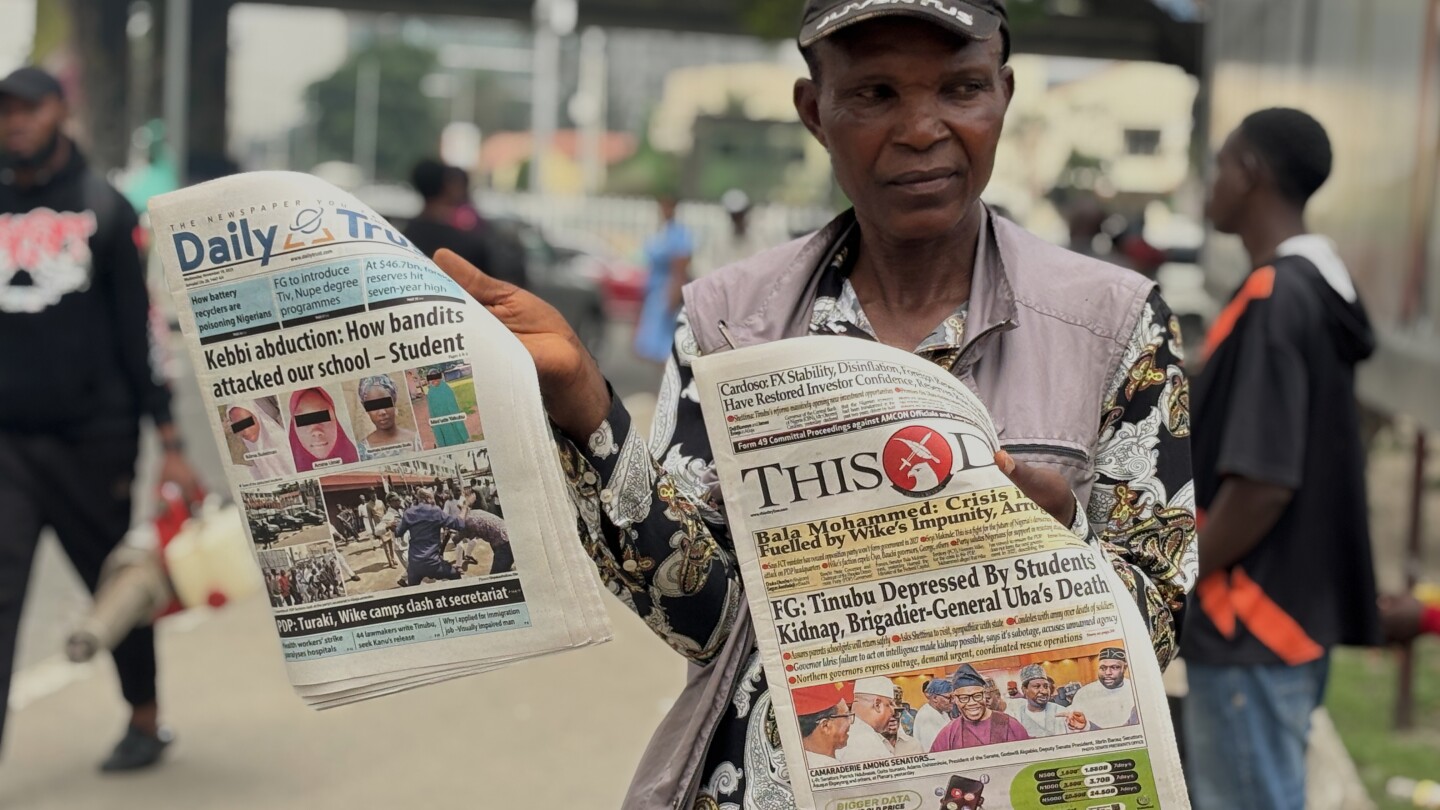
In a significant development, all 24 schoolgirls abducted from the Government Girls Comprehensive Secondary School in Kebbi state, Nigeria, have been successfully rescued, President Bola Tinubu announced on Tuesday. The mass abduction occurred on November 17 in Maga town, where 25 girls were initially taken. One girl managed to escape the same day, while the remaining 24 were freed following a coordinated rescue operation, though specific details of the mission remain undisclosed. President Tinubu expressed relief over the girls’ safe return and emphasized the urgent need to bolster security in vulnerable regions to prevent future kidnappings. The incident is part of a troubling pattern of mass abductions in Nigeria, including a recent raid on Saint Mary’s School in Niger state, where over 300 students and staff were kidnapped. While 50 students escaped over the weekend, the fate of the others remains uncertain. Musa Rabi Magaji, the principal of the Kebbi school, confirmed the girls’ release but noted they are still under official custody, with no immediate updates on their condition. Abdulkarim Abdullahi, whose two daughters were among the abducted, expressed relief and awaited further information on their well-being. Meanwhile, 38 worshippers kidnapped during a deadly church attack in Kwara state were also freed, according to Governor AbdulRahman AbdulRazaq. The recent wave of abductions, attributed to armed bandits, highlights the ongoing security crisis in Nigeria, where kidnappings for ransom have become a pervasive issue. Analysts note that these gangs often target schools and remote communities, exploiting the lack of government presence. Since the infamous Chibok schoolgirls’ abduction a decade ago, over 1,500 students have been seized, with many released only after ransom payments. The situation underscores the need for comprehensive security reforms to address the root causes of this escalating crisis.
博客
-

Two outstanding students named 2025 UAE Rhodes Scholars, set to study at Oxford
Two exceptional Emirati students, Amal Musa Ali Alrebh and Fatima Mohammed Abdulla AlNuaimi, have been awarded the prestigious 2025 UAE Rhodes Scholarship, securing their places for postgraduate studies at the University of Oxford in October 2026. The scholars, aged 22 and 24 respectively, were chosen from a highly competitive pool for their intellect, leadership potential, moral character, and dedication to service. Their selection aligns closely with the UAE’s National Youth Agenda 2031 and its vision for nurturing the next generation of homegrown changemakers.
Amal Alrebh, a biomedical engineering student at Khalifa University, aims to pursue a master’s in healthcare improvement and evaluation, followed by a master’s in medical physics at Oxford. Her goal is to develop culturally grounded, sustainable healthcare solutions for the UAE. Fatima AlNuaimi, currently studying English and Comparative Literature at Columbia University, will pursue a Master of Studies in World Literature at Oxford. She is committed to elevating Gulf literature and integrating marginalised regional narratives into global academic and creative spaces.
The UAE Rhodes Scholarship, established in 2013 and endowed by the Salama bint Hamdan Al Nahyan Foundation, has supported 26 scholars to date. The programme plays a strategic role in advancing the UAE Centennial 2071 plan, which emphasizes education, innovation, and leadership development. Previous Emirati Rhodes Scholars now hold senior positions in government and various sectors, demonstrating the programme’s impact on national progress.
Omar Saif Ghobash, Advisor to the UAE Minister of Foreign Affairs and Chair of the Selection Committee, praised the scholars, stating, ‘Rhodes Scholars embody the UAE’s enduring belief in education as a catalyst for growth on individual, national, and global levels.’ Angela Migally, Executive Director of the Salama bint Hamdan Al Nahyan Foundation, highlighted the transformative power of the scholarship, emphasizing its role in creating environments where young people can learn, grow, and lead with integrity.
-
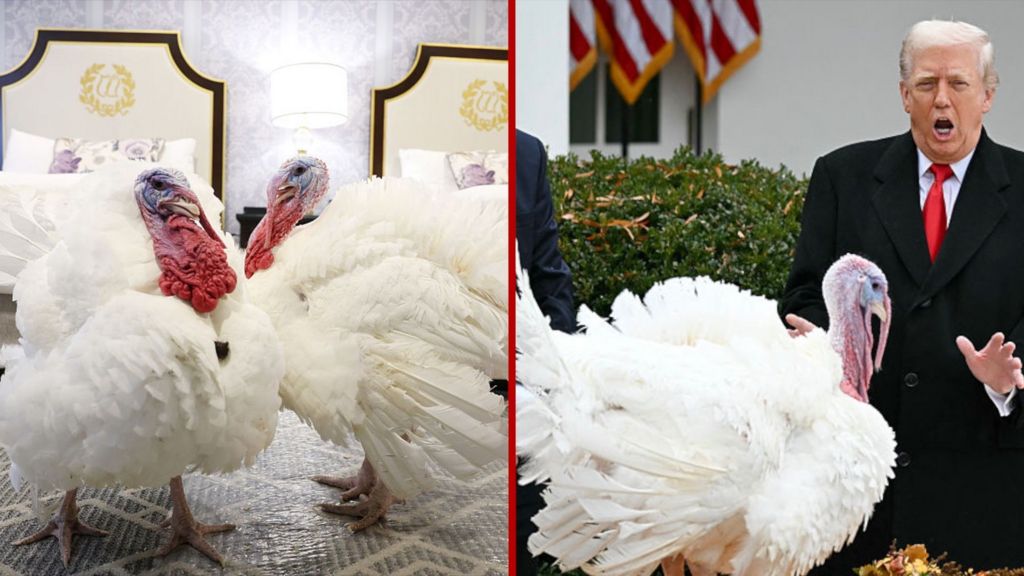
Watch: President Trump pardons the Thanksgiving turkeys
In a time-honored tradition at the White House, President Donald Trump officially pardoned two Thanksgiving turkeys, named Waddle and Gobble, during a festive ceremony. The event, held in the Rose Garden, showcased the president’s playful side as he humorously remarked on the turkeys’ good fortune. This annual ritual, dating back several decades, symbolizes a gesture of mercy and goodwill during the holiday season. The pardoned turkeys will now live out their days at a farm, spared from the Thanksgiving table. The ceremony also provided a lighthearted moment amid the often intense political climate, drawing smiles from attendees and viewers alike.
-

Meta in talks to spend billions on Google’s chips, The Information reports
Meta, the parent company of Facebook, is reportedly in advanced discussions with Alphabet’s Google to secure a multi-billion dollar agreement for the use of Google’s tensor processing units (TPUs) in its data centers. According to a report by The Information, this collaboration could see Meta renting TPUs from Google Cloud as early as next year, with full integration into its data centers slated for 2027. Google has positioned its TPUs as a cost-effective and secure alternative to Nvidia’s chips, which have faced supply constraints. The report also suggests that Google aims to capture 10% of Nvidia’s revenue through its TPU business. Neither Meta, Google, nor Nvidia have commented on the matter, and Reuters has yet to independently verify the report. Meta has been a significant customer of Nvidia since 2022, utilizing its graphics processing units (GPUs) to train AI models and support its vast user base of over 3 billion daily app users. Earlier this year, Meta announced a $600 billion investment in U.S. infrastructure and jobs over the next three years, including the development of AI data centers.
-
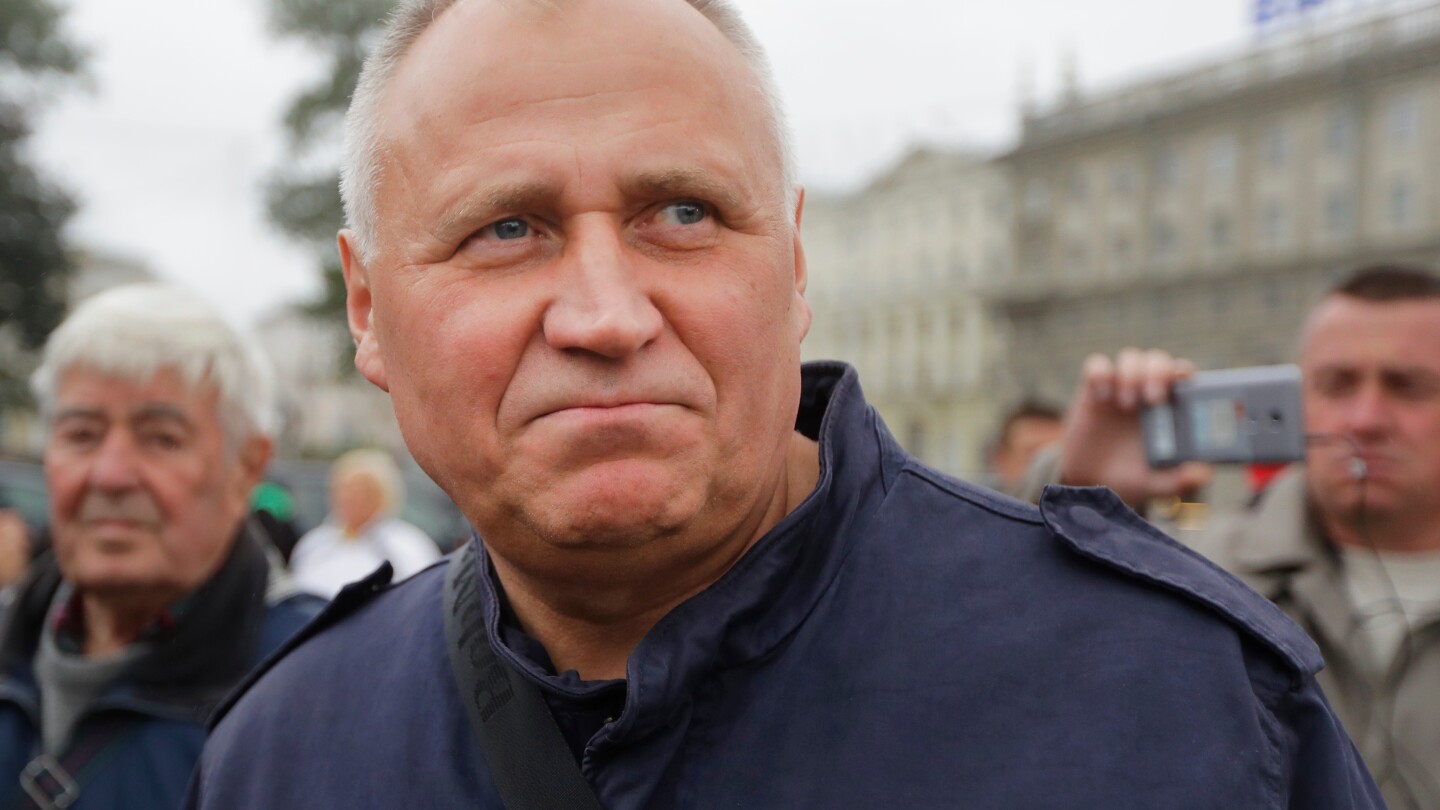
Belarusian politician Mikola Statkevich returned to prison after refusing ‘forced deportation’
Belarusian opposition leader Mikola Statkevich has been returned to prison after refusing to leave his homeland following a U.S.-mediated release, activists revealed on Tuesday. Statkevich, a former presidential candidate, had been among a group of political prisoners pardoned by Belarusian President Alexander Lukashenko on September 11, following a request from U.S. President Donald Trump. Despite being transported to the Belarusian-Lithuanian border with other freed detainees, Statkevich, 69, rejected what he termed a ‘forced deportation,’ forcibly exiting the bus and lingering in the border’s no-man’s land for hours before being taken into custody by Belarusian police. The Ministry of Internal Affairs confirmed to his wife, Maryna Adamovich, that he is now back in prison and ‘continues to serve his sentence.’ Statkevich was sentenced in 2021 for allegedly organizing mass unrest, a charge widely criticized by human rights groups as politically motivated. His current whereabouts remain undisclosed, and concerns over his health have intensified, given his history of a heart attack while incarcerated. Pavel Sapelka, a lawyer with the Viasna human rights organization, argued that Statkevich’s pardon should have ensured his freedom, labeling his re-imprisonment as ‘legal chaos.’ This incident underscores the ongoing repression in Belarus, which currently holds 1,246 political prisoners, including Nobel Peace Prize laureate Ales Bialiatski. Despite recent efforts by Lukashenko to mend ties with the West, including the release of 52 prisoners and the lifting of sanctions on Belarus’ national airline, Belavia, the situation highlights the regime’s enduring authoritarian grip.
-
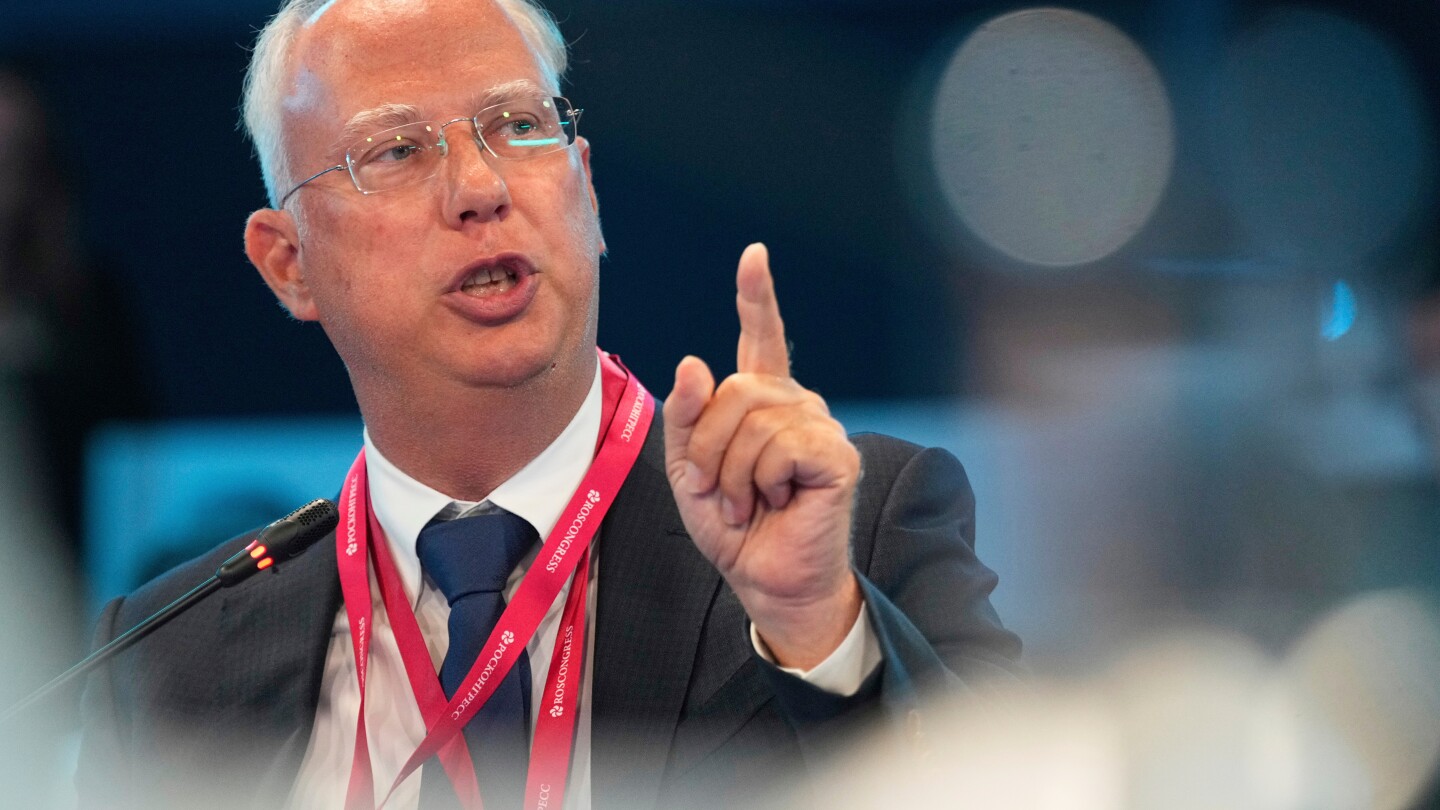
A look at Kirill Dmitriev, the Russian envoy who helped craft the new Ukraine peace proposal
Kirill Dmitriev, the head of Russia’s sovereign wealth fund, has emerged as a pivotal figure in crafting a new proposal to end Moscow’s war in Ukraine. Despite lacking formal diplomatic credentials, Dmitriev’s background as a former investment banker and his role as a back-channel communicator between the Kremlin and allies of former U.S. President Donald Trump have positioned him uniquely for this task. His inclusion on the U.S. sanctions list has not deterred his involvement in high-stakes negotiations.
Boris Bondarev, a former Russian diplomat who resigned in protest after Russia’s 2022 invasion of Ukraine, noted that Dmitriev’s informal status might actually be an asset. His ability to connect with figures like Steve Witkoff, Trump’s special envoy, has made him a valuable intermediary. Bondarev emphasized that Dmitriev’s approachability and business-oriented mindset resonate well with U.S. counterparts.
Born in Kyiv in 1975, Dmitriev’s early exposure to the U.S. through a school exchange program and his education at Stanford University and Harvard Business School laid the foundation for his global perspective. His career trajectory, which included stints at Goldman Sachs and McKinsey & Company, eventually led him to private equity firms in Russia and Ukraine. In 2011, he was appointed CEO of the Russian Direct Investment Fund (RDIF), where he worked to attract foreign investment and foster financial ties with countries like Saudi Arabia and the UAE.
Political analyst Anton Barbashin described Dmitriev as a modern negotiator, contrasting him with traditional Soviet-trained diplomats. His ability to navigate the Trump administration’s business-centric approach has further solidified his role. Dmitriev’s connections extend beyond business; his wife, Natalia Popova, is linked to the Putin family through her role at Innopraktika, a nonprofit headed by the president’s daughter, Katerina Tikhonova.
Despite his informal status, Dmitriev’s efforts have not gone unnoticed. If his peace proposals succeed, he could earn significant recognition from Vladimir Putin. However, as Bondarev cautioned, the Kremlin retains the power to disown him at any moment, underscoring the precarious nature of his role.
-
Trump envoy denies bias as he pushes for Sudan peace plan
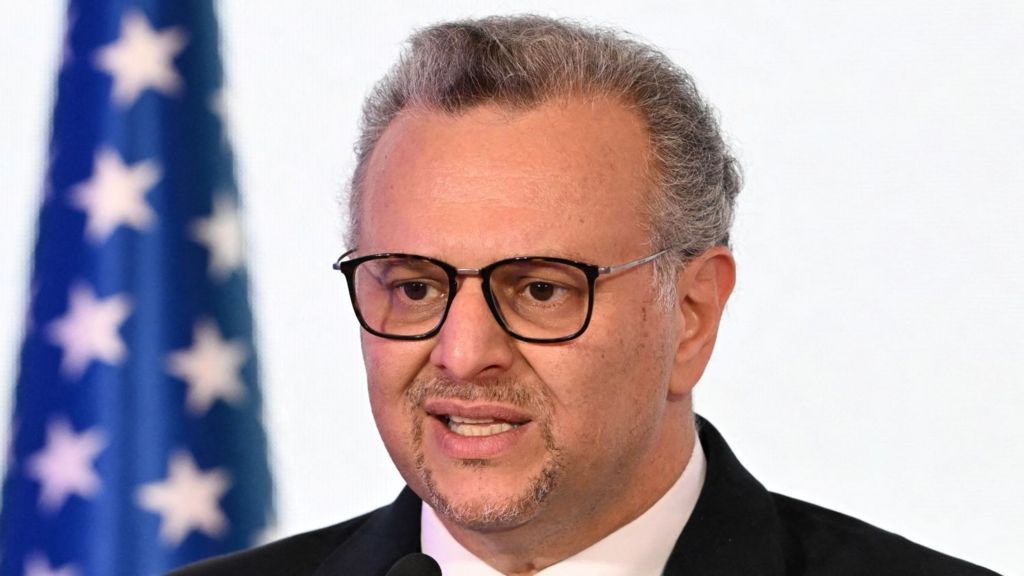
Massad Boulos, the senior Africa envoy for former US President Donald Trump, has dismissed allegations that the US-led peace proposal to end Sudan’s civil war is biased. The proposal, backed by the US, Saudi Arabia, Egypt, and the United Arab Emirates (UAE), aims to mediate between Sudan’s army and the paramilitary Rapid Support Forces (RSF), who have been locked in a brutal conflict for over two years. On Sunday, Sudan’s army chief, Abdel Fattah al-Burhan, criticized the latest ceasefire proposal as ‘the worst ever,’ claiming it favored the RSF and sidelined the army. He also accused the UAE of supporting the RSF, a claim the Gulf state denies. Boulos, speaking at a media briefing in the UAE alongside presidential adviser Anwar Gargash, refuted Burhan’s accusations, stating, ‘He was making reference to something that does not exist, that has never been presented by us.’ The US-led ‘Quad’ proposed a three-month humanitarian truce in September, followed by a permanent ceasefire and a transition to civilian rule. However, the army rejected the plan, citing ‘foreign interference’ and equating the RSF to a ‘racist terrorist militia.’ The RSF announced a unilateral ceasefire on Monday, but the army accused them of attacking Babanusa, their last stronghold in West Kordofan state. Analysts suggest the RSF’s ceasefire declaration is a political maneuver to gain favor with the Quad. The conflict, which began in April 2023, has displaced 12 million people and caused what the UN calls the world’s worst humanitarian crisis. Both sides have been accused of war crimes, with recent reports of atrocities in el-Fasher sparking international condemnation.
-

Ageing populations a ‘ticking time bomb’ for GDP growth, says EBRD
The European Bank for Reconstruction and Development (EBRD) has issued a stark warning about the economic repercussions of ageing populations, describing the trend as a ‘ticking time bomb’ for GDP growth. In its annual report released on Tuesday, the EBRD highlighted that declining birth rates and an increasing share of elderly citizens are already undermining economic progress in several nations. Emerging Europe, in particular, is projected to see a reduction in annual per capita GDP growth by nearly 0.4 percentage points between 2024 and 2050 due to a shrinking working-age population.
EBRD Chief Economist Beata Javorcik emphasized that post-communist countries are ‘getting old before getting rich,’ with a median age of 37 and an average GDP per capita of $10,000—far below the levels seen in advanced economies during similar demographic stages. The report identified multiple factors contributing to declining birth rates, including shifting social norms and the impact of motherhood on women’s career earnings. While many EBRD member states have implemented incentives to encourage higher birth rates, these measures have failed to produce significant or lasting results.
Migration, often suggested as a solution, remains politically unpopular in most regions. Additionally, public sentiment toward leveraging artificial intelligence (AI) to boost productivity is mixed. Javorcik argued that extending working lives through retraining and pension reforms could be the most effective strategy, though it requires candid discussions with voters about the implications of demographic shifts.
The report also noted that ageing leaders, who tend to prioritize pension protection and restrict migration, further complicate efforts to address the issue. Globally, the average age of leaders is now 60, significantly older than the median adult. In autocracies, this gap has widened to 26 years in 2023, up from 19 years in 1960.
For newer EBRD member nations like Nigeria, the focus should be on job creation and private sector expansion to capitalize on their current demographic dividend. However, Javorcik cautioned that this window of opportunity is fleeting, as birth rates in other parts of Africa are also declining. ‘These countries must act now to secure their economic future,’ she said.
-
Why Goldman Sachs is so optimistic about China
In a surprising turn of events, China has managed to outmaneuver the United States in the ongoing trade war, thanks to President Xi Jinping’s strategic patience and exploitation of President Donald Trump’s eagerness for a quick deal. This has led to another delay in the economic arms race initiated by Trump, pushing any potential trade agreement to 2027 at the earliest. This delay not only gives the U.S. Supreme Court ample time to potentially rule Trump’s tariffs unconstitutional but also allows Beijing to further insulate its economy from U.S. pressures. China is projected to grow by 5% this year, despite the tariffs, while the U.S. faces a shaky labor market and rising inflation. Goldman Sachs predicts even stronger growth for China in 2026, potentially reaching 6%, driven by government efforts to boost manufacturing and exports. However, challenges remain, including a property crisis, high youth unemployment, and an aging population. Meanwhile, escalating tensions between China and Japan over Taiwan add another layer of complexity to the geopolitical landscape. Despite these hurdles, China’s economy appears resilient, and Trump’s efforts to destabilize it have so far fallen short.
-
Turkey arrests three suspected Emirati agents
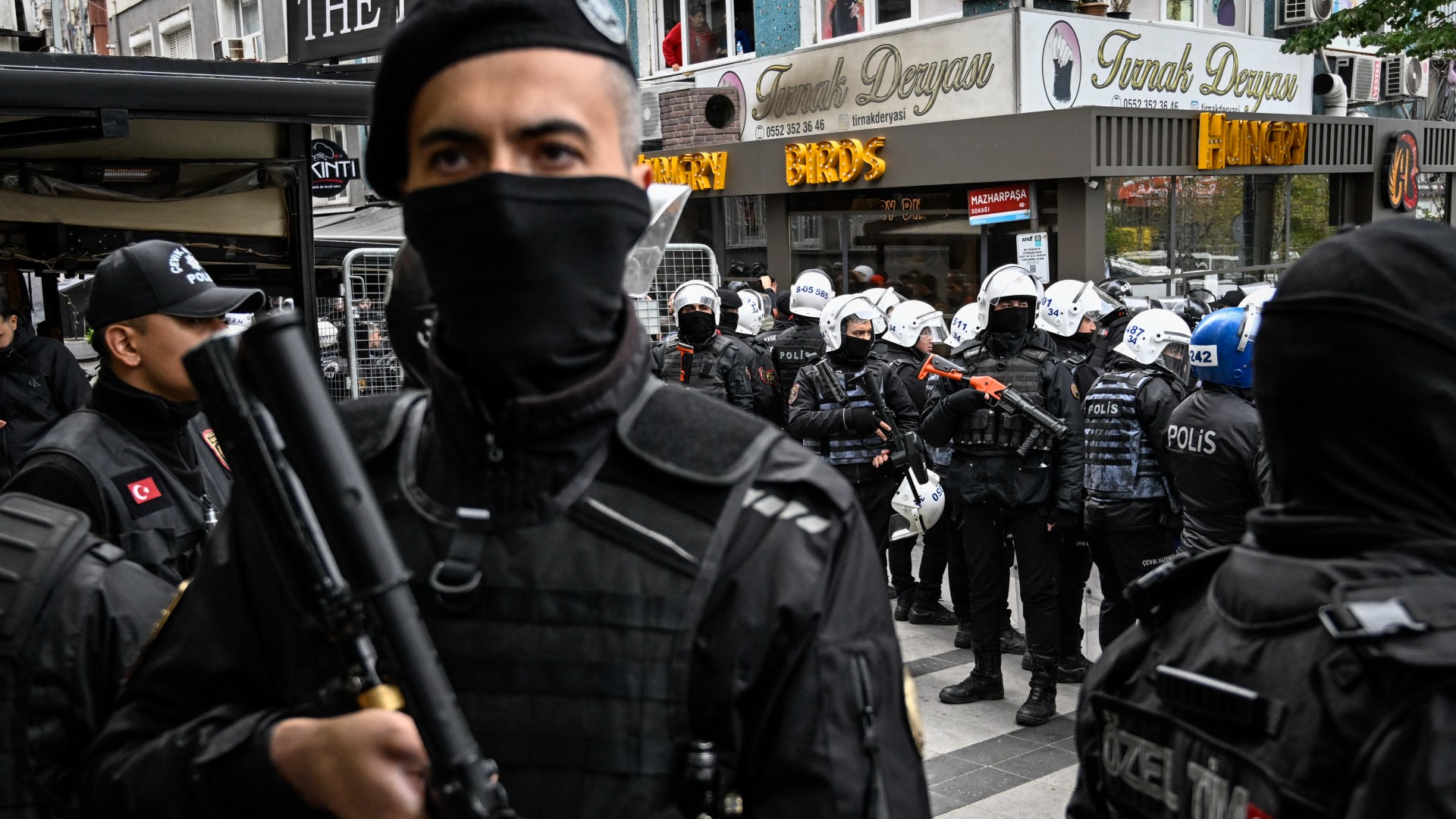
Turkish authorities have apprehended three individuals accused of espionage activities on behalf of the United Arab Emirates (UAE) intelligence service, according to a statement released by the Istanbul Chief Prosecutor’s office on Tuesday. The suspects allegedly utilized a Turkish mobile phone number to gather sensitive personal information on key public officials in Turkey, including executives in the defense sector and representatives of foreign nations. The prosecutor’s office revealed that the suspects obtained a mobile phone line from a Turkish GSM operator, which was subsequently transported to the UAE for use by intelligence operatives. During a coordinated operation, three suspects were arrested, while a fourth individual remains at large, prompting an international arrest warrant. This incident occurs against the backdrop of renewed tensions between Turkey and the UAE, particularly over their divergent stances on the Sudan conflict. While the UAE supports the paramilitary Rapid Support Forces, Turkey has strengthened its ties with the Sudanese army. Despite these challenges, Turkish officials emphasize that their relationship with the UAE remains cordial, with both nations agreeing to compartmentalize disputes to avoid further escalation. This development follows a series of similar arrests in Turkey targeting individuals allegedly linked to foreign intelligence agencies, including those of Israel, Russia, and Iran.