博客

  • Canadian minister resigns from cabinet over oil pipeline deal

    Canadian minister resigns from cabinet over oil pipeline deal

    In a dramatic display of political dissent, Canadian Languages Minister Steven Guilbeault tendered his resignation from Prime Minister Mark Carney’s cabinet on Thursday, directly opposing a newly signed oil pipeline agreement between the federal government and Alberta province.

    The resignation occurred mere hours after Ottawa and the oil-rich western province finalized a memorandum of understanding to advance development of a private-sector pipeline project. This infrastructure initiative aims to transport a minimum of 1 million barrels daily of low-emission bitumen from Alberta’s oil sands to international markets.

    Guilbeault, who has served as official languages minister since May and held the Canadian identity and culture portfolio since March, articulated his opposition through a formal statement posted on social media platform X. ‘I remain one of those for whom environmental issues must remain front and center,’ declared the former environment and climate change minister. ‘That is why I strongly oppose the Memorandum of understanding between the federal government and the government of Alberta.’

    The controversial agreement confirms federal support for a pipeline that would enable bitumen exports from a strategic deep-water port to Asian markets, representing a significant expansion of Canada’s energy export capabilities. Guilbeault’s departure highlights the ongoing tension within the Canadian government between economic development priorities and environmental commitments, particularly concerning fossil fuel infrastructure projects.

    The timing of this resignation, occurring on the same day as the agreement’s signing, delivers a substantial political blow to the Carney administration and underscores the deep ideological divisions within the governing coalition regarding climate policy and resource development.


  • Chancay Port becomes new trade gateway

    Chancay Port becomes new trade gateway

    Peru’s Chancay Port has completed its inaugural year of commercial operations, establishing itself as a pivotal maritime gateway transforming Sino-Latin American trade dynamics. The facility, which marked its first anniversary on November 15, has rapidly gained significance amid growing cargo flows between China and South American nations.

    According to Carlos Aquino, Professor of International Economics at Peru’s National University of San Marcos, the port is already reshaping regional trade patterns. “The volume of cargo departing directly for China continues to increase, encompassing not only Peruvian exports but also goods from Ecuador, Chile, and Colombia,” Aquino noted. This direct routing reduces transit duration by approximately ten days, yielding an estimated 30 percent reduction in freight expenses.

    Customs data reveals substantial trade growth through the port, with Chinese imports via Chancay exceeding $759 million in value during 2025. Vehicles and machinery constitute the primary commodities, while 79 percent of customs declarations designate China as their destination, underscoring the deepening commercial relationship.

    Javier Eduardo Franco Castillo, Peru’s Customs Administration Chief, emphasized the nation’s commitment to enhancing trade security and efficiency, stating: “We continue to facilitate international logistics chains and combat smuggling to support trade with the world’s main economies, including China, our principal trading partner.”

    The port’s emergence has stimulated competitive responses within Peru’s maritime sector. The country’s largest port at Callao is undertaking infrastructure upgrades to remain competitive, now offering direct connections to Chinese and Asian ports. This heightened competition has already reduced freight costs for both Peruvian exporters and importers.

    Beyond port operations, Chancay’s influence extends to broader infrastructure development. Aquino highlighted how increased goods movement is revitalizing proposals for highway projects and the long-discussed bi-oceanic railway connecting Peru and Brazil. Additionally, two export-processing zones planned near the port could enable Peru’s transition from raw material exports to value-added manufacturing.

    The port’s improved efficiency particularly benefits perishable agricultural exports including blueberries, grapes, and avocados, while Chinese imports such as electronics, automobiles, and industrial machinery have become more affordable. Chancay has also emerged as a crucial entry point for Chinese electric vehicles expanding across South American markets.

    Aquino concluded that Peru is evolving into both the entry point for Chinese and Asian goods in South America and the exit port for South American exports to China and Asian markets, positioning Chancay to become a major logistics hub connecting China and Latin America.

  • S. Korea’s 4th rocket launch successful

    S. Korea’s 4th rocket launch successful

    South Korea has triumphantly entered a new chapter in its space exploration journey with the successful fourth launch of its domestically developed Nuri space rocket on Thursday. The landmark event, which occurred at 1:13 AM from the Naro Space Center in Goheung, represents a significant milestone in the nation’s aerospace capabilities and marks a strategic shift toward private sector integration in space technology development.

    The 200-metric-ton launch vehicle, carrying a 516-kilogram primary satellite and twelve secondary payloads, achieved orbital insertion despite experiencing a minor delay due to abnormal pressure sensor readings prior to liftoff. President Lee Jae-myung celebrated the achievement as demonstrative of South Korea’s technological self-reliance and a foundation for future generations, pledging continued government support for scientific innovation and space sector investment.

    This launch distinguishes itself as the first to feature comprehensive private sector participation throughout the entire process. Hanwha Aerospace spearheaded the manufacturing and assembly operations using government-transferred technology, under the supervision of the Korea Aerospace Research Institute. This collaboration signals a deliberate transition from government-led to private-driven space industry development, which Deputy Prime Minister Bae Kyung-hoon characterized as a crucial turning point for the nation’s space ecosystem.

    The primary satellite will conduct advanced space science research, including detailed observations of Earth’s auroras. According to Professor Shin Dong-hyuk from the Korea Advanced Institute of Science and Technology, this research will significantly enhance GPS accuracy in South Korea by improving space weather monitoring capabilities.

    The Nuri program, initiated in 2021, has demonstrated remarkable progress following an initial unsuccessful launch. The current mission represents increased payload capacity compared to previous launches. With additional launches planned for 2026 and 2027, and potential expansion into 2028, South Korea is positioning itself as an emerging force in the global space industry.

  • Death toll from floods in Thailand reach 145 as receding water reveals widespread damage

    Death toll from floods in Thailand reach 145 as receding water reveals widespread damage

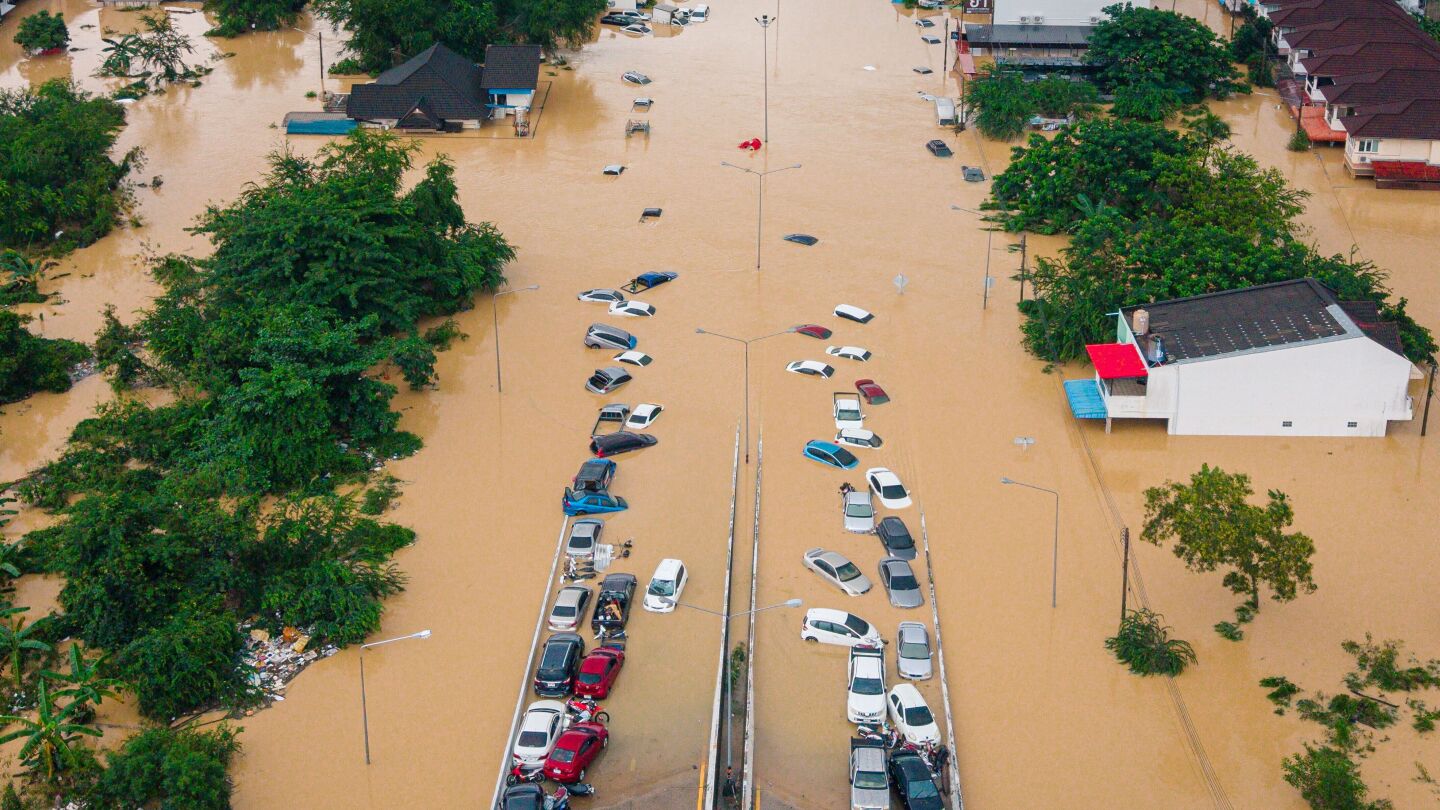
    BANGKOK — Catastrophic flooding across twelve southern Thai provinces has resulted in at least 145 confirmed fatalities, according to official statements released Friday. The devastating deluge, triggered by torrential rainfall, has impacted approximately 1.2 million households and 3.6 million residents throughout the region.

    Government spokesperson Siripong Angkasakulkiat confirmed during a Bangkok news conference that the majority of casualties occurred in Songkhla province, which alone recorded 110 deaths. The death toll saw a significant increase as receding floodwaters enabled rescue teams to access previously submerged residential areas, particularly in Hat Yai, the south’s largest urban center.

    While flood levels have subsided across most affected zones, certain locations continue to experience elevated water levels. The Meteorological Department reported decreased rainfall but issued ongoing thunderstorm warnings for specific areas.

    The scale of destruction became increasingly visible as waters retreated, revealing overturned vehicles, collapsed infrastructure, and extensive debris accumulation. Powerful currents had swept away automobiles, leaving them stacked atop one another, while damaged roads and fallen power poles rendered many areas inaccessible. Household appliances and personal belongings lay scattered throughout flooded neighborhoods, illustrating the overwhelming force of the floodwaters that stranded thousands of residents and submerged low-rise buildings.

  • Epic tales and star power: How Tollywood is reshaping Indian cinema

    Epic tales and star power: How Tollywood is reshaping Indian cinema

    HYDERABAD, India — While Bollywood has long dominated perceptions of Indian cinema internationally, a powerful cinematic movement from South India has emerged as a formidable global competitor. The Telugu-language film industry, colloquially known as Tollywood, has captured worldwide attention through its distinctive blend of mythological storytelling, high-octane action sequences, and spectacular visual effects.

    Operating primarily from Hyderabad, Tollywood benefits from the massive infrastructure of Ramoji Film City—the world’s largest film studio complex according to Guinness World Records. This 1,666-acre production hub enables the industry to generate approximately 300 films annually, establishing itself as India’s second-largest film industry after Bollywood.

    The pandemic-era expansion of streaming services proved transformative for Tollywood, providing regional films unprecedented access to international audiences. This digital revolution coincided with Bollywood’s creative challenges, allowing Telugu cinema to fill a void with its unique formula of star-driven spectacles and large-scale epics.

    Tollywood’s signature approach combines family drama, action, and mythology into what industry marketers now term ‘pan-India’ releases—films deliberately crafted for cross-cultural appeal and routinely dubbed into multiple languages. While the industry produces smaller, culturally-rooted films addressing social issues and regional themes, its global breakthroughs have come primarily from big-budget productions like the ‘Baahubali’ series and the Oscar-winning ‘RRR’.

    The industry’s cultural impact extends beyond entertainment, with its stars commanding near-religious devotion from fans. Male actors particularly enjoy godlike status, with followers performing ritualistic worship of their idols’ images and organizing charitable events in their names. This fandom culture frequently translates into political influence, with several Tollywood actors successfully transitioning into political leadership roles.

    Much of Tollywood’s recent international success is attributed to visionary filmmaker S.S. Rajamouli, whose imaginative storytelling and preference for larger-than-life heroes have redefined Indian cinema’s global potential. His upcoming project ‘Varanasi,’ blending time-travel with Hindu mythology, anticipates continued international interest in Telugu cinema.

    Financially, Tollywood operates through theatrical releases, television rights, overseas distribution, and brand partnerships. Despite being controlled by influential regional families, strategic marketing campaigns and cross-industry collaborations have positioned Tollywood releases as national events across India and beyond.

  • Cute robot pets emerge as cuddly companions

    Cute robot pets emerge as cuddly companions

    In a significant technological advancement within the emotional AI sector, robotic companion pets are emerging as innovative solutions for urban professionals seeking low-maintenance companionship. These AI-driven creations, exemplified by products like Ropet and Moflin, combine sophisticated sensor technology with emotionally responsive behaviors to simulate genuine pet interactions.

    The Ropet robotic pet, developed specifically for young female white-collar workers, represents a breakthrough in emotional artificial intelligence. Priced at $299 for its basic version, this feline-inspired device features multi-sensor capabilities including a nasal camera, forehead microphone, and tactile sensors that enable it to perceive and respond to human interactions through audio, visual, and touch inputs. The unit’s LED-screen eyes display food imagery during feeding interactions, while its AI model allows for personality development based on user treatment patterns.

    Market validation has been substantial, with Ropet’s Kickstarter campaign attracting 1,134 backers and raising approximately $400,000—exceeding its initial goal by 300 times. Similarly, Casio’s Moflin AI rabbit toy sold over 7,000 units at 59,400 yen ($380) each within months of release.

    According to industry analysis by Global Market Insights, the emotion AI market is projected to expand from $2.9 billion last year to $19.4 billion by 2034, indicating robust growth potential for companion robotics. The technology’s appeal lies in its ability to stimulate oxytocin secretion while reducing anxiety and depression through non-verbal companionship.

    He Jiabin, CEO and co-founder of Ropet, emphasizes that these devices provide ‘soft companionship’ rather than verbal communication, intentionally designed to trigger caregiving instincts and childlike playfulness. Users like tech columnist Yoky Liu report meaningful emotional connections with their robotic companions, noting that the devices’ evolving personalities reflect their own behavioral patterns over time.

    This technological innovation addresses growing urban loneliness while offering a cost-effective alternative to traditional pet ownership, representing a significant convergence of artificial intelligence, emotional wellness, and consumer electronics.

  • China successfully breeds third-generation Chinese sturgeon artificially

    China successfully breeds third-generation Chinese sturgeon artificially

    In a landmark achievement for wildlife conservation, Chinese scientists have successfully bred the third filial generation of Chinese sturgeon entirely through artificial propagation techniques. The breakthrough was announced on November 27, 2025, by the China Three Gorges Corporation (CTGC), representing a critical advancement in the preservation of this endangered species.

    The historic breeding occurred at CTGC’s Yangtze River Rare Fish Conservation Center, where researchers utilized second-generation captive-bred sturgeon as parent fish. The selected specimens—a 13-year-old female and 14-year-old male—underwent meticulous preparation beginning early this year. This involved specialized nutritional enhancement and carefully controlled environmental simulations to replicate natural breeding conditions.

    The actual artificial induction and fertilization procedures were conducted during November 6-7, coinciding with the species’ optimal reproductive window. The scientific team recorded an extraordinary fertilization rate exceeding 95 percent. Following a five-day incubation period, approximately 112,000 third-generation fry emerged, demonstrating the program’s remarkable success.

    According to Jiang Wei, Deputy Director of CTGC’s Yangtze River Biodiversity Research Center, this achievement proves that second-generation sturgeon can reach full maturity and reproduce under controlled conditions. This milestone enables a significant transition where the more numerous second-generation population will replace the first generation as the primary breeding group, establishing a sustainable model for large-scale conservation.

    The Chinese sturgeon, endemic to China and often described as a ‘living fossil,’ represents one of the world’s most ancient migratory fish species. Conservation efforts began decades ago, with the first generation successfully bred from wild parents in the 1980s, followed by the second generation in 2009. The new breakthrough paves the way for developing comprehensive ‘artificial-plus-natural’ protection systems that could ultimately support the restoration of wild sturgeon populations.

  • Anti-corruption units raid home and offices of Zelenskyy’s chief of staff

    Anti-corruption units raid home and offices of Zelenskyy’s chief of staff

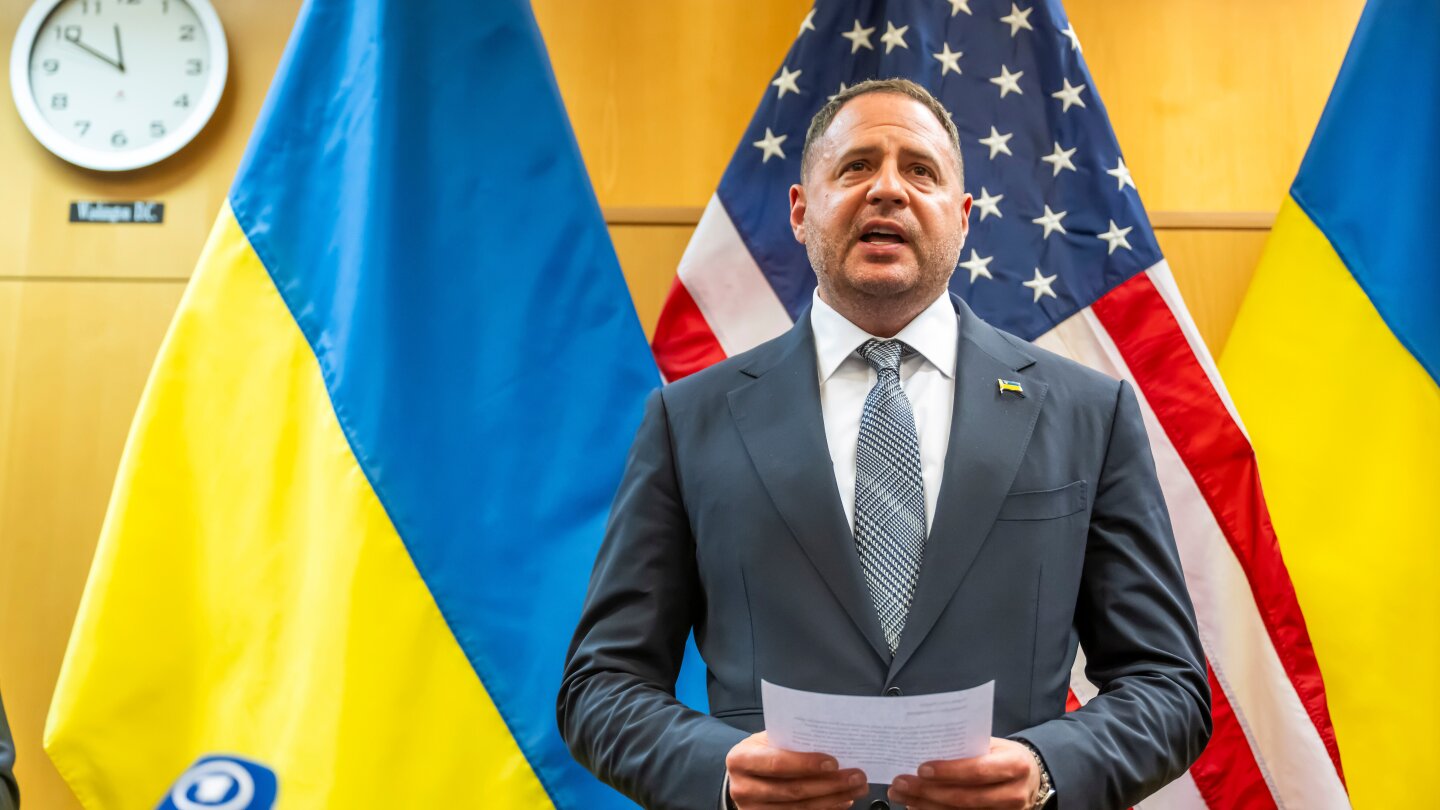
    In a significant development within Ukraine’s political landscape, anti-corruption authorities have executed coordinated raids targeting the residence and official workplace of Presidential Chief of Staff Andrii Yermak. This operation represents a substantial escalation in Ukraine’s ongoing campaign against systemic corruption, particularly striking given Yermak’s position as one of President Volodymyr Zelenskyy’s most influential advisors and a central figure in diplomatic negotiations with the United States.

    The National Anti-Corruption Bureau of Ukraine (NABU), in collaboration with the Specialized Anti-Corruption Prosecutor’s Office (SAPO), confirmed conducting searches as part of a comprehensive investigation into corruption allegations within the nation’s energy sector. The probe centers on a massive financial scandal involving approximately $100 million and implicates several high-ranking Ukrainian officials.

    Yermak publicly acknowledged the investigations through a statement on Telegram, emphasizing his full cooperation with authorities. He noted that investigative teams encountered no obstructions during their searches and confirmed that his legal representatives were present throughout the proceedings. This transparency statement appears designed to demonstrate compliance with anti-corruption efforts despite the sensitive timing.

    The raids create considerable complications for the Zelenskyy administration as it simultaneously manages military operations against Russian invasion forces and delicate diplomatic negotiations regarding potential peace settlements. Western nations, particularly the United States, have consistently emphasized anti-corruption reforms as prerequisite conditions for continued financial and military assistance to Ukraine.

    This development occurs amid critical discussions with international partners regarding Ukraine’s defense funding and long-term security guarantees. The administration must now navigate these domestic investigations while maintaining confidence among its international allies that governance reforms remain on track despite the ongoing conflict.

  • Kenyan court declares law banning seed sharing unconstitutional

    Kenyan court declares law banning seed sharing unconstitutional

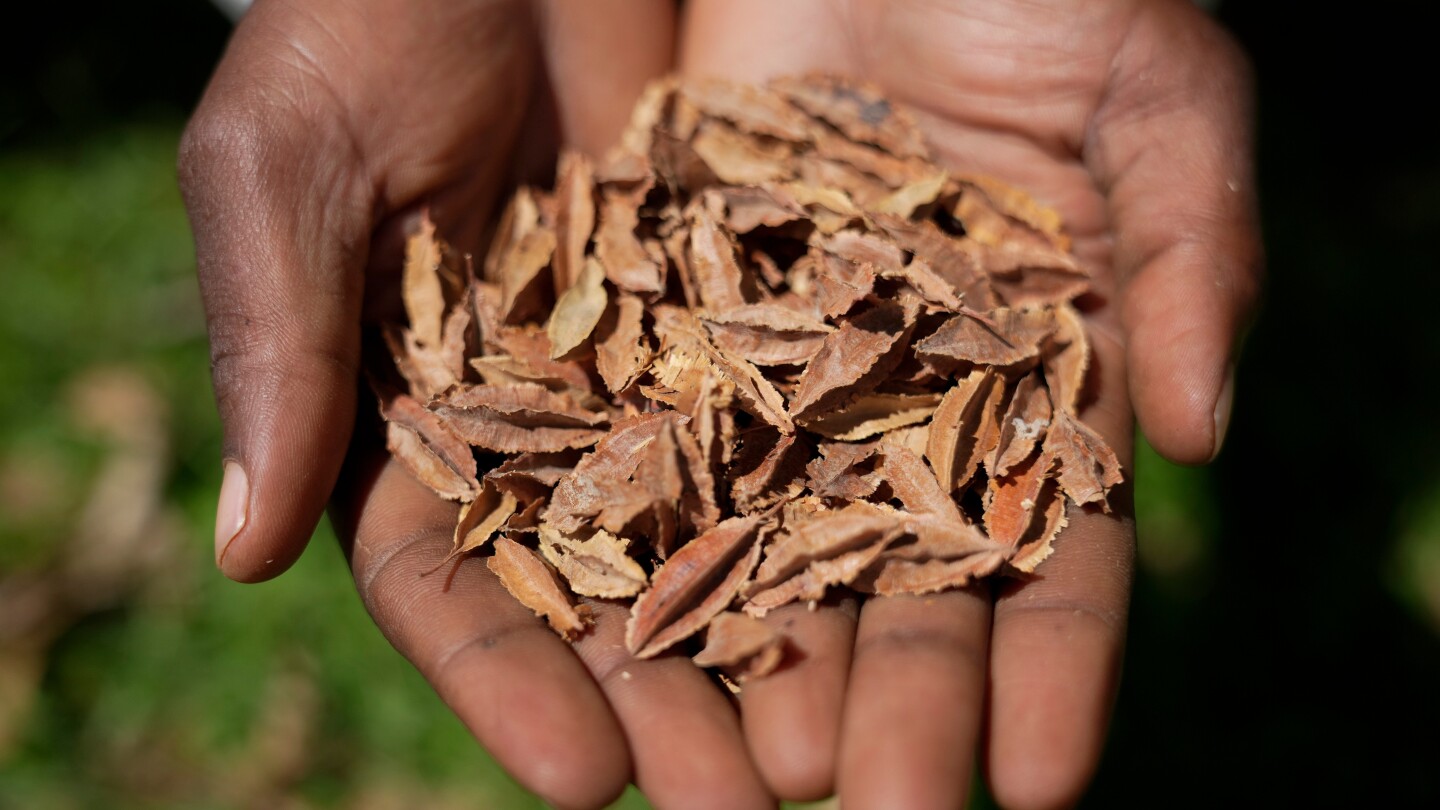
    In a groundbreaking judicial decision, Kenya’s High Court has struck down controversial provisions of the nation’s seed legislation that criminalized traditional farming practices. The ruling, delivered Thursday in Kisumu, nullifies sections of the 2012 seed law that imposed severe penalties—including two-year imprisonment and fines equivalent to $7,700—on farmers for sharing indigenous seeds through community seed banks.

    Presiding Justice Rhoda Rutto declared unconstitutional the statutory clauses that granted government authorities power to conduct raids on seed banks and confiscate seeds. The original legislation was enacted to combat the proliferation of counterfeit seeds that had caused significant agricultural losses, granting exclusive seed trading rights to licensed corporations.

    The case was brought before the court by fifteen smallholder farmers representing community seed banks that have preserved and distributed traditional seeds for generations. Plaintiff Samuel Wathome expressed profound relief, stating: “My grandmother saved seeds, and today the court has said I can do the same for my grandchildren without fear of the police or of prison.”

    Environmental and food security advocates hailed the decision as transformative. Elizabeth Atieno of Greenpeace Africa celebrated the outcome as “a victory for our culture, our resilience, and our future,” emphasizing that the ruling challenges corporate dominance over food systems while legitimizing climate-resilient agricultural practices.

    The court’s recognition of indigenous seeds—known for their drought resistance and adaptability to local conditions—marks a significant advancement for food security advocates who have long promoted farmer-government collaboration in seed preservation. While Kenya maintains a national seed bank near Nairobi, community-based seed preservation remains crucial for both variety accessibility and geographical convenience for farmers.

    This decision emerges against the backdrop of ongoing challenges in Kenya’s agricultural sector, where counterfeit seeds have resulted in massive financial losses for farmers dependent on rain-fed agriculture.

  • Scores killed as floods sweep several Asian nations

    Scores killed as floods sweep several Asian nations

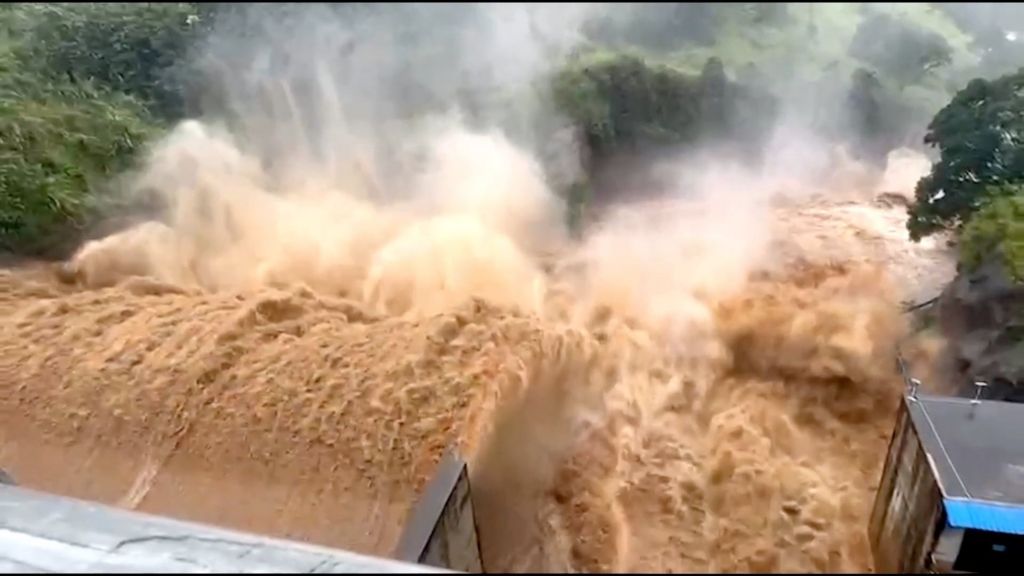
    A devastating wave of extreme weather has unleashed catastrophic flooding across multiple Asian nations, resulting in a mounting humanitarian crisis with significant loss of life. The archipelago nation of Indonesia has borne the heaviest toll, with official reports confirming at least 80 fatalities. Concurrently, the island nation of Sri Lanka has suffered profound casualties, recording 56 deaths according to emergency response officials. The severe weather system, characterized by torrential, unrelenting rainfall, has triggered widespread flooding and destructive landslides over the past week. These events have submerged entire communities, severed critical transportation networks, and displaced thousands of residents from their homes. Emergency services in both countries are engaged in extensive search and rescue operations, battling challenging conditions to reach isolated populations. The scale of the destruction points to a severe regional disaster, overwhelming local infrastructure and response capabilities. This event underscores the increasing vulnerability of densely populated regions to intense climatic phenomena, raising urgent questions about disaster preparedness and climate resilience strategies in South and Southeast Asia.