博客

  • Tulip Siddiq MP given jail sentence in Bangladesh after trial in her absence

    Tulip Siddiq MP given jail sentence in Bangladesh after trial in her absence

    British Labour MP Tulip Siddiq has been convicted and sentenced to two years imprisonment by a Bangladeshi court for corruption-related offenses, tried in absentia alongside sixteen other defendants. The ruling centers on allegations that Siddiq improperly influenced her aunt, former Bangladeshi Prime Minister Sheikh Hasina, to obtain a land allocation for family members on the outskirts of Dhaka—charges the London-based parliamentarian vehemently denies.

    The verdict, delivered by Judge Rabiul Alam, includes a financial penalty of 100,000 Bangladeshi Taka (approximately $821), with an additional six-month prison term stipulated for non-payment. Despite the sentence, Siddiq is unlikely to serve time given the UK’s lack of an extradition treaty with Bangladesh and her status as a sitting British MP.

    This case emerges amid widespread legal actions initiated by Bangladeshi prosecutors following the ouster of Hasina’s government in July 2024. The former prime minister herself recently received a death sentence in a separate trial concerning crimes against humanity during anti-government protests.

    Siddiq’s legal representatives contest the jurisdiction of Bangladeshi courts, maintaining that she holds no Bangladeshi citizenship or official documentation. The trial has drawn international scrutiny, with prominent British legal figures—including former Justice Secretary Robert Buckland and human rights lawyer Cherie Blair—questioning the fairness of proceedings and noting Siddiq’s inability to secure adequate legal representation.

    The MP previously resigned from her Treasury ministerial position in January to avoid becoming a ‘distraction’ for the UK government, though an ethics investigation found no evidence of impropriety. She continues to face multiple additional charges in Bangladesh, including investigations into property transfers and a nuclear power plant deal during Hasina’s administration.

  • Singapore executes three men for drug offences over two days

    Singapore executes three men for drug offences over two days

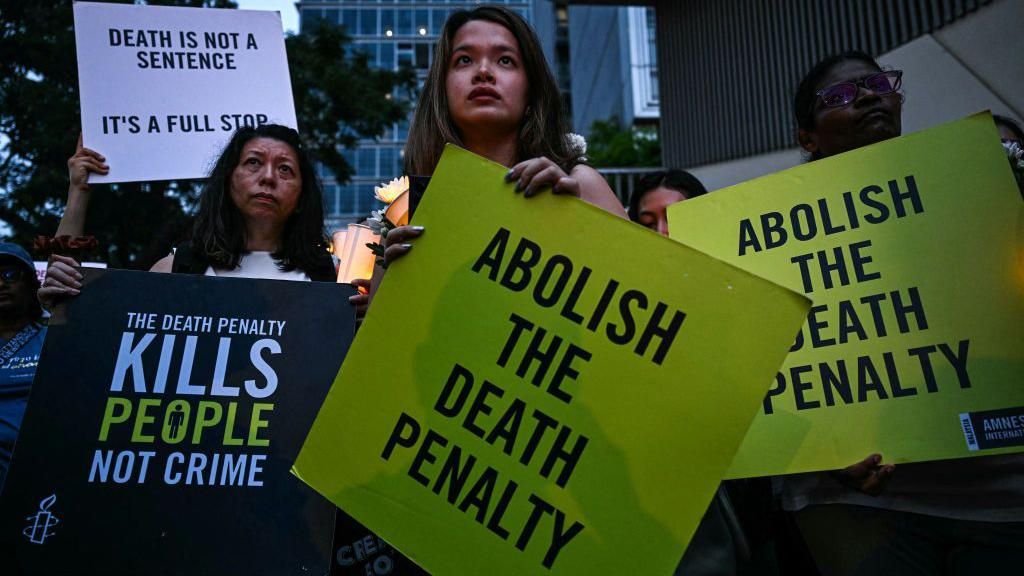
    Singapore has carried out three executions for drug-related offenses within a single week, elevating the nation’s total number of state-sanctioned deaths to 17 this year—the highest figure recorded since 2003. The executions occurred just days before a significant constitutional challenge questioning the legality of the mandatory death penalty for drug crimes is scheduled to be heard.

    Under Singapore’s stringent anti-narcotics legislation, individuals found guilty of trafficking more than 15 grams of diamorphine, 30 grams of cocaine, 250 grams of methamphetamine, or 500 grams of cannabis face compulsory capital punishment. The government defends these measures as essential deterrents against drug-related crimes, which remain a critical concern across Southeast Asia.

    A coalition of seven activists has mounted a legal challenge arguing that the mandatory death penalty violates constitutional guarantees to life and equal protection. They contend that the current framework contradicts the constitutional provision that “no person shall be deprived of his life or personal liberty save in accordance with law.”

    Among those executed was Saminathan Selvaraju, a Malaysian logistics driver convicted in 2013 of transporting 301.6 grams of heroin. Saminathan maintained his innocence, claiming that multiple drivers had access to the company vehicle used in the offense and that immigration documents bearing his signature were forged. His defense was rejected by the court, and his plea for clemency was denied.

    Singapore’s use of the death penalty has drawn international criticism. The European Union delegation in Singapore issued a statement condemning the executions, emphasizing that drug offenses do not meet the international legal threshold for “most serious crimes” warranting capital punishment. Activist groups, including the Transformative Justice Collective, have labeled Singapore’s policy “barbaric” and out of step with global norms.

    Despite external pressure, the Singaporean government remains resolute. Home Affairs Minister K. Shanmugam has asserted that abolishing the death penalty could lead to increased drug-related violence, harm, and fatalities, particularly among vulnerable populations. A 2023 government-sponsored survey indicated that 69% of Singaporean residents support capital punishment for major drug trafficking offenses.

    The constitutional challenge, set for hearing imminently, represents a pivotal moment in the ongoing debate over justice, human rights, and drug policy in one of Asia’s most developed—and strictest—legal jurisdictions.

  • Pope Leo XIV’s visit highlights Christian resilience in Lebanon despite regional turmoil

    Pope Leo XIV’s visit highlights Christian resilience in Lebanon despite regional turmoil

    BEIRUT — While Christian populations across the Middle East have faced significant decline due to conflict and extremist violence, Lebanon presents a striking exception to this regional trend. Despite enduring numerous national crises, Lebanon’s Christian community continues to maintain substantial political influence and religious freedom, creating a unique sanctuary in a region where Christian populations have dwindled dramatically.

    The recent visit of Pope Leo XIV to Lebanon underscores the Vatican’s recognition of Lebanon’s distinctive religious pluralism and serves as an encouragement for Christians to remain in the region. This stands in stark contrast to neighboring countries like Iraq and Syria, where Christian communities faced devastating persecution following the U.S.-led invasion of 2003 and the subsequent rise of the Islamic State group. IS forces systematically destroyed churches, confiscated properties, and declared caliphates across Iraq and Syria, triggering massive Christian emigration.

    In Syria, recent church bombings in Damascus and concerns about the Islamist-led government under interim President Ahmad al-Sharaa have prompted many remaining Christians to consider leaving. Yet in Lebanon, Christians demonstrate remarkable resilience, clinging to their ancestral homeland despite economic and political challenges.

    Lebanon’s sectarian power-sharing system, while frequently criticized for political deadlock, has effectively protected minority rights. The country’s political structure mandates that the president be a Maronite Christian, making Lebanon the only Arab nation with a Christian head of state. Christians also hold key positions including army command, central bank leadership, and senior security agency roles.

    “More than half the advantage comes from Lebanon’s political system when it comes to Christians,” noted Monsignor Abdo Abou Kassm, director of the Catholic Center for Information. “There is a democratic system where people can express their opinions freely without getting killed, oppressed or sent to exile.”

    Christian roots in Lebanon trace back to the faith’s earliest days, with monastic communities historically seeking refuge in mountain caves to avoid persecution. Today, Christians constitute approximately one-third of Lebanon’s 5 million people, representing the highest percentage of Christians in any Middle Eastern nation. The country recognizes 18 religious sects, with Maronite Catholics forming the largest Christian group followed by Greek Orthodox.

    The historical ties between Lebanon and the Vatican run deep, with tradition holding that St. Peter established churches along Lebanon’s coast. Two men of Phoenician origin from Tyre were elected popes in the 8th century, and uninterrupted correspondence between the Maronite Church and the papacy dates back to 1215.

    Despite Lebanon’s 1975-90 civil war that largely pitted Christians against Muslims, the Taif Agreement established equal parliamentary and cabinet representation between Christians and Muslims. Today, Muslims and Christians largely coexist peacefully, with Sunni Muslim cleric Khaldoun Oreimet acknowledging, “Christians are not only a community but an integral part of this land.”

    The papal visit occurs amid ongoing regional tensions, including regular Israeli airstrikes and criticism from Christian politicians toward Hezbollah’s military actions. Many Christian leaders, including Maronite Church head Cardinal Bechara Rai, advocate for Lebanese neutrality in regional conflicts, emphasizing the devastating impact of foreign wars on Lebanese soil.

    As Christian legislator Camille Dory Chamoun stated, “Our Lebanese identity is as important as our Christian identity. We have seen that we are paying a very high price for other people’s wars on our land.”

  • US futures slip and Asian stocks are mixed, while oil prices surge more than $1 a barrel

    US futures slip and Asian stocks are mixed, while oil prices surge more than $1 a barrel

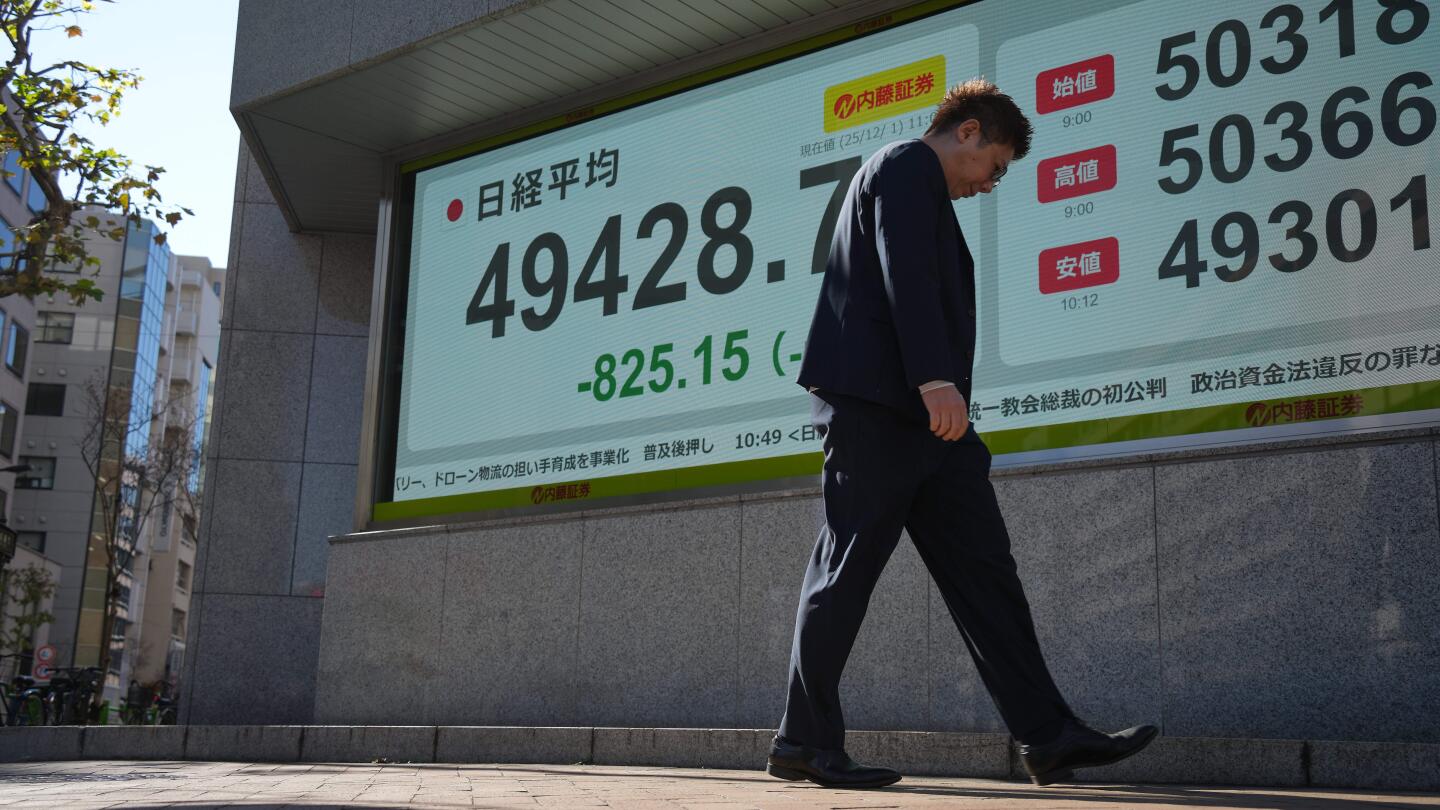
    Asian financial markets exhibited a divergent trajectory at the start of the trading week, characterized by significant declines in Japan’s Nikkei 225 index which plummeted 1.9% to 49,285.66. This downturn followed the release of disappointing corporate investment figures and a persistently contracting manufacturing sector. The S&P Global Japan Manufacturing Purchasing Managers Index (PMI) registered at 48.7 in November, marking its fifth consecutive month in contraction territory below the critical 50-point expansion threshold.

    China’s industrial sector mirrored these challenges, with official data confirming an eighth straight month of factory activity contraction. This ongoing weakness in Asia’s largest economies occurs despite the extended trade truce between Washington and Beijing, highlighting deeper structural economic challenges.

    Regional performance varied considerably across Asian markets. Hong Kong’s Hang Seng index defied the trend with a 0.8% gain to 26,068.05, while mainland China’s Shanghai Composite advanced 0.4% to 3,904.90. South Korea’s Kospi remained virtually unchanged, and Australia’s S&P/ASX 200 slipped 0.3%. Notable corporate movement included Meituan, the Chinese food delivery giant, whose shares declined 1.5% despite revenue growth, as intense competition compressed profit margins.

    Energy markets witnessed substantial movement with benchmark crude oil prices climbing over $1 per barrel. Currency markets saw the U.S. dollar weaken against the Japanese yen to 155.57, while the euro gained modest ground. Cryptocurrency markets experienced volatility as Bitcoin retreated 5.3% to $86,225.

    The manufacturing slowdown across Asia is being closely monitored for indications of how elevated U.S. tariffs might be affecting export-dependent economies. Despite these industrial challenges, regional exports have demonstrated resilience in recent months. Market attention remains divided between manufacturing weaknesses and robust consumer spending during the recent Black Friday and Cyber Monday retail events, which reportedly exceeded expectations.

    U.S. futures pointed to a lower opening, with S&P 500 futures down 0.7% and Dow Jones Industrial Average futures declining 0.4%. This follows a technical disruption on Friday that halted trading for hours at the Chicago Mercantile Exchange due to a data center outage, though markets ultimately finished the abbreviated post-Thanksgiving session with gains.

  • Death toll from floods, landslides in Indonesia rises to 442

    Death toll from floods, landslides in Indonesia rises to 442

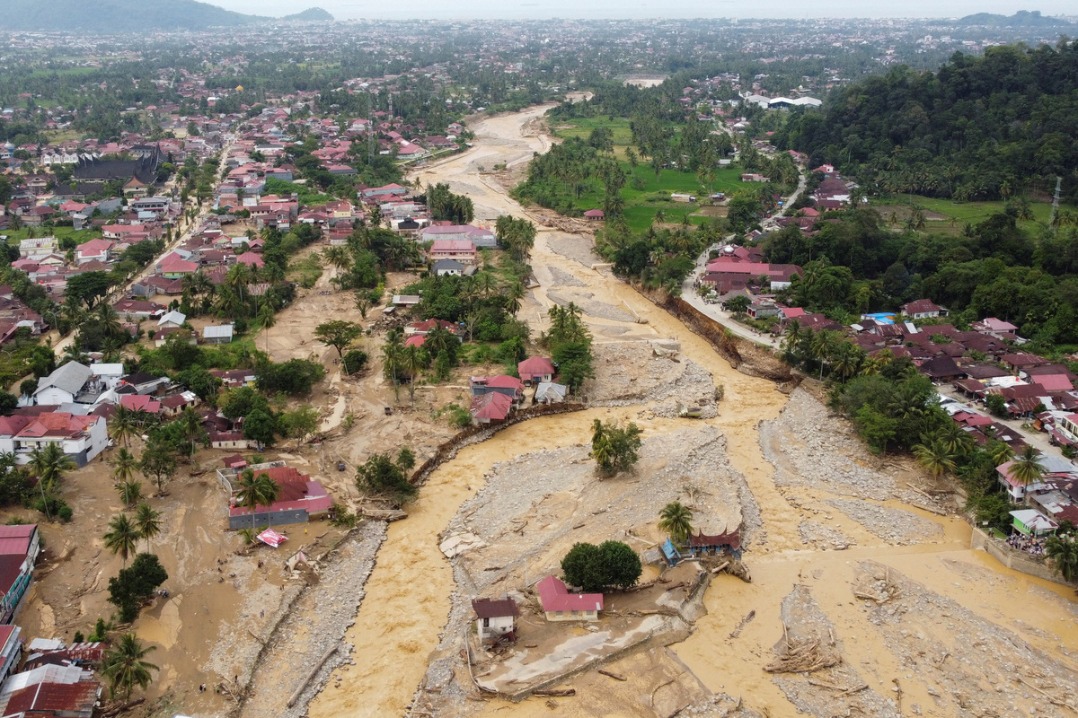
    Indonesian authorities have reported a sharp increase in casualties from devastating flash floods and landslides that struck Sumatra Island, with the official death toll reaching 442 as of Sunday. The National Disaster Management Agency (BNPB) confirmed the grim figures following one of the most severe natural disasters to hit the archipelago nation in recent years.

    North Sumatra Province has borne the brunt of the catastrophe, accounting for 217 confirmed fatalities with an additional 209 individuals still unaccounted for. BNPB Chief Suharyanto disclosed that rescue teams operating in South Tapanuli Regency continue to discover more victims as operations intensify.

    The neighboring provinces continue to report staggering losses, with Aceh Province documenting 96 deaths and 75 missing persons, while West Sumatra has recorded 129 fatalities alongside 118 missing individuals. The widespread destruction follows torrential rainfall that triggered massive flooding and catastrophic landslides across multiple regions.

    In response to the escalating humanitarian crisis, Indonesian President Prabowo Subianto has issued directives to mobilize all available national resources for emergency response operations. Coordinating Minister for Human Development and Cultural Affairs Pratikno emphasized the government’s commitment to prioritizing rapid rescue and relief efforts amid the ongoing devastation.

    The disaster has prompted large-scale search and rescue missions involving military personnel, emergency services, and volunteer organizations working against challenging conditions to locate survivors and recover victims across the affected regions.

  • What to know about this week’s diplomatic efforts to end the war in Ukraine

    What to know about this week’s diplomatic efforts to end the war in Ukraine

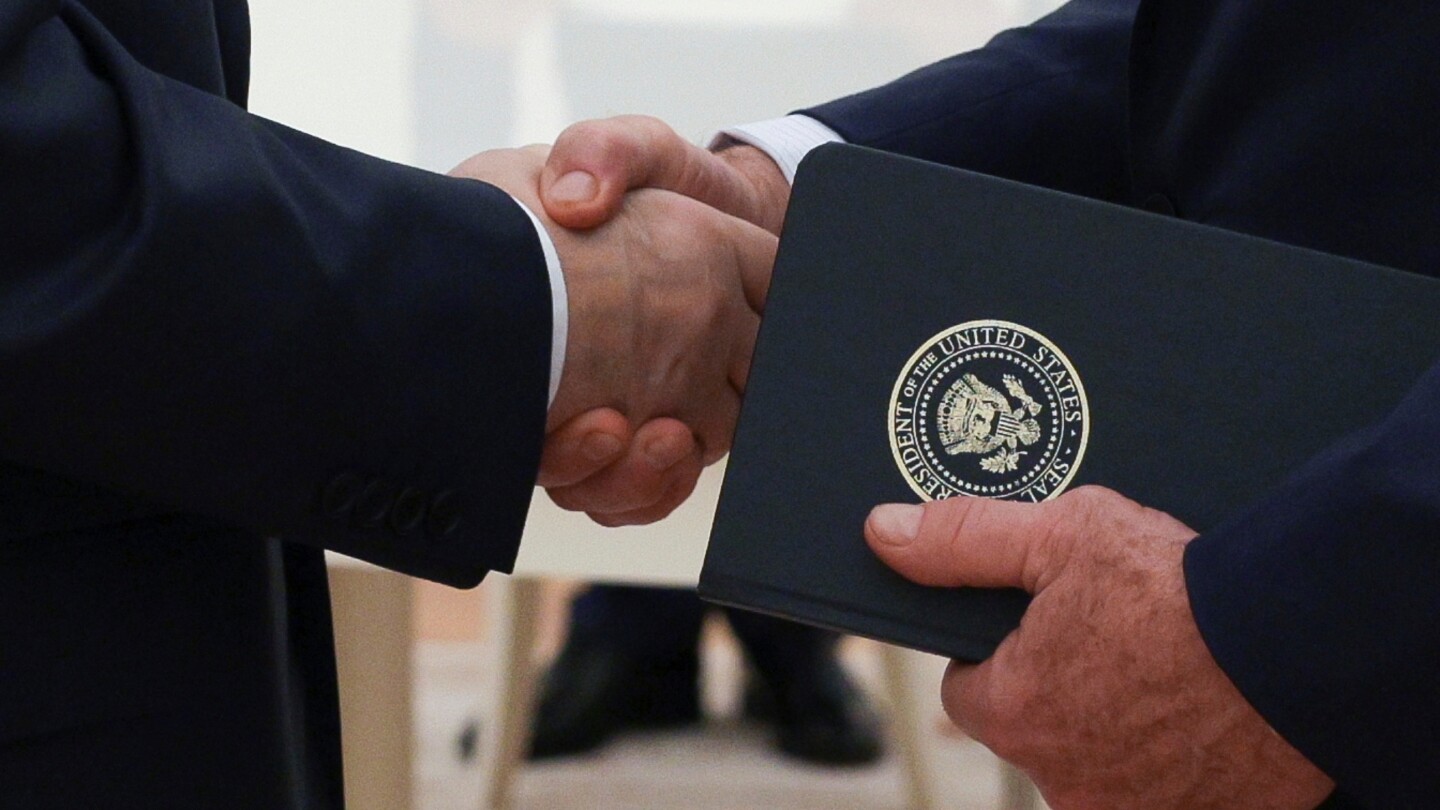
    Diplomatic efforts to broker a peace agreement between Russia and Ukraine are intensifying this week as U.S. representatives engage in high-stakes shuttle diplomacy. The renewed push comes after President Donald Trump’s revised peace proposal, which has received cautious optimism from both Ukrainian President Volodymyr Zelenskyy and Russian President Vladimir Putin, though significant obstacles remain.

    The diplomatic sequence began with extensive four-hour discussions between Ukrainian officials—including National Security Council head Rustem Umerov and presidential adviser Oleksandr Bevz—and U.S. representatives on Sunday. Secretary of State Marco Rubio characterized the talks as productive while acknowledging substantial work ahead. This week, Trump’s envoy Steve Witkoff is scheduled to meet with Russian leadership in Moscow, with Kremlin spokesman Dmitry Peskov confirming discussions would occur in the week’s first half.

    Despite surface-level agreement that Trump’s proposal could form a negotiating basis, fundamental disagreements persist. Russia maintains its maximalist demands for Ukrainian territorial concessions in four illegally annexed regions and permanent exclusion from NATO membership. Ukraine remains adamant against ceding sovereign territory and continues to pursue NATO integration as a security guarantee.

    The political landscape shifted notably with Friday’s resignation of Andrii Yermak, Zelenskyy’s former chief of staff and lead negotiator, amid corruption allegations. While neither Zelenskyy nor Yermak face direct accusations, the departure removes a key experienced diplomat from negotiations.

    European powers face their own dilemmas as NATO and EU meetings convene this week to discuss military support for Ukraine and address the contentious issue of utilizing frozen Russian assets for Ukrainian reconstruction. The situation highlights Europe’s precarious position—being Ukraine’s primary supporter while remaining peripheral to U.S.-led diplomatic initiatives.

    Analysts note Putin’s strategic patience, believing time favors Russian objectives through military pressure. Meanwhile, Zelenskyy faces domestic challenges while maintaining Ukraine’s defensive stance, asserting that Ukraine “doesn’t have a right not to push it to the end.”

  • Japanese ‘One Piece’ singer stopped mid-show after China-Japan feud

    Japanese ‘One Piece’ singer stopped mid-show after China-Japan feud

    A series of sudden cancellations of Japanese musical performances in Shanghai has ignited widespread criticism and highlighted growing diplomatic strains between China and Japan. The incidents occurred against the backdrop of escalating tensions following Japanese Prime Minister Sanae Takaichi’s recent comments regarding Taiwan.

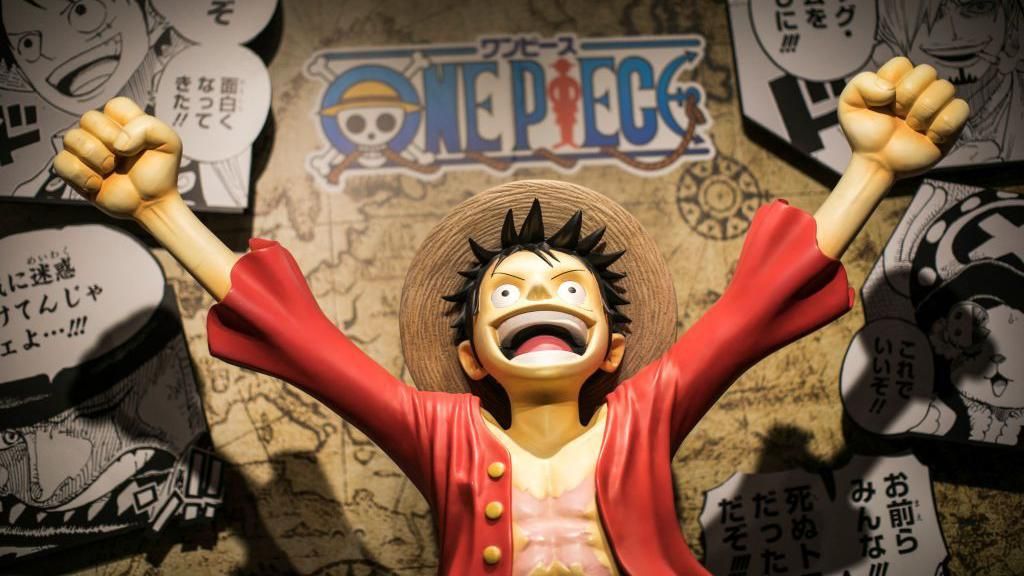
    On Friday, singer Maki Otsuki was abruptly cut off mid-performance during her rendition of the popular anime ‘One Piece’ theme song at a Shanghai music festival. Stage lights and audio were suddenly terminated, after which crew members hurried her offstage. The following day, pop icon Ayumi Hamasaki performed to a completely empty 14,000-seat stadium after organizers canceled her concert, citing ‘force majeure’ circumstances.

    These disruptions coincide with heightened diplomatic friction stemming from Prime Minister Takaichi’s suggestion last month that Japan might consider military intervention should China attack Taiwan. Beijing, which considers Taiwan a breakaway province, has consistently maintained its right to use force for reunification.

    Otsuki’s management attributed the interruption to ‘unavoidable circumstances’ while acknowledging the professionalism of local staff. The three-day music festival subsequently canceled all remaining events after comprehensive consideration of various factors, according to Kyodo News.

    The incident has sparked diverse reactions across social media platforms. Some fans created memes comparing Otsuki’s removal to the unexpected extraction of former Chinese leader Hu Jintao during a Communist Party meeting in 2022. Critics questioned why cultural events were being targeted when the diplomatic dispute involves governmental matters.

    US Ambassador to Japan George Glass expressed regret that ‘there are people who can’t feel the power of music,’ while Hamasaki herself performed to empty seats as a tribute to her team and expressed her belief that entertainment should serve as a bridge between peoples.

    Meanwhile, Chinese social media displayed nationalist sentiments, with some users questioning why Japanese events were permitted during periods of diplomatic tension. The cancellations follow recent announcements postponing releases of popular Japanese anime films in China, indicating the cultural sphere is increasingly affected by bilateral relations.

  • Kiwi commentators praise Abu Dhabi T10 tournament

    Kiwi commentators praise Abu Dhabi T10 tournament

    ABU DHABI – Prominent New Zealand cricket analysts Simon Doull and Danny Morrison have enthusiastically endorsed the Abu Dhabi T10 tournament following its ninth season, characterizing the format as a visionary glimpse into cricket’s evolutionary path. The commentators provided comprehensive insights after observing the 12-day competition at Zayed Cricket Stadium.

    Simon Doull emphasized the tournament’s growing prestige within international cricket circuits. “Each successive edition attracts progressively higher-caliber athletes,” Doull observed. “The scheduling proves ideal for global players, who appreciate both the superb climatic conditions and the world-class facilities at Zayed Stadium. This championship carries significant competitive prestige – participants are genuinely motivated to claim victory, supported by exemplary organizational standards and intensely contested matches.”

    Danny Morrison spotlighted emerging Emirati talent, specifically highlighting right-arm pace bowler Zohair Iqbal’s tournament performance. Despite competing alongside established international bowlers, Iqbal emerged as the third-highest wicket-taker. Morrison noted: “Zohair has demonstrated exceptional skill domestically and now translates that ability to the international stage. His crucial breakthroughs for Aspin Stallions, combined with his effective swing bowling, have been particularly impressive. The pitches themselves have provided balanced contest between bat and ball.”

    Doull further elaborated on the format’s distinctive appeal, describing the Abu Dhabi T10 as “electrifying, dynamic, and intensely competitive.” He articulated: “This tournament offers a preview of cricket’s future trajectory. As the most condensed and accelerated format, it delivers complete sporting entertainment within a compact 90-minute to two-hour window, requiring minimal time investment from viewers while maximizing excitement.”

    The 2025 tournament continuation underscores the United Arab Emirates’ growing significance as a global cricket hub, providing optimal infrastructure and conditions for both established professionals and developing regional talent.

  • South Korean e-commerce giant Coupang hit by massive data leak

    South Korean e-commerce giant Coupang hit by massive data leak

    South Korea’s dominant e-commerce platform Coupang has issued a formal apology following the discovery of a significant cybersecurity incident that potentially compromised the personal information of approximately 33.7 million domestic customer accounts. The breach, which represents more than half of South Korea’s 52 million population, marks the latest in a series of data security failures affecting major corporations in the technologically advanced nation.

    According to company statements to the BBC, Coupang initially detected unauthorized access to approximately 4,500 customer accounts on November 18th, promptly reporting the incident to relevant authorities. Subsequent forensic investigation revealed the breach’s true magnitude, with evidence suggesting the security compromise may have originated as early as June through an overseas-based server.

    The exposed data includes fundamental personal identifiers: customer names, email addresses, telephone numbers, physical shipping addresses, and selected order histories. Crucially, Coupang confirmed that financial information including credit card details and login credentials remained secure and uncompromised throughout the incident.

    Often characterized as South Korea’s answer to Amazon, Coupang maintains dual headquarters in Seoul and the United States, recently reporting nearly 25 million active users. The company has advised customers to remain vigilant against potential phishing attempts and scams impersonating the brand while emphasizing that no immediate user action is required.

    South Korea’s Ministry of Science and ICT has launched a comprehensive investigation into the breach, evaluating both its full scope and whether Coupang violated data protection regulations. The Personal Information Protection Commission announced plans for expedited assessment, noting that confirmed violations of safety measure obligations could result in significant sanctions.

    This incident continues a troubling pattern of cybersecurity failures among South Korea’s corporate leaders despite the nation’s reputation for robust data privacy frameworks. Earlier this year, telecommunications behemoth SK Telecom faced penalties approaching $100 million following a breach affecting 20 million subscribers, while Lotte Cards acknowledged a separate cyberattack compromising data of nearly 3 million customers in September.

  • Campaign to ‘free Palestinian hostages’ in Israeli jails gains momentum

    Campaign to ‘free Palestinian hostages’ in Israeli jails gains momentum

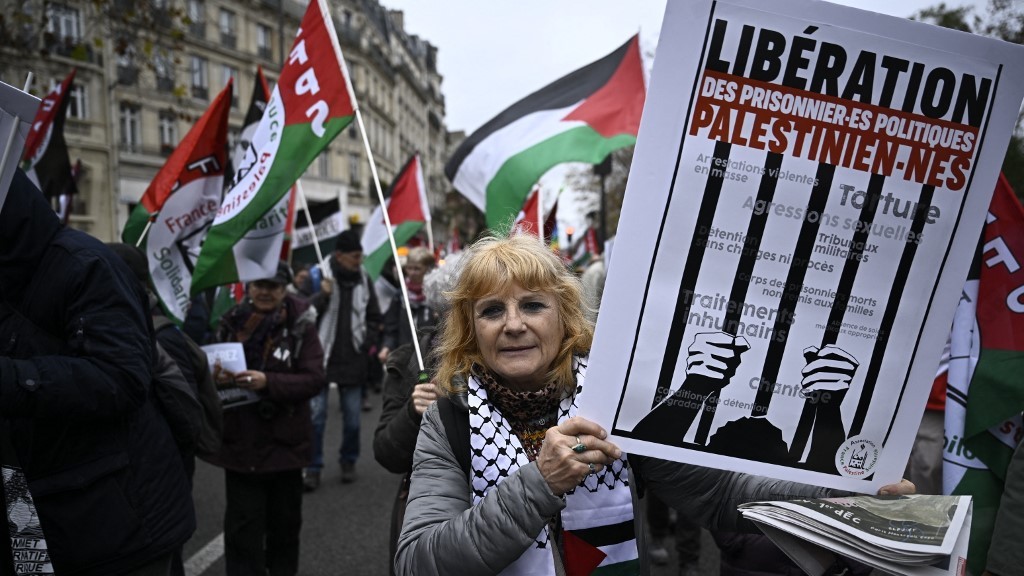
    Major European capitals witnessed massive demonstrations over the weekend as thousands mobilized in solidarity with Palestinian prisoners held in Israeli detention facilities. The coordinated protests, occurring on the International Day of Solidarity with the Palestinian People, saw central London flooded with activists demanding the immediate release of approximately 9,100 Palestinians currently incarcerated, including more than 450 women and children.

    Protesters adorned with red ribbons and waving Palestinian flags condemned Israel’s judicial practices, specifically targeting the system of administrative detention that allows indefinite imprisonment without formal charges. The demonstrations highlighted allegations of systematic torture, sexual violence, arbitrary arrests, and inhumane treatment within the Israeli prison network.

    The movement quickly expanded across continental Europe, with parallel gatherings occurring in Paris and Athens drawing tens of thousands of participants. In Copenhagen, activists assembled outside the Israeli embassy under the banner “Bring Them Home,” personalizing their protest by sharing individual stories of detained Palestinians.

    Central to the campaign is the case of Marwan Barghouti, a 66-year-old political figure viewed as a potential future Palestinian leader who has been imprisoned since 2002. Barghouti, serving five life sentences for alleged involvement in killings during the Second Intifada, has endured extended solitary confinement periods—including one stretch lasting three years—with reports indicating his conditions have significantly deteriorated since October 2023.

    Recent investigative findings have uncovered disturbing detention practices, including an underground facility where Gazan prisoners are allegedly denied sunlight, adequate nutrition, and all external communication. Among those detained without charge are a nurse apprehended while wearing medical scrubs and a teenage food vendor.

    Leaked Israeli data suggests that the overwhelming majority of Palestinians arrested during recent military operations in Gaza were civilians. A report by Physicians for Human Rights-Israel documented at least 94 Palestinian fatalities in Israeli custody, attributing deaths to torture, physical assault, deliberate medical neglect, or severe malnutrition. The case of 17-year-old Walid Ahmad, who died six months after his arrest at Megiddo prison, revealed post-mortem evidence of “severe and prolonged malnutrition.”

    These findings align with a recent United Nations report that accused Israel of maintaining a de facto policy of organized and widespread torture against Palestinian detainees, with practices allegedly intensifying significantly since October 2023. The UN committee expressed particular concern that Israel’s detention policies, if implemented as described, would constitute cruel, inhuman, and degrading treatment prohibited under international law.