博客

  • China hits record 180 billion parcel deliveries

    China hits record 180 billion parcel deliveries

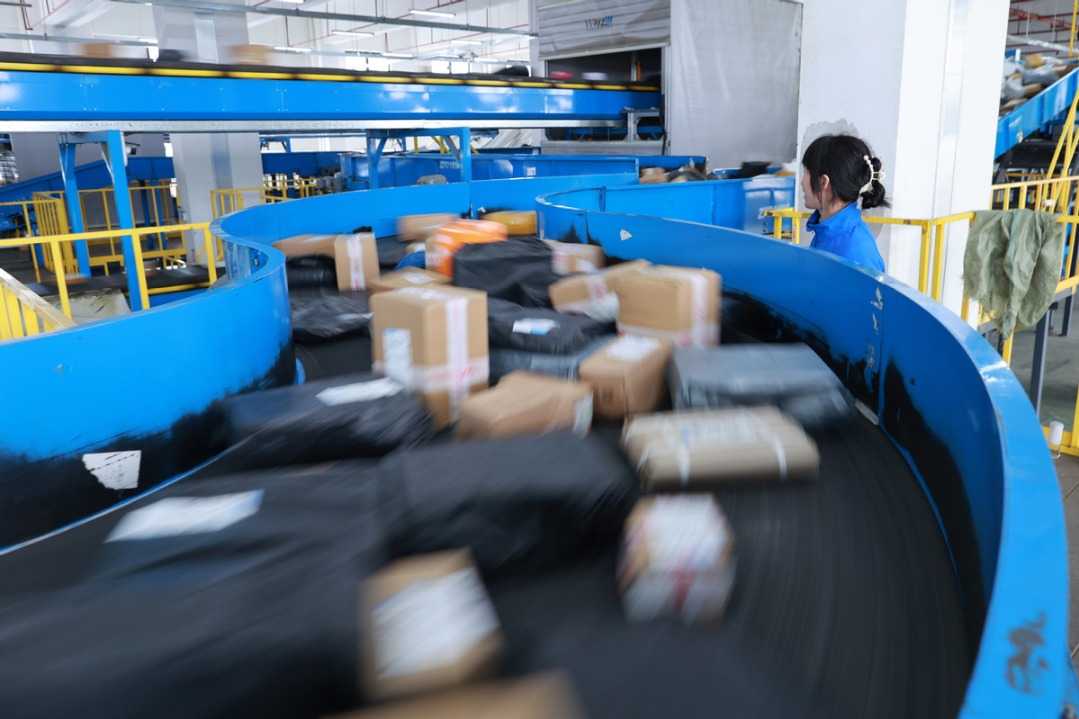
    China’s logistics industry has reached an unprecedented milestone, processing a staggering 180 billion parcel deliveries as of late November 2025. This remarkable achievement underscores the massive scale and efficiency of the country’s delivery infrastructure, which has become the backbone of the world’s largest e-commerce market.

    The record-breaking figure demonstrates the continued expansion of China’s digital economy despite global economic headwinds. The parcel volume represents a significant increase from previous years, reflecting sustained consumer demand and the deepening penetration of e-commerce services across urban and rural areas alike.

    Industry analysts attribute this growth to several key factors: the maturation of last-mile delivery networks, technological innovations in logistics management, and the proliferation of live-stream commerce platforms that have transformed shopping behaviors. The development of specialized delivery services for agricultural products has particularly contributed to rural economic vitality, enabling farmers to access nationwide markets directly.

    This logistical achievement occurs alongside other technological advancements highlighted in recent reports, including Beijing’s artificial intelligence sector projecting over $63 billion in output and the deployment of China’s first sea-based rocket recovery platform. The parallel development of these sectors demonstrates the interconnected nature of China’s technological and logistics ecosystems.

    The record parcel volume also reflects the successful implementation of China’s dual circulation strategy, which emphasizes both domestic consumption and international trade. As the holiday season approaches, industry observers anticipate further growth in parcel volumes, testing the resilience and capacity of delivery networks.


  • US and UK set to agree zero tariffs deal on pharmaceuticals

    US and UK set to agree zero tariffs deal on pharmaceuticals

    The United Kingdom and United States are poised to announce a landmark trade agreement eliminating proposed pharmaceutical tariffs, following months of tense negotiations and investment diversions by major drug manufacturers. Industry sources indicate the deal could be finalized imminently, potentially as early as today.

    This breakthrough comes after several pharmaceutical giants scaled back UK operations or redirected investments stateside in response to threatened tariff increases of up to 100% on branded medications. The UK’s Department for Business and Trade reports £11.1 billion in medicine exports to the US during the twelve months ending September, representing 17.4% of all UK goods exports during that period.

    Under the anticipated agreement, UK medicine exports will receive three-year protection from tariff escalations while Britain commits to raising its price threshold for expensive new treatments by 25%. Additionally, the National Health Service will increase overall pharmaceutical expenditures, addressing industry concerns about stagnant spending.

    The tariff dispute intensified amid longstanding tensions between pharmaceutical companies and the UK government regarding drug pricing and approval rates. Former Trump administration officials highlighted that American consumers pay significantly more for medications than their UK and European counterparts.

    Recent investment patterns underscore the agreement’s urgency: GSK pledged $30 billion toward US research and manufacturing over five years, while Merck abandoned a planned £1 billion expansion in UK operations. AstraZeneca similarly paused a £200 million Cambridge research facility investment while committing $50 billion to US manufacturing and R&D.

    The agreement represents a delicate balancing act between Health Secretary Wes Streeting’s commitment to preventing drug companies from ‘ripping off’ the UK and Science Minister Sir Patrick Vallance’s acknowledgment that NHS medicine spending must increase after a decade of budgetary decline.

  • China’s first sea-based rocket net recovery platform delivered

    China’s first sea-based rocket net recovery platform delivered

    China has achieved a significant milestone in its commercial space ambitions with the recent delivery of its inaugural seaborne rocket recovery platform. This groundbreaking infrastructure, officially named “Linghangzhe” (Pathfinder), represents the nation’s first certified marine-based system designed specifically for retrieving rocket components using advanced net technology.

    The platform received formal certification from the China Classification Society, marking its compliance with all necessary class and statutory requirements for maritime rocket recovery operations. This development provides crucial support infrastructure for China’s rapidly expanding reusable launch vehicle programs, potentially revolutionizing how space companies recover and reuse rocket stages.

    This achievement follows i-Space’s August launch of their specialized landing vessel “Xingjiguihang” (Stellar Return), featuring an expansive 40-by-60-meter recovery deck engineered to retrieve the first stage of the company’s SQX-3 reusable methane-liquid oxygen rocket. The simultaneous progress across multiple Chinese aerospace entities indicates a coordinated national push toward reusable space technology.

    The same period witnessed China’s new-generation manned launch vehicle, the Long March-10, successfully complete its initial static fire test. This vehicle family includes two configurations: the standard Long March-10 and the reusable Long March-10A variant, demonstrating China’s parallel development of both government and commercial space capabilities.

    Chinese aerospace companies are accelerating reusable vehicle development through competitive innovation. LandSpace conducted successful ground ignition tests for its Zhuque-3 rocket’s first-stage propulsion system in June, while multiple entities have completed essential vertical takeoff and landing demonstrations—critical validation steps for reusable rocket technology.

  • Victim at centre of murder probe named

    Victim at centre of murder probe named

    The family of Vijay Kumar has issued an emotional tribute following the 30-year-old’s tragic death after being discovered with critical injuries on Barbourne Road in Worcester. The incident occurred during the early hours of November 25th at approximately 04:15 GMT, with police confirming five individuals have been arrested on suspicion of murder and subsequently released on bail as investigations proceed.

    In a moving statement, Kumar’s relatives painted a portrait of a man who embodied “purpose, passion and heart” in his daily life. They described how he consistently “brought energy, joy and laughter” to those around him, creating an atmosphere where “life was never dull with him around.”

    The family emphasized Kumar’s resilient character, noting that “even in hard times, his spirit was unbreakable” and highlighting his profound care for loved ones through “small gestures, shared glances and unexpected kindness” rather than mere words. They expressed the profound impact of their loss, stating his “tragic departure has left us devastated and has created a void in our lives” despite his “unbelievably short” time with them.

    West Mercia Police detectives continue to investigate the circumstances surrounding the attack and have appealed to the public for any information that might assist their inquiry. The family concluded their tribute by vowing to honor Kumar’s memory, acknowledging they would miss him “deeply and carry his memory forward” through the difficult days ahead.

  • West African bloc delegation arrives in Guinea-Bissau for talks with military coup leaders

    West African bloc delegation arrives in Guinea-Bissau for talks with military coup leaders

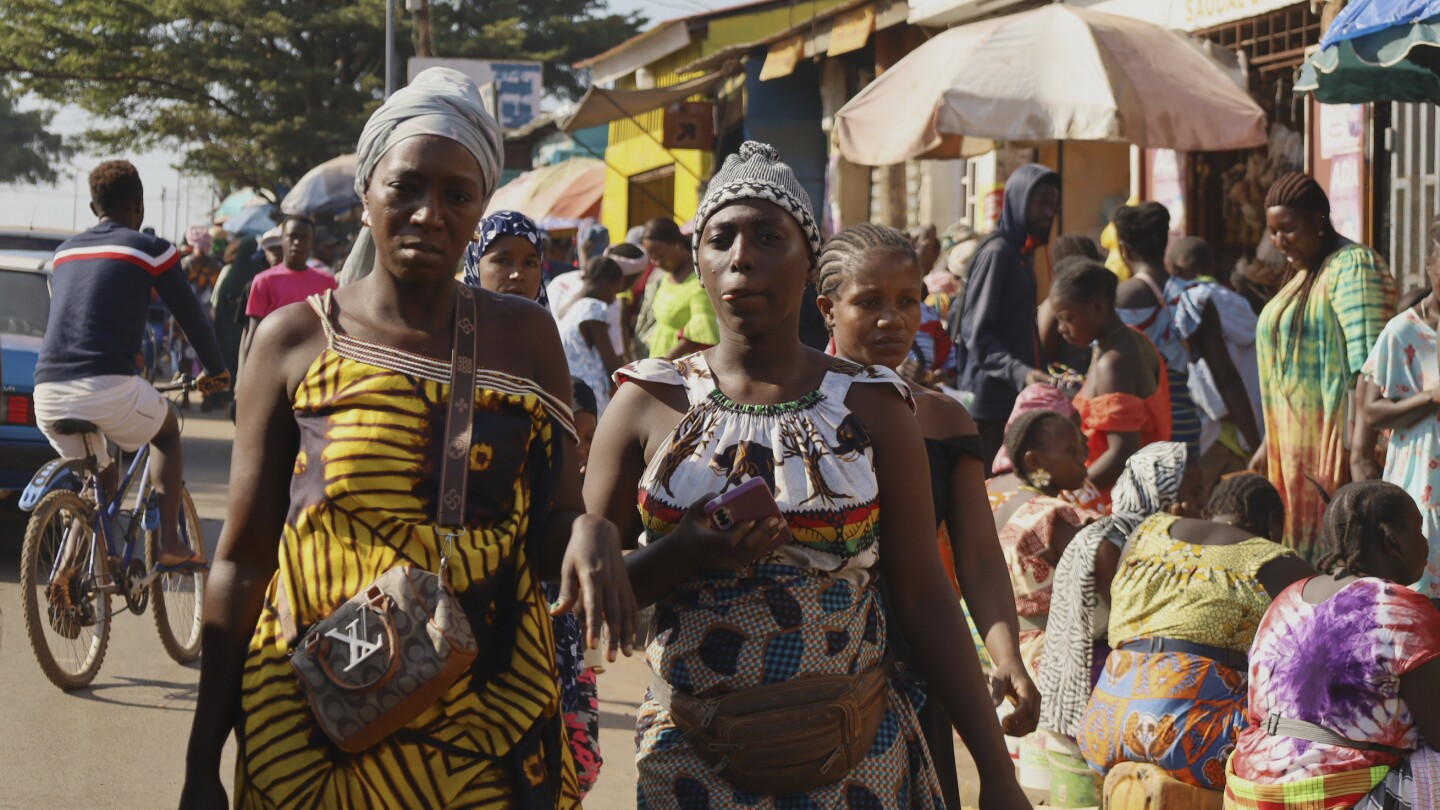
    A high-level delegation from the Economic Community of West African States (ECOWAS) arrived in Guinea-Bissau’s capital Bissau on Monday to initiate critical mediation talks with military leaders who seized power in last week’s coup. The mission, headed by ECOWAS Chairman and Sierra Leonean President Julius Maada Bio, aims to negotiate the complete restoration of constitutional order following the overthrow of democratically elected institutions.

    The military government, which assumed control last Wednesday amid post-electoral turmoil, has implemented stringent security measures prohibiting all demonstrations, strikes, and activities deemed threatening to national stability. In an official statement released Sunday evening, the junta additionally mandated the reopening of public institutions and ministries.

    This political crisis erupted just three days after a tightly contested presidential election where both primary contenders declared victory. During the military takeover, ousted President Umaro Sissoco Embaló confirmed his deposition and arrest via telephone communication with French media before subsequently fleeing to Brazzaville, capital of the Republic of Congo.

    The armed forces have installed former army chief of staff General Horta Inta-a to lead a transitional military government overseeing a projected one-year political transition. On Saturday, Inta-a appointed a new 28-member administration predominantly composed of allies from the deposed president’s circle.

    In a significant development, Nigeria granted protective asylum to Guinea-Bissau opposition candidate Fernando Dias da Costa citing imminent threats to his life. Nigeria’s Minister of Foreign Affairs formally requested ECOWAS troop protection for da Costa, currently sheltering at the Nigerian embassy in Bissau.

    ECOWAS had previously suspended Guinea-Bissau from its decision-making bodies pending full constitutional restoration. United Nations Secretary-General Antonio Guterres condemned the military takeover as an unacceptable violation of democratic principles, particularly following the November 23 general elections. He demanded immediate unconditional restoration of constitutional order and release of all detained officials including electoral authorities and political leaders.

    Guinea-Bissau’s history remains marred by political instability since gaining independence from Portugal over five decades ago, with this representing the latest in numerous coups and attempted power seizures. The nation of 2.2 million people, among the world’s poorest, has become a notorious hub for narcotics trafficking between Latin America and Europe—a factor experts identify as exacerbating its chronic political crises.

    ECOWAS, the 15-nation bloc established in 1975 as West Africa’s primary political and economic authority, continues grappling with regional democratic backsliding despite its mandate to promote stability and integration. The organization faces mounting challenges reversing military takeovers in member states where citizens increasingly protest inequitable distribution of natural resource wealth.

  • One of the world’s most important energy analysts shares his 2026 oil forecast

    One of the world’s most important energy analysts shares his 2026 oil forecast

    In an exclusive interview with Khaleej Times, Dr. Daniel Yergin, vice chairman of S&P Global and Pulitzer Prize-winning energy authority, presented a comprehensive outlook for global energy markets heading into 2026. The renowned analyst predicts Brent crude will average approximately $60 per barrel in 2026 before recovering to $65 in 2027, reflecting fundamental shifts in the global energy landscape.

    Yergin identifies several critical factors influencing oil markets, noting that supply currently exceeds demand despite vigorous debate about the exact degree of oversupply. He emphasizes that economic fundamentals, political developments, and unexpected events will collectively shape price trajectories. Two particular uncertainties dominate the outlook: the market status of Russian oil amid ongoing sanctions and the trajectory of Chinese demand, which remains obscured by strategic stockpiling activities.

    According to Yergin, the globalization paradigm that characterized oil markets for decades has fundamentally fractured following Russia’s invasion of Ukraine, creating a partitioned market structure. This new era of sanctions, tariffs, and protectionism introduces non-economic variables that complicate traditional forecasting models.

    Beyond oil, Yergin highlights significant transformations in natural gas markets, where the United States has emerged as the world’s leading LNG exporter within just a decade. He anticipates abundant LNG supplies will pressure prices downward, particularly as Europe permanently reduces dependence on Russian gas. The analyst also notes Gulf countries’ strategic evaluations of their roles as global gas producers.

    A central theme in Yergin’s analysis is the escalating electricity demand driven by artificial intelligence infrastructure. He identifies electricity availability as the critical constraint on AI development, noting that natural gas is experiencing a resurgence in power generation despite previous transition expectations. This electricity demand has also renewed interest in nuclear power, with Yergin specifically praising the UAE’s decision to build four nuclear reactors as “a brilliant strategic decision.”

    Regarding investment strategies, energy sector experts suggest a cautious approach to oil-related equities given anticipated price weakness, while highlighting stronger fundamentals for natural gas and power infrastructure. They recommend patience with oil stocks and consideration of LNG companies, nuclear utilities, and power producers as alternative energy investments.

    Yergin’s upcoming CERAWeek conference in March will focus extensively on AI-energy intersections, LNG market dynamics, oil market developments, and technological innovations across energy industries.

  • Israel says killed 40 fighters over past week in Gaza tunnels operation

    Israel says killed 40 fighters over past week in Gaza tunnels operation

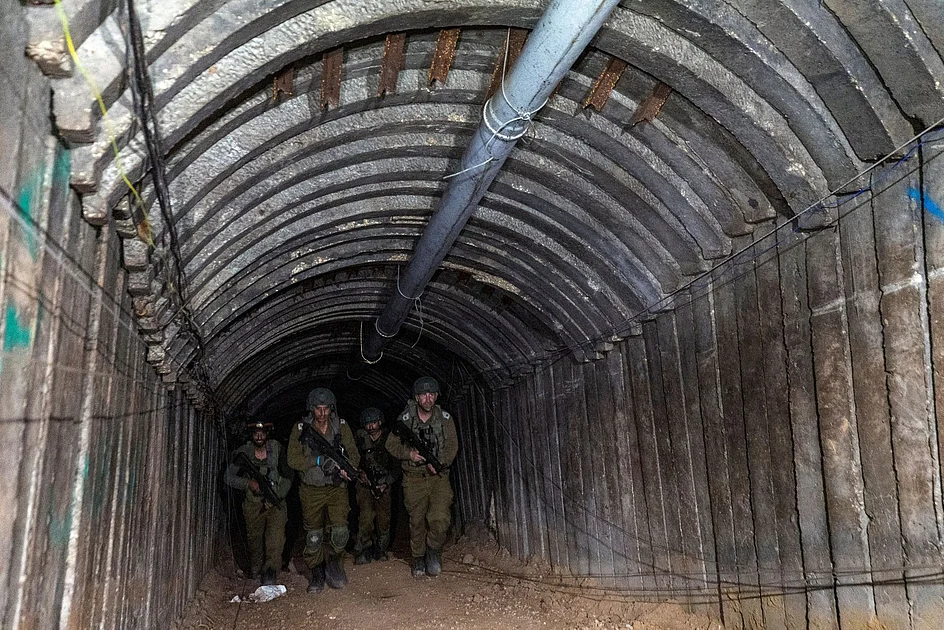
    The Israeli military has reported eliminating over 40 Hamas operatives during intensive tunnel clearance operations in southern Gaza’s Rafah region over the past week. According to official statements released Sunday, these targeted missions focused on dismantling underground networks beneath Israeli-controlled zones where dozens of militants remain entrenched.

    The operations, concentrated in eastern Rafah for 40 consecutive days, have resulted in the destruction of numerous tunnel shafts and terrorist infrastructure sites both above and below ground. This development comes amid delicate negotiations regarding the fate of an estimated 60-80 Hamas fighters trapped in tunnels on the Israeli-controlled side of the Yellow Line demarcation boundary established under the current ceasefire agreement.

    Hamas official Husam Badran stated the group’s fighters ‘cannot accept surrendering or handing over their weapons to the occupation,’ while accusing Israel of stalling the transition to the next phase of the US-brokered truce. The ceasefire, mediated by Egypt, Turkey, and Qatar alongside American diplomats, took effect October 10 but remains precarious with mutual violations alleged by both sides.

    The conflict originated with Hamas’s October 7, 2023 attack that killed 1,221 Israelis. Israel’s subsequent military campaign has resulted in at least 70,103 Palestinian fatalities according to Gaza’s health ministry, with 356 additional deaths reported since the ceasefire began. The humanitarian situation in Gaza remains critically severe as diplomatic efforts continue to address both the immediate tunnel standoff and broader regional stability concerns.

  • Working during UAE National Day holidays? How does compensatory leave work

    Working during UAE National Day holidays? How does compensatory leave work

    As the UAE prepares for its National Day celebrations, private-sector employees anticipating a four-day weekend should note their legal entitlements when required to work during official holidays. UAE labor regulations provide clear compensation mechanisms that employers must follow for holiday shifts.

    The foundational legislation, Article 28 of the UAE Labour Law titled ‘Official Holidays and Requiring Worker to Work Therein,’ establishes two compensation options for holiday work: employers must either provide a substitute rest day or pay the normal daily wage plus a minimum 50% bonus based on the employee’s basic wage. This effectively guarantees at least 1.5 times the regular compensation for holiday work.

    Legal protections extend uniformly across the workforce hierarchy, covering senior staff, junior employees, and contract workers without discrimination. All private-sector employees benefit from these safeguards under federal law.

    Human resources consultant Ghina El Naber observes that many workers, particularly in retail and hospitality sectors, remain unaware of their entitlements. ‘The law is unequivocal. Working on a public holiday should never be treated as an ordinary shift,’ El Naber emphasized. ‘Employees should scrutinize their pay slips and assert their rights through proper channels when compensation is absent.’

    For non-compliant employers, the Ministry of Human Resources and Emiratisation (MoHRE) provides complaint mechanisms, with labor dispute tribunals consistently enforcing strict adherence to Article 28 provisions.

    The 2025 holiday schedule sees National Day observations moving to December 1-2 (Monday-Tuesday), creating an extended weekend for many workers. Those working during this period should verify their compensation through either additional pay reflected in their earnings or substitute leave days allocated by their employer.

  • National Guard shooting suspect radicalised after he came to US, homeland secretary says

    National Guard shooting suspect radicalised after he came to US, homeland secretary says

    U.S. Homeland Security Secretary Kristi Noem revealed on Sunday that the Afghan immigrant accused of ambushing National Guard members in Washington, D.C. underwent radicalization after entering the United States, not before his arrival. The suspect, identified as 29-year-old Rahmanullah Lakanwal, allegedly carried out Wednesday’s shooting just blocks from the White House, resulting in one National Guard member killed and another critically wounded.

    Speaking across multiple national news programs including NBC’s ‘Meet the Press’ and ABC’s ‘This Week,’ Secretary Noem indicated investigators believe Lakanwal became radicalized while residing in Washington state. ‘We believe he was radicalized since he’s been here in this country,’ Noem stated, adding that authorities suspect the process occurred ‘through connections in his home community and state.’

    The case has ignited political tensions regarding U.S. immigration policy. While President Trump’s administration has criticized the vetting processes during the Biden administration, records show Lakanwal was actually granted asylum in April under the current Trump administration. The suspect entered the United States in 2021 as part of the mass evacuation of Afghans who assisted U.S. forces during the Afghanistan conflict.

    In response to the attack, the Trump administration has implemented significant immigration policy changes, including a comprehensive freeze on processing all asylum applications. President Trump told reporters aboard Air Force One that his administration could ‘pause asylum admissions into the US for an extended period’ with ‘no time limit.’

    Secretary Noem warned that immigration officials would now review every pending asylum claim and consider deportations where warranted. She also issued a stern warning to anyone connected to the shooting: ‘Anyone who has information on this needs to know that we will be coming after you, and we will bring you to justice.’

    Investigators continue to seek additional information from family members and associates of Lakanwal, who previously served in a CIA-backed unit in Afghanistan before seeking refuge in the United States.

  • Indian analyst urges more China-India flights, exchanges

    Indian analyst urges more China-India flights, exchanges

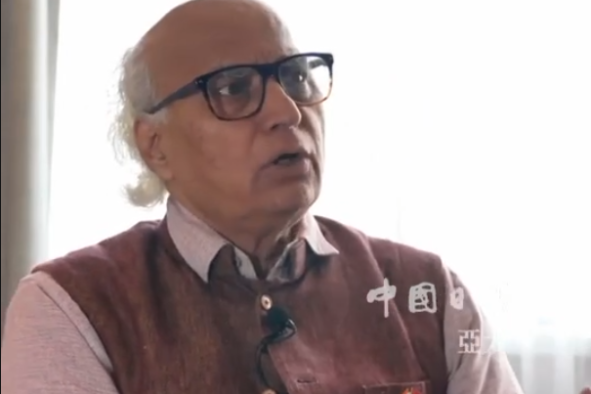
    Prominent Indian political analyst Sudheendra Kulkarni has issued a compelling appeal for significantly enhanced aviation connectivity and cultural exchanges between China and India, characterizing current bilateral efforts as merely “a very small step” toward realizing the full potential of this critical relationship.

    As founder and chairman of the Forum for a New South Asia and former aide to Indian Prime Minister Atal Bihari Vajpayee, Kulkarni possesses substantial expertise in Sino-Indian relations. In an exclusive interview with China Daily, he articulated a visionary framework for bilateral engagement that matches the demographic and economic scale of both nations.

    Kulkarni emphasized that with both countries representing populations of 1.4 billion people experiencing rapid economic growth, the existing aviation infrastructure remains woefully inadequate. Rather than maintaining the current limited flight operations, he proposed an ambitious expansion to approximately 100 direct flights connecting twenty different cities across both nations.

    The seasoned analyst underscored that robust people-to-people exchanges constitute the fundamental bedrock of stronger diplomatic and economic ties. He specifically highlighted student exchange programs as particularly valuable mechanisms for fostering mutual understanding and long-term cooperation between the two Asian giants.

    Kulkarni’s recommendations arrive at a crucial juncture in China-India relations, suggesting that enhanced civilian connectivity could potentially facilitate improved diplomatic engagement between the world’s two most populous nations.