博客

  • Mangione in court as lawyers seek to rule out notebook, gun and other key evidence

    Mangione in court as lawyers seek to rule out notebook, gun and other key evidence

    The Manhattan courtroom became the stage for a pivotal legal battle as Luigi Mangione, the 27-year-old defendant charged with the murder of United Healthcare CEO Brian Thompson, appeared for a multi-day pre-trial hearing. The proceedings center on defense motions to suppress crucial evidence, including a firearm and personal writings allegedly outlining a motive.

    Mangione, who pleaded not guilty to both state and federal murder charges that carry potential death penalty implications, attended Monday’s hearing in a grey suit after court personnel removed his restraints. His legal team is challenging the admissibility of evidence obtained during his December 2024 arrest at a Pennsylvania McDonald’s days after the shooting.

    Defense attorneys argue constitutional violations occurred when police conducted warrantless searches of Mangione’s backpack and obtained statements before reading Miranda rights. Prosecutors maintain the 9mm handgun recovered matches the weapon used in the daylight shooting of Thompson, a father of two, as he entered a Manhattan investors’ conference.

    The notebook in question allegedly contains writings describing what prosecutors characterize as anti-health insurance industry sentiments, referring to ‘the deadly, greed fueled health insurance cartel.’ However, the defense contends these materials were illegally obtained.

    Legal experts observing the case suggest the defense faces significant hurdles. ‘The chances of evidence exclusion are virtually non-existent,’ noted New York criminal defense attorney Dmitriy Shakhnevich, citing exceptions to warrant requirements during manhunts for violent suspects.

    The hearing has featured testimony from law enforcement officials, including NYPD Deputy Commissioner of Public Information Sgt. Chris McLaughlin, and included review of surveillance footage from both the crime scene and arrest location. Prosecutors have indicated additional forensic evidence, including DNA or fingerprints from items discarded near the shooting, strengthens their case.

    Separately, Mangione’s attorneys are seeking to prevent federal prosecutors from pursuing capital punishment, arguing public comments from high-ranking officials like Attorney General Pam Bondi have prejudiced the case through political motivation.

  • China breaks ‘foreign technological monopolies’ with carbon fiber production line

    China breaks ‘foreign technological monopolies’ with carbon fiber production line

    China has achieved a significant technological milestone with the successful launch of its T1000 carbon fiber production line in Datong, Shanxi Province. This groundbreaking facility, which commenced operations on Sunday, represents a crucial advancement in China’s capability for large-scale manufacturing of high-performance carbon materials—a substance often referred to as the ‘monarch of novel materials.’

    The demonstration production line, with an annual capacity of 200 tons for 12K small tow T1000 carbon fiber, initiated construction in June 2024. This project constitutes the initial phase of a comprehensive high-performance carbon fiber initiative spearheaded by Shanxi Huayang Carbon Material Technology. The enterprise emerged from a strategic collaboration between Huayang New Material Technology Group, the municipal government of Datong, and the Institute of Coal Chemistry under the Chinese Academy of Sciences.

    According to Director Fang Yitian of the Institute of Coal Chemistry, this achievement effectively dismantles long-standing international technological monopolies while reinforcing the security and robustness of China’s supply chain for essential materials. High-performance carbon fiber stands as a priority within China’s strategic emerging industries, serving as both the lifeblood and vanguard for sophisticated high-tech applications, advanced defense technologies, and the global transformation of conventional industries.

    Technical specifications reveal the extraordinary properties of T1000 carbon fiber: with a single filament diameter measuring merely 6 to 7 micrometers—less than one-tenth the width of a human hair—it exhibits a tensile strength surpassing 6400 MPa. Despite having a density equivalent to one-quarter that of steel, its strength exceeds steel’s by more than fivefold. A practical illustration demonstrates that a one-meter strand of Huayang’s T1000 carbon fiber, weighing only 0.5 grams, can sustain a load of 200 kilograms. The material additionally demonstrates exceptional resistance to high temperatures and corrosion, maintaining chemical inertness in both acidic and alkaline conditions, while offering superior thermal and electrical conductivity.

    These characteristics render it invaluable across diverse sectors including national defense, aerospace, rail transportation, and the emerging low-altitude economy. Industry experts note its extensive potential applications in wind turbine blade manufacturing and high-performance sports equipment.

    Project academic leader Lü Chunxiang, simultaneously a researcher at the Institute of Coal Chemistry, affirmed that China has attained comprehensive domestic supply security for high-end carbon fiber alongside self-sufficiency in technological innovation. His team previously overcame the challenges of aerospace-grade T300 carbon fiber production in 2008, positioning China as the third nation globally—after Japan and the United States—to master this technology. The T800 carbon fiber developed by his team was utilized in bobsleds and helmets for Chinese athletes during the Beijing Winter Olympics.

    Reflecting on the development journey, Lü acknowledged initial obstacles, recalling how foreign corporations dominated both carbon fiber technology and markets back in 2003. Today, Shanxi has evolved into an essential supply base for high-end carbon fiber applications within China.

    Huayang New Material Technology Group General Manager Wang Dali committed to intensifying market orientation, maintaining integrated progress in technological and industrial innovation, and deepening focus on T1000 carbon fiber to develop competitive, market-valued high-tech products.

    Datong Mayor Liu Junyi characterized the project as not merely a milestone but a transformative breakthrough for the high-quality development of Datong’s new material industry. He anticipates the initiative will accelerate the growth of associated sectors within Datong, including high-end equipment manufacturing and new energy storage, while attracting numerous upstream and downstream supporting enterprises to establish operations in the city.

  • Why New Delhi has become the most dependable partner in South Asia

    Why New Delhi has become the most dependable partner in South Asia

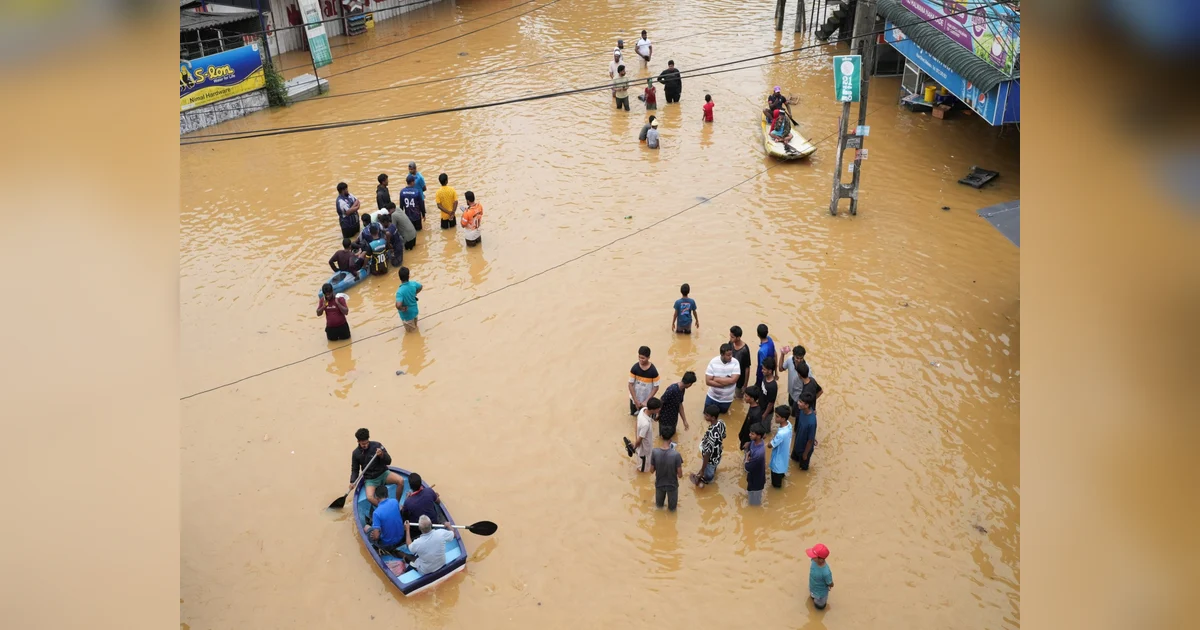
    When Cyclone Ditwah approached Sri Lanka with destructive force last week, India’s humanitarian machinery activated with precision and purpose. Even before the storm made landfall, New Delhi had positioned naval assets, relief supplies, and emergency teams on standby, demonstrating what has become standard protocol for the region’s dominant crisis responder.

    This rapid mobilization represents neither anomaly nor exception but rather the established norm in Indian foreign policy. Over the past decade, India has systematically developed its capacity as the Indian Ocean Region’s most reliable first responder, operating under a clearly articulated principle: in moments of crisis, neighboring nations receive priority attention.

    The architecture of India’s response mechanism involves sophisticated coordination between multiple government agencies. As Sri Lankan authorities issued early warnings, India’s Ministry of External Affairs and Navy immediately engaged Colombo counterparts. The Southern Naval Command prepared ships laden with relief supplies, medical teams, and emergency equipment while Coast Guard aircraft stood ready for search and rescue operations. Critical infrastructure including high-capacity power generators and water purification units were pre-positioned for immediate deployment.

    This operational pattern has become familiar throughout South Asia. India consistently anticipates distress calls rather than awaiting them—a critical advantage in a region frequently battered by cyclones, monsoons, and seismic events where response speed directly correlates with survival rates.

    The historical record demonstrates remarkable consistency. During Nepal’s devastating 2015 earthquake, India launched Operation Maitri, its largest humanitarian mission to date, with Air Force aircraft conducting over 250 sorties that rescued approximately 5,000 people and delivered thousands of tons of essential supplies.

    When Sri Lanka faced economic collapse in 2022, India provided over $4 billion in credit lines and emergency assistance, outpacing all other nations in both scale and urgency. During Maldives’ 2014 drinking water crisis, Indian naval ships delivered over 1,000 tons of potable water within hours of the request. Similar rapid responses occurred during Cyclone Mocha in Myanmar and Bangladesh (2023) and throughout the COVID-19 pandemic through the Vaccine Maitri initiative that supplied critical medical resources to multiple nations.

    This consistent humanitarian engagement stems from formal policy doctrines. India’s ‘Neighbourhood First’ and ‘SAGAR’ (Security and Growth for All in the Region) frameworks recognize that regional stability and prosperity are interconnected. The approach contains a moral dimension as well, acknowledging centuries of shared cultural, commercial, and social exchange across South Asian borders.

    As climate change intensifies weather-related disasters, India’s role as regional stabilizer grows increasingly vital. The nation has dramatically expanded its response capabilities—from naval assets to satellite technology—while maintaining unwavering commitment to regional assistance. For Sri Lanka and neighboring nations, this reliability represents an invaluable security component in an uncertain world.

    India has demonstrated repeatedly that it serves not merely as a fair-weather partner but as the nation that arrives first during crises and remains until the last family reaches safety. In a region characterized by complex geopolitical relationships, India has established itself as South Asia’s most dependable humanitarian ally.

  • Israel’s Ben Gvir promotes head of unit involved in executing two Palestinians

    Israel’s Ben Gvir promotes head of unit involved in executing two Palestinians

    In a move drawing international condemnation, Israel’s far-right National Security Minister Itamar Ben Gvir has promoted the commander of an undercover Border Police unit implicated in the fatal shooting of two unarmed Palestinian men in the occupied West Bank. The incident, captured on video in Jenin’s Abu Dhahir neighborhood, shows Al-Muntasir Abdullah, 26, and Yousef Asasa, 37, emerging from a building with raised arms and lifted shirts—clear gestures of surrender—before being executed at point-blank range. Despite the Israeli military and police jointly admitting to the shootings and launching an investigation, Ben Gvir advanced the commander to the rank of colonel days later. A police source claimed the promotion was pre-approved two weeks prior by senior command, requiring Ben Gvir’s endorsement. The United Nations rights office denounced the killings as “summary executions,” while Ben Gvir visited the unit’s base to “embrace the heroic fighters” and vowed to halt investigations into Palestinians he labels “terrorists.” This occurs amid a UN Committee Against Torture report condemning Israel’s “organized and widespread” use of torture, exacerbated since the Gaza war began on October 7, 2023. Israeli forces have killed over 1,000 Palestinians in the West Bank in two years, with military investigations rarely leading to prosecutions.

  • Dozens missing as deadly landslide hits two boats in Peru

    Dozens missing as deadly landslide hits two boats in Peru

    A catastrophic landslide has struck a river port in Peru’s Amazon rainforest, resulting in a significant loss of life with at least 12 fatalities and approximately 50 individuals reported missing. The disaster occurred in the early hours of Monday morning near Iparia in the Ucayali region, sinking one ferry and critically damaging another passenger vessel during disembarkation procedures.

    According to official reports from Peru’s National Emergency Operations Center, the tragedy was triggered by severe riverbank erosion along the Ucayali River, which serves as the primary headwater for the Amazon River system. The incident took place at approximately 05:00 local time (10:00 GMT) when both vessels were docked with passengers preparing to exit.

    Rescue operations involving national police and Peruvian Navy personnel face substantial challenges due to rapidly flowing river currents that complicate search and recovery efforts. Hospital facilities in the region are currently treating multiple injured survivors pulled from the wreckage.

    Passenger manifests indicate those aboard included children, educators, and medical professionals, with concerns mounting that minors may be among the missing. One vessel had embarked from Pucallpa traveling northward on Sunday, scheduled to serve multiple riverside communities including Caco Macaya, Curiaca del Caco, and Pueblo Nuevo del Caco.

    Authorities are coordinating with grieving families gathered at the disaster site to establish precise accounting of those still unaccounted for as recovery operations continue under difficult conditions.

  • UN delegation praises UAE field hospital in Gaza for humanitarian efforts

    UN delegation praises UAE field hospital in Gaza for humanitarian efforts

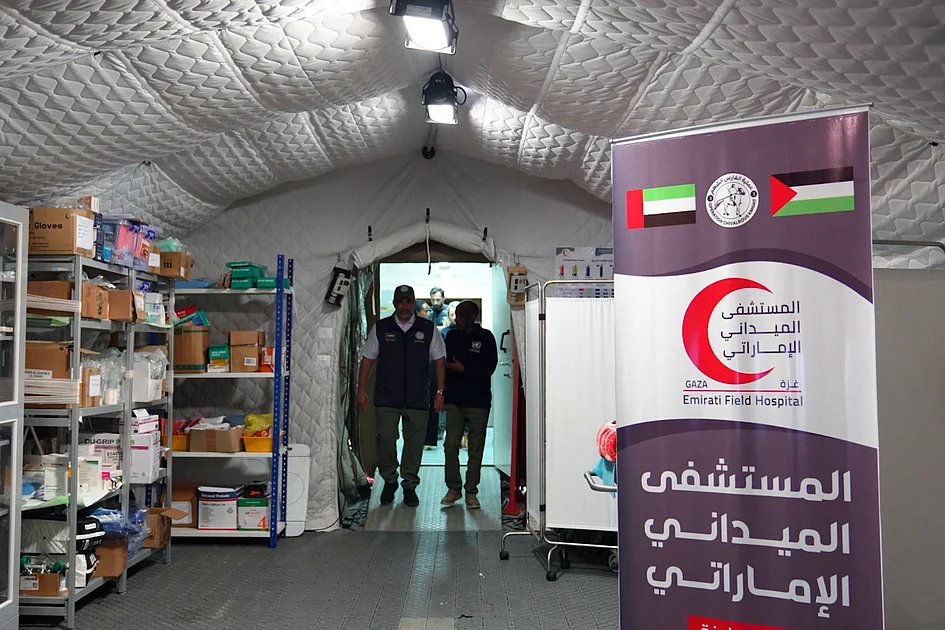
    A high-level United Nations delegation conducted an extensive evaluation of the United Arab Emirates’ field medical facility in the Gaza Strip, expressing profound admiration for its comprehensive humanitarian operations. The delegation, headed by Dr. Ramiz Alakbarov, UN Resident and Humanitarian Coordinator for Palestinian territories, thoroughly examined the hospital’s continuous 24/7 emergency medical services and trauma care capabilities for wounded civilians.

    The inspection extended beyond medical facilities to include operational warehouses supporting Operation Chivalrous Knight 3, where delegates received detailed briefings on logistical coordination, equipment management, and distribution mechanisms ensuring efficient aid delivery to vulnerable populations. The delegation observed sophisticated preparation processes designed to maximize humanitarian impact while minimizing operational bottlenecks.

    Dr. Alakbarov particularly emphasized the UAE’s innovative approach to holistic humanitarian support, highlighting the recently organized mass wedding ceremony as an exemplary initiative that provides psychological relief and emotional restoration amidst ongoing adversity. He characterized the UAE’s multifaceted assistance program as representing an advanced paradigm in humanitarian crisis response that effectively addresses both immediate physical needs and longer-term community resilience.

    The UN coordinator further noted that the UAE’s sustained commitment to alleviating civilian suffering establishes a benchmark for international humanitarian solidarity, combining emergency medical response with strategic vision to foster hope and stability within conflict-affected communities.

  • Shanxi University hosts folk dance workshop for international students

    Shanxi University hosts folk dance workshop for international students

    TAIYUAN – In an innovative cultural initiative, Shanxi University hosted an immersive folk dance workshop exclusively for its international student community this past Saturday. The event saw over twenty overseas scholars actively engaging with the rich tapestry of Shanxi’s intangible cultural heritage through hands-on dance instruction.

    The workshop featured three distinct regional dance forms: the vigorous Yangko Dance from northern Shanxi, the elegant Small Flower Dance characteristic of central regions, and the rhythmically complex Flower Drum Dance from the province’s southern territories. Participants received professional guidance on intricate footwork, traditional gestures, rhythmic patterns, and the artistic application of cultural props unique to each performance style.

    For numerous attendees, this represented their inaugural exposure to China’s provincial folk traditions. Pengkasit Jirapha, a 20-year-old Thai exchange student, expressed particular fascination with the dynamic movements and visual spectacle of the spinning fans employed in the Small Flower Dance. “The whirling fans create such mesmerizing patterns – I’m eager to share this extraordinary experience with my friends back home,” she remarked.

    The drum-accompanied choreography presented a distinctive challenge, requiring dancers to maintain precise rhythm while executing complex movements. Pham Trong Tuan, a 26-year-old Vietnamese graduate student, found the coordination demands both challenging and enjoyable. “This workshop provided unparalleled access to authentic Chinese cultural traditions that few international visitors experience,” he noted.

    According to Zhang Bowen, an instructor from the University’s School of Music, this event constitutes part of a broader strategy to integrate traditional Chinese arts into the institution’s international education curriculum. She emphasized that these dance forms not only possess profound local historical significance but remain vibrant components of contemporary community celebrations throughout Shanxi Province.

    “These traditional dances serve as dynamic conduits for cross-cultural dialogue,” Zhang observed. “Through firsthand experience with these living traditions, we enable our international scholars to become cultural ambassadors who can authentically represent Chinese heritage to global audiences.”

    The workshop represents growing efforts by Chinese educational institutions to combine cultural preservation with international exchange programs, creating meaningful intercultural connections through shared artistic experiences.

  • Australia’s social media ban explained… in 60 seconds

    Australia’s social media ban explained… in 60 seconds

    The Australian government has announced a sweeping prohibition on social media access for all citizens under the age of 16, marking one of the world’s most restrictive digital age-based bans. This unprecedented national policy aims to address growing concerns about youth mental health, cyberbullying, and online predation that have been linked to social media platforms.

    The implementation framework involves collaboration between federal regulators, internet service providers, and social media companies to establish age verification protocols. The policy mandates platform-level compliance with stringent age verification requirements, though specific technological implementation details remain under development.

    Critics question the feasibility of effective enforcement, citing challenges in accurate age verification and potential circumvention methods. Digital rights advocates have raised concerns about privacy implications of age verification systems and possible infringement on youth digital literacy development.

    Proponents argue the measure represents a necessary intervention to protect vulnerable adolescents from documented psychological harms associated with excessive social media use. The Australian initiative follows similar but less comprehensive measures in other nations, positioning the country at the forefront of regulatory attempts to control minors’ digital access.

    Implementation timelines and specific compliance mechanisms are expected to be finalized in coming months, with ongoing debates about the balance between protection and digital rights likely to continue throughout the rollout process.

  • National anthem at 11am: UAE invites everyone to sing together on Eid Al Etihad

    National anthem at 11am: UAE invites everyone to sing together on Eid Al Etihad

    In a powerful display of national unity, the United Arab Emirates has issued a nationwide invitation for all residents to participate in a synchronized singing of the national anthem at precisely 11am on Tuesday, December 2nd. The initiative, marking Eid Al Etihad (UAE National Day), represents a collective celebration of the country’s diverse communities and shared identity.

    Sheikh Abdullah bin Zayed Al Nahyan, Deputy Prime Minister and Minister of Foreign Affairs, formally announced the event through social media platform X on Monday, while residents across all seven emirates received SMS reminders to participate in this symbolic moment. The coordinated singing aims to create “a powerful echo that carries through every home, street, and city” throughout the nation.

    To ensure inclusive participation across the UAE’s multicultural population, authorities have provided phonetic transliterations of ‘Ishy Bilady’ in both Arabic and English. An official sing-along video has been made available to guide participants, while residents are encouraged to capture and share their experiences on social media using the hashtags #EidAlEtihad and #VoicesOfUnity.

    The initiative represents one of the centerpiece events of the National Day celebrations, designed to foster a spirit of unity and belonging among Emiratis, expatriates, and visitors alike, regardless of their location within the country.

  • Starbucks to pay NYC workers $35m after alleged labour law violations

    Starbucks to pay NYC workers $35m after alleged labour law violations

    Starbucks has reached a historic $35 million settlement with New York City authorities following allegations of systematic violations of the city’s Fair Workweek Law. The agreement, announced Monday, resolves claims that the coffee giant denied predictable schedules and arbitrarily reduced hours for thousands of employees across its NYC locations.

    More than 15,000 hourly workers will receive compensation of $50 for each week worked between July 2021 and July 2024, according to city officials. The settlement represents the largest worker protection agreement in New York City’s history, with investigators documenting over half a million violations of scheduling regulations.

    New York City Department of Consumer and Worker Protection Commissioner Vilda Vera Mayuga stated the investigation revealed ‘a pattern of systemic violations’ across all Starbucks locations in the city. ‘All workers deserve to be treated with dignity,’ Mayuga emphasized, ‘and we are proud to stand up for our neighbors when a multibillion-dollar company chooses to systematically violate their employees’ rights.’

    As part of the settlement, Starbucks must now comply with NYC’s worker protection laws requiring fast-food employers to provide regular schedules and opportunities for additional shifts. The company acknowledged the complexity of the city’s regulations while maintaining its commitment to compliance.

    In a statement, Starbucks noted the compensation represents ‘legal compliance, not unpaid wages’ and reiterated its commitment to ‘creating the best job in retail.’ The company recently announced plans to invest $500 million in coffeehouse staffing and training improvements nationwide.

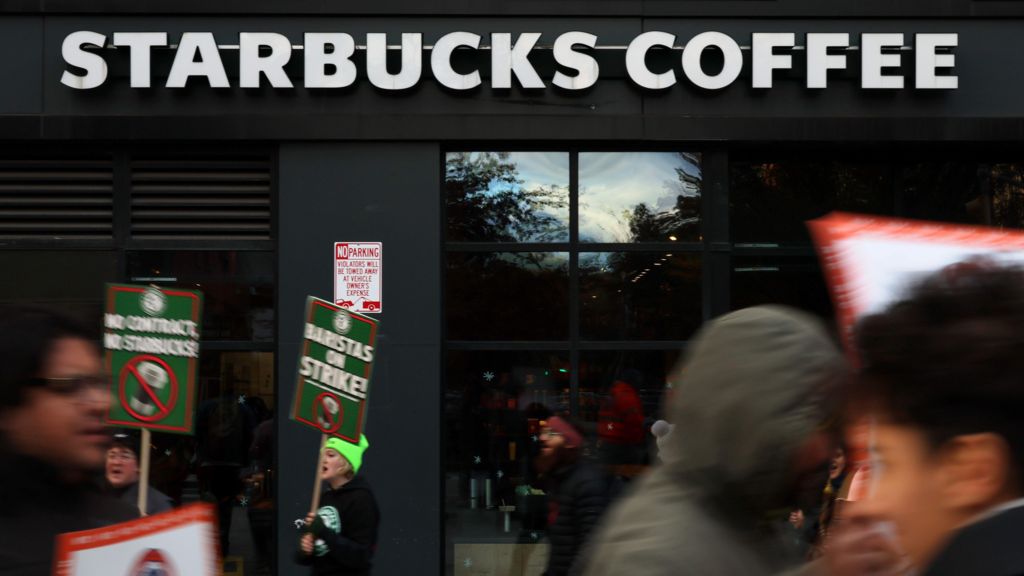
    The settlement occurs amid ongoing labor tensions between Starbucks and unionized workers. Starbucks Workers United continues to organize strikes across more than 120 stores in 85 cities, demanding better pay, improved staffing levels, and formal union contracts. The union has won representation elections at approximately 5% of company-owned U.S. locations since its formation four years ago.

    New York City Mayor Eric Adams characterized the agreement as a ‘landmark settlement’ that will ‘put tens of millions of dollars back into the pockets of hard-working New Yorkers and reinforce every New Yorker’s right to a reliable schedule, full hours, and basic dignity.’

    The resolution comes as Starbucks navigates multiple challenges including consumer boycotts, increased competition, pricing criticism, and leadership transitions. While the company reported its first quarterly sales growth in nearly two years this October, U.S. sales remained flat, indicating ongoing operational challenges.