博客

  • Chinese firms keep innovating despite restrictions

    Chinese firms keep innovating despite restrictions

    Amid ongoing deliberations by the Trump administration regarding continued restrictions on high-end processor exports to China, Chinese technology companies are demonstrating remarkable resilience through accelerated innovation in domestic semiconductor development. This strategic pivot toward self-reliance represents a significant shift in the global artificial intelligence landscape.

    Baidu Inc., China’s pioneering technology conglomerate, has unveiled substantial advancements in both hardware and software capabilities. The company recently introduced its latest generation Kunlun AI chips alongside the upgraded Ernie 5.0 large language model, marking a substantial milestone in China’s autonomous AI development trajectory. The Kunlun M100 chip, specifically engineered for large-scale AI model inference scenarios, is scheduled for commercial release in early 2026. Looking further ahead, Baidu’s roadmap includes the Kunlun M300, slated for 2027 deployment, which promises to deliver unprecedented computational power for ultra-large-scale multimodal model training and inference operations.

    Industry analysts emphasize the strategic importance of these developments. According to Charlie Dai, Vice-President and Principal Analyst at Forrester Research, “The Kunlun chip series represents a critical component in China’s strategy to reduce foreign GPU dependency while simultaneously controlling costs and ensuring performance scalability.” Dai further noted that Baidu’s deployment of multimodal large language models and interactive digital human technologies positions the company to drive efficiency and innovation across multiple sectors including e-commerce, advanced manufacturing, and autonomous vehicle development.

    The technological advancements occur against a backdrop of intensifying geopolitical tensions. President Trump has repeatedly emphasized his administration’s commitment to maintaining American leadership in artificial intelligence, explicitly stating that the United States would not permit China to dominate this strategically crucial field. The administration continues to evaluate whether chip manufacturing giant Nvidia will receive authorization to export its most advanced processors to Chinese enterprises.

    Michael Kratsios, Director of the White House Office of Science and Technology Policy, articulated the administration’s perspective during a recent Wall Street Journal podcast appearance: “Our primary objective must be ensuring American leadership in innovation. The United States must remain the birthplace of the next great AI discoveries. We require a regulatory framework that enables our leading AI technology companies and innovators to successfully deploy these transformative technologies.”

    The commercial implications of these restrictions are substantial. Nvidia CEO Jensen Huang estimates China’s current AI chip market at approximately $50 billion, with projections indicating potential growth to $200 billion within five years. Huang expressed concern that export limitations could effectively exclude American companies from participating in this rapidly expanding market. “It’s difficult to conceive of any policymaker considering it advantageous for the United States to voluntarily withdraw from one of the world’s largest technology markets,” Huang remarked.

    Expert analysis suggests that intelligent transformation and the development of new quality productive forces have emerged as the most powerful economic drivers in the contemporary era. He Hui, Semiconductor Research Director at technology research firm Omdia, observed that “Currently, only the United States and China possess truly competitive capabilities at the AI development table.” She cautioned that “Without access to the Chinese market, Nvidia’s growth narrative in the AI sector cannot achieve its full potential,” noting that the Nvidia CEO’s consistent acknowledgments of Chinese companies’ rapid advancement should serve as a warning to US policymakers that additional restrictions may ultimately accelerate China’s technological independence.


  • Crackdown on scams preying on sick and elderly

    Crackdown on scams preying on sick and elderly

    China’s Supreme People’s Court has launched a comprehensive judicial offensive against fraud schemes specifically targeting elderly and disabled citizens, emphasizing the protection of vulnerable populations as a paramount judicial priority. In a significant move on December 1, 2025, the nation’s highest judicial authority publicized six major fraud cases while directing courts across China to enhance safeguards for pension and subsistence allowance systems.

    The court identified an alarming proliferation of sophisticated fraud operations spanning healthcare, retirement services, investment management, and consumer sectors. These criminal enterprises employ increasingly elaborate tactics that not only jeopardize citizens’ property security but also pose substantial threats to social stability.

    One particularly egregious case involved convicted fraudster Ni, sentenced to ten years and three months imprisonment by Shanghai Pudong New District People’s Court on June 17, 2025. Ni masterminded a scheme that defrauded elderly victims of over 620,000 yuan ($87,670) through the sale of counterfeit anti-cancer health products. The criminal operation, initiated in September 2024, involved multiple collaborators who lured seniors with free meals and gifts before transporting them to rural venues where hired speakers made false claims about product efficacy against cancer and chronic diseases.

    In another representative case, defendant Yang from Hubei province received a three-year prison sentence with five years probation in April 2025 for concealing his father-in-law’s death to illegally collect 120,000 yuan in pension payments.

    The Supreme People’s Court emphasized that social insurance funds constitute critical national security assets and warned that fraudulent practices—including duplicate pension claims and improper disability benefit collections—undermine system integrity. The judiciary simultaneously called for severe punishment of offenders while promoting enhanced legal awareness among vulnerable groups, particularly regarding false health product advertising that preys on seniors’ health concerns and depletes retirement savings.

    This judicial initiative reinforces China’s people-centered development approach and demonstrates the judiciary’s commitment to safeguarding public welfare through rigorous enforcement and systemic protection mechanisms.

  • Shanxi law shields women from bias, online violence

    Shanxi law shields women from bias, online violence

    Northern China’s Shanxi province has implemented sweeping new legal protections for women that address contemporary forms of discrimination and harassment. The landmark legislation, which took effect on December 1, 2025, represents one of China’s most comprehensive regional measures for gender equality protection.

    The provincial Implementation Measures for the Law on the Protection of Women’s Rights and Interests specifically prohibits age-based discrimination against unmarried women, mistreatment of infertile women, and prejudice against mothers of daughters or children with disabilities. The regulations also establish robust mechanisms to combat online harassment, requiring digital platforms to promptly remove abusive content and restrict offending accounts upon notification.

    Wang Juhua, an inspector with the Social Affairs Committee of the Shanxi Provincial People’s Congress, explained that the revision addresses how women’s rights violations have become increasingly concealed in the digital era. The measures respond to emerging challenges including subtle employment discrimination and the need for enhanced career support following China’s implementation of its three-child policy.

    Significantly, the regulations safeguard women’s property rights by ensuring they cannot be deprived of rural collective economic benefits due to marital status or absence of male family members. The rules also reinforce inheritance rights protection against outdated local customs that traditionally favored male heirs.

    For women like Liu Jingxin, a 36-year-old Shanxi resident, the legislation represents a transformative development. Liu described enduring years of intrusive questioning about her unmarried status and judgmental attitudes from relatives and strangers alike. Now empowered by the new legal framework, she can confidently challenge inappropriate comments and has noticed even her mother’s attitude shifting toward greater acceptance.

    The measures extend protection to female minors through stringent employment screening requirements. Organizations working closely with young women must implement background checks that exclude individuals with criminal records involving sexual assault, abuse, trafficking, or violent offenses. Any such records discovered after hiring mandate immediate dismissal.

    Wang Yunying, former vice-chairperson of the Shanxi Provincial Women’s Federation, outlined comprehensive implementation plans including community legal education campaigns, improved women’s rights protection platforms, streamlined access to the 12338 rights hotline, and enhanced inter-departmental cooperation. The ultimate objective is to strengthen women’s sense of security, fulfillment, and well-being through rigorous enforcement of these pioneering protections.

  • Schools’ ‘snow vacation’ targets winter tourism

    Schools’ ‘snow vacation’ targets winter tourism

    Several Chinese provinces have pioneered an innovative educational break known as the ‘snow vacation,’ strategically timed to boost winter tourism while encouraging family participation in seasonal activities. The policy, currently implemented in northeastern Jilin province and Xinjiang’s Altay region, provides compulsory education students with extended winter breaks specifically designed to coincide with optimal skiing conditions.

    In Altay, part of the Xinjiang Uygur autonomous region, students received a five-day vacation from Monday through Friday, while Urumqi announced a nine-day break beginning Saturday through December 7. Jilin province, renowned for its winter sports infrastructure, similarly implemented its inaugural five-day snow vacation from Wednesday through December 7.

    The initiative includes substantial tourism incentives: Jilin has made 171 A-rated winter scenic spots and 39 certified skiing facilities completely free for primary and secondary students, with discounted tickets available for accompanying parents. Provincial authorities have actively encouraged employees to utilize paid leave during this period, with explicit instructions for schools to refrain from assigning homework or organizing academic activities.

    Early indicators demonstrate significant success. Travel platform Qunar reported a 13% year-on-year increase in bookings for Jilin tourist sites during the vacation period. Flight reservations from Changchun, Jilin’s capital, surged 57% following the policy announcement compared to the previous week.

    Tourism experts recognize the multidimensional benefits of this approach. Wei Changren, founder of financial tourism news platform btiii.com, notes that the policy simultaneously stimulates local tourism consumption while advancing nationwide winter tourism development. The initiative also serves as a catalyst for improving China’s paid leave system by creating natural opportunities for family travel.

    Public response has been overwhelmingly positive, with many expressing envy toward students in these regions. Beijing resident Li Qin commented, ‘I hope the snow vacation can be popularized in other provinces so my future children can enjoy the white fairyland.’ The policy represents a innovative approach to seasonal tourism development while addressing broader questions about work-life balance and educational scheduling.

  • Japan’s vague and evasive stance on Taiwan slammed

    Japan’s vague and evasive stance on Taiwan slammed

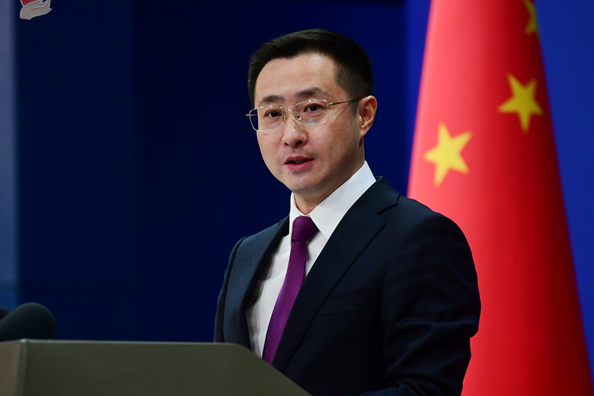
    China has issued a forceful condemnation of Japan’s deliberately ambiguous diplomatic stance regarding the Taiwan question, characterizing Tokyo’s position as both evasive and historically revisionist. The criticism emerged through statements from Foreign Ministry spokesman Lin Jian, who articulated Beijing’s profound dissatisfaction with Japan’s refusal to acknowledge foundational historical documents that cement China’s sovereignty over Taiwan.

    Lin specifically challenged recent comments by Japanese Prime Minister Sanae Takaichi, who invoked the 1951 Treaty of San Francisco to suggest Japan had renounced all claims to Taiwan without explicitly affirming Chinese sovereignty. This position was subsequently echoed by Japanese Foreign Minister Toshimitsu Motegi, who maintained that Japan’s stance remains precisely as articulated in the 1972 Sino-Japanese Joint Statement.

    The Chinese spokesperson highlighted Japan’s conspicuous omission of critical historical records including the Cairo Declaration, Potsdam Proclamation, and Japanese Instrument of Surrender—all documents that explicitly mandated Taiwan’s return to Chinese territory. Lin further noted Japan’s avoidance of referencing the four political documents that underpin Sino-Japanese relations, alongside Tokyo’s political commitment to the One-China principle.

    Lin characterized Japan’s selective historical narrative as particularly offensive given its deliberate exclusion of China—the primary victim of Japanese colonial aggression—from the San Francisco Treaty. This approach, according to Lin, demonstrates disregard for the painful legacy of Japanese militarism while challenging the established historical truth of the global anti-fascist struggle.

    The Foreign Ministry spokesman emphasized that Japan’s attempts to obscure its position constitute a direct challenge to United Nations authority and the postwar international order. Lin warned against historical revisionism, stating that turning back the wheel of history remains unacceptable and that peace must not be compromised.

    In parallel developments, China reaffirmed its sovereignty over the Diaoyu Islands, dismissing Japan’s recent exhibition of so-called historical documents at Tokyo’s National Museum of Territory and Sovereignty as selective and unconvincing attempts to justify illegal territorial claims.

  • Tip of an iceberg: Hong Kong’s deadly blaze raises anger over corruption and safety lapses

    Tip of an iceberg: Hong Kong’s deadly blaze raises anger over corruption and safety lapses

    Hong Kong confronts profound systemic failures as investigations into its deadliest fire in decades reveal alarming safety breaches and corruption within the construction industry. The Wang Fuk Court apartment complex tragedy, which claimed 156 lives, has triggered widespread public outrage over building safety lapses, regulatory negligence, and suspected bid-rigging practices.

    Authorities have arrested 14 individuals—including scaffolding subcontractors, construction company directors, and consultancy executives—on charges of manslaughter and gross negligence. The investigation centers on a multi-million dollar renovation project where highly flammable foam panels, used to seal windows during repairs, accelerated the fire’s rapid spread across seven of eight towers.

    New forensic evidence indicates contractors deliberately used substandard safety netting to maximize profits, with seven of twenty additional samples failing safety standards. The crisis deepened as residents revealed they had previously raised concerns about construction materials, while officials acknowledged that fire alarms failed to activate during the emergency.

    The scandal has prompted authorities to suspend 28 other projects managed by the same construction company. Political analysts describe the disaster as revealing ‘tip-of-the-iceberg’ problems encompassing bid-rigging, collusion, and systemic regulatory failures. Professor John Burns of the University of Hong Kong noted, ‘You’ve got all these issues which have been swept under the table.’

    In response to mounting public pressure, Chief Executive John Lee announced an independent judge-led investigation and promised comprehensive reform of Hong Kong’s building renovation system. However, the government faces additional scrutiny as national security police arrested a petition organizer calling for official accountability, highlighting the political sensitivity surrounding the tragedy.

  • Gunmen kill a government official and 3 others after vehicle ambush in northwestern Pakistan

    Gunmen kill a government official and 3 others after vehicle ambush in northwestern Pakistan

    In a targeted assault on Tuesday, suspected militants ambushed and killed a senior government administrator in Pakistan’s volatile northwest region, marking the latest episode in an escalating pattern of violence. The attack occurred in Bannu district within Khyber Pakhtunkhwa province, approximately near the sensitive Afghan border region.

    According to police official Alam Khan, the ambush claimed the lives of administrator Shah Wali, two of his security personnel, and an unfortunate civilian bystander. Wali had been serving in the strategically significant Miran Shah area, known for its proximity to conflict zones.

    This lethal incident follows closely on the heels of another security tragedy—a suicide bombing targeting police personnel in Lakki Marwat district that killed a high-ranking police officer just one day prior. While no militant organization has immediately claimed responsibility for these coordinated attacks, authorities indicate the Pakistani Taliban (Tehrik-e-Taliban Pakistan or TTP) as the primary suspect.

    The TTP, while operationally distinct from Afghanistan’s Taliban government, maintains ideological alignment with the neighboring regime. Pakistani security officials consistently accuse the group of exploiting Afghanistan’s territory as a safe haven since the Taliban’s 2021 takeover—an allegation Kabul vehemently denies.

    This surge in violence exacerbates already strained diplomatic relations between Pakistan and Afghanistan. Tensions reached critical levels last month when the Taliban government accused Pakistan of executing a drone strike in Kabul on October 9th. Subsequent cross-border clashes resulted in numerous casualties among military personnel, civilians, and militants until Qatar mediated a temporary ceasefire on October 19th.

    Although the truce remains technically intact, recent diplomatic negotiations in Istanbul concluded without substantive agreement, leaving the region in a precarious state of unresolved conflict and ongoing security challenges.

  • Employee sorry for leaking pop star’s rehearsal clips

    Employee sorry for leaking pop star’s rehearsal clips

    A professional videographer has issued a formal public apology after leaking unauthorized rehearsal footage of Japanese pop icon Ayumi Hamasaki’s scheduled Shanghai performance, triggering the abrupt cancellation of her highly anticipated concert. The incident, which unfolded over the weekend, has exposed critical vulnerabilities in entertainment event security protocols.

    The staff member, identified as Lai Zonglong, confessed to covertly recording Hamasaki during private rehearsals and subsequently posting misleading content to his personal Douyin account last Friday. His actions occurred just one day before the artist’s scheduled performance, part of her broader 2025 Asian tour itinerary.

    In an official statement released through his Weibo account ‘Yanhuobinhai,’ Lai acknowledged his serious professional misconduct, including violating strict contractual prohibitions against recording or disseminating any media during closed rehearsals. His posts inadvertently fueled widespread misinformation across social media platforms, including the false narrative that Hamasaki had performed an entire concert to an empty venue.

    ‘The photographs I shared and the resulting misinformation have substantially disrupted both the performance and concert organization,’ Lai stated. ‘I profoundly regret my actions and offer my sincere apologies for breaching the established protocols set forth by the concert organizers.’

    Concert promoters officially canceled the event citing ‘force majeure circumstances’ and committed to processing full refunds for all ticket holders within a 30-day window. Lai has pledged to adhere strictly to workplace regulations and professional ethics moving forward, vowing to ‘resolutely refrain from publishing false information’ online in the future.

    The incident has sparked broader conversations about digital accountability, artist rights, and the ethical responsibilities of event staff within the entertainment industry, particularly regarding the protection of artists’ creative content during preparatory phases.

  • Tianjin turns hub for green electricity trade

    Tianjin turns hub for green electricity trade

    Tianjin has solidified its position as China’s premier hub for green electricity trading, with renewable energy transactions soaring to 17.3 billion kilowatt-hours in 2025—a staggering increase from just 12 million kWh recorded in 2021 when the national green electricity market launched. This exponential growth represents approximately 40% of the city’s energy trading activity, marking a transformative shift toward sustainable power infrastructure in the northern port city.

    The remarkable expansion has yielded substantial environmental benefits, dramatically reducing carbon dioxide emissions and harmful pollutants including sulfur dioxide, nitrogen oxides and particulate matter. According to State Grid Tianjin Electric Power Co, the emission reductions achieved are equivalent to the annual carbon absorption capacity of 767 million mature trees.

    China’s national green electricity market facilitates dual transactions encompassing both physical renewable energy and tradable green certificates. This innovative mechanism enables major energy consumers—particularly manufacturing facilities and data centers—to directly source verified clean power. The system provides corporate buyers with transparent documentation of their renewable energy usage, supporting both environmental targets and corporate sustainability reporting.

    The development aligns with China’s broader ecological civilization initiatives, demonstrating how regional energy markets can drive nationwide progress toward carbon neutrality goals. Tianjin’s strategic location as a major industrial center and port city has positioned it ideally to lead this transition, combining renewable energy generation—including offshore wind farms visible from the Binhai New Area—with advanced trading infrastructure.

  • Nation makes strides in climate governance

    Nation makes strides in climate governance

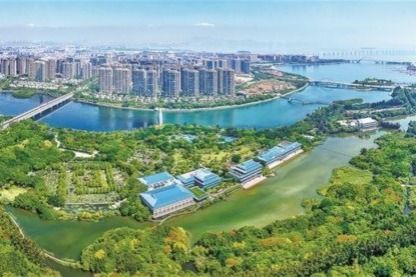
    China has dramatically transformed its role in global environmental governance, evolving from a participating nation to a definitive leader in climate action, according to officials and experts speaking at a recent seminar on Ecological Civilization in Xiamen. The gathering brought together provincial leaders, national ministry officials, researchers, and business representatives to discuss China’s expanding contributions to building a sustainable global future.

    Substantial environmental progress within China provides the foundation for this leadership claim. Public satisfaction with ecological conditions has remained above 90% for four consecutive years, demonstrating successful environmental protection alongside continued economic advancement. Air quality metrics show particularly dramatic improvement: concentrations of fine particulate matter (PM2.5) in major cities have plummeted by 56% compared to a decade ago, while heavily polluted days have decreased by an impressive 92%—representing the world’s most rapid air quality enhancement.

    The green transition has simultaneously fueled economic growth, with China dominating the global new energy vehicle market for ten straight years. The nation’s forest coverage has expanded to over 25%, accounting for a quarter of the planet’s new green growth. These domestic achievements are now complemented by extensive international cooperation through multiple channels.

    China has established 55 climate-focused South-South cooperation agreements with 43 developing nations while providing professional training to participants from over 120 countries. This effort aims to transform developing nations from passive recipients to active participants in global climate rule-making, advocating for equitable responsibility distribution and opposing green trade barriers.

    Juncao technology exemplifies China’s practical contributions to global sustainability. This innovative, adaptable grass hybrid developed by Professor Lin Zhanxi serves multiple purposes—growing edible mushrooms, providing livestock feed, and enabling ecological restoration. Introduced to 109 countries, it has particularly benefited less developed regions through over 400 training sessions for 16,000 international trainees. The technology’s symbolic significance was highlighted when King Tupou VI of Tonga personally planted Juncao during a recent visit to Fujian, with many now calling it ‘friendship grass’ for its role in strengthening international bonds and improving livelihoods.