博客

  • As lead changes in knife-edge Honduran election, will Trump fail to get his way?

    As lead changes in knife-edge Honduran election, will Trump fail to get his way?

    In a dramatic turn of events that has captivated international attention, Honduras finds itself at a political crossroads with presidential candidate Salvador Nasralla maintaining a slender advantage as vote counting continues. The electoral process, now entering its critical final stages, sees Nasralla narrowly outpacing his conservative opponent Nasry Asfura, though Asfura’s National Party remains confident of ultimate victory.

    The election has been significantly influenced by external forces, particularly from Washington where former President Donald Trump has actively intervened in support of his preferred candidate. Trump’s involvement has ranged from suggesting potential aid cuts to the impoverished Central American nation to making unsubstantiated claims of electoral fraud, creating what analysts describe as an unprecedented level of American interference in Honduran domestic affairs.

    Adding to the political turbulence, ex-President Juan Orlando Hernández has been unexpectedly released from U.S. custody after serving merely one year of his 45-year sentence for drug trafficking and weapons charges. His pardon, directly orchestrated by Trump, has sparked both celebration and outrage. Hernández’s presidency was marred by serious allegations of human rights violations and corruption, making his early release particularly controversial among Honduran citizens who had viewed his conviction as a rare instance of accountability for political elites.

    Political analyst Josué Murillo characterizes Trump’s interventions as reminiscent of Cold War-era tactics: “No government should come here and treat us as a banana republic. That is a lack of respect. Donald Trump saying who we should elect violates our autonomy as a nation.”

    The former first lady, Ana García Carías, has emerged as a vocal defender of her husband, describing his release as “like being in a dream, a dream made reality.” She attributes Hernández’s legal troubles to what she calls “lawfare” and a “politically motivated witch-hunt” by the Biden administration, despite evidence that the case against Hernández was developed during Trump’s own presidency. García Carías acknowledged the instrumental role of Trump allies Roger Stone and Matt Gaetz in securing the pardon.

    As the nation awaits final election results, the outcome will determine not only Honduras’s political future but also the extent of American influence in Central American affairs, with Trump potentially gaining both a new ally in Asfura and the restoration of an old one in Hernández.

  • Police were doubtful of tip that led to Luigi Mangione’s arrest

    Police were doubtful of tip that led to Luigi Mangione’s arrest

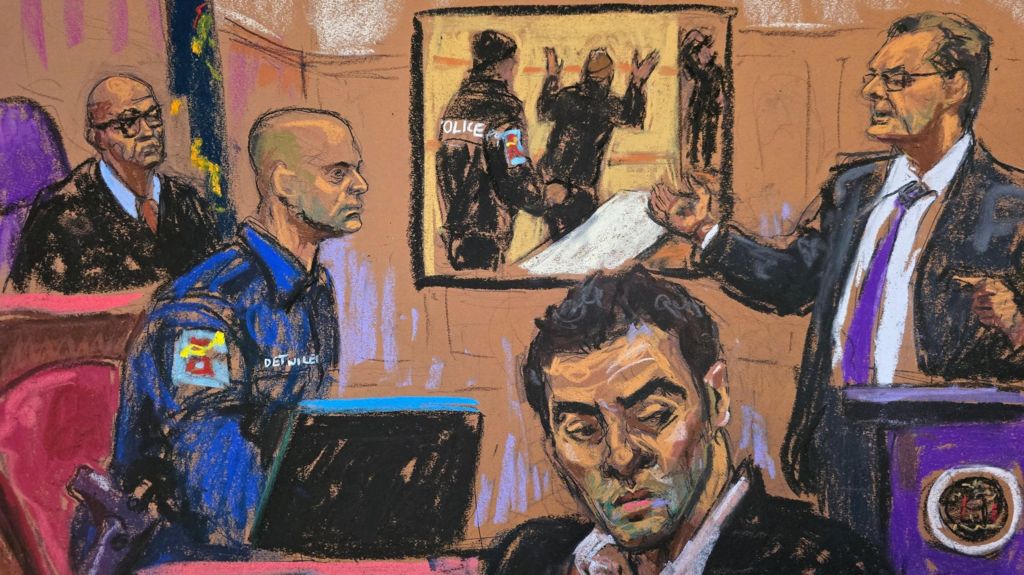
    A Pennsylvania police officer provided detailed testimony in a Manhattan courtroom regarding the unexpected arrest of Luigi Mangione, the suspect in the shooting death of UnitedHealthcare CEO Brian Wilson. Officer Joseph Detwiler revealed that he and his supervisor initially exchanged joking text messages about the tip that ultimately led to Mangione’s capture at an Altoona McDonald’s location.

    The December 2024 shooting of Wilson as he entered a Manhattan investors’ conference triggered an interstate manhunt and sparked national debate about the for-profit health insurance industry. Mangione, 27, now faces both state and federal murder charges while maintaining his not guilty plea.

    During pretrial proceedings that could extend for several days, the courtroom heard how Detwiler responded to what seemed like an improbable tip from a McDonald’s restaurant manager whose customers believed they had spotted the suspected shooter. Despite approaching the situation with what he described as a “semi-sarcastic” attitude, Detwiler quickly realized the tip’s legitimacy when he encountered a man matching the description exactly—wearing a large coat, brown beanie, and medical mask.

    Body camera footage presented in court showed the surreal scene of Mangione eating hash browns and a steak sandwich while Christmas music played in the background. Detwiler testified that he whistled along to the music in an effort to “keep things calm and normal” while secretly waiting for backup and fabricating a story about restaurant loitering policies.

    The defense team, led by attorney Karen Agnifilo, is seeking to exclude key evidence including a 9mm gun and notebook allegedly containing motive details, arguing that Mangione wasn’t immediately informed of his rights. The defense also aims to prevent federal prosecutors from seeking the death penalty, emphasizing the “low-priority” nature of the initial dispatch call that didn’t warrant lights or sirens during the officers’ approach.

  • Watch: Driver hoisted to safety from truck dangling over West Virginia bridge

    Watch: Driver hoisted to safety from truck dangling over West Virginia bridge

    A routine commute transformed into a perilous ordeal for a West Virginia driver this week when his truck lost control on an icy bridge, leaving the vehicle teetering over the edge and prompting a complex emergency response.

    The incident occurred during hazardous winter driving conditions, with black ice creating particularly treacherous surfaces on elevated roadways. According to preliminary reports from local authorities, the driver’s pickup truck skidded on the icy surface, crashing through the bridge barrier and coming to rest with its front section suspended precariously in open air.

    Emergency services responded with multiple agencies coordinating the delicate rescue operation. Using specialized heavy rescue equipment and harness systems, first responders carefully accessed the unstable vehicle. In a operation that combined technical rope expertise and emergency medical care, rescue teams secured the driver and hoisted him to safety using a crane apparatus.

    Miraculously, the driver emerged from the harrowing experience without physical injuries and was evaluated at the scene by medical personnel. The successful outcome highlighted both the dangers of winter driving and the advanced training of West Virginia’s emergency response teams in technical rescue scenarios.

    The damaged bridge section was temporarily closed for safety inspections and repairs, with transportation officials reminding motorists to exercise extreme caution during winter weather conditions and to ensure vehicles are properly equipped for cold weather driving.

  • UK government lawyers use ‘secret evidence’ to justify ban on Palestine Action

    UK government lawyers use ‘secret evidence’ to justify ban on Palestine Action

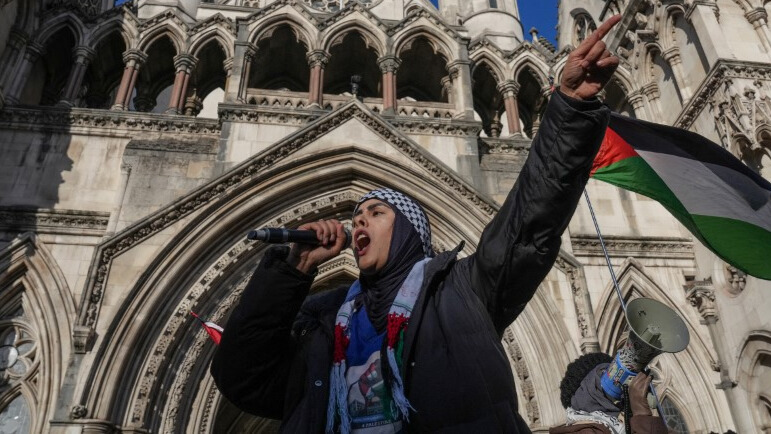
    In a landmark legal proceeding, the UK government concluded its judicial review of Palestine Action by presenting classified evidence withheld from both the defendant’s legal team and the public. The controversial three-day review—the first ever granted to an organization proscribed as terrorist—culminated in a three-hour closed session where government lawyers submitted national security material under special procedures.

    The Home Office defended its ban on Palestine Action, with lawyer Stephen Kosmin asserting the prohibition was essential ‘to protect the public’ and ‘maintain national security.’ The government outlawed the direct-action group following an incident where activists protesting the Gaza war allegedly caused £7 million in damage to military aircraft at an air force base.

    Legal representatives for Palestine Action co-founder Huda Ammori sharply criticized the government’s tactics. Raza Husain KC revealed the ban has triggered house raids, frozen bank accounts, and protest injunctions, creating a ‘severe chilling effect’ on Palestinian activism nationwide. The European Legal Support Centre provided documentation showing hundreds of arrests related to opposition to the ban.

    The case attracted international attention with UN special rapporteurs arguing the UK has become an ‘international outlier’ in its terrorism definition. Notably, Irish novelist Sally Rooney submitted a witness statement warning that the prohibition could force the withdrawal of her books from UK stores due to her support for the group, representing what she called ‘a truly extreme incursion by the state into artistic expression.’

    The High Court has not indicated when a final judgment will be issued in this precedent-setting case that balances national security concerns against civil liberties and protest rights.

  • Air India reports delays after check-in systems disruption at multiple airports

    Air India reports delays after check-in systems disruption at multiple airports

    Air India has confirmed significant operational disruptions affecting its check-in systems at multiple airports nationwide. The airline attributed the technical failure to a third-party service provider, resulting in substantial delays across its flight network.

    In an official statement released Tuesday evening, the carrier acknowledged the system-wide outage while withholding specific details regarding the root cause. The airline confirmed that restoration efforts are currently underway but warned passengers that flight delays would persist until full operational normalization is achieved.

    Travelers were advised to verify their flight status before heading to airports and allocate additional time for check-in procedures. Air India’s ground teams are implementing manual processing protocols to mitigate the impact on passenger travel experience.

    The technical disruption represents one of the most significant system failures affecting Indian aviation infrastructure recently, highlighting the industry’s dependence on third-party technological solutions. Aviation experts note that such system-wide outages can create cascading effects throughout airline operations, potentially affecting aircraft rotations and crew scheduling.

    Air India’s communication emphasized their commitment to resolving the situation promptly while maintaining transparency with affected passengers. The airline has not provided an estimated timeline for complete system restoration but assured travelers that alternative measures are being implemented to minimize inconvenience.

  • OpenAI declares ChatGPT ‘code red’ over stiff competition: Media reports

    OpenAI declares ChatGPT ‘code red’ over stiff competition: Media reports

    OpenAI CEO Sam Altman has issued an urgent internal ‘code red’ directive in response to mounting competitive pressures in the artificial intelligence sector, according to multiple US media reports. The emergency declaration comes as the company’s flagship ChatGPT technology faces increasingly sophisticated challenges from rival AI systems, particularly Google’s recently launched Gemini model.

    In a company-wide memorandum circulated on Monday, Altman emphasized that OpenAI has reached a critical juncture requiring immediate strategic reallocation of resources toward fortifying ChatGPT’s competitive position. The memo explicitly stated that non-essential projects would be postponed indefinitely, including previously planned advertising initiatives for the chatbot and development of automated AI agents designed for commercial and healthcare applications.

    The urgency of this corporate maneuver is particularly notable given OpenAI’s extraordinary market valuation of approximately $500 billion, making it the world’s most valuable privately-held company. Despite this impressive valuation and intense investor interest, significant questions persist regarding the company’s capacity to monetize its technology effectively. The fundamental challenge remains generating sufficient revenue to offset the enormous operational costs associated with providing AI services to hundreds of millions of predominantly free users.

    This competitive alert signals a dramatic reversal in the AI landscape since ChatGPT’s groundbreaking debut three years ago, which initially caught established tech giants like Google by surprise. Google’s subsequent development and refinement of its Gemini AI platform represents one of the most significant competitive responses to OpenAI’s early market dominance. The intensified competition reflects the increasingly strategic importance of generative AI technologies within the broader technology sector, with multiple corporations now vying for leadership in this transformative field.

  • World Cup draw 2026: Which Middle East and North Africa teams qualified? Who will they play?

    World Cup draw 2026: Which Middle East and North Africa teams qualified? Who will they play?

    The upcoming 2026 FIFA World Cup, scheduled to unfold across North America from June 11th, will mark a historic milestone for Middle Eastern and North African (MENA) football. A record-breaking eight teams from the region have officially secured their places in the tournament, signaling a significant shift in global football dynamics driven by the expansion to a 48-team format.

    The qualified contingents include Algeria, Egypt, Iran, Jordan, Morocco, Qatar, Saudi Arabia, and Tunisia. Their group stage opponents were determined during the recent draw ceremony in Washington. Additionally, Turkey (competing through UEFA) and Iraq remain in contention, hoping to clinch the final berths via the intercontinental playoffs scheduled for March 2026.

    This edition represents a substantial evolution from the previous tournament. The 2026 World Cup will span 39 days and feature 104 matches, a major increase from the 64 games in the 32-team Qatar 2022 edition. The action will be hosted in 16 cities across the United States, Canada, and Mexico, with the inaugural match at Mexico City Stadium and the grand finale set for New Jersey Stadium on July 19th.

    The tournament structure introduces 12 groups of four teams each. The top two finishers from every group, along with the eight best third-placed teams, will advance to a new 32-team knockout stage. Pre-tournament favorites Spain, Argentina, France, and England have been seeded to avoid each other until the semi-finals.

    Morocco enters as a regional powerhouse, fresh off its spectacular fourth-place finish in 2022. The Atlas Lions, currently on an unprecedented 18-match winning streak and led by African Footballer of the Year Achraf Hakimi, are drawn in Group C against Brazil, Scotland, and Haiti.

    Iran (Team Melli), a consistent Asian qualifier for its seventh appearance, finds itself in Group G alongside Belgium, Egypt, and New Zealand. Egypt, the first-ever MENA participant in the 1934 World Cup, seeks to advance past the group stages for the first time in its history.

    Other notable groupings include Algeria’s return after a 12-year absence, placed in Group J with Argentina, Austria, and Jordan—the latter making its World Cup debut. Tunisia, drawn in Group F with the Netherlands and Japan, aims to build on its memorable victory over France in 2022.

    Host nation Qatar (Al-Annabi) looks to redeem its 2022 performance in Group B against Canada, Switzerland, and a playoff winner. Saudi Arabia, the future host of the 2034 World Cup, will face a formidable challenge in Group H against top-ranked Spain, Uruguay, and Cape Verde.

    The expanded format not only increases competitive opportunities but also highlights the growing influence and development of football within the MENA region on the world’s biggest sporting stage.

  • Look: UAE Rulers watch rare clips at Eid Al Etihad ceremony at new Zayed National Museum

    Look: UAE Rulers watch rare clips at Eid Al Etihad ceremony at new Zayed National Museum

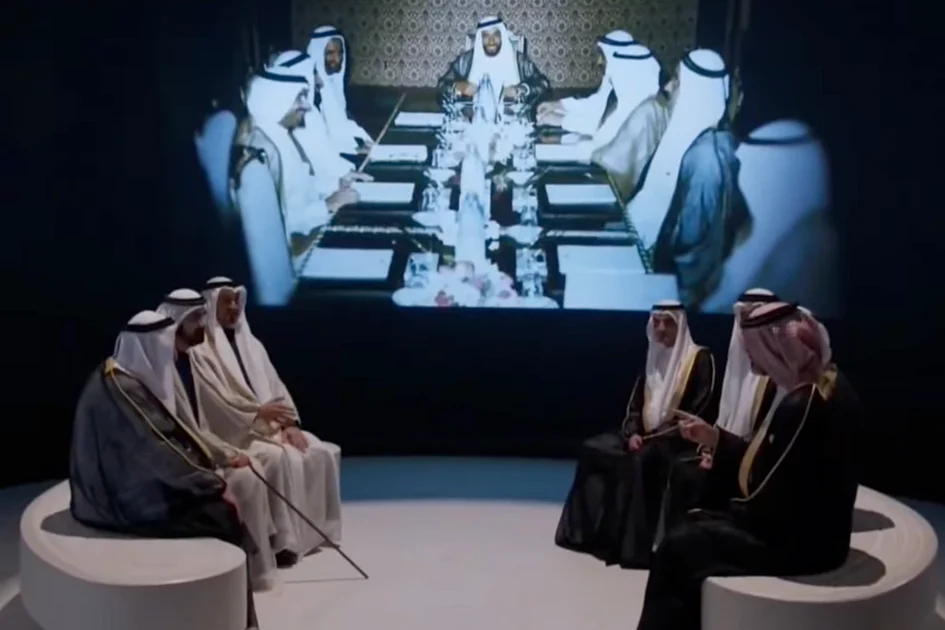
    Abu Dhabi witnessed a profound historical narrative unfold on December 2nd as the UAE President and Rulers of all seven emirates convened for the 54th Eid Al Etihad ceremony at the newly inaugurated Zayed National Museum. This inaugural event at the architectural marvel designed by Foster + Partners served as both a National Day celebration and preview of the institution set to open to the public on December 3rd.

    The production masterfully transcended conventional historical presentation through multi-sensory storytelling. The desert landscape itself assumed the role of narrator, accompanied by archival radio recordings and citizen voices, guiding attendees through millennia of regional history. The ceremony challenged temporal boundaries by fluidly transitioning between ancient civilizations, pre-Union Bedouin communities, and contemporary achievements.

    A particularly poignant moment featured restored footage of the late Sheikh Zayed bin Sultan Al Nahyan driving his 1966 Chrysler Newport through the desert in 1968, his voice resonating through the hall with the traditional greeting ‘Y Marhba ya Zain’ (hello beautiful). The vehicle, meticulously restored after being located in the United States, now constitutes a centerpiece of the museum’s permanent collection.

    Technological innovation merged with artistic expression as drone formations over Abu Dhabi reconstructed symbolic artifacts from the museum’s holdings. These aerial displays represented archaeological treasures including the 8,000-year-old Abu Dhabi Pearl, the ancient metalworking site of Saruq Al Hadid, and carnelian trade beads demonstrating early commercial networks.

    The historical journey culminated with archival footage documenting the pivotal meetings between Sheikh Zayed and fellow rulers preceding the 1971 federation. The original radio broadcast announcing the UAE’s formation was seamlessly integrated into the ceremony, creating an auditory bridge across decades.

    Cultural milestones were achieved as the newly formed UAE National Orchestra delivered its inaugural public performance of the national anthem ‘Ishy Biladi’, uniting Emirati and international musicians. The production further highlighted post-union advancements in sustainability, nuclear energy, medical research, and space exploration, symbolized by a Mirage 2000-9 jet’s ascent representing extraterrestrial ambition.

    The ceremony concluded with children’s performances emphasizing unity and responsibility, reinforcing that Sheikh Zayed’s legacy continues evolving through future generations who will shape the nation’s destiny.

  • Look: Fireworks, drones light up Dubai skies as UAE celebrates 54th National Day

    Look: Fireworks, drones light up Dubai skies as UAE celebrates 54th National Day

    The skies above Dubai transformed into a canvas of light and color on Tuesday evening as the United Arab Emirates commemorated its 54th National Day with breathtaking celebrations. The landmark occasion featured synchronized fireworks displays and sophisticated drone light shows that captivated residents and visitors alike, creating a visual spectacle across the city’s iconic skyline.

    The meticulously choreographed events represented a significant milestone in the nation’s history, marking 54 years since the federation’s establishment in 1971. The celebrations demonstrated the UAE’s technological advancement through the deployment of hundreds of drones that formed intricate patterns and national symbols against the night sky, while traditional fireworks provided a complementary display of pyrotechnic artistry.

    Authorities organized multiple viewing areas across Dubai to accommodate the large crowds gathering to witness the festivities. The events were designed to reinforce national unity and pride while showcasing the Emirates’ capacity for organizing world-class public celebrations. The coordination between various government entities ensured both the spectacular visual impact and the safety of all participants.

    The National Day celebrations also included cultural performances and traditional activities throughout the day, culminating in the evening aerial displays. The events reflected the country’s progressive vision while honoring its rich heritage and cultural traditions, creating a meaningful blend of historical remembrance and futuristic expression.

  • ‘Come and kill me’: Sick ants invite destruction to save colony

    ‘Come and kill me’: Sick ants invite destruction to save colony

    In a remarkable display of social immunity, scientific research reveals that terminally ill ant pupae actively signal worker ants to destroy them to prevent colony-wide infection outbreaks. The study, led by behavioral ecologist Erika Dawson at Austria’s Institute of Science and Technology, demonstrates how ant colonies function as cohesive super-organisms with sophisticated disease containment strategies.

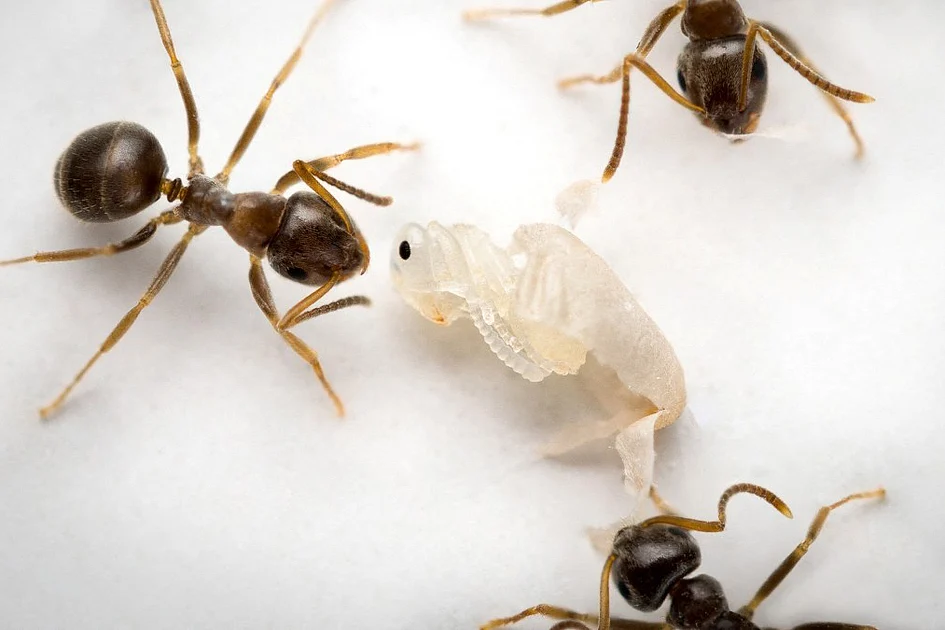
    Unlike many species that conceal illness for social reasons, ant colonies have evolved mechanisms reminiscent of cellular responses in complex organisms. When infected cells in human bodies emit ‘find-me and eat-me’ signals, similarly, young ants trapped in their cocoons—unable to practice social distancing—release specific chemical cues when fatally diseased.

    The research team working with Lasius neglectus, a common black garden ant species, discovered that worker ants respond to these olfactory signals by tearing open the cocoons and administering poison that simultaneously eliminates both the pathogen and the developing pupae. This disinfectant process protects the broader colony from potential epidemics in the densely populated nest environment.

    Crucially, the study established that pupae only produce these chemical signals when workers are present, confirming intentional communication rather than passive chemical leakage. This represents an evolutionary adaptation where individual sacrifice benefits genetic survival through colony preservation.

    Notably, queen pupae exhibit different behavior—they neither send destruction signals nor fall victim to this altruistic protocol. Researchers attribute this exception to queens’ superior immune systems, which typically enable them to overcome infections without requiring intervention. The differential treatment underscores the colony’s prioritization of reproductive success over individual worker lineages.

    The findings, published in Nature Communications, provide new insights into social insect evolution and disease management strategies in highly organized animal societies.