博客

  • Carmakers seek substitute for rare earths as supply chain woes mount

    Carmakers seek substitute for rare earths as supply chain woes mount

    Facing persistent supply chain disruptions and geopolitical tensions, major automakers across the United States and Europe are intensifying efforts to develop alternative technologies that reduce or eliminate dependence on rare-earth metals. These materials, particularly neodymium, dysprosium and terbium, are crucial components in numerous automotive parts ranging from electric vehicle motors to windshield wiper mechanisms and adjustable seating systems.

    China’s dominant position in rare-earth mining and processing—controlling approximately 80-90% of global supply—has created significant vulnerabilities for Western manufacturers. The situation escalated in 2025 when Beijing implemented export controls on these materials, widely interpreted as retaliation against Trump administration tariffs on Chinese goods. Although some restrictions were temporarily suspended through diplomatic agreements, industry executives remain concerned about future weaponization of these critical resources.

    The pandemic-era semiconductor shortage served as a wake-up call, highlighting the dangers of over-reliance on single-source suppliers. This realization has spurred two parallel strategies: diversifying sourcing outside China and developing alternative technologies that bypass rare-earth requirements entirely.

    General Motors exemplifies the diversification approach through its partnership with MP Materials, a domestic company mining rare earths in California and constructing a Texas-based refining facility. Meanwhile, BMW has pioneered technological innovation with rare-earth-free motors already deployed in models like the iX SUV. These electronically excited motors generate magnetic fields through electric currents rather than permanent magnets, though they historically faced challenges with weight, size and energy efficiency that BMW claims to have largely overcome.

    Research institutions including Northeastern University are exploring synthetic materials with magnetic properties found only in meteorites, while the Department of Energy offers grants up to $3 million for developing alternatives twice as powerful as existing rare-earth magnets—a target some experts consider unrealistic. Despite these efforts, most solutions remain years from commercialization, and current alternatives often come with cost or performance trade-offs.

    Industry analysts note that while temporary détente has eased immediate shortages, the structural vulnerability persists. ‘This isn’t a challenge you can overcome in a year,’ observed Gracelin Baskaran of the Center for Strategic and International Studies, capturing the long-term nature of this supply chain transformation.


  • India: Patanjali appeals court order to pay over Rs100,000 for selling sub-standard ghee

    India: Patanjali appeals court order to pay over Rs100,000 for selling sub-standard ghee

    Indian consumer goods giant Patanjali Ayurved has launched a legal appeal against a recent court ruling that found the company liable for selling substandard ghee products. The controversy centers around a 2020 case where food safety authorities purchased and tested Patanjali’s ghee, which allegedly failed to meet established safety parameters.

    The legal proceedings, initiated under India’s Food Safety and Standards Act, culminated in a November 2025 ruling that ordered Patanjali to pay ₹100,000 (approximately $1,200) in penalties, while two retailers faced additional fines of ₹40,000 each. The case originated when a food security officer conducted random testing of the product, with initial results indicating non-compliance with safety standards. A subsequent test at a central laboratory reportedly confirmed these findings.

    Patanjali has mounted a vigorous defense, asserting three primary grounds for appeal. The company contends that the testing laboratory lacked proper accreditation from the National Accreditation Board for Testing and Calibration Laboratories (NABL) specifically for cow ghee analysis. Furthermore, the organization claims the parameters used for testing were ‘illegally applied’ as they were not applicable at the time of product manufacture. The third argument presented suggests the sample was tested after its expiration date, potentially compromising the validity of results.

    In an official statement released on social media platform X, Patanjali characterized the court’s decision as ‘erroneous’ and ‘legally invalid.’ The company maintains that the identified variance in RM values—which measure volatile fatty acid levels—represents only a ‘nominal difference’ that does not impact product safety or consumability.

    The appeal will now proceed to India’s Food Safety Tribunal, where Patanjali expresses confidence in achieving a favorable outcome. This case emerges against a backdrop of increased regulatory scrutiny of consumer goods in India, particularly those marketed as natural or traditional products.

  • Watch: Newly released video shows Jeffrey Epstein’s private island home

    Watch: Newly released video shows Jeffrey Epstein’s private island home

    Previously unseen video documentation of Jeffrey Epstein’s secluded Caribbean estate has been made public through congressional action. The footage, originating from the U.S. Virgin Islands where the controversial property is situated, was obtained via official subpoena and released by Democratic lawmakers.

    The visual evidence provides unprecedented insight into the secluded complex that served as Epstein’s primary residence during the final years preceding his 2019 arrest. The property, located on Little St. James Island, has been central to numerous investigations into Epstein’s activities and his network of associates.

    This disclosure represents the latest development in the ongoing judicial and legislative examination of Epstein’s operations. The release mechanism—a congressional subpoena to Virgin Islands authorities—highlights the continued institutional interest in uncovering the full scope of activities connected to the convicted sex offender’s island property.

    The video materials add visual context to previous documentary and investigative reports about the compound, offering lawmakers and the public additional reference points for understanding the environment where alleged criminal activities occurred. This development comes amid continued legal proceedings involving Epstein’s associates and ongoing public interest in the case.

  • Unstoppable Kohli hits 53rd ODI ton in second game against South Africa

    Unstoppable Kohli hits 53rd ODI ton in second game against South Africa

    In a spectacular display of batting mastery, Virat Kohli delivered his second consecutive century during the second One-Day International against South Africa in Raipur on Wednesday. The legendary batsman, often hailed as ‘King Kohli’ for his extraordinary run-scoring capabilities, notched his 53rd ODI hundred with a commanding 102-run performance from just 93 deliveries.

    Kohli found a formidable partner in Ruturaj Gaikwad, who celebrated his maiden ODI century with an impressive 105 runs. The duo constructed a massive 195-run partnership for the third wicket, systematically dismantling South Africa’s bowling attack after India’s openers departed relatively early. Their collaborative effort formed the foundation of India’s imposing total of 358-5.

    The batting spectacle began with Kohli signaling his intent immediately, launching his innings with a spectacular six off pace bowler Lungi Ngidi. While Yashasvi Jaiswal provided a brisk start with 22 runs, it was the Kohli-Gaikwad partnership that truly dominated the proceedings. Both batsmen demonstrated remarkable fluency, consistently finding boundaries and rotating the strike with precision.

    The emotional highlight arrived when Gaikwad reached his century milestone, receiving an enthusiastic embrace from his celebrated partner. Though Gaikwad eventually departed, Kohli continued his relentless pursuit, eventually bringing up his 84th international century across all formats to thunderous applause from a capacity crowd of 60,000 spectators.

    Kohli’s dismissal to Ngidi, caught by Aiden Markram, prompted a standing ovation as the champion batsman exited the field. His innings featured seven boundaries and two sixes, maintaining a strike rate of over 109. Captain KL Rahul then provided the finishing flourish with an unbeaten 66, including an 18-run final over that pushed India’s total beyond the 350-mark.

    This performance extends Kohli’s record as the leading century-maker in ODI cricket, now four centuries ahead of retired Indian legend Sachin Tendulkar’s 49 hundreds. The 37-year-old batting maestro, who along with 38-year-old Rohit Sharma now focuses exclusively on the 50-over format after retiring from T20 and Test cricket, continues to redefine batting excellence.

    South Africa faces a challenging pursuit of 359 runs to keep the three-match series alive, having fallen 17 runs short while chasing 349 in the opening encounter.

  • Hillary Clinton says TikTok to blame for young Americans’ pro-Palestine views. They disagree

    Hillary Clinton says TikTok to blame for young Americans’ pro-Palestine views. They disagree

    Former U.S. Secretary of State Hillary Clinton has ignited widespread criticism following her remarks at a New York summit hosted by right-wing Israeli publication Israel Hayom. Clinton asserted that growing pro-Palestinian sentiment among American youth—including young Jewish Americans—stems from exposure to “totally made-up” videos on TikTok and reflects a poor understanding of historical context regarding Israel’s military operations in Gaza.

    Speaking on Tuesday, Clinton characterized social media’s influence as a “serious problem for democracy,” claiming that educated young people globally are consuming one-sided propaganda rather than balanced information. She expressed frustration that attempts at “reasonable discussions” frequently fail because young audiences “did not know history, they had very little context.”

    The response across digital platforms was swift and condemnatory. Social media users denounced Clinton’s comments as condescending and disingenuous. Numerous respondents emphasized that their perspectives were shaped by firsthand documentation of violence rather than algorithmic manipulation. One Reddit user countered: “We saw through social media the horrors and war crimes filmed by IDF soldiers themselves… These weren’t misleading TikTok videos; we were watching the atrocities as they unfolded.”

    Journalist Laila al-Arian posed a fundamental challenge to Clinton’s historical context argument: “What ‘context’ can possibly justify the mass slaughter of tens of thousands of civilians, 20,000 kids?” This sentiment was echoed by commentator Tommy Vietor, who noted that dismissing concerns as merely products of media consumption patterns patronizes those genuinely distressed by documented bloodshed.

    Particular offense was taken at Clinton’s characterization of young Jewish Americans. Numerous Jewish respondents emphasized their deep familiarity with historical narratives while rejecting the implication that historical knowledge should lead to supporting military action in Gaza. Dr. Mia Brett responded sharply: “Jews know our own history. We are told it from the time we’re toddlers… Jewish academic experts are more likely to call what’s happening a genocide.”

    The controversy emerges amid increasing political scrutiny of TikTok’s content distribution. Israeli Prime Minister Benjamin Netanyahu recently described social media as Israel’s “most important weapon” for shaping American public opinion, while former Obama administration official Sarah Hurwitz claimed the platform exposes young users to excessive “carnage in Gaza.”

  • Family of Colombian man killed in US strike in the Caribbean files human rights challenge

    Family of Colombian man killed in US strike in the Caribbean files human rights challenge

    In an unprecedented legal challenge, the family of Colombian fisherman Alejandro Carranza has submitted the first formal petition against U.S. military drug interdiction operations to the Inter-American Commission on Human Rights. The filing alleges Carranza’s death during a September 15th maritime strike constitutes an extrajudicial killing that violated international human rights conventions.

    The case emerges amid escalating U.S. military operations in the Caribbean basin, where over 80 individuals have been killed since early September under the Trump administration’s enhanced counter-narcotics campaign. While U.S. officials maintain targeted vessels were operated by terrorist organizations transporting narcotics, the administration has provided minimal details about casualties and no visual evidence supporting claims that Carranza’s boat contained drugs.

    Legal representative Daniel Kovalik stated the family seeks compensation for their primary breadwinner’s death while acknowledging the non-binding nature of any commission recommendations. The attorney revealed the family has received threats from right-wing paramilitaries since publicly challenging the official narrative, creating security concerns that complicate pursuing justice through Colombian domestic channels.

    The petition gains significance amid reports that Defense Secretary Pete Hegseth issued verbal orders to ‘kill everybody’ on targeted vessels, with subsequent strikes eliminating survivors of initial attacks. President Trump’s recent statements suggesting expanded land-based operations in multiple countries, including Colombia, have intensified regional apprehensions about the legal and humanitarian implications of these military actions.

    Colombian President Gustavo Petro has condemned the maritime operations as ‘murders,’ highlighting diplomatic tensions between the traditional allies. The case represents a critical test of accountability mechanisms for U.S. military actions in the region, with potential implications for future counter-narcotics strategies and international human rights enforcement.

  • As NYC prepares for Mamdani, departing Mayor Eric Adams wanders the globe

    As NYC prepares for Mamdani, departing Mayor Eric Adams wanders the globe

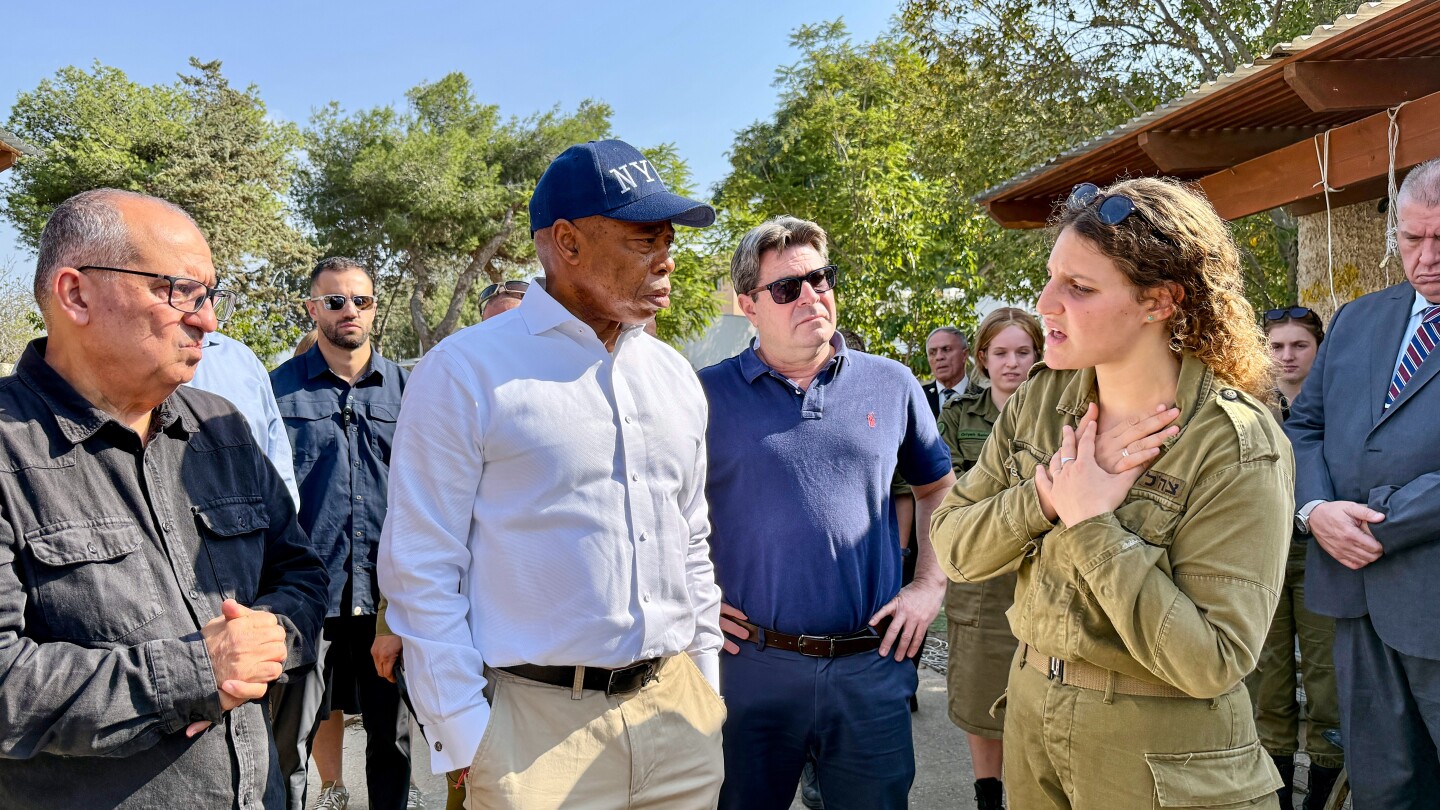
    NEW YORK — As his mayoral term approaches its conclusion, Eric Adams has intensified his international diplomatic engagements, embarking on multiple overseas journeys that have sparked both criticism and defense of his travel priorities. The outgoing mayor recently completed official visits to Albania, Israel, and Uzbekistan, with a subsequent trip to New Orleans to receive an award from the Combat Antisemitism Movement—marking his second recognition from the organization within a fortnight.

    City taxpayers predominantly fund these diplomatic missions, covering expenses for mayoral security, staff accommodations, and travel logistics. While the administration’s spokesperson declined to disclose exact costs, Deputy Mayor for Communications Fabien Levy defended the trips as productive engagements that fostered discussions about innovation, job creation, and intergovernmental relations.

    The travel pattern has drawn sharp criticism from political opponents who characterize it as mayoral ‘senioritis’—a perceived neglect of municipal responsibilities during the transition period. New York City Public Advocate Jumaane Williams accused Adams of prioritizing personal interests over civic duties, suggesting the mayor’s actions reinforce public perceptions of self-interest.

    Adams, who has openly contemplated international career opportunities post-mayoralty, maintains his identity as a ‘global leader’ with longstanding diplomatic aspirations. His travel history predates his current position, having established sister city agreements as Brooklyn borough president that facilitated official visits to China, Senegal, and Turkey.

    The federal investigation into Adams’ Turkish connections—specifically allegations of improperly discounted flights from Turkish officials—previously resulted in indictment proceedings that were ultimately discontinued. However, the scandal significantly damaged his political standing, contributing to his abandoned reelection campaign and poor performance in Democratic primaries.

    Recent itineraries have included meetings with Albanian Prime Minister Edi Rama, Israeli President Isaac Herzog, Prime Minister Benjamin Netanyahu, and Uzbek officials discussing economic development opportunities. The timing of certain trips, particularly the Israel visit following the election of critic Zohran Mamdani, has been interpreted by observers as politically pointed messaging.

    As the January 1st transition to Mamdani’s administration approaches, Adams continues to leverage his final weeks in office for international diplomacy, maintaining that these engagements serve New York’s economic and cultural interests despite mounting criticism about their timing and fiscal implications.

  • Turkey to drill for oil off Somalia coast by 2026

    Turkey to drill for oil off Somalia coast by 2026

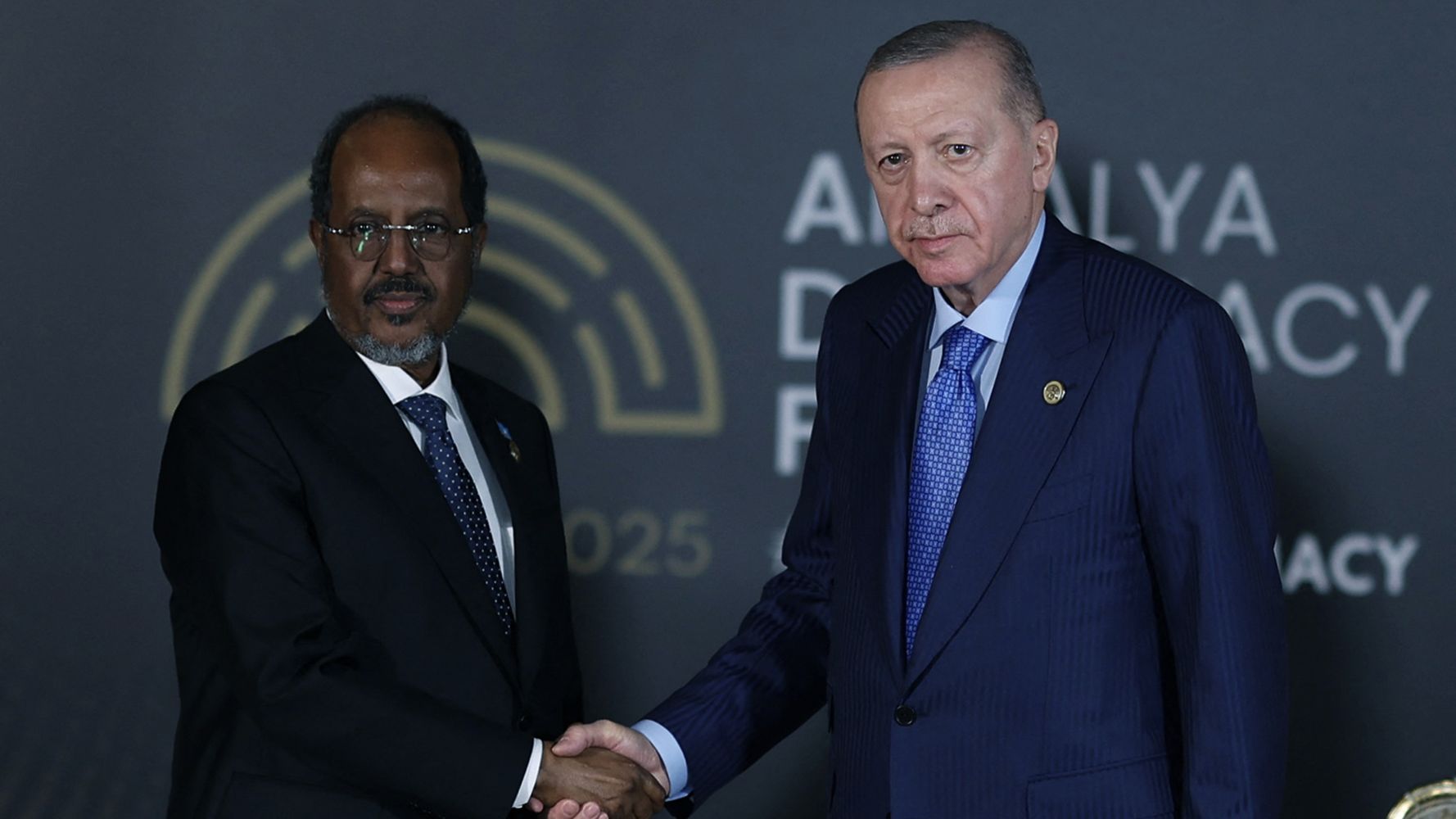
    The Republic of Turkey has formally announced its strategic ambition to commence offshore hydrocarbon drilling operations in Somali maritime territories by 2026. This development follows the completion of an extensive seismic survey conducted by the research vessel Oruc Reis, which meticulously analyzed three designated zones encompassing 15,000 square kilometers in total during its ten-month mission.

    Energy Minister Alparslan Bayraktar disclosed to press members on Wednesday that the comprehensive data acquisition phase has concluded. Preliminary interpretations of the seismic data suggest promising subsurface formations, with a full analytical report scheduled for official release in January 2025. The minister outlined the subsequent phase, indicating that Turkey will deploy its newly acquired fleet of advanced drilling vessels to undertake complex operations in ultra-deep waters reaching depths of approximately 3,000 meters.

    This ambitious energy venture is not without significant challenges. Minister Bayraktar explicitly acknowledged the dual hurdles of substantial infrastructural deficits and persistent security concerns within the region. The absence of basic access roads to onshore sites necessitates complete infrastructure development before extraction can begin. Security protocols already implemented during the seismic survey, which included naval frigate escorts for the Oruc Reis, will be further enhanced for drilling operations.

    The Turkey-Somalia bilateral agreement encompasses both offshore and onshore energy exploration rights. While offshore drilling presents technological challenges due to extreme depths, onshore operations face logistical obstacles. A Somali official source confirmed that infrastructure development tenders will be issued imminently to ensure road access is established prior to the 2026 operational timeline.

    Geological assessments by international agencies, including the U.S. Energy Information Administration, estimate Somalia’s potential hydrocarbon reserves could exceed 30 billion barrels of oil equivalent. However, realizing this potential requires monumental investment estimates ranging from $500 million for initial exploration to several billion dollars for full field development.

    This energy partnership forms part of Turkey’s broader strategic engagement with Somalia dating back to 2011. Ankara has provided over $1 billion in humanitarian assistance, constructed its largest global embassy in Mogadishu, operates critical infrastructure including the airport and seaport, maintains a significant military training facility (Turksom), and has professionally trained approximately one-third of Somalia’s national armed forces.

  • Groundbreaking ceremony for Buckinghamshire New University’s campus at UAQ Free Trade Zone

    Groundbreaking ceremony for Buckinghamshire New University’s campus at UAQ Free Trade Zone

    UMM AL QUWAIN – In a significant development for higher education in the region, Cromwell UK University College has officially commenced construction of Buckinghamshire New University’s (BNU) campus within the Umm Al Quwain Free Trade Zone (UAQFTZ). The groundbreaking ceremony, held on December 3, 2025, represents a pivotal moment in bringing British higher education directly to the Northern Emirates.

    The ceremony was presided over by key figures including Professor Sarah Williams, Pro Vice-Chancellor of Buckinghamshire New University, and Nisar Muhammed, CEO of Cromwell UK University College, which serves as the academic infrastructure provider for BNU. Senior management from UAQ Free Trade Zone, including General Manager Johnson George, attended the event, underscoring the strategic importance of this partnership.

    Professor Williams emphasized the longstanding academic relationship between the institutions, characterizing the UAE campus development as “an exciting and accelerated phase of our academic partnership.” She noted that Cromwell has consistently proven to be “a long-standing and reputable partner of BNU” in previous collaborations.

    The new campus will function as an extension of the UK-based university, with Cromwell ensuring identical academic standards, curriculum structure, and quality benchmarks are maintained. This academic alignment guarantees that UAE students will receive education equivalent to that offered at BNU’s UK campuses.

    Johnson George articulated UAQFTZ’s strategic vision, stating: “This partnership exemplifies our commitment to developing a dynamic ecosystem that offers world-class opportunities for the community. It reflects our competitive strength: the ability to facilitate all requirements with unmatched speed and seamless efficiency, turning business vision into reality.”

    Nisar Muhammed described the project as transcending physical infrastructure, calling it “the beginning of a shared vision to build a better future through quality education.” He emphasized the critical role of structured guidance and mentorship in ensuring student success within the new academic environment.

    Upon completion, the campus will provide students across the Northern Emirates access to internationally recognized UK degrees without requiring overseas travel, significantly expanding local access to globally benchmarked higher education and supporting the region’s development as an education hub.

  • Israel to build wall deep inside West Bank that ‘accelerates annexation’

    Israel to build wall deep inside West Bank that ‘accelerates annexation’

    Israeli military authorities are advancing plans to construct an additional separation barrier deep within the occupied West Bank’s northern Jordan Valley region. This 22-kilometer security structure will position itself approximately 12 kilometers west of the Jordanian border, creating significant concerns among experts about territorial redesign and de facto annexation.

    The proposed barrier mirrors the existing separation wall’s impact by severing connections between Palestinian communities and disconnecting agricultural families from their farmlands. Particularly affected will be the herding community of Khirbet Yarza, where approximately 70 residents relying on thousands of sheep will become encircled within an isolated enclave.

    Jamal Juma, coordinator of the Anti-Apartheid Wall Campaign, characterized the initiative as “extremely dangerous,” stating it represents accelerated annexation efforts targeting the Jordan Valley region. According to Juma, this construction forms part of a broader campaign affecting herding communities throughout the West Bank.

    United Nations documentation indicates that violent settler attacks have displaced over 2,200 Palestinians since October 2023, predominantly from herding backgrounds. Juma further asserts that these geographic re-engineering efforts aim to confine Palestinian populations into controlled cantons while establishing Israeli dominance over the West Bank.

    The Israeli military plans to establish a 50-meter-wide security corridor alongside the barrier, requiring demolition of all existing Palestinian infrastructure including homes, agricultural structures, storage facilities, and water pipelines. Anonymous security sources estimate approximately 60 structures will be affected.

    Major General Avi Bluth, head of Israel’s Central Command, justifies the barrier as necessary for preventing weapons smuggling and protecting Israeli settlers. Military authorities argue that Palestinian structures in the area increase sabotage risks against security forces, making their removal an operational necessity.

    Local residents fear catastrophic economic consequences as the barrier will prevent access to farmlands and livestock grazing areas. Tubas Governorate, representing 370 square kilometers of primarily agricultural land supporting significant livestock populations, faces particular hardship.

    Anti-wall activist Rashid Khudairi reports that approximately 70% of Tubas farmlands will become inaccessible, severely impacting economic stability. Many northern Jordan Valley communities will become completely separated from Tubas and the broader West Bank.

    The International Court of Justice previously deemed Israel’s existing 700-kilometer separation wall illegal under international law in a 2004 advisory opinion, ruling that the barrier should be dismantled due to its violations of international statutes.