博客

  • Watch: Moment Hawaii volcano eruption engulfs camera

    Watch: Moment Hawaii volcano eruption engulfs camera

    Hawaii’s Kilauea volcano, renowned as one of the planet’s most geologically active sites, has provided a spectacular display of nature’s power as surveillance equipment captured the precise moment its latest eruption overwhelmed a monitoring camera. The remarkable footage shows incandescent lava and volcanic material completely engulfing the recording device, offering scientists and the public alike a rare first-person perspective of volcanic violence.

    This ongoing eruptive phase represents the latest chapter in Kilauea’s sustained period of activity that recommenced in December of the previous year. The volcano’s intermittent eruptions have characterized its behavior patterns throughout this cycle, with periods of heightened activity followed by relative calm.

    Geological experts from the U.S. Geological Survey’s Hawaiian Volcano Observatory continue to monitor Kilauea’s behavior around the clock, utilizing both the captured footage and other monitoring technologies to better understand eruption dynamics. These visual records provide invaluable data for predicting future eruption patterns and enhancing early warning systems for communities near active volcanic zones worldwide.

    The documentation of such extreme geological events contributes significantly to volcanology research while simultaneously demonstrating the raw, unstoppable force of nature that continues to shape the Hawaiian landscape.

  • Soldiers in Benin say they have seized power from President Talon

    Soldiers in Benin say they have seized power from President Talon

    In a dramatic turn of events, military forces in the West African nation of Benin have executed a coup d’état, forcibly removing President Patrice Talon from power. The stunning development was announced through a nationally televised broadcast where soldiers declared their takeover of government institutions.

    The political upheaval unfolded with reports of gunfire near the presidential residence, according to an alert issued by the French embassy in Benin. The military junta has implemented sweeping measures including the immediate suspension of the nation’s constitution, closure of all land borders, and shutdown of the country’s airspace to consolidate their control.

    Leadership of the new military regime has been assigned to Lieutenant-Colonel Tigri Pascal, who will head a transitional council overseeing governmental operations. This development occurs despite President Talon’s previously stated intention to complete his constitutional mandate. The 67-year-old leader had publicly acknowledged his plans to step down next year following the conclusion of his second term in office.

    The coup represents a significant setback for democratic stability in West Africa, a region that has experienced several military takeovers in recent years. Benin had been regarded as one of the region’s more stable democracies, making this development particularly concerning for regional security and governance norms.

    International observers are closely monitoring the situation as the military consolidates power and establishes its transitional framework. The suspension of constitutional governance raises serious questions about the future of democratic institutions in the nation.

  • Soldiers appear on television to announce apparent military coup in Benin

    Soldiers appear on television to announce apparent military coup in Benin

    COTONOU, Benin — Benin’s political stability faced a severe challenge Sunday when uniformed soldiers appeared on national television to declare the dissolution of the government in what appears to be the latest military coup in West Africa. Identifying themselves as the Military Committee for Refoundation, the group announced the removal of President Patrice Talon and all state institutions, appointing Lieutenant Colonel Pascal Tigri as president of the military committee.

    The broadcast was abruptly cut off following the announcement, with state television and public radio signals going silent. Gunshots were reported near the presidential residence earlier in the day, and there has been no official communication regarding President Talon’s whereabouts or condition.

    Government spokesperson Wilfried Houngbedji provided a brief statement to The Associated Press stating ‘Everything is fine’ without offering further elaboration. The attempted takeover occurs against a backdrop of recent political tensions, including the sentencing of two Talon associates to 20 years in prison in January for an alleged 2024 coup plot.

    President Talon, who assumed power in 2016, was scheduled to leave office next April following presidential elections. His party’s preferred candidate, former Finance Minister Romuald Wadagni, was considered the frontrunner, while opposition candidate Renaud Agbodjo was disqualified by the electoral commission for insufficient sponsors.

    Last month, the Benin legislature approved a constitutional amendment extending the presidential term from five to seven years while maintaining the two-term limit. This development marks another episode in the region’s pattern of military interventions, following last month’s coup in Guinea-Bissau that ousted former President Umaro Embalo after contested election results.

  • Operatic ambition

    Operatic ambition

    Amidst venue closures and an aging audience demographic threatening its survival, Cantonese opera is experiencing a remarkable transformation in Hong Kong through innovative fusion with contemporary culture and cutting-edge technology. This centuries-old performance art form is being reimagined by a new generation of artists, educators, and enthusiasts who are determined to secure its future.

    The recently opened Xiqu Centre in 2019 set a global precedent as a purpose-built venue dedicated to Chinese traditional theater. This commitment continues with the December 19 inauguration of FutureScope, Hong Kong’s first large-scale art dome at Kai Tak Sports Park, which will feature Cantonese opera in its inaugural programming.

    A groundbreaking collaboration titled ‘Waving Script’ exemplifies this new approach. Created by new-media artist Chris Cheung (h0nh1m), the immersive experience brings together Chinese calligrapher Xu Jing and Cantonese opera performer Leung Fei-tung within a 360-degree sensory environment. The production explores the artistic resonance between traditional brush strokes and the fluid movements of water-sleeve dancing intrinsic to Cantonese opera.

    Leung Fei-tung describes the art form as ‘living, breathing’ and constantly evolving, noting how it ‘absorbs the characteristics of each generation and the spirit of each era.’ She draws surprising parallels between the symbolic language of Cantonese opera and modern programming codes, suggesting inherent compatibility with contemporary digital experiences.

    Despite an overall audience decline, educational institutions report unprecedented interest. The Hong Kong Academy for Performing Arts (HKAPA) received record applications for its Bachelor of Fine Arts in Chinese Opera—the world’s only accredited program of its kind. Dean Martin Lau attributes this success to their ‘innovative, interdisciplinary, and globally focused’ approach that integrates advanced technologies to modernize pedagogy.

    The challenge of audience development remains critical following the closure of the iconic Sunbeam Theatre in March. Professor Leung Bo-wah of the Education University of Hong Kong emphasizes that ‘audience-building is the first and most important issue,’ particularly among younger demographics.

    Various initiatives are addressing this challenge. The Ina Ho Cantonese Opera Research Centre, led by Kelly Chan Kar-yue, is developing digital archives and general education courses that combine traditional knowledge with contemporary experiences. Their Cantonese Opera Repository digitizes memorabilia, scripts, and stage props while making them accessible through online applications.

    Students and professionals are exploring creative innovations while respecting tradition. Performance major Cao Xiulin advocates for maintaining traditional instruments like the gaohu while incorporating electronic synthesizers for atmospheric enhancement. Music student Lam Wai-hung sees potential in incorporating magic elements to make performances more accessible to youth.

    Technology plays a crucial role in preservation and innovation, from AI-assisted restoration of historical recordings to virtual reality recreations of historical scenes. As alumnus and lecturer Zhao Riwei observes, ‘Traditional culture is no longer remote; it is within reach. Through the fusion of tradition and technology, Cantonese Opera in Hong Kong will gain enduring vitality.’

    This multifaceted revival effort represents a significant cultural moment where ancient art forms meet digital innovation, creating new possibilities for cultural preservation and contemporary relevance in an increasingly technological world.


  • Forever, in code

    Forever, in code

    The emerging field of ‘digital immortality’ is transforming how humans process grief and preserve memories through artificial intelligence. Companies like Nanjing-based Superbrain Studio are pioneering services that create interactive digital replicas of deceased individuals, enabling real-time video conversations that mimic their appearance, voice, and thought patterns.

    This technological breakthrough offers profound emotional support for those coping with loss. Zhang Xinyu, a 47-year-old who lost her father to cancer in 2021, describes how her digital father agent has helped her rebuild emotional stability. ‘I feel like dad’s still here, accompanying me as I get older,’ she says, noting that the nightly video chats provide comfort through simulated warmth and understanding.

    The creation process involves multidisciplinary collaboration between AI specialists, data organizers, psychologists, and computer vision engineers. Clients provide photos, audio clips, and detailed memories, which are processed through large language models to reconstruct not just physical attributes but consciousness patterns. The resulting agents undergo Turing test-like evaluations to ensure human-like responsiveness, with over 90% of clients finding the mental replication convincing.

    Superbrain Studio founder Zhang Zewei describes the service as ‘a business ahead of the law,’ acknowledging the limited regulatory framework governing this nascent industry. His company has fulfilled over 20,000 orders, capturing approximately 30% of China’s domestic market by June 2025. Basic services start at around 2,000 yuan ($283) with annual maintenance fees.

    Beyond personal use, applications include partnerships with cemeteries where QR codes on tombstones allow interaction with digital replicas, and commercial uses where knowledge influencers employ clones as avatars for paid consultations.

    However, significant ethical concerns emerge from recent research published in the Conference on Human Factors in Computing Systems. The study reveals public apprehension about emotional manipulation, data privacy, and legal accountability. Participants expressed concerns about poorly simulated agents causing additional trauma, potential data misuse, and questions about whether digital entities could legally represent individuals.

    Researchers Lei Ying of Simon Fraser University and Ma Shu of Aalto University emphasize the need for regulatory frameworks before broader commercialization. They recommend oversight mechanisms to prevent emotional overdependence and suggest regulatory bodies rather than private companies should manage these sensitive digital entities.

    The technology also challenges cultural beliefs, particularly in Chinese traditions where some view digital immortality as disrupting natural cycles of life and death. Long-term sociological studies are needed to understand the psychological impacts of interacting with digital clones of departed loved ones.

  • Cruz retains title with controversial draw

    Cruz retains title with controversial draw

    SAN ANTONIO – Boxing’s contentious decision trend continued Saturday night as Isaac Cruz’s WBC interim super-lightweight title defense against Lamont Roach concluded in a disputed majority draw at Frost Bank Center. The verdict sparked immediate protests from both camps, extending Roach’s unusual streak of inconclusive outcomes this year.

    The Mexican champion (27-2-1) appeared to seize control in the third round, flooring Roach (24-1-3) with a devastating left hook that marked the American’s first career knockdown. However, Cruz’s momentum was compromised in the seventh round when referee Mark Calo-oy deducted a point for illegal kidney punches.

    CompuBox statistics revealed Roach outlanded the champion 191-159 over twelve rounds, though Cruz consistently delivered more powerful connections. The official scorecards reflected the bout’s divisive nature: two judges tallied identical 113-113 scores while a third favored Cruz 115-111.

    Roach, experiencing his second consecutive majority draw following March’s deadlock with Gervonta Davis, expressed profound frustration: ‘All I want is a fair shake. I clearly thought I won a close fight but don’t know what I must accomplish to get decisive results.’

    Cruz simultaneously disputed the outcome, blaming officiating: ‘The referee stole this victory from me. I’ll grant a rematch only with different officiating supervision.’

    On the undercard, O’Shaquie Foster (22-2) dominated Stephen Fulton (22-1) to claim the WBC interim lightweight title via lopsided majority decision. Despite the bout originally scheduled for Foster’s super-featherweight championship, Fulton’s failure to make weight (by 2 pounds) transformed it into a non-title affair. Foster’s masterclass performance earned scores of 117-111, 118-110 and 119-109, establishing him as mandatory challenger for the January 31 Lopez-Stevenson winner.

    Meanwhile, 42-year-old Erislandy Lara (31-3-3) demonstrated ageless excellence with a commanding WBA middleweight title defense against late substitute Johan Gonzalez. The Cuban-American veteran scored knockdowns in the first and final rounds, cruising to unanimous scores of 118-108, 119-107 and 120-106 after original opponent Janibek Alimkhanuly failed pre-fight drug screening.

  • Carving out dreams

    Carving out dreams

    In the operating theaters of Shenzhen, Dr. Guo Shuzhong practices what can only be described as medical artistry. The 62-year-old chief plastic surgeon at Shenzhen United Family Hospital has dedicated three decades to perfecting the complex craft of ear reconstruction, bringing hope to thousands affected by microtia—a congenital condition affecting approximately 1 in 2,500 Chinese newborns that results in malformed or absent external ears.

    Dr. Guo’s approach blends surgical precision with artistic sensibility. Using carefully carved rib cartilage harvested from patients, he sculpts intricate ear frameworks during procedures that demand both technical mastery and aesthetic judgment. ‘The ear is one of the most complex organs in the human body in terms of shape,’ explains Guo. ‘It demands careful observation and a deep understanding of the material.’

    His innovative two-phase technique involves initially inserting a tissue expander under the skin to create space for the future ear framework. After several months of expansion, the second stage sees Guo removing the expander and implanting the meticulously crafted cartilage structure. His refinements have streamlined the process, reducing the overall surgical cycle to just three to four months while introducing new devices that allow patients to manage expander maintenance at home.

    Beyond technical innovations, Guo emphasizes psychological healing. His team organizes communication workshops, language classes, and creative activities to support children through their transformation. ‘Doctors need to understand how to heal both the body and the heart,’ he notes.

    Having established his career across multiple Chinese cities and international exchanges, Guo now sees Shenzhen as the ideal platform for global outreach. The Greater Bay Area’s unique advantages—including Shenzhen’s medical equipment manufacturing prowess and Hong Kong’s international connectivity—position the region to become a world-class center for ear reconstruction.

    International interest is growing, with surgeons from New Zealand, India, and South America seeking training opportunities. Guo’s patients already include expatriates from Hong Kong, Mongolia, and Latin America, validating his vision of China becoming a destination for medical innovation rather than just a source of patients seeking treatment abroad.

    As he trains the next generation of surgeons—still insisting they practice with vegetables and pork ribs as he once did—Guo remains driven by the profound satisfaction of restoring both form and confidence. His office filled with paintings from grateful young patients stands testament to the life-changing impact of his work, with dreams of eventually establishing a museum to preserve these precious tokens of transformation.

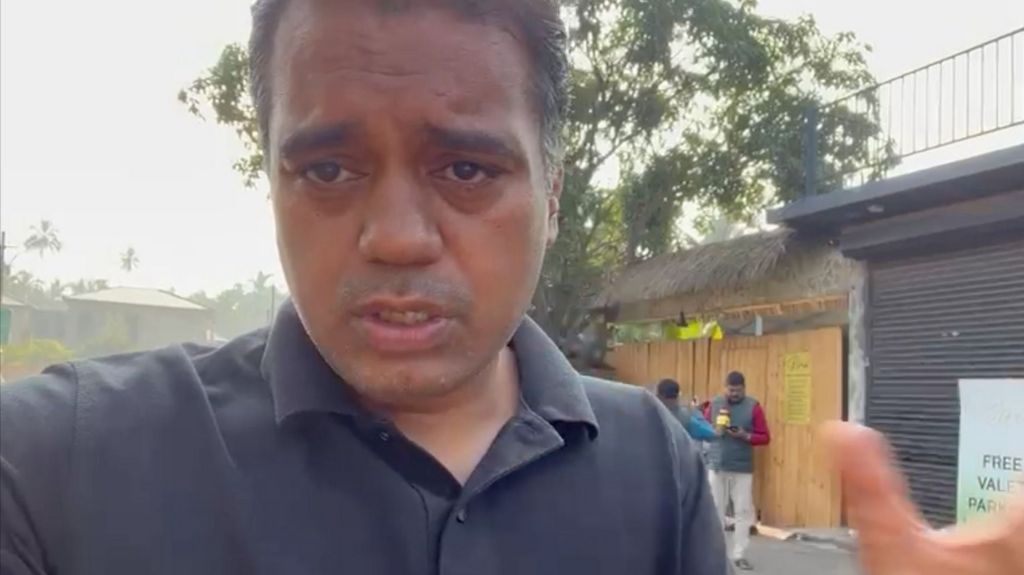
  • Watch: BBC reports from scene of deadly Goa nightclub fire

    Watch: BBC reports from scene of deadly Goa nightclub fire

    A devastating fire at a popular nightclub in India’s coastal resort state of Goa has resulted in a tragic loss of 25 lives, according to on-the-ground reporting by BBC News. The incident, which occurred during peak nightlife hours, has sent shockwaves through the popular tourist destination known for its vibrant entertainment scene.

    BBC India Editor Vikas Pandey provided exclusive coverage from the scene of the catastrophe, documenting the aftermath of the blaze that engulfed the entertainment venue. Emergency responders worked through the night battling the flames and conducting rescue operations amid chaotic scenes. Preliminary investigations suggest the fire spread rapidly through the establishment, trapping patrons inside and creating a deadly bottleneck at exits.

    Local authorities have launched a comprehensive investigation into the cause of the fire, with initial reports pointing to possible electrical faults or flammable interior materials that may have accelerated the blaze. The tragedy has raised serious questions about safety protocols and regulatory compliance at entertainment venues across the region, particularly regarding maximum occupancy limits, emergency exit accessibility, and fire prevention infrastructure.

    The state government of Goa has announced compensation for victims’ families and ordered immediate safety inspections of all nightlife establishments. This incident represents one of the deadliest nightclub fires in India in recent years, echoing similar tragedies globally where inadequate safety measures have led to mass casualties in entertainment venues.

  • Voting for HKSAR’s 8th-term LegCo election kicks off

    Voting for HKSAR’s 8th-term LegCo election kicks off

    Hong Kong commenced voting for its eighth Legislative Council election on Sunday morning, marking a significant democratic exercise in the Special Administrative Region. The election will determine 90 legislative members who will shape Hong Kong’s governance framework for the coming term.

    The voting process initiated at 7:30 AM across numerous polling stations established throughout Hong Kong. Electoral authorities reported comprehensive preparations to ensure smooth electoral operations, with stringent health protocols implemented amid ongoing public health considerations.

    This electoral event represents the first LegCo election conducted under Hong Kong’s revamped electoral system, which underwent substantial structural reforms following the 2021 electoral overhaul. The reformed system introduces new constituency divisions and voting mechanisms designed to enhance governance stability while maintaining representative democracy.

    International observers and local monitoring groups are closely watching the electoral proceedings, which conclude with vote counting immediately following polling station closures. The newly elected legislature is expected to address pressing legislative matters including economic recovery initiatives, housing policies, and social welfare reforms.

    Electoral officials confirmed robust security arrangements and contingency measures to address any potential disruptions, emphasizing the importance of this electoral process in upholding Hong Kong’s constitutional order under the ‘one country, two systems’ framework.

  • At least 23 people killed in nightclub fire in India: media

    At least 23 people killed in nightclub fire in India: media

    A devastating fire erupted at a popular nightclub in the southern Indian city of Kochi during peak hours on Saturday night, resulting in at least 23 fatalities and numerous injuries, according to multiple media reports. The blaze, which started around 11:30 PM local time, rapidly engulfed the multi-story entertainment venue filled with weekend revelers.

    Emergency responders faced significant challenges reaching the scene due to the nightclub’s location in a densely populated commercial district. Firefighters battled the flames for over four hours before bringing the situation under control in the early hours of Sunday morning. Preliminary investigations suggest the inferno may have originated from electrical faults in the lighting system, though official causes remain under investigation.

    The tragedy has sparked immediate outrage across India, with many questioning safety compliance in entertainment establishments. Kerala state officials have announced compensation for victims’ families and ordered a comprehensive audit of fire safety measures in all public venues. This incident represents one of the deadliest nightclub fires in India’s recent history, echoing similar tragedies that have occurred in other developing nations where enforcement of safety regulations remains inconsistent.