博客

  • Thieves snatch eight Matisse artworks from library in Brazil

    Thieves snatch eight Matisse artworks from library in Brazil

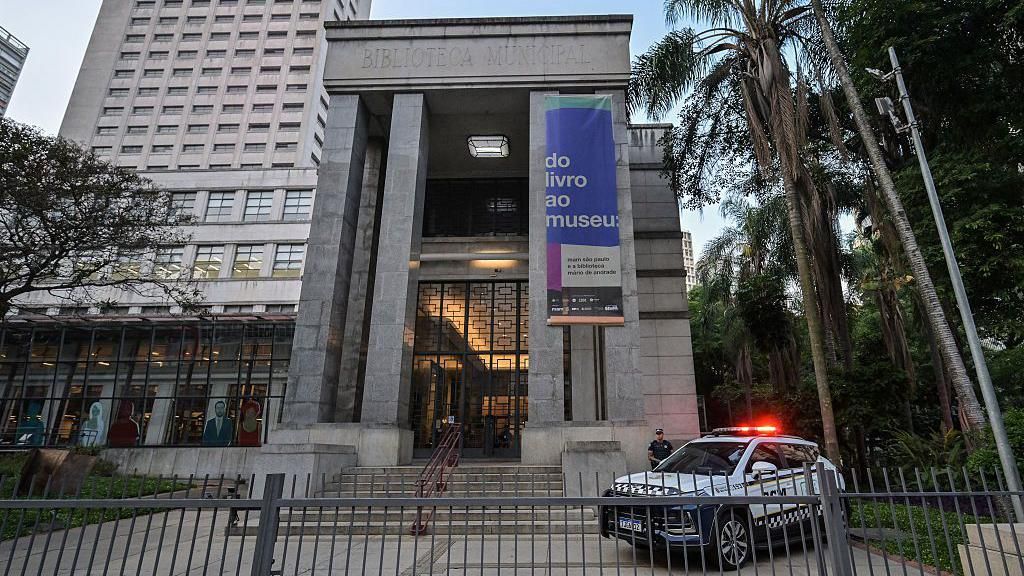
    In a brazen daylight robbery, two armed perpetrators executed a meticulously planned art theft at São Paulo’s prestigious Mário de Andrade Library on Sunday morning. The assailants, operating during regular opening hours at approximately 10:00 local time, successfully appropriated eight engravings by French master Henri Matisse alongside at least five works by renowned Brazilian modernist Cândido Portinari.

    The thieves entered through the library’s main entrance, immediately subduing both a security guard and an elderly couple visiting the premises. Despite the facility’s advanced security infrastructure—including facial recognition technology—the criminals managed to escape on foot toward the nearby metro station, vanishing before authorities could respond.

    This sophisticated operation targeted the ‘From Book to Museum’ exhibition during its final day, a collaborative presentation between the library and the São Paulo Museum of Modern Art. Among the stolen pieces was a particularly valuable Matisse collage created for the limited-edition art book ‘Jazz,’ considered among the artist’s most significant graphic works.

    The heist occurs merely weeks after the international art community was shaken by the Louvre jewel theft in Paris, raising concerns about coordinated targeting of cultural institutions. São Paulo’s mayor has confirmed investigators have identified the suspects, though they remain at large as the manhunt continues.

    Art valuation experts describe the loss as ‘incalculable,’ noting both artists’ profound influence on 20th century art. Matisse revolutionized modern art through his innovative techniques, while Portinari’s depictions of Brazilian laborers made him a national icon. The stolen Portinari engravings were specially commissioned for José Lins do Rego’s novel ‘Plantation Boy,’ representing unique examples of literary-artistic collaboration.

    Cultural authorities have yet to release a comprehensive inventory of missing works as the investigation continues, highlighting ongoing vulnerabilities in even the most technologically secured public institutions.

  • Allan Zeman slams Western media bias in Tai Po fire tragedy

    Allan Zeman slams Western media bias in Tai Po fire tragedy

    Prominent Hong Kong business leader Allan Zeman has launched a scathing critique against Western media outlets for their biased coverage of the recent Tai Po fire tragedy. The chairman of Lan Kwai Fong Group, in a Sunday interview with China Daily, challenged international media organizations to address their own countries’ shortcomings before criticizing Hong Kong’s emergency response efforts.

    Zeman highlighted what he characterized as disproportionate attention given to the Hong Kong incident compared to similar fire tragedies in Western nations. He pointed to specific cases in both the United States and United Kingdom where casualty numbers were significantly higher yet received substantially less international media scrutiny and criticism.

    ‘The selective outrage demonstrates a clear double standard in international reporting,’ Zeman stated. He emphasized that Hong Kong’s emergency services mounted a highly efficient and professional response to the Tai Po incident, contrasting it with what he described as less effective handling of comparable situations in Western countries.

    Zeman’s comments come amid ongoing investigations into the fire that broke out in the New Territories district. The businessman, known for his outspoken views, suggested that Western media frequently apply different standards when reporting on incidents in China and its special administrative regions compared to those in their own countries.

    The Hong Kong government has established an independent commission chaired by a judge to investigate the fire’s causes and response efforts, demonstrating the administration’s commitment to transparency and accountability in the tragedy’s aftermath.

  • US shifts strategy from global role, resets security priorities

    US shifts strategy from global role, resets security priorities

    The United States has formally unveiled a transformative foreign policy framework through its newly released National Security Strategy, signaling a profound shift from its traditional global leadership role. The document articulates an approach characterized as ‘flexible realism,’ fundamentally reprioritizing American security interests with an intensified focus on hemispheric dominance.

    Central to this strategic recalibration is the revival of the 19th-century Monroe Doctrine, explicitly declaring the Western Hemisphere as Washington’s exclusive zone of influence. The administration terms this updated approach the ‘Trump Corollary,’ presenting it as a commonsense restoration of American power that aligns with national security interests. The document emphasizes that substantial U.S. military deployments in the region represent a permanent strategic commitment rather than temporary positioning.

    The strategy delivers strikingly critical assessments of traditional European allies, issuing stark warnings about the continent’s potential ‘civilizational erasure’ unless significant policy changes occur. This perspective fundamentally challenges post-World War II assumptions about transatlantic relations, suggesting that within decades, certain NATO members may become majority non-European populations.

    Regarding the Ukraine conflict, the strategy advocates for rapid diplomatic resolution and reestablishment of ‘strategic stability’ with Russia, framing this as a core American strategic interest. The 29-page document presents President Trump’s foreign policy as pragmatically principled and muscular yet restrained—above all motivated by practical outcomes benefiting American interests.

    This comprehensive strategic vision represents the administration’s most systematic effort to redefine international relationships through an ‘America First’ lens, potentially reshaping global power dynamics and alliance structures for decades to come.

  • 2026 World Cup ‘Pride Match’ to feature Egypt and Iran

    2026 World Cup ‘Pride Match’ to feature Egypt and Iran

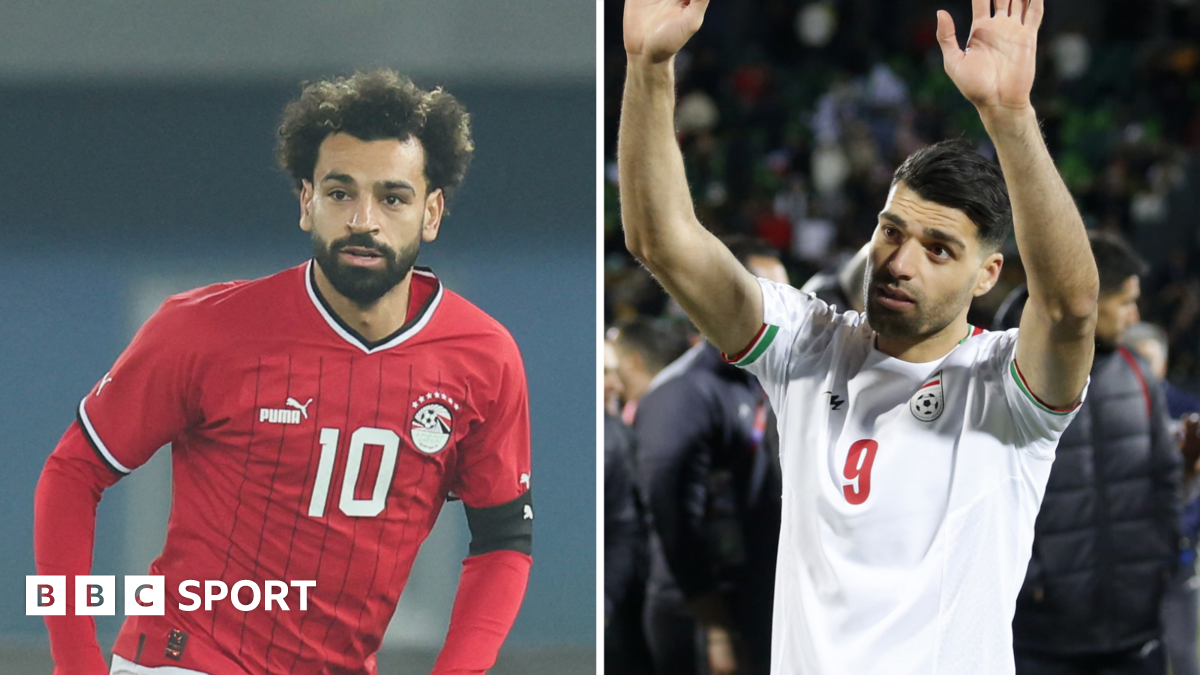
    In a striking juxtaposition of sporting values and national legislation, the 2026 FIFA World Cup’s specially designated LGBTQ+ ‘Pride Match’ will feature national teams from Egypt and Iran—two countries where homosexuality remains illegal. The match, scheduled for June 26th at Seattle’s Lumen Field, was designated by local organizers as part of the city’s Pride weekend celebrations long before the tournament draw determined the participating teams.

    The Seattle local organizing committee, operating independently from FIFA, planned the event to feature artistic displays celebrating LGBTQ+ communities throughout the city and stadium. This celebration directly contrasts with the legal environments in both competing nations: Iran imposes the death penalty for homosexual acts, while Egypt routinely employs morality laws to suppress LGBTQ+ rights and relationships.

    Organizers acknowledge the challenging context but reaffirm their commitment through the Seattle Pride Match Advisory Committee. A spokesperson told Outsports that ‘soccer has a unique power to unite people across borders, cultures, and beliefs,’ emphasizing the event’s purpose to ‘celebrate and elevate Pride events in Seattle and across the country.’

    This situation echoes previous conflicts between LGBTQ+ advocacy and international football, notably at the 2022 Qatar World Cup where FIFA threatened sporting sanctions against teams whose captains wore OneLove armbands in support of LGBTQ+ rights. Both the English and Welsh football associations ultimately abandoned their planned protest following FIFA’s intervention.

    The upcoming match highlights the ongoing tension between global sporting events and human rights considerations, raising questions about how international football navigates profound cultural differences among participating nations. FIFA, along with the Egyptian and Iranian football associations, has been contacted for comment regarding this developing story.

  • Zelenskyy meets in London with European allies on the US peace plan and Ukrainian security

    Zelenskyy meets in London with European allies on the US peace plan and Ukrainian security

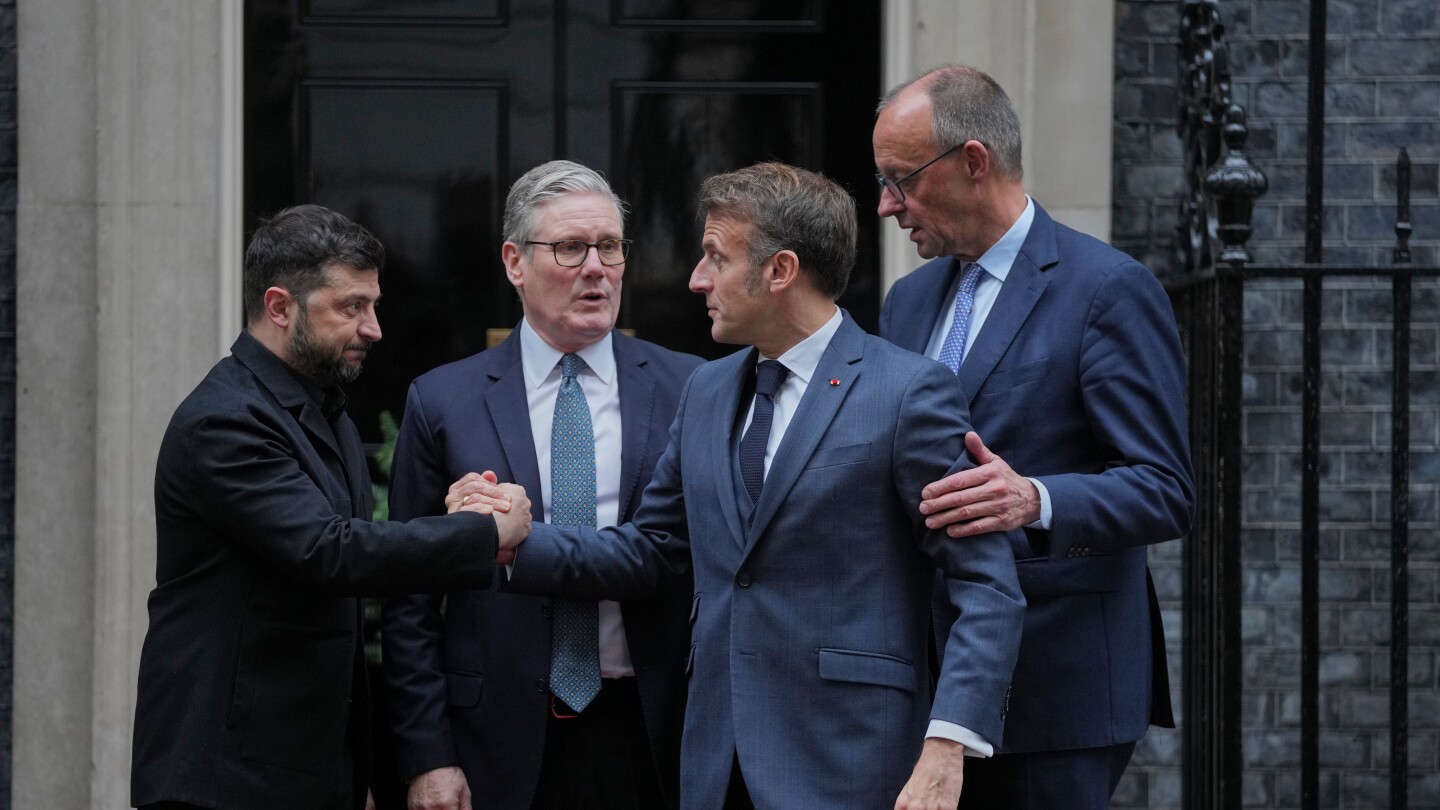
    LONDON — In a significant demonstration of European solidarity, Ukrainian President Volodymyr Zelenskyy convened with British Prime Minister Keir Starmer, French President Emmanuel Macron, and German Chancellor Friedrich Merz at 10 Downing Street on Monday. The high-level gathering occurred during what participants described as a pivotal moment in the U.S.-backed initiative to resolve Russia’s ongoing war in Ukraine.

    The two-hour diplomatic session focused on strengthening Ukraine’s negotiating position amid growing concerns about wavering American support under President Donald Trump’s administration. Following their discussions, the leaders issued a collective call for European allies to maintain pressure on Russian President Vladimir Putin, emphasizing the urgent need to intensify both military assistance to Ukraine and economic sanctions against Russia.

    Prime Minister Starmer’s office released a statement characterizing the meeting as essential, noting that “the leaders all agreed that now is a critical moment and that we must continue to ramp up support to Ukraine and economic pressure on Putin to bring an end to this barbaric war.” The discussions specifically addressed how European nations could enhance the U.S. peace proposal through additional security guarantees and financial commitments.

    President Zelenskyy revealed that the current American peace framework has been refined from 28 to 20 points after the removal of what he termed “obvious anti-Ukrainian elements.” The Ukrainian leader highlighted that central to the security negotiations remains the question of international response mechanisms should Russia launch future aggression after any ceasefire agreement.

    The London meeting occurred against a backdrop of diplomatic tension, with President Trump expressing frustration publicly about Zelenskyy’s engagement with the peace process. European leaders have grown increasingly concerned about the new U.S. National Security Strategy, which suggests warming relations with Russia and criticizes NATO expansion—a document that Kremlin officials have openly praised.

    Despite these challenges, the European leaders affirmed their commitment to a “just and lasting peace” that includes robust security guarantees for Ukraine. National security advisers from the four countries were instructed to continue technical discussions in the coming days, with Chancellor Merz noting that “the coming days could be a decisive time for all of us.”

    As diplomatic efforts intensified, Russia continued its aerial assaults on Ukrainian cities, with overnight drone attacks reported in Okhtyrka and Chernihiv that resulted in civilian injuries and significant infrastructure damage, underscoring the ongoing urgency of the diplomatic negotiations.

  • Japan missile plan sparks alarm

    Japan missile plan sparks alarm

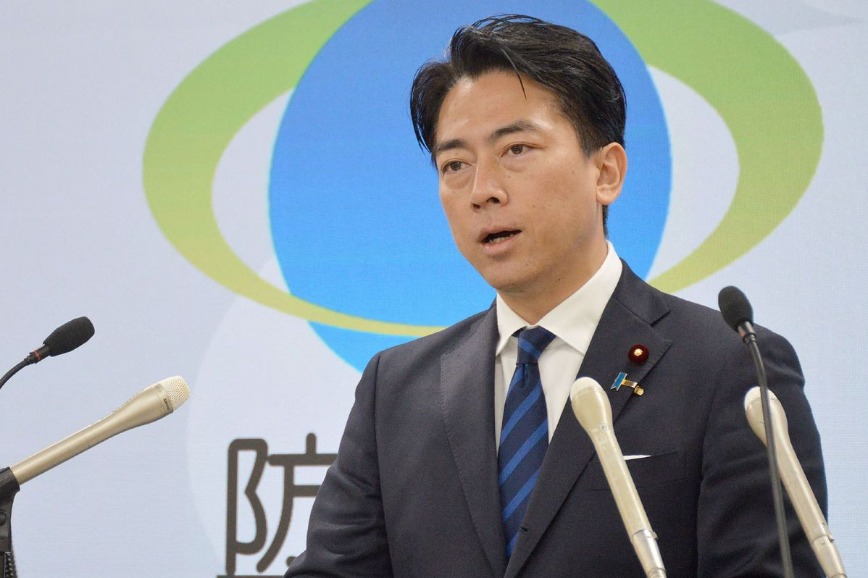
    Japan is reportedly considering exporting its Type 03 medium-range surface-to-air missile system to the Philippines, marking a significant departure from its post-World War II pacifist principles. This move, currently in informal consultation phases according to Kyodo News, would require Tokyo to abolish its longstanding “five-category” restriction on defense equipment exports, potentially as early as the first half of 2026.

    The proposed arms transfer has raised serious concerns among international security experts who view it as part of Japan’s broader military expansion under Prime Minister Sanae Takaichi’s administration. Professor Chen Hong, executive director of the Asia Pacific Studies Center at East China Normal University, warns that this development represents a dangerous bypass of constitutional constraints that could accelerate regional arms races and increase the likelihood of military conflicts.

    This strategic shift occurs against the backdrop of strengthened Japan-Philippines military cooperation, exemplified by the Reciprocal Access Agreement that took effect on September 11, 2025, permitting Japanese troops to operate on Philippine soil. Experts argue that these developments collectively signal Japan’s transition from its postwar identity as a “peace-loving nation” toward what it now calls a “normal nation” with expanded military capabilities.

    International observers, including Zamir Ahmed Awan of Pakistan’s Global Silk Route Research Alliance, have expressed alarm at what they perceive as a revival of Japanese militaristic tendencies. The Takaichi administration justifies these changes by citing an “existential crisis,” but critics contend they risk undermining multilateral dispute resolution mechanisms and could push the Asia-Pacific toward Cold War-style confrontations.

    Furthermore, Japan’s repeated revisions of its Three Principles on Arms Exports have raised questions about its commitment to international disarmament and nonproliferation norms, particularly as a signatory to the UN Arms Trade Treaty. The international community faces growing concerns about how these developments might affect regional stability and the broader postwar international order.

  • Record gold prices in Dubai: Will shoppers prefer 14K jewellery over 22K in UAE?

    Record gold prices in Dubai: Will shoppers prefer 14K jewellery over 22K in UAE?

    Dubai’s jewellery industry demonstrates remarkable resilience as gold prices reach unprecedented levels, with 24K gold surpassing Dh500 per gram in the UAE markets. Despite the Dubai Jewellery Group’s recent introduction of official 14K gold rates—a first for the emirate—industry leaders confirm that traditional 22K jewellery maintains its dominant position among consumers.

    Market analysis reveals that Dubai’s distinctive gold purchasing culture prioritizes purity over price sensitivity. According to Anil Dhanak, Managing Director of Kanz Jewels, “The Dubai jewellery customer has always been extremely particular about purity. Buyers may compromise on design or reduce overall weight, but they rarely compromise on purity.” This sentiment is particularly strong among residents from the Indian subcontinent and GCC regions, where 22K gold carries significant cultural and investment value.

    The recent pricing milestone saw 24K gold at Dh505.75 per gram, with 22K, 21K, 18K and 14K trading at Dh468.25, Dh449.0, Dh385 and Dh300.25 per gram respectively. While globally gold closed at $4,197.81 per ounce, Dubai’s market dynamics differ substantially from Western trends.

    Industry executives indicate that 14K gold will likely find its niche in diamond-studded jewellery and contemporary designs targeting younger, fashion-conscious consumers. Chirag Vora of Bafleh Jewellers noted that select pilot programs for 14K bracelets, pendants, and studs are underway, with broader rollout plans pending market response.

    Shamlal Ahamed of Malabar Gold and Diamonds emphasized that record prices reinforce gold’s status as a value-appreciating asset, combining aesthetic appeal with investment security. The consensus among jewellers suggests that while 14K may expand product ranges, it cannot displace the deeply rooted preference for higher purity gold that defines Dubai’s reputation as the ‘City of Gold.’

  • How authorities trace BlueChip scam money trail; CCTV shows founder stuffing cash into bags

    How authorities trace BlueChip scam money trail; CCTV shows founder stuffing cash into bags

    The unraveling of the BlueChip investment scandal, which defrauded UAE residents of approximately Dh400 million ($109 million), demonstrates a paradigm shift in how global authorities now pursue digital financial crimes once considered untraceable. The case took a dramatic turn with the November 30 arrest of founder Ravindra Nath Soni in Dehradun, India, ending an 18-month international manhunt that began when his Dubai-based operation collapsed abruptly in March 2024.

    Newly emerged CCTV footage from the company’s final operational days depicts Soni systematically removing substantial cash volumes from office drawers, stacking currency bundles on tables, and concealing them within suitcases and carry bags. This visual evidence has become crucial for investigators quantifying capital extraction during the scheme’s terminal phase.

    The investigation has revealed sophisticated financial maneuvering, including a previously documented $41.35 million transfer to an unidentified cryptocurrency wallet immediately preceding the company’s shutdown. According to Rayad Kamal Ayub, Managing Director of Rayad Group Technology, this case exemplifies how blockchain intelligence tools have revolutionized financial crime investigations. “Modern forensic capabilities can map relationships across thousands of wallets, flag suspicious movements in real-time, and identify connections to darknet operations and sanctioned entities,” Ayub explained.

    Indian authorities report the scam’s financial scope continues expanding beyond initial estimates. Forensic accounting has identified over ten domestic bank accounts operated by Soni across multiple cities, with transactions suggesting coordinated movement through both hawala channels and cryptocurrency conversions. Kanpur Police Commissioner Raghubir Lal confirmed the operation now exhibits clear characteristics of cross-border financial crime, with twelve international associates—including individuals in Dubai—implicated in the money movement network.

    The case reflects broader advancements in global regulatory cooperation, with platforms like Chainalysis, Elliptic, and TRM Labs enabling investigators to trace funds across blockchain networks with unprecedented speed. “What previously required months now takes hours,” Ayub noted. “Blockchain anonymity is largely mythological—every transaction creates permanent forensic evidence that regulators can reconstruct.”

    For affected investors, many of whom have traveled to India to join the expanding criminal case, the sophisticated investigation offers renewed hope for potential asset recovery after months of financial uncertainty and losses.

  • China, US businesses urged to enhance ties

    China, US businesses urged to enhance ties

    Senior officials and corporate leaders from the world’s two largest economies are spearheading a concerted push to revitalize commercial ties through enhanced dialogue and collaborative ventures. This development emerges against a backdrop of stabilizing diplomatic relations and China’s forthcoming economic planning cycle.

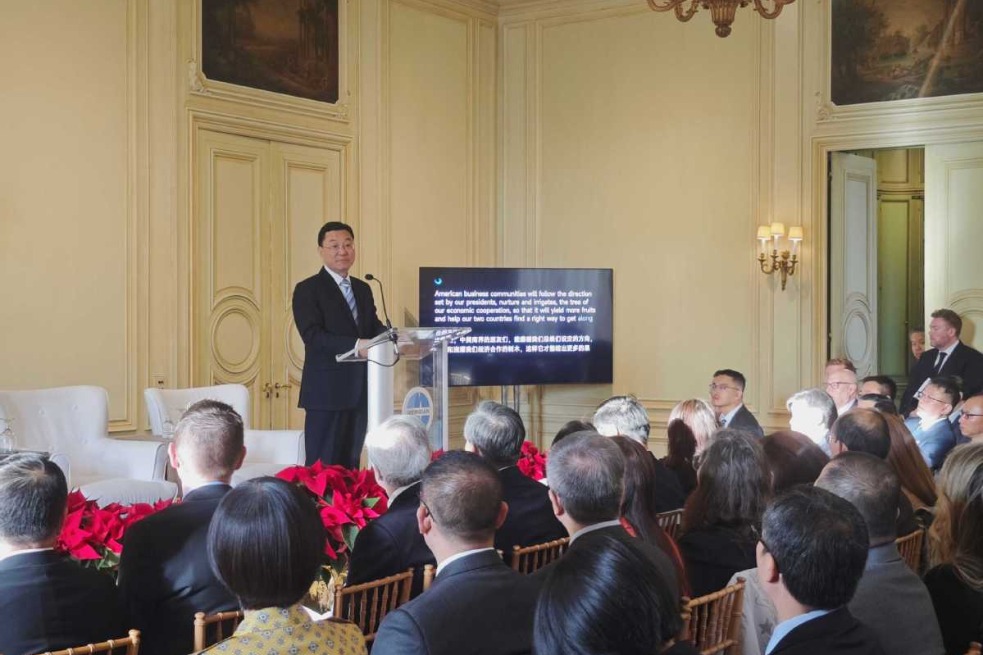
    At the China-US Business Cooperation Forum in Washington on December 4th, Chinese Ambassador Xie Feng emphasized the business community’s pivotal role in transcending political differences and capitalizing on opportunities generated by head-of-state diplomacy. The event, jointly organized by the China Council for the Promotion of International Trade and Washington’s Meridian International Center, brought together executives seeking clarity on navigating the relationship’s ‘new era’.

    Ambassador Xie highlighted how presidential commitments from both nations have injected ‘precious certainty’ into economic cooperation, with head-of-state diplomacy expected to remain the anchor of bilateral relations. He outlined substantial opportunities arising from China’s pursuit of high-quality development under the 15th Five-Year Plan (2026-2030), particularly with China hosting the 2026 APEC Economic Leaders’ Meeting and the US convening the G20 Summit.

    Concurrently on the West Coast, the ‘Port of Opportunity: US-China Business Exchange Breakfast’ in Berkeley, California facilitated connections between 25 Chinese companies and approximately 100 local executives and officials. Discussions spanned finance, agriculture, logistics, aviation, healthcare, renewable energy, and cultural industries.

    Ren Hongbin, Chairman of the China Council for the Promotion of International Trade, noted that recent high-level interactions have reinvigorated business confidence, urging concrete implementation of leadership consensus. Oakland Mayor Barbara Lee emphasized China’s significance as the port’s largest import partner (29% of total trade volume), advocating for sustained economic focus despite geopolitical challenges, particularly in green economy initiatives.

    John Grubb, Interim President and CEO of the Bay Area Council, highlighted California’s substantial role in US-China trade (approximately 25% of total), emphasizing the importance of maintaining commercial bridges through changing circumstances. The San Francisco Bay Area’s innovation ecosystem, home to companies like Apple, Intel and Nvidia that have significantly benefited from China’s market, was identified as a key driver of future cooperation in emerging sectors including renewable energy, biopharmaceuticals, and the low-altitude economy.

    Chinese Consul General in San Francisco Zhang Jianmin underscored the reality of economic interdependence in today’s globalized economy, with supply chains accounting for approximately 70% of global trade. He emphasized that innovation cooperation becomes increasingly vital amid global economic headwinds, with China’s vast market and comprehensive industrial system offering complementary advantages to the Bay Area’s innovative capacity.

  • Neymar needs surgery after helping Santos avoid drop

    Neymar needs surgery after helping Santos avoid drop

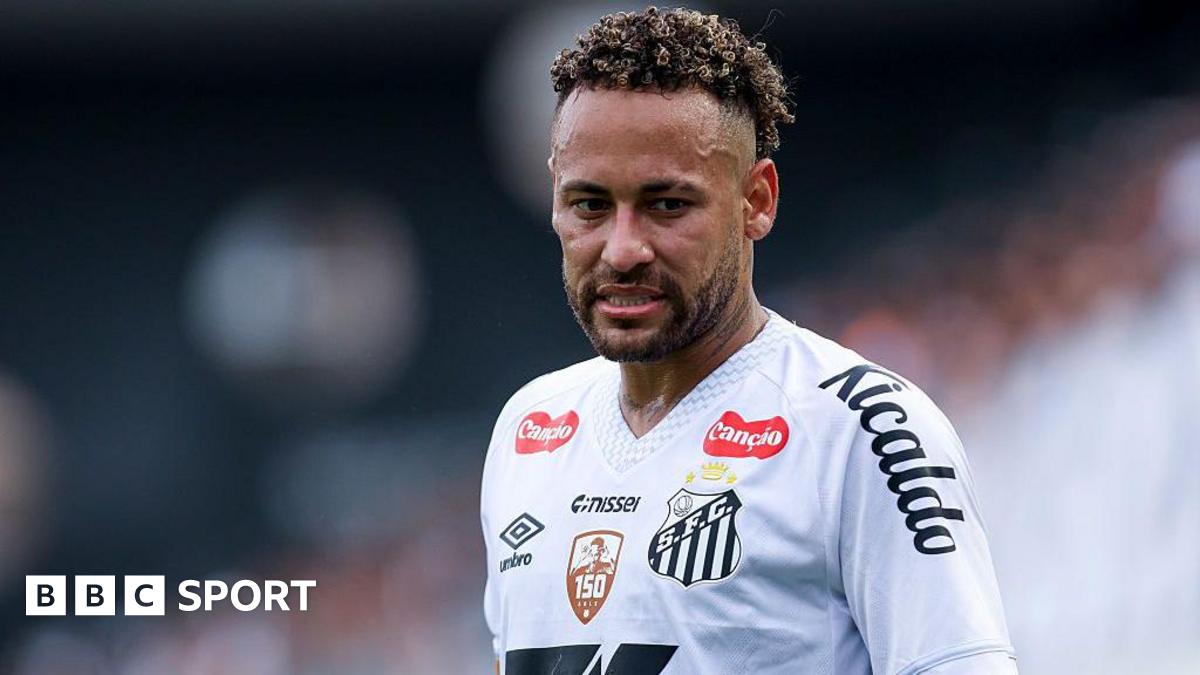
    Brazilian football superstar Neymar Jr. is scheduled for knee surgery following a heroic effort to save his boyhood club Santos from relegation. The 33-year-old forward played the full 90 minutes through significant discomfort during Sunday’s decisive 3-0 victory over Cruzeiro, ensuring the team’s continued presence in Brazil’s top-flight Serie A league.

    Neymar, who returned to Santos in January after an injury-plagued 18-month stint with Saudi Pro League’s Al Hilal where he made just seven appearances, became the club’s salvation in their final matches. The legendary scorer netted five crucial goals across Santos’ last four games of the season, demonstrating his enduring class despite physical limitations.

    ‘I came for this, to try to help in the best way I can,’ Neymar stated after the match. ‘These have been tough weeks for me. I thank those who were with me to lift me up. If it weren’t for them, I wouldn’t have played these matches because of this knee problem.’

    The persistent knee issue has not only affected his club career but has also limited his international appearances. Brazil’s all-time leading scorer with 79 goals in 128 national team caps hasn’t featured for the Seleção since October 2023. National team coach Carlo Ancelotti emphasized in October that Neymar must achieve full fitness and form to be considered for selection ahead of next summer’s World Cup in Canada, Mexico, and the United States.

    No specific timeline has been provided for Neymar’s recovery following the impending surgical procedure, with the player simply noting: ‘I need to rest and then I will have this knee surgery.’