博客

  • Pearl Harbor anniversary to see no survivors

    Pearl Harbor anniversary to see no survivors

    The 84th anniversary commemoration of the Pearl Harbor attack will proceed without the presence of any living survivors for only the second time in history, marking a poignant transition in how this historic event will be remembered. With just twelve centenarian survivors remaining from the December 7, 1941 attack, none were medically cleared to travel to Hawaii for this year’s ceremonies.

    Kimberlee Heinrichs, daughter of 105-year-old veteran Ira ‘Ike’ Schab who canceled due to illness, expressed profound emotional impact: ‘The idea of not having a survivor there for the first time—I just, I don’t know—it hurt my heart in a way I can’t describe.’

    The attack, which claimed over 2,400 American lives and wounded nearly 1,200 others, destroyed or damaged approximately 350 aircraft and sank four battleships while damaging more than a dozen additional vessels. President Franklin D. Roosevelt subsequently declared December 7 ‘a date which will live in infamy’ when announcing America’s entry into World War II.

    Current geopolitical context adds significance to this anniversary, as many Asian nations—particularly China—express growing concerns about resurgent Japanese militarism. Recent comments by Japanese Prime Minister Sanae Takaichi suggesting potential military intervention in the Taiwan Strait have drawn sharp criticism from Chinese officials.

    Senior Colonel Jiang Bin, spokesman for China’s Defense Ministry, stated: ‘Instead of repenting its war crimes of invading and colonizing Taiwan, Japan is taking an extremely wrong approach by suggesting military intervention in a so-called Taiwan contingency.’

    The anniversary also highlights the historic military cooperation between China and the United States during World War II. The Doolittle Raid of April 1942—America’s first bombing of the Japanese mainland—resulted in many crew members crash-landing in China where locals assisted their return. The Flying Tigers, American fighter pilots under General Claire Lee Chennault, further cemented this alliance by protecting Chinese supply lines and engaging Japanese aircraft.

    Descendants of Flying Tigers veterans recently gathered at California’s Richard Nixon Presidential Library to commemorate the 80th anniversary of WWII’s conclusion, honoring the shared history that continues to inspire international cooperation and peace efforts.


  • China’s ‘mind-blowing’ green efforts welcomed

    China’s ‘mind-blowing’ green efforts welcomed

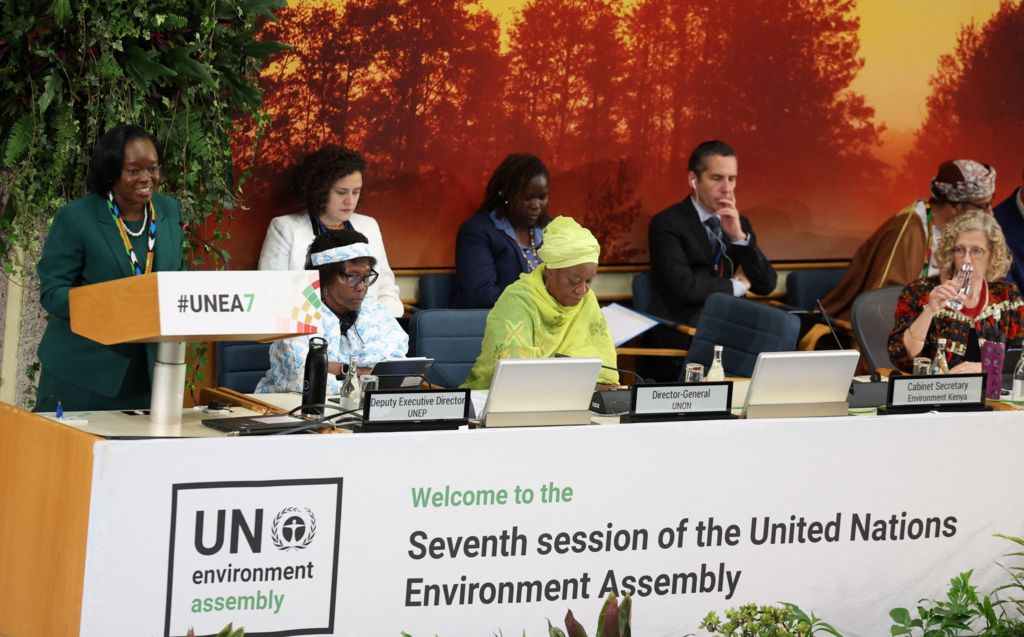
    UN Environment Programme Executive Director Inger Andersen has characterized China’s extraordinary acceleration in renewable energy deployment as a transformative force in global climate efforts. Speaking exclusively to China Daily ahead of the seventh UN Environment Assembly in Nairobi, Andersen emphasized that China’s unprecedented scale of clean energy installation—projected to reach 3,600 gigawatts by 2035—demonstrates remarkable achievements through strategic long-term planning, industrial capability, and coherent policy implementation.

    Andersen highlighted that China’s manufacturing dominance has produced significant global spillover effects, dramatically reducing renewable technology costs worldwide. Solar energy prices have plummeted to an average of 3.3 US cents per kilowatt-hour, making clean energy increasingly accessible, particularly across Global South nations. This cost reduction, coupled with expanded availability, represents what Andersen termed ‘magnificent progress’ in the worldwide transition to sustainable energy.

    Beyond energy generation, China’s rapidly evolving electric vehicle ecosystem—encompassing two-wheelers, buses, and passenger cars—is expanding throughout Asia, Africa, and Latin America. Local assembly operations in developing countries are already generating employment opportunities, improving urban air quality, and facilitating the transition to low-emission transportation networks.

    A recent UNEP report corroborates Andersen’s assessment, identifying China’s renewable energy expansion as one of the most decisive factors shaping global climate action. The report notes that China’s projected capacity—six times its 2020 level—could substantially narrow the emissions gap by accelerating clean energy deployment internationally. For developing economies, China’s model of scaling manufacturing, reducing costs, and enabling technology transfer offers a practical blueprint for enhancing South-South cooperation.

    Andersen concluded that China’s coordinated industrial policy provides a powerful example of how rapid, large-scale progress toward Paris Agreement goals can be achieved, offering valuable lessons for all nations committed to climate action.

  • Breakthrough in wireless goods trains

    Breakthrough in wireless goods trains

    In a landmark achievement for rail transport technology, China has successfully conducted the world’s first test of multiple heavy-haul freight trains operating in synchronized formation using exclusively wireless control systems. This revolutionary trial occurred on December 9, 2025, along the Baoshen Railway in Inner Mongolia Autonomous Region—a critical freight corridor dedicated primarily to coal transportation from the energy-rich Ordos basin.

    The breakthrough demonstration involved seven separate freight trains, each weighing 5,000 metric tons, collectively moving 35,000 tons of cargo without traditional physical couplings. Instead, the convoy relied on an advanced intelligent control system developed domestically by China Shenhua (a subsidiary of China Energy Investment Corporation) in collaboration with research partners. The technology utilizes sophisticated wireless communication protocols and real-time algorithmic coordination to ensure perfect synchronization during acceleration and braking maneuvers.

    This technological advancement addresses the significant engineering challenge of maintaining precise coordination among multiple heavy trains on a single track, eliminating collision risks while preventing undesirable separation. Traditionally, freight operations have relied on single-train configurations or physically connected cars, limiting capacity and efficiency.

    The successful implementation of wireless train formation control promises to transform freight rail economics. Existing rail infrastructure can now achieve over 50% increased transport capacity without requiring new construction, offering a highly cost-effective solution for bulk commodity transportation. This development holds particular significance for China’s energy logistics, enabling more efficient movement of coal from production regions to consumption centers.

    Beyond domestic applications, this breakthrough establishes a new technical paradigm for global freight rail systems seeking enhanced safety and operational efficiency in long-distance heavy haul operations. The technology demonstrates how digital innovation can dramatically improve the performance of traditional industrial infrastructure.

  • Hamas, Israel edge toward 2nd phase ceasefire

    Hamas, Israel edge toward 2nd phase ceasefire

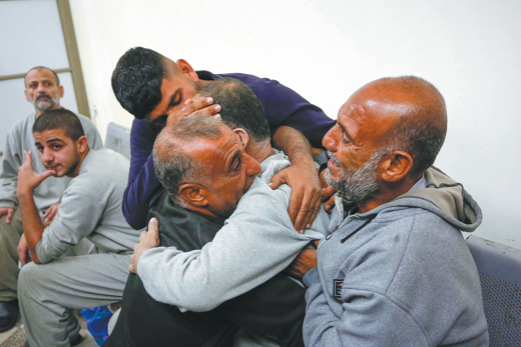
    Significant progress emerges in the Israel-Hamas peace process as both parties indicate readiness to advance toward the second phase of their truce agreement. Palestinian militant group Hamas has expressed unprecedented willingness to discuss disarmament terms, while Israeli Prime Minister Benjamin Netanyahu acknowledges the challenging road ahead in achieving Gaza’s demilitarization.

    Bassem Naim, a Hamas political bureau member, articulated the group’s openness to a comprehensive approach during discussions with The Associated Press in Qatar. While welcoming the potential deployment of a United Nations stabilization force along border regions to monitor ceasefire compliance, Naim explicitly rejected any international military presence within Palestinian territories.

    The diplomatic developments follow reports that U.S. President Donald Trump intends to announce the transition to Phase Two of the Gaza peace process before Christmas. This phase addresses the most contentious elements of the agreement, including Hamas’s disarmament and Gaza’s demilitarization.

    Netanyahu, during a Jerusalem news conference with German Chancellor Friedrich Merz, confirmed that Israel anticipates moving to the second phase shortly after recovering the remains of deceased hostage Ran Gvili. The Israeli leader credited military pressure and Trump’s diplomatic engagement with Arab and Muslim nations for compelling Hamas to negotiate.

    Despite these diplomatic advances, tensions persist on the ground. Israeli forces reportedly stormed a UN relief agency headquarters in East Jerusalem, while settlers continued land operations in the northern Jordan Valley. These actions have raised concerns among Arab and Muslim-majority nations, particularly following Israel’s announcement about opening the Rafah crossing, which prompted eight countries to issue statements rejecting Palestinian displacement.

    Regional analysts warn that Israel’s objections to proposed stabilization force participants—specifically Türkiye and Qatar—and its continued military operations threaten to undermine the entire peace process. Haydar Oruc, a Middle East researcher, emphasized that Israel must cease attacks, permit humanitarian access, and allow interim administration establishment to facilitate successful transition to Phase Two.

  • Thai airstrikes target border with Cambodia

    Thai airstrikes target border with Cambodia

    Military tensions between Thailand and Cambodia reached a dangerous new level on Monday as Thai fighter jets conducted aerial assaults along their shared border, marking a significant escalation in the ongoing territorial dispute. The Royal Thai Air Force confirmed deploying F-16 aircraft to strike what it identified as Cambodian fire-support positions, command centers, and logistical routes that allegedly threatened Thai sovereignty.

    The aerial offensive follows weekend ground clashes in the Ubon Ratchathani Province that resulted in the death of at least one Thai soldier and multiple casualties on both sides. Thai military spokesperson Jackkrit Thammavichai asserted that Cambodia had mobilized heavy weaponry and repositioned combat units, necessitating what he described as ‘carefully executed defensive measures.’

    Cambodia’s Defense Ministry vehemently denied these allegations, stating that their forces had not violated any ceasefire agreements and rejecting claims of heavy weapons deployment. According to reports from Agence France-Presse, the recent hostilities have claimed the lives of at least four Cambodian civilians, with Defense Ministry spokeswoman Maly Socheata accusing Thai forces of targeting non-combatants.

    The humanitarian consequences are rapidly mounting, with approximately 400,000 residents evacuated across four Thai border provinces and the closure of hundreds of educational institutions. On the Cambodian side, 377 schools serving nearly 78,600 students have suspended operations indefinitely.

    Thai Prime Minister Anutin Charnvirakul declared that military operations would continue ‘as necessary according to the situation,’ while Cambodian Senate President Hun Sen urged restraint among frontline troops. The economic implications are already causing concern among analysts, with Kiatnakin Phatra Securities economist Pipat Luengnaruemitchai warning of potential damage to tourism and trade networks.

    Academic voices including Professor Puangthong Pawakapan of Chulalongkorn University have called for neutral observers to monitor the conflict and prevent further escalation, emphasizing that the violence ‘benefits no one—especially border communities and the long-term economic stability of both nations.’

  • CCTV shows Matisse heist suspects making off with artworks on foot

    CCTV shows Matisse heist suspects making off with artworks on foot

    A sophisticated art theft has stunned the Brazilian cultural community after CCTV footage revealed suspects absconding on foot with priceless artworks, including a piece by legendary French artist Henri Matisse. The incident unfolded when a group of thieves orchestrated a targeted heist, first subduing a security guard and an elderly couple who were present at the location.

    Brazilian law enforcement authorities confirmed that the perpetrators executed a swift and calculated operation. After neutralizing the individuals on-site, the suspects proceeded to seize the artworks before making their escape through the city streets, all of which was captured by surveillance cameras. The footage is now a critical component of the ongoing investigation, providing visual evidence of the culprits and their method of retreat.

    The stolen pieces, whose total value is still being appraised, represent a significant loss to cultural heritage. The inclusion of a Matisse painting elevates the crime to an international level, likely triggering collaborative efforts with global art theft units such as Interpol. The brazen nature of the theft—carried out without the use of getaway vehicles—suggests a highly planned operation with specific logistical knowledge.

    This event has prompted immediate reviews of security protocols at cultural institutions across Brazil. Museum curators and private collectors are being urged to reassess their protection measures for high-value artworks to prevent similar sophisticated crimes. The emotional impact on the victims, particularly the elderly couple, is also a grave concern for local communities, highlighting the human cost of such criminal acts.

  • China launches new internet satellite group

    China launches new internet satellite group

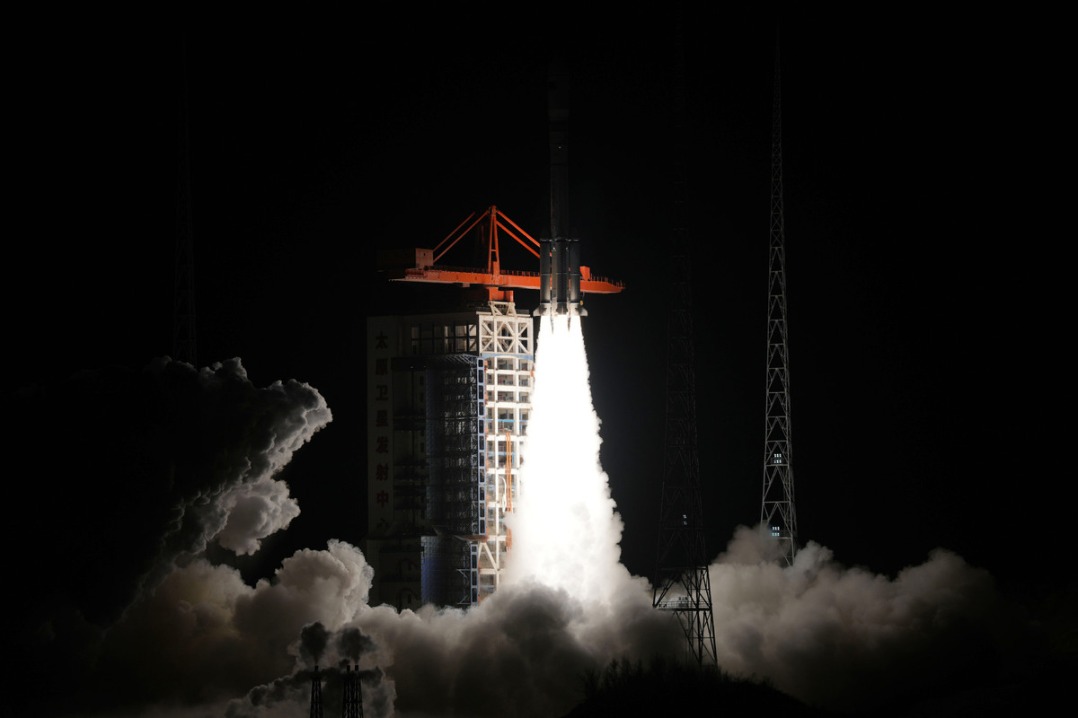
    China has successfully deployed its fifteenth cluster of low-orbit internet satellites in a landmark launch operation conducted Tuesday morning. The mission originated from the Taiyuan Satellite Launch Center in Shanxi Province at precisely 6:11 am Beijing Time (2211 GMT Monday).

    A modified Long March-6 carrier rocket propelled the latest satellite constellation into predetermined orbit, marking another significant advancement in China’s ambitious space-based internet infrastructure project. This deployment represents the 613th flight mission within the Long March rocket family’s operational history, underscoring China’s growing capabilities in space technology and telecommunications.

    The newly launched satellites will join an expanding network designed to provide global internet coverage from low Earth orbit. This strategic initiative aims to deliver high-speed connectivity to remote and underserved regions worldwide while enhancing China’s technological presence in the increasingly competitive space communications sector.

    Space industry analysts note that this consistent deployment rhythm demonstrates China’s methodical approach to building critical space infrastructure. The successful mission further solidifies China’s position as a major player in the global race to develop next-generation satellite internet services, competing with other international satellite constellations currently under development.

  • Ukrainians raise flag to show BBC the fight goes on in city claimed by Russia

    Ukrainians raise flag to show BBC the fight goes on in city claimed by Russia

    Despite Russian President Vladimir Putin’s declaration of victory, Ukrainian military units continue to maintain defensive positions in the strategically vital city of Pokrovsk, according to frontline observations. The city, which has endured nearly 18 months of continuous combat, remains partially under Ukrainian control despite relentless Russian advances from the south.

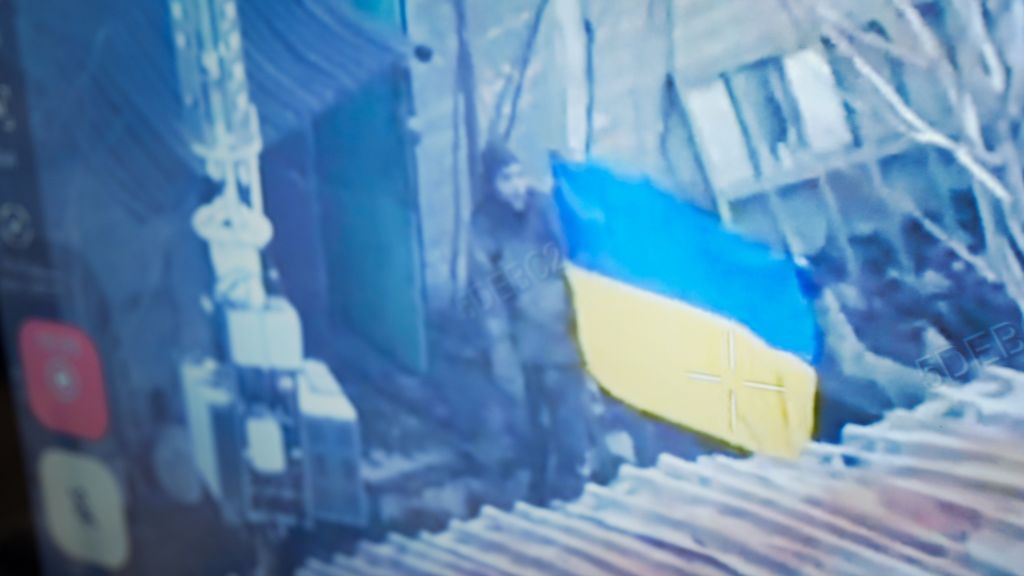
    At a Ukrainian command post situated behind front lines, military personnel coordinate defensive operations through rapid radio communications while monitoring numerous live drone feeds. In a symbolic demonstration of defiance, soldiers from the Skala Assault Regiment executed a high-risk maneuver to briefly display the Ukrainian flag within the city’s northern sector—a direct refutation of Kremlin claims regarding total occupation.

    Yuri, commander of the Skala Regiment, emphasized the psychological significance of this resistance: ‘The whole world should know we will not just give up our territory. If we do not show this, everyone will lose faith and stop helping Ukraine.’

    Military assessments indicate Ukrainian forces maintain control up to the railway line that bisects the devastated urban landscape. Battalion commanders utilize detailed tactical maps with plastic figurines to track positions, revealing that Russian forces have employed small infiltration teams—sometimes disguised as civilians—to penetrate Ukrainian defenses.

    While acknowledging the challenging conditions, soldiers describe the situation as ‘hard, but under control’ and ‘tense, but not critical.’ The conflict has exacted heavy casualties on both sides, with Ukrainian troops reporting the retrieval of documents from fallen Russian soldiers. One soldier with the call sign Rabbit remarked on the human cost with grim determination: ‘Not enough,’ when asked if they had eliminated sufficient enemy combatants.

    The technological asymmetry presents significant challenges, as Russian forces deploy thermal-imaging drones capable of 24/7 surveillance. Ukrainian troops have developed countermeasures and frequently express hope for adverse weather conditions that impede aerial reconnaissance.

    International perspectives emerge from foreign volunteers like the Latvian deputy commander known as ‘Godfather,’ who warns that Western support remains crucial: ‘If Ukraine loses the war, it’s going to be our country next.’ He criticized international response efforts as containing ‘a lot of talking, a lot of bureaucracy and not enough doing.’

    The collective resolve among Ukrainian defenders remains firm, with soldiers emphasizing their connection to the land and rejecting territorial concessions despite the tremendous physical and psychological toll of prolonged urban warfare.

  • UN environment report ‘hijacked’ by US and others over fossil fuels, top scientist says

    UN environment report ‘hijacked’ by US and others over fossil fuels, top scientist says

    A landmark United Nations environmental assessment has been published without official governmental endorsement after the United States and several allied nations refused to approve its scientific conclusions. The Global Environment Outlook report, representing six years of collaborative research by nearly 300 international scientists, directly links climate change, biodiversity loss, and pollution to unsustainable consumption patterns in wealthy and emerging economies.

    The comprehensive analysis warns of a “dire future” for millions worldwide without rapid transition from coal, oil, and gas infrastructure, coupled with substantial reductions in fossil fuel subsidies. The report emphasizes that current patterns of resource extraction across food production, clothing manufacturing, and energy consumption are fundamentally unsustainable.

    During what participants described as a “stormy” October meeting in Nairobi, political representatives from approximately 70 countries failed to reach consensus on the summary for policymakers—a critical component typically endorsed by governments to demonstrate commitment to implementing scientific recommendations. The United States, Saudi Arabia, and Russia emerged as primary opponents to the report’s strong language regarding fossil fuels and plastics.

    Sir Robert Watson, the report’s co-chair and former IPCC chairman, told the BBC that “a small number of countries basically just hijacked the process.” He revealed that the US initially avoided the meeting entirely, joining only via teleconference at the final moment to declare disagreement with most of the report’s findings regarding climate change, biodiversity, and fossil fuels.

    The absence of governmental approval significantly weakens the report’s potential impact, as these summaries traditionally serve as catalysts for policy action. Researchers note that this obstruction mirrors similar resistance demonstrated during recent COP30 climate negotiations and other international environmental discussions.

    The Trump administration’s consistent pattern of challenging environmental science appears to underlie this opposition. Since taking office, the administration has actively promoted fossil fuel expansion, attempted to reverse carbon dioxide endangerment findings, and systematically opposed international efforts to address climate change through various multilateral organizations.

    This development raises substantial concerns about future Intergovernmental Panel on Climate Change reports, which form the scientific foundation for global climate action. The unprecedented blockage of a major UN environmental assessment signals potential challenges for international cooperation on environmental protection moving forward.

  • Rendezvous with rich heritage

    Rendezvous with rich heritage

    In an inspiring fusion of tradition and modernity, Yang Yuxiao has transformed her career path from international trade to cultural preservation. After five years working as a Paris-based trader specializing in crafts and artworks, the French-educated professional made a pivotal decision in 2016 to return to her roots in Linhai, Zhejiang province. Her mission: to reinvigorate the ancient art of Linhai paper-cutting, recognized as part of Zhejiang’s intangible cultural heritage since 2007.

    Yang assumed leadership of the Zhang Xiujuan Paper Cutting Museum, founded by her mother who serves as a respected bearer of this cultural tradition. Confronting the challenges of preserving delicate paper artworks vulnerable to humidity and fading, Yang pioneered innovative solutions that have secured 13 national patents. Her breakthrough came with developing paper-cutting techniques using alternative materials including silk and cashmere cotton, creating both durable and marketable products.

    Beyond material innovations, Yang has strategically expanded the art form’s applications through contemporary product designs featuring traditional patterns. Her creations now adorn functional items including fashion accessories, bags, coasters, and traditional Chinese cloud shoulders (shawls). This commercial approach has generated sustainable revenue through gift orders while preserving artistic integrity.

    The enterprise operates through a multi-tiered production system: collectible pieces crafted by Yang and her mother, alongside cultural gifts produced by approximately 30 project-based artisans. Yang has additionally established educational initiatives that provide vocational training to local villagers, having conducted over 150 sessions with more than 2,000 participants. Her international outreach includes livestreamed classes attracting global students from the United States, Spain, Hungary, and beyond, complemented by cultural exchange programs including a recent visit to South Korea.

    At 36, Yang balances innovation with tradition, stating: ‘To sustain our intangible cultural heritage work, we need products that can support us financially.’ Her vision continues to evolve toward making Linhai paper-cutting relevant to younger generations through everyday integration rather than merely wall decorations, ensuring this family legacy thrives through contemporary relevance.