博客

  • Lithuania declares emergency situation over Belarus balloons

    Lithuania declares emergency situation over Belarus balloons

    Lithuania has escalated its response to what it describes as a coordinated ‘hybrid attack’ from Belarus, declaring a nationwide emergency situation following hundreds of unauthorized incursions by weather balloons and drones. These aerial vehicles, allegedly carrying smuggled cigarettes, have repeatedly penetrated Lithuanian airspace, creating significant disruptions to civil aviation and national security.

    Prime Minister Inga Ruginiene condemned the ongoing provocations, stating they represent a deliberate campaign by Belarus to destabilize the situation. This year alone, approximately 600 smuggling-linked balloons and nearly 200 drones have entered Lithuanian territory, resulting in the repeated closure of Vilnius International Airport and affecting over 1,000 passengers. Authorities have intercepted 11 smuggling balloons, confiscating nearly 40,000 cigarette packets.

    The emergency declaration grants the Lithuanian armed forces enhanced powers to respond more swiftly and effectively to these incursions. This measure falls just below a full state of emergency, last implemented during Russia’s 2022 invasion of Ukraine.

    Belarusian leader Alexander Lukashenko has denied involvement, calling the accusations ‘politicized’ and insisting the balloons pose no actual threat to aviation. He expressed confusion over Lithuania’s motives, stating, ‘Do they want to fight us? We do not need war.’

    The situation has broader implications for European security. Lithuania’s President, Gitanas Nauseda, asserts there is substantial evidence indicating the balloon campaign is a ‘deliberate action’ backed by Belarus’s key ally, Russia. This incident echoes previous hybrid tactics, including the 2021 migrant crisis orchestrated by Belarus along its border with Lithuania.

    In retaliation to border checkpoint closures by Lithuania, Belarus has barred Lithuanian trucks from its roads, leaving hundreds of vehicles stranded. The EU has consistently condemned such activities as part of a wider ‘hybrid campaign’ by Russia, which includes sabotage and disruptions to critical infrastructure. NATO is reportedly considering a more ‘pro-active’ stance in response to these evolving hybrid warfare tactics.
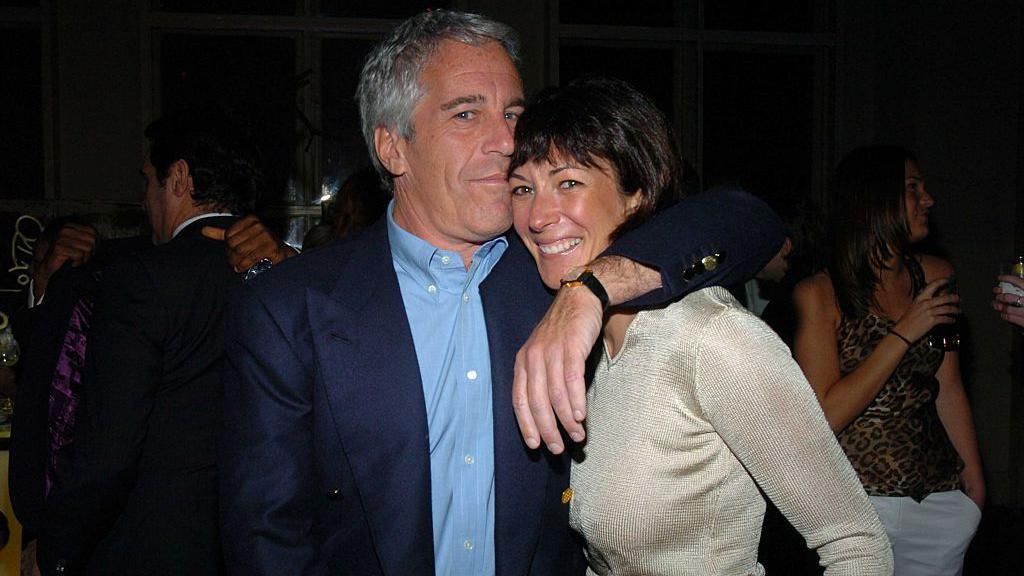

  • Judge rules Ghislaine Maxwell grand jury records can be unsealed

    Judge rules Ghislaine Maxwell grand jury records can be unsealed

    Federal courts in both New York and Florida have authorized the unprecedented public release of grand jury materials from investigations into Jeffrey Epstein and Ghislaine Maxwell, marking a significant breakthrough in the long-running sex trafficking case. The rulings come as a direct result of the Epstein Files Transparency Act, recently signed into law, which mandates the Justice Department to disclose investigative documents by December 19th.

    In Manhattan, U.S. District Judge Paul Engelmayer ruled that the Department of Justice could proceed with releasing the sealed records, citing congressional legislation that overrides traditional grand jury secrecy protocols. The court simultaneously established protective measures to safeguard victim identities and prevent privacy violations during the disclosure process.

    This development follows a parallel decision by a Florida judge on Friday to unseal documents from the state’s 2005 investigation into Epstein. Both jurisdictions had previously denied similar requests, maintaining the confidentiality of grand jury proceedings until the new federal law created a legislative mandate for transparency.

    Ghislaine Maxwell, currently serving a 20-year sentence for her role in recruiting underage girls for sexual exploitation by her former partner Epstein, remains at the center of these judicial proceedings. Epstein died in prison in 2019 while awaiting trial on federal sex trafficking charges.

    The Justice Department retains authority to withhold materials that pertain to ongoing criminal investigations or present substantial privacy concerns. However, the newly passed legislation requires disclosure of all unclassified records, communications, and investigative materials connected to the Epstein-Maxwell case, potentially revealing previously hidden aspects of one of the most notorious sex trafficking operations in recent history.

  • Honduras presidential candidate alleges election has been ‘stolen’

    Honduras presidential candidate alleges election has been ‘stolen’

    Honduras remains engulfed in a deepening electoral crisis nine days after its presidential vote, with no official winner declared amid allegations of manipulation and foreign interference. The National Electoral Council (CNE) continues to grapple with technical issues and thousands of disputed voting records, creating unprecedented delays in the counting process.

    The latest figures from the CNE, with 98.77% of votes tallied, show conservative candidate Nasry ‘Tito’ Asfura maintaining a slender advantage with 40.53% support. Centrist challenger Salvador Nasralla trails closely with 39.16%, while left-wing candidate Rixi Moncada remains distant with 19.32%. The electoral process has been marred by multiple extended pauses in counting, with officials attributing delays to technical complications.

    Salvador Nasralla, who initially led before slipping to second place, has publicly denounced what he terms ‘theft’ by ‘corrupt elements’ manipulating the tally. Meanwhile, Rixi Moncada’s Libre party has demanded complete annulment of the elections, citing ‘interference and coercion’ from former US President Donald Trump.

    The pre-election period was significantly influenced by Trump’s endorsement of Asfura, including his controversial pledge of conditional support and last-minute pardon of imprisoned former Honduran president Juan Orlando Hernández. Hernández, who was serving a 45-year narcotics sentence in the US, now faces an international arrest warrant from Honduran authorities.

    Trump further escalated tensions by accusing the CNE of attempting to manipulate outcomes when Nasralla briefly led, warning of consequences without providing evidence of fraud. Under Honduran law, the electoral authority has until December 30 to declare a final result.

  • Iain Douglas-Hamilton, British zoologist and Save the Elephants founder, dies at 83

    Iain Douglas-Hamilton, British zoologist and Save the Elephants founder, dies at 83

    NAIROBI, Kenya — The conservation world mourns the passing of Dr. Iain Douglas-Hamilton, the visionary British zoologist who revolutionized elephant protection strategies and spearheaded global efforts against ivory trafficking. The renowned conservationist died Monday in Kenya at age 83, according to his organization Save the Elephants.

    Douglas-Hamilton’s pioneering work established revolutionary animal tracking methodologies, including advanced collar systems that enabled unprecedented monitoring of elephant movements and poaching patterns. His groundbreaking research during the 1980s revealed the catastrophic decline of Africa’s elephant populations—with over half eliminated within a single decade—providing critical evidence that compelled the international community to implement the 1989 ivory trade ban through the Convention on International Trade in Endangered Species.

    “He never lost his lifelong curiosity about what was happening inside the minds of one of our planet’s most intriguing creatures,” remarked Frank Pope, CEO of Save the Elephants, describing Douglas-Hamilton’s unique connection to the animals he devoted his life to understanding. Colleagues remembered his characteristic enthusiasm whether observing elephants from the ground, analyzing movement maps, or conducting aerial surveys in his aircraft.

    Beyond scientific contributions, Douglas-Hamilton’s advocacy extended to policy transformation, playing instrumental roles in shuttering domestic ivory markets across multiple nations during the 2010s. His work significantly influenced China’s landmark decision to close its legal ivory markets, which he acknowledged in a 2017 interview: “With the end of the legal ivory trade in China, the survival chances for elephants have distinctly improved.”

    The Uganda Conservation Foundation honored his legacy of knowledge sharing and capacity building, noting he “empowered the people protecting them” while creating collaborative conservation networks. His academic credentials included degrees from Oxford University, and his work received recognition through numerous honors including Commander of the British Empire (2015) and the Esmond B. Martin Royal Geographical Society Prize awarded earlier this year.

    Douglas-Hamilton’s comprehensive approach addressed all threats to elephant survival, including climate-related challenges. During Kenya’s severe 2009 drought, he documented how food scarcity weakened elephant immune systems, increasing vulnerability to disease. His conservation philosophy extended beyond protection to deep ecological understanding, captured in his co-authored books with wife Oria and the 2024 documentary “A Life Among Elephants.”

    He is survived by his wife, two daughters, and six grandchildren, leaving a legacy that transformed global wildlife conservation practices and provided renewed hope for elephant species survival.

  • Slovakia’s parliament approves plan to dismantle whistleblower protection office

    Slovakia’s parliament approves plan to dismantle whistleblower protection office

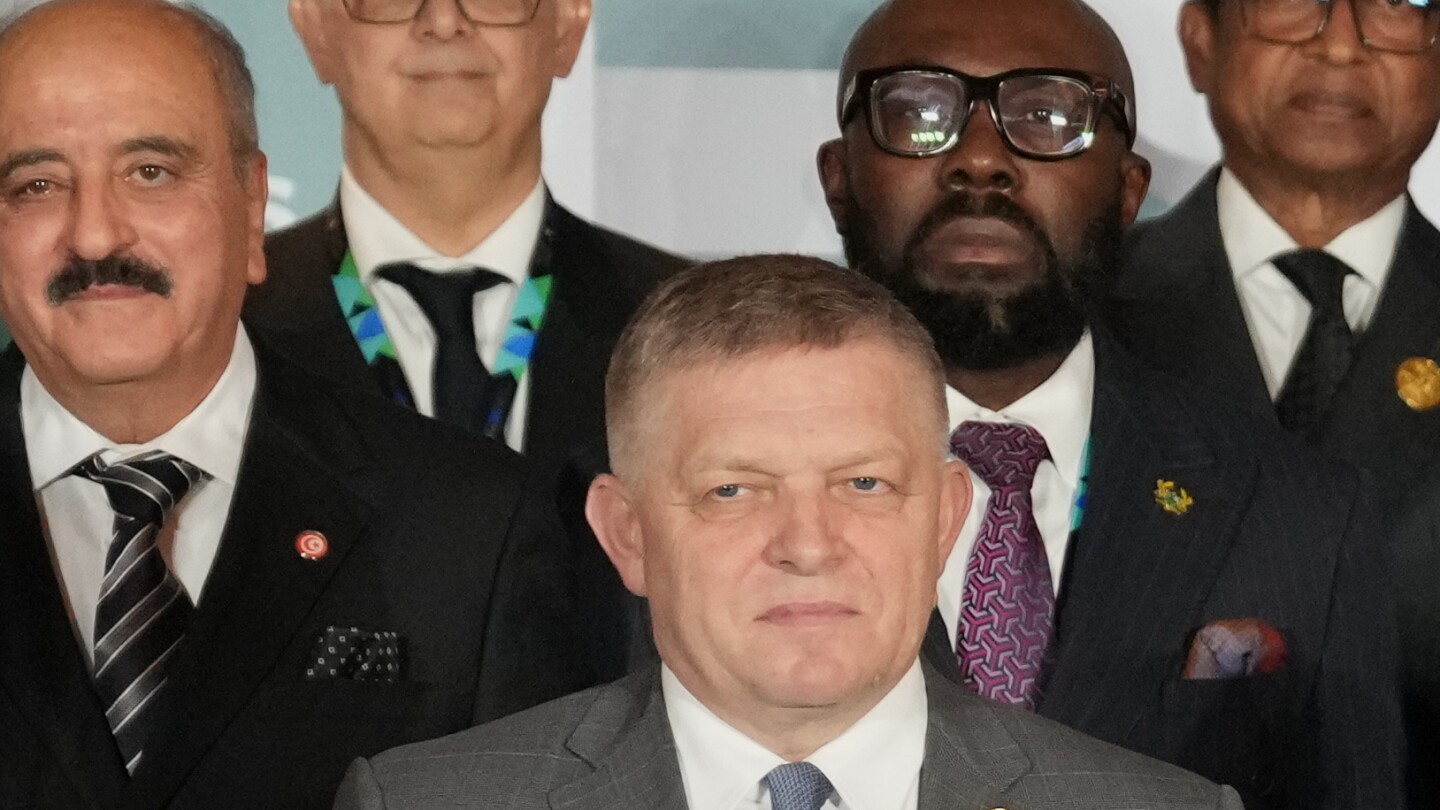
    BRATISLAVA, Slovakia — Slovakia’s parliamentary body has ratified a contentious governmental initiative to dissolve the nation’s autonomous anti-corruption whistleblower protection agency, triggering widespread domestic and international condemnation. The ruling coalition administration under populist Prime Minister Robert Fico secured 78 affirmative votes within the 150-seat legislative chamber to advance the measure, bypassing substantial opposition from multiple sectors.

    The decision has drawn sharp criticism from an unusual coalition of detractors including opposition parties, Slovakia’s Prosecutor-General, European Union authorities, and both international and local anti-corruption organizations. Even President Peter Pellegrini, typically a Fico ally, has expressed reservations about the legislative changes. While Pellegrini retains authority to sign the bill into law, the government maintains sufficient parliamentary strength to override any potential presidential veto.

    In an official statement, the Whistleblower Protection Office warned that “the level of protection, as well as public confidence in the whistleblower protection system meticulously developed over recent years, will be substantially undermined by this legislation.” The office was originally established in 2021 pursuant to European Union regulatory requirements.

    The government justifies its action by proposing to establish a replacement institution that would simultaneously address whistleblower protections and crime victim rights, asserting that previous regulations had been manipulated for political purposes. However, the new framework introduces provisions enabling the revocation of previously granted protections and permits recurrent reassessments of protection status at employer request.

    Notably, the governing coalition employed an accelerated parliamentary procedure to advance the changes, effectively eliminating standard expert review and stakeholder consultation processes. The legislative debate itself was constrained to merely hours before the vote.

    Opposition leader Michal Šimečka of the Progressive Slovakia party condemned the move as “an assault against the rule of law” and indicated plans to challenge the legislation before Slovakia’s Constitutional Court. The political climate remains intensely polarized, with Fico’s critics alleging Slovakia is emulating the authoritarian trajectory of Hungarian Prime Minister Viktor Orbán’s administration. Mass demonstrations have recurrently mobilized thousands across Slovakia protesting Fico’s Russia-friendly orientation and broader policy directions.

  • 13-year-old girl praised for heroic rescue of child from icy lake

    13-year-old girl praised for heroic rescue of child from icy lake

    A 13-year-old girl from China’s Ningxia Hui Autonomous Region has become an internet sensation after executing a daring rescue of a young child from freezing lake waters. Li Jiating, a resident of Wuzhong city, demonstrated extraordinary courage on December 6th when she encountered a life-threatening emergency at approximately 3:00 pm.

    While cycling near a local lake, Li witnessed a critical situation unfolding—a 4-year-old boy had broken through thin ice and fallen into the frigid water. Multiple bystanders had already contacted emergency services but remained hesitant to attempt direct rescue due to concerns about the unstable ice conditions.

    Displaying remarkable presence of mind, Li assessed the situation and volunteered for the rescue mission, declaring “I’m lightweight. Let me save him!” She strategically employed a plastic pipe as her primary rescue tool, carefully maneuvering across the precarious ice surface to maintain both her safety and that of the victim.

    The ingenious rescue operation saw Li extending the pipe toward the struggling toddler while maintaining a safe distance from the compromised ice area. She successfully guided the child to grasp the implement and systematically pulled him to secure ground. Emergency responders arrived shortly after to provide medical attention to both children.

    Local authorities and netizens nationwide have celebrated Li’s quick thinking and selfless actions. The People’s Daily official WeChat account featured images of the thoroughly soaked but triumphant teenager following her heroic intervention. The incident has sparked widespread discussions about youth bravery and emergency response preparedness in winter conditions.

  • Trump ban on wind energy permits ‘unlawful’, court rules

    Trump ban on wind energy permits ‘unlawful’, court rules

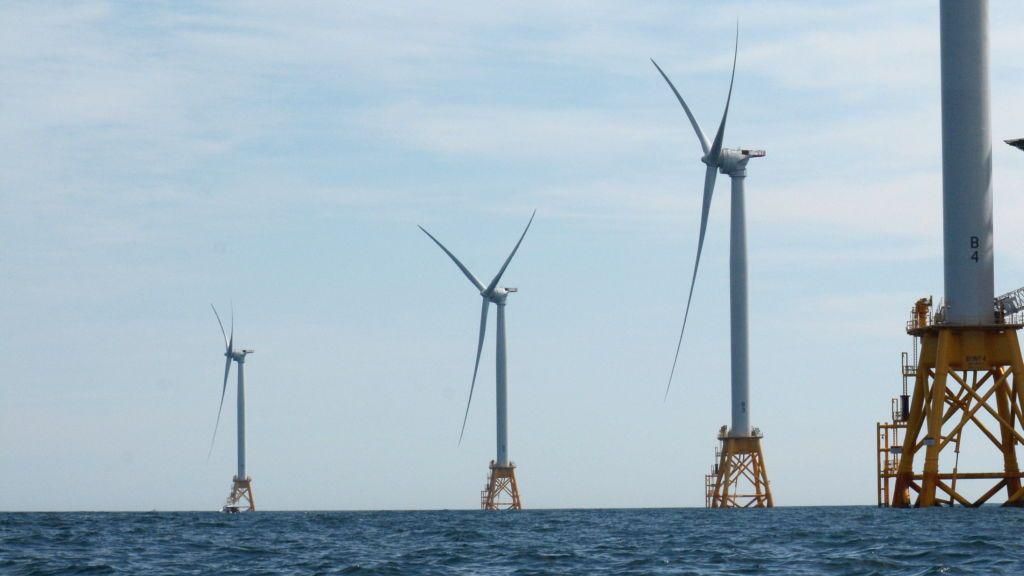
    A Massachusetts federal court has delivered a significant judicial rebuke to the Trump administration’s energy policy, declaring its ban on new wind energy permits “unlawful.” The ruling from District Judge Patti B. Saris vacated an executive order issued in January that had frozen federal approvals for both offshore and onshore wind projects nationwide.

    The legal challenge originated from a coalition of 17 states, led by New York, and a clean energy advocacy group. Their lawsuit was triggered when the Interior Department mandated a work stoppage on the Empire Wind 1 project—a major offshore wind farm designed to power approximately 500,000 New York homes.

    In her decisive ruling, Judge Saris characterized the administration’s policy shift as “arbitrary and capricious and contrary to law.” She noted that federal agencies had failed to provide adequate justification or “a reasoned explanation for the change” in their renewable energy approval process.

    New York Attorney General Letitia James celebrated the decision as “a big victory in our fight to keep tackling the climate crisis” through social media channels. She emphasized that the successful litigation had prevented the administration from obstructing numerous wind energy initiatives across the country.

    The court’s intervention comes amid ongoing tensions between the Trump administration’s pro-fossil fuel agenda and state-level renewable energy ambitions. While construction on the Empire Wind project has since resumed, states argued the broader permitting freeze was causing substantial economic harm nationwide.

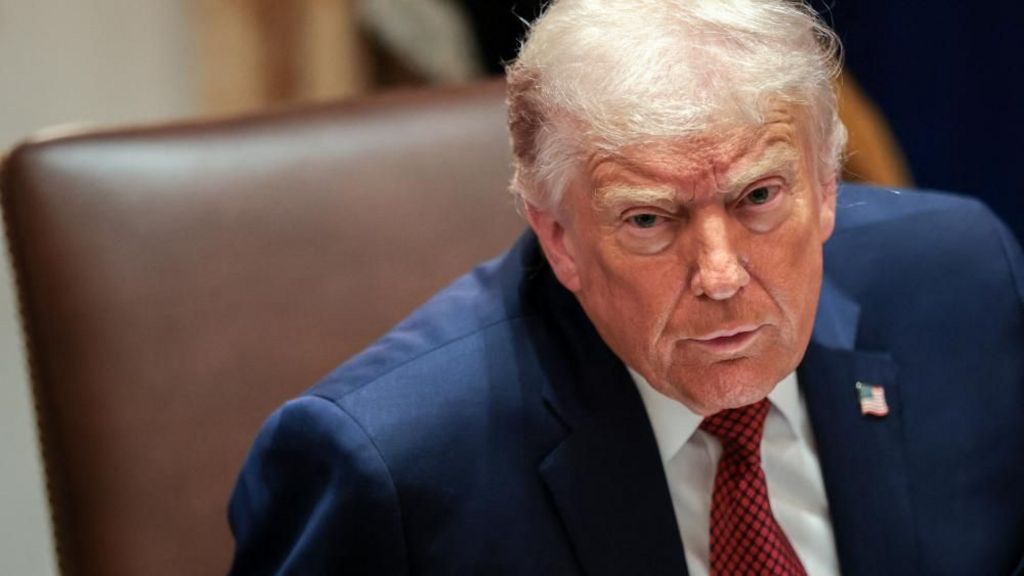
    President Trump has consistently expressed hostility toward wind energy, recently stating “we’re not going to do the wind thing” and referring to turbines as “big, ugly windmills” that endanger wildlife. His administration has actively promoted fossil fuel development under the “drill, baby, drill” energy philosophy.

    The Empire Wind project, developed by Norwegian energy company Equinor, remains on track for completion within two years, with full operational capacity expected by late 2027.

  • Trump criticises ‘weak’ European leaders over Ukraine and immigration

    Trump criticises ‘weak’ European leaders over Ukraine and immigration

    In a provocative interview with Politico, former US President Donald Trump launched scathing criticisms against European leadership, characterizing them as “weak” and suggesting a potential reduction in American support for Ukraine. The controversial remarks have ignited fresh transatlantic tensions regarding the ongoing conflict with Russia.

    Trump asserted that “decaying” European nations have demonstrated incompetence in managing migration crises and formulating decisive strategies to resolve the Ukraine-Russia war. He accused European leaders of permitting Kyiv to continue fighting “until they drop” without providing adequate assistance.

    The former president presented a stark assessment of the military situation, claiming Russia maintains the “upper hand” in the conflict. He further urged Ukrainian President Volodymyr Zelensky to “play ball” by considering territorial concessions to Moscow as a potential pathway to peace.

    British authorities swiftly countered Trump’s assertions, with Downing Street highlighting the UK’s leadership in implementing sanctions against Russia and reaffirming commitment to the US-led peace initiative. The official response emphasized Europe’s substantial contributions to supporting Ukraine’s defense efforts.

    These diplomatic exchanges occurred concurrently with the release of a 33-page National Security Strategy document from Trump’s administration, which contained alarming warnings about Europe’s potential “civilisational erasure” and raised questions about the reliability of certain NATO allies. The document outlines a strategic pivot that could significantly alter traditional American foreign policy approaches toward European partnerships.

  • French feminists outraged by Brigitte Macron’s comment about activists

    French feminists outraged by Brigitte Macron’s comment about activists

    A political and cultural firestorm has erupted in France after First Lady Brigitte Macron used vulgar language to describe feminist protesters, triggering a widespread online movement reclaiming the insult. The controversy began when activists from the organization Nous Toutes, which campaigns against violence toward women, disrupted a stand-up performance by comedian Ary Abittan on Saturday. The protesters, wearing masks of Abittan, shouted “Abittan rapist” during his show—referencing 2021 rape allegations against the comedian that were later dropped due to insufficient evidence.

    The following day, Mrs. Macron attended Abittan’s performance with her daughter and met with the comedian beforehand. In a video recording of their conversation, Abittan expressed feeling “scared” about potential further disruptions. Mrs. Macron responded with “if there are any stupid bitches we’ll kick them out,” using the French phrase “sales connes” while smiling and laughing. Her team subsequently told AFP that her comments were intended to “critique the radical method” of the protest rather than target women specifically, emphasizing that “Brigitte Macron does not approve of this radical method.”

    Instead of quelling the situation, Mrs. Macron’s remark ignited a digital uprising among French celebrities and feminists. The term “#salesconnes” (stupid bitches) has been widely adopted across social media platforms as a badge of honor rather than an insult. Prominent figures in French entertainment have joined the movement, including actress Judith Godrèche—who has previously accused a film director of historical rape—who declared on social media: “I too am a stupid bitch.”

    Belgian comedian Florence Mendez expressed pride in identifying with the term, while actor and singer Nadège Beausson-Diagne posted on Instagram: “I too am a stupid bitch in summer, winter, spring and autumn.” She further voiced support for the “courageous” woman who had initially accused Abittan of rape and praised Nous Toutes, predicting the group would “come back stronger to fight together against sexual violence.” Actor Rachida Brakni similarly thanked the “bitches” in her social media post, directly tagging the feminist organization.

    Stand-up comedian Marine Leonardi offered a different perspective, asserting that “Feminists are never stupid bitches” in her Instagram post. The overwhelming response has transformed the First Lady’s derogatory comment into a unifying symbol for those advocating against sexual violence and supporting women’s rights movements in France.

  • Former executive of Chinese financial firm executed for bribery

    Former executive of Chinese financial firm executed for bribery

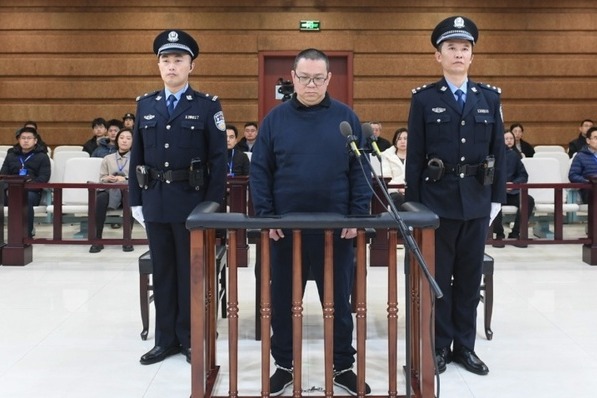
    In a landmark demonstration of China’s intensified anti-corruption campaign, former China Huarong International Holdings general manager Bai Tianhui was executed on Tuesday, December 9, 2025. The execution followed the Supreme People’s Court’s final validation of his death sentence for accepting bribes exceeding 1.1 billion yuan ($156 million).

    The Tianjin No. 2 Intermediate People’s Court carried out the sentence after formally notifying Bai of the supreme court’s decision and granting him a final meeting with family members. This concludes a legal process that began with his initial conviction on May 28, 2024, when he received the death penalty, lifetime deprivation of political rights, and confiscation of all personal assets.

    According to judicial authorities, between 2014 and 2018, Bai systematically exploited his executive positions to illicitly benefit certain entities in project acquisitions and corporate financing operations. The Supreme People’s Court characterized the case as exceptionally severe, noting the ‘extremely large’ bribe amounts, ‘extremely serious’ offense circumstances, ‘extremely negative’ social impact, and ‘extremely huge’ losses to national and public interests.

    The case represents the second major execution within China Huarong Asset Management’s leadership, following the 2021 execution of former chairman Lai Xiaomin for accepting 1.78 billion yuan in bribes. China’s legal framework requires all death sentences to undergo mandatory review by the Supreme People’s Court before execution, ensuring judicial oversight of capital punishment cases.

    This development occurs amidst heightened judicial scrutiny of corruption cases, with top courts recently demanding severe penalties for grassroots corruption offenses, signaling continued commitment to anti-graft measures across all levels of society.