博客

  • Thai-Cambodian clashes spread as death toll rises

    Thai-Cambodian clashes spread as death toll rises

    The longstanding border dispute between Thailand and Cambodia has escalated into widespread military confrontation, resulting in significant civilian casualties and mass displacement. As of Tuesday, December 10, 2025, the death toll has risen to ten with over 140,000 civilians forced to evacuate their homes amid intensifying hostilities.

    Military engagements have expanded beyond initial conflict zones, with Thailand deploying airstrikes and tank units against Cambodian positions. The fighting has now reached historically sensitive areas including the vicinity of the UNESCO World Heritage Site Preah Vihear Temple, raising international concerns about potential damage to cultural heritage.

    Cambodian Senate President Hun Sen confirmed his nation’s military response after previously exercising restraint for two days. Phnom Penh authorities report seven civilian fatalities and approximately twenty injuries since hostilities reignited on Sunday. Thai military officials acknowledge three soldier casualties, including one killed by indirect fire in Surin Province and another by grenade near the Preah Vihear temple complex.

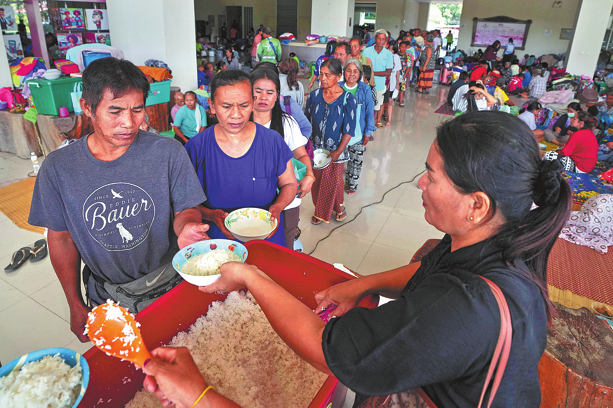
    Humanitarian crisis intensifies as nearly 500 temporary shelters have been established across border provinces, accommodating more than 125,000 displaced persons. Civilian testimonies reveal the trauma of repeated displacements, with some residents experiencing their fourth evacuation this year due to persistent border tensions.

    The conflict’s expansion into coastal regions adds another dimension to the crisis. Thai naval spokesperson Parat Rattanachaiphan accused Cambodian forces of establishing military installations in disputed coastal territories of Trat Province and deploying unmanned drones to provoke Thai units, prompting what Thailand describes as defensive military operations.

    The current violence represents the most significant escalation in the century-old border dispute between the Southeast Asian neighbors, with diplomatic solutions remaining elusive as military actions continue to intensify.
  • Para athletes showcase abilities, sportsmanship

    Para athletes showcase abilities, sportsmanship

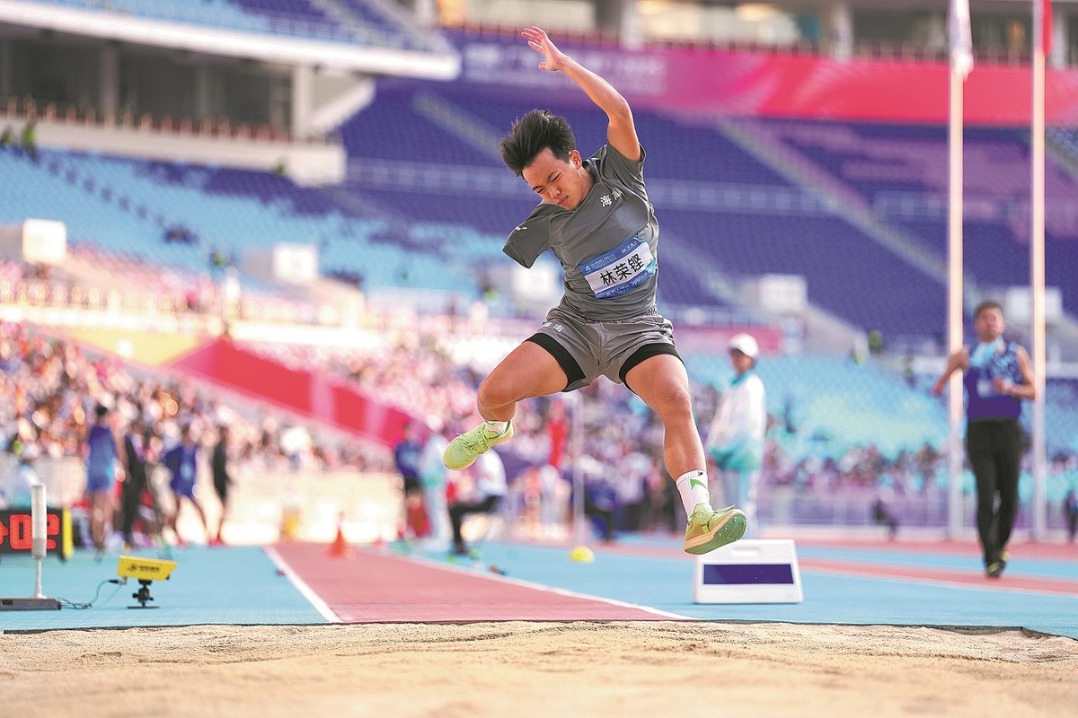
    The 12th National Games for Persons with Disabilities and the 9th National Special Olympic Games have commenced in the Guangdong-Hong Kong-Macao Greater Bay Area, marking a significant milestone in regional cooperation and disability inclusion. Jointly hosted by Guangdong province and the two special administrative regions, the events represent China’s commitment to advancing para sports and social integration.

    During Tuesday’s athletics competitions at Guangdong Olympic Sports Center, athletes demonstrated exceptional skill and sportsmanship. Vice-Governor Li Yun of Guangdong province emphasized the games’ role in showcasing the resilience and capabilities of para athletes while presenting awards to medalists.

    Notable performances included Jiang Yanhong of Guangdong securing the first athletics gold medal for the host team after two years of preparation. “Merely standing on this field brings me immense happiness,” Jiang stated, expressing satisfaction with her debut performance while looking ahead to her T64 class 100m event.

    The games witnessed emotional moments as Sichuan’s Hu Yutao embraced his wife Wang Wenjie following his T64 class 100m victory, acknowledging her four years of unwavering support. Meanwhile, Henan’s Li Lu celebrated her T47 class 400m gold as the perfect birthday gift, adding to her previous Paralympic achievement from the 2016 Rio Games.

    Veteran athlete Liu Cuiqing from Guangxi demonstrated remarkable perseverance, overcoming injury and age-related challenges to claim the T11 class 100m title. The games continue through Monday, featuring multiple athletic disciplines across the Greater Bay Area venues.

  • Events honor role of first provincial governor in modernizing Taiwan

    Events honor role of first provincial governor in modernizing Taiwan

    Beijing hosted a significant cross-strait gathering on Tuesday to commemorate the 140th anniversary of Liu Mingchuan’s appointment as Taiwan’s first provincial governor during the Qing Dynasty. The event at Beijing’s Taiwan Guild Hall brought together representatives from both sides of the strait, highlighting the historical interconnectedness between Taiwan and mainland China.

    Liu Mingchuan, who led successful defenses against French invaders during the Sino-French War (1883-1885), was appointed in 1885 when Taiwan was formally elevated to provincial status. During his six-year tenure, Governor Liu transformed Taiwan into the most progressive province of late Qing China by introducing railway systems, telegraph technology, and modern infrastructure, earning him the title ‘father of Taiwan’s modernization.’

    Yang Yizhou, Vice-Chairman of the All-China Federation of Taiwan Compatriots, emphasized that Taiwan’s establishment as a province ‘institutionally reinforced Taiwan’s status as an inseparable part of Chinese territory.’ He noted that UN documents continue to designate Taiwan as ‘Taiwan, Province of China,’ reflecting contemporary reality.

    Yu Shu-chin, President of Taiwan’s Association of World Peace Promotion, addressed current cross-strait tensions, stating that separatist forces advocating ‘Taiwan independence’ are ‘destined to fail.’ She expressed concern about revised curriculum guidelines in Taiwan that obscure historical facts, making it harder for younger generations to learn their history.

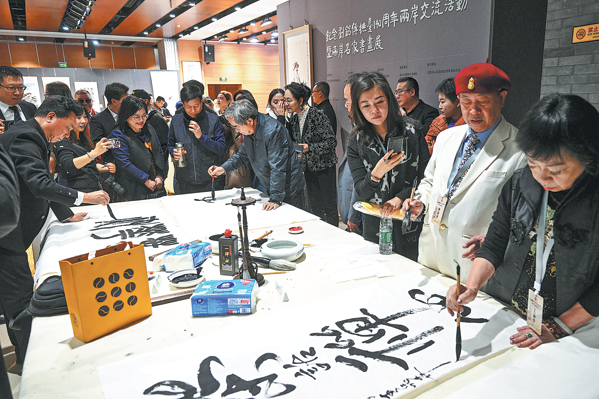
    The commemoration included a calligraphy and painting exhibition featuring over 100 works by 91 artists from across the strait, depicting Liu’s life and character. Liu Xuexuan, president of the Liu Mingchuan Research Association and descendant of the governor, expressed hope that the event would build ‘a bridge of understanding across the Taiwan Strait.’

    Participants noted that many Taiwanese locations bear Liu’s name, including Ming Chuan University and the Liu Ming-Chuan Tunnel in Keelung, serving as shared cultural symbols between the mainland and Taiwan.

  • HK fire death toll rises to 160, six still missing

    HK fire death toll rises to 160, six still missing

    Hong Kong authorities confirmed Tuesday that the death toll from November’s catastrophic Tai Po residential fire has reached 160 victims following advanced DNA analysis of recovered remains. The devastating blaze at Wang Fuk Court continues to haunt the community as six individuals remain unaccounted for nearly two weeks after the tragedy.

    Police Commissioner Joe Chow Yat-ming disclosed during an afternoon press briefing that forensic experts had positively identified previously discovered remains as belonging to two additional victims—an elderly female resident and a domestic worker. Both victims’ families, currently residing in Hong Kong, provided genetic material that enabled the conclusive identifications.

    The painstaking recovery operation has entered a new phase as authorities collaborate with the Housing Department to remove all compromised bamboo scaffolding that collapsed during the inferno. Commissioner Chow noted that during this delicate process, workers discovered skeletal fragments requiring further laboratory examination to determine their origin—whether human, animal, or previously cataloged remains.

    Meanwhile, the Fire Services Department completed draining water from all seven affected structures, revealing no additional human remains. Chief Superintendent Tsang Shuk-yin, overseeing casualty investigations, provided updated statistics: twelve individuals initially reported missing have been confirmed safe, four had deceased prior to the fire incident, and six were determined to be non-residents of the complex.

    The forensic identification effort has intensified with police collecting DNA samples from 162 family members of potential victims. The Government Laboratory and forensic departments have prioritized these analyses to accelerate identifications and provide closure to grieving families.

    In a disturbing development, authorities revealed they have uncovered 21 fraud cases exploiting the tragedy, resulting in two arrests. Additionally, building safety regulators are investigating six suspected cases involving falsified documentation for safety scaffolding nets used during building renovations. The Buildings Department is expected to announce stringent new regulations within days requiring on-site sampling and certification of all scaffold netting before installation.

    Multiple residential estates across Hong Kong—including Baguio Villa in Pok Fu Lam, Fung Wah Estate in Chai Wan, and several others—are under investigation for potential safety violations. The Housing Bureau’s Independent Checking Unit continues extracting concrete core samples from the seven fire-damaged buildings in Wang Fuk Court to assess structural integrity.

    As of Tuesday evening, compliance with the Buildings Department’s safety order has resulted in the removal of scaffold nets from 230 private buildings, with two cases completed by government contractors. Concurrently, the Labour Department has intensified inspections of fire protection facilities and emergency preparedness at maintenance sites with extensive scaffolding, issuing 189 written warnings, 101 improvement notices, and initiating 25 prosecutions following inspections of 371 construction sites.

  • Science teaching to foster curious minds

    Science teaching to foster curious minds

    China has unveiled a comprehensive national guideline to revolutionize science, technology, engineering, and mathematics (STEM) education in primary and secondary schools. The initiative, jointly issued by the Ministry of Education and six other government departments on November 12, 2025, aims to develop students who “think like scientists and practice like engineers.”

    The ambitious plan establishes clear milestones: by 2030, a structured science education system should be fundamentally established with enhanced curricula, teaching methodologies, evaluation mechanisms, and teacher development programs. By 2035, the vision expands to a fully matured science education ecosystem supported by social resources and widespread implementation of project-based, inquiry-driven, and interdisciplinary teaching approaches.

    Tian Zuyin, Director of the Ministry’s Department of Basic Education, emphasized the graduated approach aligned with cognitive development. Early primary education will focus on experiential learning and curiosity stimulation, while upper primary grades advance to conceptual understanding and hands-on exploration. Middle school students will engage in practical inquiry around real-world problems, with high schoolers concentrating on experimental research and engineering practice involving cutting-edge advancements.

    The guideline encourages innovative teaching models including “dual-teacher classes” featuring collaborations between scientists and classroom teachers, and “future classrooms” utilizing metaverse-based virtual laboratories. Assessment methods will evolve beyond exam-focused metrics to include process evaluation and digital profiles tracking students’ innovative growth.

    To address implementation challenges, the policy promotes partnerships between schools, universities, research institutes, and technology enterprises. Teacher training will be enhanced through master’s programs in science education at top universities and specialized development for current educators. Experts from academic and research institutions will be encouraged to serve as part-time instructors.

    Educators nationwide have welcomed the guideline as a transformative roadmap. Lu Yongli, Principal of Beijing No. 2 Experimental Primary School, noted the alignment with existing national science curricula that already include 78 compulsory inquiry experiments for primary students. In rural areas, teachers like Hu Guozhu from Yaoxiang Middle School in Hunan praised the emphasis on adapting to local conditions rather than copying urban models.

    The human impact of this approach is already visible. Xia Jun’an, a fifth-grade student in Hangzhou, recently experienced the principles firsthand through designing and building a functional water clock using simple materials. “When the clock finally dripped evenly and timed three minutes successfully,” he recounted, “it felt like I could ‘touch’ time—it was no longer abstract, but right there in the rhythm of each drop.”

    As the policy rolls out, educators believe that by making science more engaging, practical, and inclusive, China can lay the foundation for a new generation of curious, creative minds prepared to contribute to the nation’s scientific and technological future.

  • 8 dead in residential building fire in South China

    8 dead in residential building fire in South China

    A devastating residential fire in Shantou City, Guangdong province has resulted in eight fatalities and four injuries, according to local authorities. The blaze erupted at approximately 9:21 PM on Tuesday evening in Chaonan District and was successfully contained by firefighters around 10:00 PM.

    Emergency responders immediately transported all injured individuals to nearby medical facilities for treatment. Preliminary investigations indicate the affected structure was a four-story self-built concrete building with approximately 150 square meters of area damaged by the fire.

    The Chaonan District fire department confirmed the casualty figures in an early Wednesday statement while noting that the specific cause of the incident remains under active investigation. The tragedy has prompted local officials to establish an independent judge-chaired commission to conduct a comprehensive fire investigation.

    This incident represents one of the deadliest residential fires in the region in recent memory, raising concerns about fire safety standards in self-built structures throughout southern China. The community has begun mourning the victims while authorities work to determine the factors that contributed to the catastrophic outcome.

  • South Korea protests Chinese and Russian warplanes in its airspace

    South Korea protests Chinese and Russian warplanes in its airspace

    South Korea has formally registered a diplomatic protest with Chinese and Russian defense officials stationed in Seoul following the unauthorized entry of their military aircraft into Korea’s Air Defense Identification Zone (KADIZ). The incident occurred on Tuesday when seven Russian and two Chinese warplanes penetrated the designated airspace without prior notification.

    According to South Korea’s Joint Chiefs of Staff, the Russian aircraft entered KADIZ near the disputed Dokdo Islands (known as Takeshima in Japan) and Ulleung Island, while Chinese planes approached near Ieodo, a submerged rock claimed by both Seoul and Beijing. Following their separate entries, the aircraft converged in international airspace near Japan’s Tsushima Island.

    The South Korean military promptly deployed fighter jets to monitor the situation and implement tactical preparedness measures, though officials confirmed the aircraft never violated sovereign airspace. This marks the latest in a series of similar incidents since 2019, when Chinese and Russian aircraft began conducting joint patrols in the region.

    China’s Defense Ministry confirmed the operation, characterizing it as part of an “annual cooperation plan” with Russia aimed at “addressing regional challenges and maintaining regional peace and stability.” Meanwhile, Russia maintains its longstanding position that it does not recognize South Korea’s unilaterally declared air defense zone, arguing it creates no legal obligations for other nations.

    The incident highlights ongoing territorial tensions in Northeast Asia, where multiple nations maintain overlapping claims over islands and maritime boundaries. Both Japan and North Korea join South Korea in claiming sovereignty over the Dokdo Islands, while Ieodo remains a point of contention between China and South Korea.

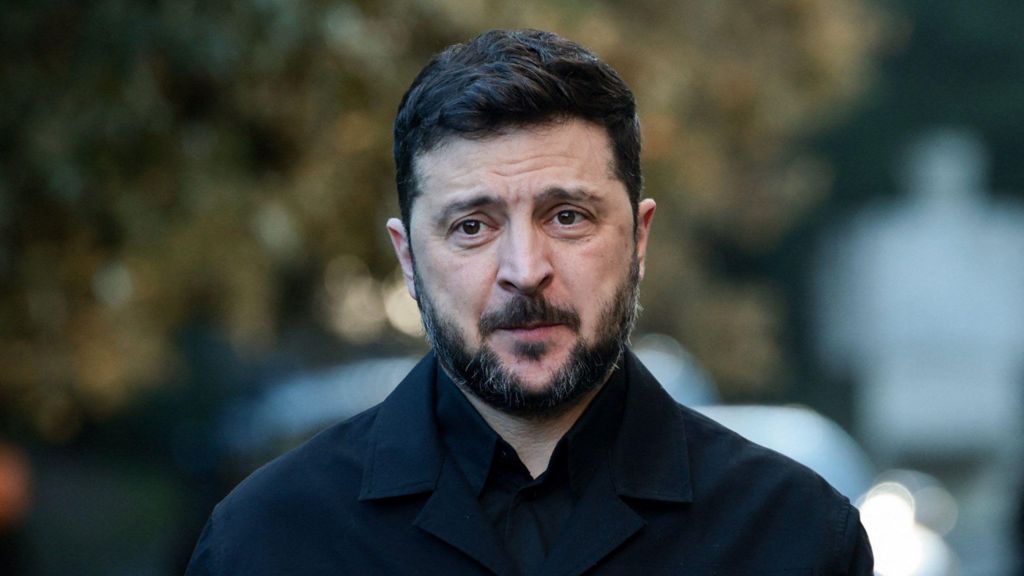
  • Ukraine ‘ready for elections’ if partners guarantee security, Zelensky says

    Ukraine ‘ready for elections’ if partners guarantee security, Zelensky says

    Ukrainian President Volodymyr Zelensky has forcefully responded to international pressure regarding presidential elections, declaring Ukraine’s readiness to conduct a democratic vote within 60-90 days provided adequate security guarantees from Western allies materialize. This statement comes as a direct rebuttal to claims by former US President Donald Trump that Kyiv exploits ongoing hostilities to avoid electoral accountability.

    The constitutional dilemma stems from the suspension of normal electoral processes under martial law imposed after Russia’s full-scale invasion in 2022. While Zelensky’s five-year term technically concluded in May 2024, Ukrainian law prohibits elections during military emergency periods.

    In detailed remarks to journalists following Trump’s Politico interview, Zelensky announced he would request legislative proposals to enable exceptional wartime elections. He emphasized that electoral decisions remain Ukraine’s sovereign prerogative, stating: ‘The issue of elections in Ukraine depends first and foremost on our people, not the people of other countries.’

    The Ukrainian leader specifically addressed what he termed ‘completely unreasonable narratives’ suggesting his administration clings to power deliberately prolonging the conflict. These allegations mirror Kremlin propaganda positioning Zelensky as an illegitimate leader and demanding elections as a ceasefire precondition.

    Practical implementation challenges remain formidable according to opposition lawmakers and policy experts. Lesia Vasylenko, an opposition parliamentarian, emphasized that true electoral fairness requires inclusive participation of all citizens—including frontline military personnel and the approximately four million refugees dispersed across Europe.

    Security concerns present perhaps the most significant obstacle. Hanna Shelest of Ukrainian Prism think tank noted the impossibility of securing polling stations amid ongoing missile strikes and occupation of Ukrainian territory. Historical precedent also exists—Western democracies including Britain suspended elections during World War II.

    Public sentiment appears to reinforce governmental caution. A March survey by the Kyiv International Institute of Sociology revealed 78% of Ukrainians oppose elections even after conflict resolution, prioritizing national unity over political processes during existential warfare.

    The election discourse emerges as US-mediated peace negotiations continue, with Zelensky’s legitimacy becoming an unexpected bargaining point in diplomatic discussions.

  • Amazon, Microsoft pledge mega AI investments in India

    Amazon, Microsoft pledge mega AI investments in India

    In a landmark demonstration of confidence in India’s technological future, Amazon and Microsoft have unveiled massive investment commitments totaling $52.5 billion. This strategic move positions India as a primary beneficiary of global AI infrastructure development.

    Amazon announced on Wednesday its plan to inject $35 billion into the Indian market by 2030, focusing on AI-driven digital transformation, export enhancement, and employment generation. This commitment builds upon the company’s previous $40 billion investment, solidifying its status as India’s largest foreign investor. A substantial portion will be allocated to developing local cloud computing and artificial intelligence infrastructure.

    Microsoft’s parallel announcement of a $17.5 billion investment follows its earlier $3 billion commitment this year. The technology giant revealed plans to establish a new hyperscale cloud region in Hyderabad, scheduled for operational status by mid-2026. This cluster of data centers will form a critical component of India’s AI value chain. Additionally, Microsoft will provide access to its sovereign public cloud platform, enabling organizations to maintain sensitive data within national borders while leveraging advanced computational tools.

    The investment surge reflects India’s emergence as a significant AI and cloud infrastructure hub. Recent months have witnessed substantial commitments from other tech leaders, including Google’s $15 billion AI data hub initiative and Intel’s collaboration with Tata Electronics on a $14 billion semiconductor manufacturing project.

    Prime Minister Narendra Modi acknowledged the growing global optimism toward India’s AI capabilities following his meeting with Microsoft CEO Satya Nadella. The government’s semiconductor mission, offering generous subsidies for chip manufacturing facilities, has been instrumental in attracting these investments.

    Microsoft’s expansion includes integrating AI technologies into government platforms to support approximately 310 million informal workers. This initiative forms part of Microsoft’s broader $23 billion global AI expansion across multiple countries including Canada, Portugal, and the UAE.

    Despite India’s substantial internet user base of one billion and significant tech talent pool, the nation continues to trail global leaders like China and the United States in AI development. The forthcoming unveiling of India’s sovereign AI model in February 2025 represents another milestone in the country’s technological advancement strategy.

  • The man behind the headlines – Salah, by Klopp, Diaz and more

    The man behind the headlines – Salah, by Klopp, Diaz and more

    The unfolding narrative surrounding Liverpool’s iconic forward Mohamed Salah reveals a multifaceted portrait of an athlete grappling with perceived marginalization while maintaining an unwavering commitment to excellence. Recent developments have cast a spotlight on the Egyptian international’s emotional response to being relegated to substitute status for three consecutive matches under manager Arne Slot, prompting widespread discussion about his character among supporters and pundits alike.

    Jurgen Klopp, the architect of Liverpool’s most successful modern era, provides profound insight into Salah’s psychological makeup. “We are all massively influenced by our past—how we were raised, where we grew up,” reflects the German tactician. “Mo understood from an early age that exceptional achievement required extraordinary effort. His continuous development mindset transformed him into arguably the Premier League’s most formidable attacking force.”

    Former teammates paint a picture of a relentlessly driven professional whose competitive nature transcends conventional boundaries. Adam Lallana observes: “He maintains remarkable emotional equilibrium—never excessively celebrating triumphs nor dwelling on setbacks. His composure under pressure became a calming influence throughout the squad.” James Milner, Liverpool’s former vice-captain, recalls Salah’s obsession with perfection extending even to chess matches, noting: “He hired a chess instructor to refine his strategic thinking—that exemplifies his comprehensive approach to self-improvement.”

    The analysis extends beyond sporting achievement to examine Salah’s cultural significance as a global icon. Hailing from Nagrig, an agricultural village where over half the population lives in poverty, his journey to superstardom represents a narrative of unprecedented social mobility. Maher Anwar Shtiyeh, mayor of Nagrig, emphasizes: “He remains deeply connected to his roots despite international acclaim. His philanthropic initiatives—including funding ambulance services and religious institutions—demonstrate unwavering commitment to his community.”

    Salah’s visible Muslim faith has reshaped perceptions throughout his career. Shafique Rahman, Imam at Liverpool Mosque and Islamic Institute, notes: “His regular prayers before and after matches normalized religious expression in elite sports environments. Worshipers standing shoulder-to-shoulder with him during prayers experienced profound equality in spiritual practice.”

    The current tension stems from what insiders describe as Salah’s frustration with recent performance critiques and speculation about his January transfer prospects. This scenario echoes historical patterns at Liverpool, where legendary figures including Steven Gerrard and Fernando Torres faced similar public scrutiny during transitional periods.

    Despite the uncertainty, Salah’s legacy as a transformative figure remains secure. Luis Diaz, his former attacking partner now at Bayern Munich, reflects: “His mentorship transcended tactical advice—he created genuine emotional connections. Lifting the Premier League trophy alongside him revealed the profound joy he derives from collective achievement.” As the football world watches this chapter unfold, Salah’s story continues to evolve as a complex interplay of athletic brilliance, cultural influence, and human vulnerability.