博客

  • Fifa launches $60 ticket tier amid criticism of 2026 World Cup pricing

    Fifa launches $60 ticket tier amid criticism of 2026 World Cup pricing

    In response to mounting criticism over ticket affordability, FIFA has unveiled a new budget-friendly pricing tier for the 2026 World Cup. The global football governing body announced on Tuesday the creation of “Supporter Entry Tier” tickets priced at $60, designed to enhance accessibility for fans of qualified teams across all 104 matches—including the final showdown.

    The discounted tickets will constitute 10% of the allocation reserved for Participating Member Associations (PMAs), which represent competing national teams and administer dedicated fan ticket programs. These associations will establish specific criteria to prioritize “loyal fans” with demonstrated connections to their national teams.

    FIFA’s revised allocation structure now designates half of each PMA’s ticket inventory to affordable categories: 40% under the existing Supporter Value Tier and 10% under the new Entry Tier. The remaining tickets will be equally divided between Standard and Premier tiers.

    In a significant consumer-friendly move, FIFA will waive administrative fees for refund requests from fans who purchase through PMA programs if their national team fails to advance to the knockout stage.

    This initiative emerges amid intensified scrutiny of FIFA’s pricing strategy for the 2026 tournament, scheduled from June 11 to July 19 across 16 cities in Canada, Mexico, and the United States. The announcement follows recent accusations from Football Supporters Europe (FSE) characterizing FIFA’s initial pricing as “extortionate” and potentially exclusionary for average supporters.

    Despite the controversy, FIFA reports robust interest in the current third-phase ticket sales window, which opened December 11 and continues through January 13, buoyed by the recent release of match schedules, venues, and kick-off times.

  • Trump orders blockade of sanctioned oil tankers in and out of Venezuela

    Trump orders blockade of sanctioned oil tankers in and out of Venezuela

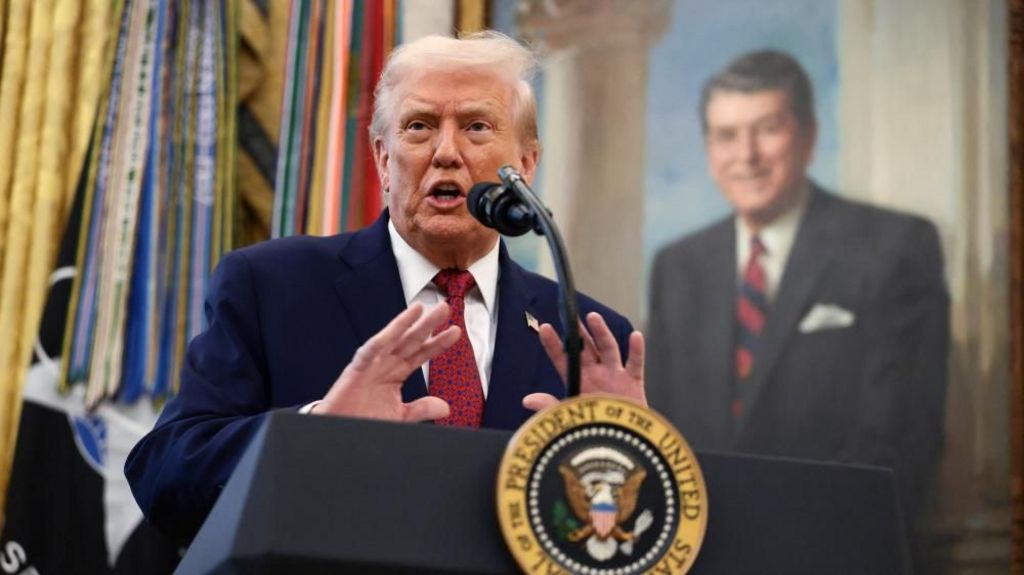
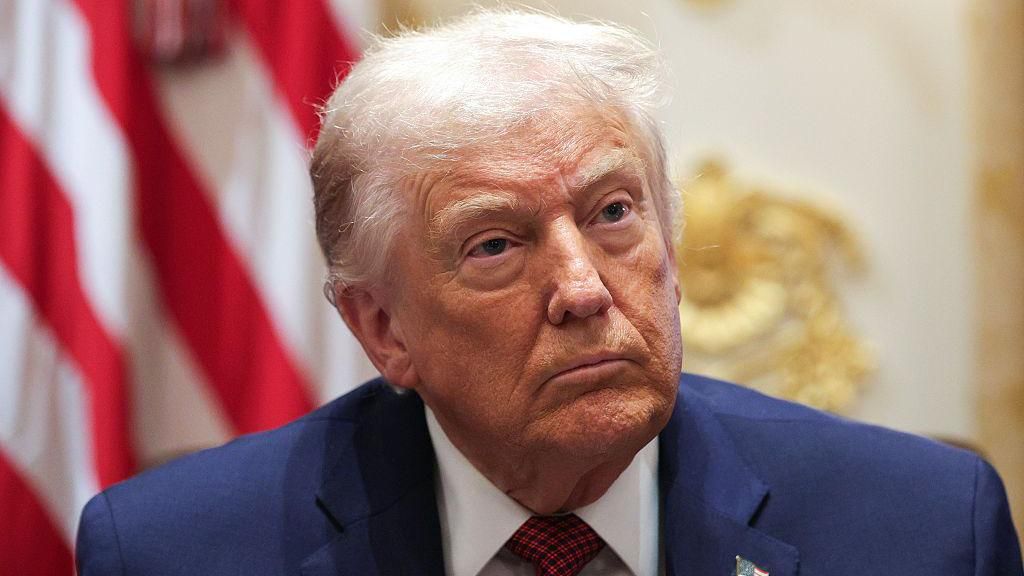
    In a dramatic escalation of tensions, former US President Donald Trump has announced a comprehensive naval blockade targeting all sanctioned oil tankers entering or departing Venezuelan waters. The declaration came via Trump’s Truth Social platform, where he formally designated Nicolás Maduro’s government as a foreign terrorist organization while leveling serious allegations of asset theft, drug smuggling, and human trafficking.

    This provocative move follows last week’s seizure of the oil tanker ‘Skipper’ by US forces off Venezuela’s coast, which Caracas condemned as an act of ‘kidnapping and theft.’ Trump asserted that Venezuela is now ‘completely surrounded by the largest Armada ever assembled in the South American region,’ promising the military presence would ‘only get bigger’ and exceed anything previously witnessed.

    The Trump administration has maintained consistent pressure against Maduro’s government, with the US military reporting approximately 90 casualties in recent anti-narcotics operations targeting vessels allegedly transporting fentanyl. Additional sanctions have been imposed on six more ships carrying Venezuelan oil, alongside measures targeting Maduro’s relatives and businesses associated with his administration.

    Venezuela, possessing among the world’s largest proven oil reserves, has repeatedly accused Washington of attempting to plunder its natural resources. The escalating situation has drawn serious concern from US lawmakers, with Congressman Joaquin Castro (D-Texas) characterizing the naval blockade as ‘unquestionably an act of war.’ The House of Representatives is scheduled to vote on a resolution directing the president to cease hostilities with Venezuela, highlighting domestic political divisions over the aggressive foreign policy approach.

  • IPL auction: How Cameron Green struck gold in Abu Dhabi

    IPL auction: How Cameron Green struck gold in Abu Dhabi

    The Indian Premier League auction in Abu Dhabi witnessed historic bidding wars on Tuesday, with Australian all-rounder Cameron Green emerging as the standout acquisition. The 26-year-old cricket sensation sparked an intense competition among franchises, ultimately securing a record-breaking $2.8 million contract with Kolkata Knight Riders. This monumental deal establishes Green as the most expensive overseas player in IPL history, underscoring the premium value placed on versatile athletes capable of contributing across multiple disciplines.

    Green’s exceptional dual capabilities as a powerful top-order batsman and skilled seam bowler made him the most sought-after talent of the auction. His acquisition reflects a strategic shift among IPL franchises toward prioritizing multi-dimensional players who provide tactical flexibility throughout the demanding tournament season.

    Beyond the headline-making Green signing, Chennai Super Kings demonstrated calculated aggression by securing both Prashanth Veer and Kartik Sharma for identical $1.58 million contracts. This dual investment strategy highlighted CSK’s focused approach to building immediate competitiveness while planning for future transitions as veteran players approach retirement.

    Royal Challengers Bengaluru strengthened their squad balance with the strategic addition of Venkatesh Iyer for $780,000. The experienced all-rounder brings proven IPL performance credentials and pressure-handling capabilities to a team historically reliant on specialist batsmen.

    The auction proceedings saw 77 players successfully secured, including 29 international cricketers, with particular demand for bowlers possessing specialized death-over or spin techniques. While some established names initially went unsold, teams returned during accelerated bidding rounds to address specific roster requirements.

    With the 2026 IPL season commencing March 26, franchises now shift focus to finalizing team combinations and strategic preparations. The Abu Dhabi auction has once again demonstrated how strategic acquisitions during this single-day event can fundamentally reshape team prospects and championship expectations in the world’s premier T20 cricket competition.

  • Calls to expel Muslims spark backlash as US officials invoke Bondi Beach attack

    Calls to expel Muslims spark backlash as US officials invoke Bondi Beach attack

    A firestorm of controversy has engulfed American politics following calls from multiple Republican officials for the mass expulsion of Muslims from the United States. The inflammatory rhetoric emerged in response to a mass shooting at a Hanukkah celebration on Bondi Beach in Sydney, Australia, with lawmakers attempting to link the overseas incident to Muslim communities in America.

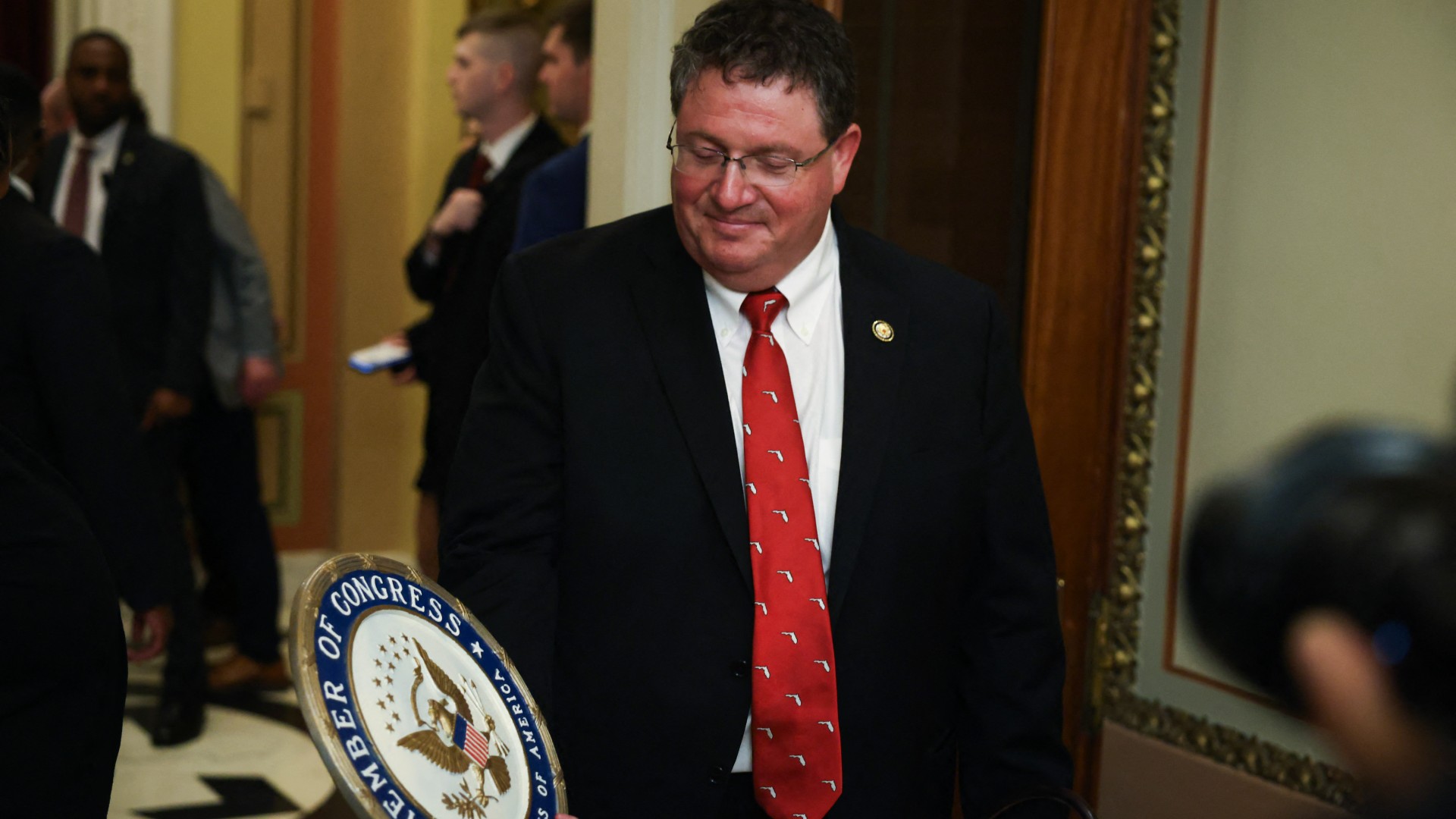
    Leading the charge, Florida Congressman Randy Fine declared on social media platform X that ‘mainstream Muslims have declared war on us’ and advocated for ‘radical deportations of all mainstream Muslim legal and illegal immigrants, and citizenship revocations wherever possible.’ His statements were echoed by Alabama Senator Tommy Tuberville, who controversially asserted that ‘Islam is not a religion’ but rather ‘a cult,’ adding that Muslims ‘aren’t here to assimilate. They’re here to conquer.’

    Texas Congressman Keith Self meanwhile claimed that Republican lawmakers possessed ‘critical pieces of legislation’ to protect the United States from what he described as the threat of Sharia law, which he alleged had ‘already taken over France and the UK.’ New York City Councilmember Vicki Paladino similarly called for Muslim expulsion in a since-deleted post, despite approximately one million Muslim residents constituting nearly a quarter of America’s Muslim population residing in her city.

    The remarks triggered immediate condemnation from officials across government levels. New York City Mayor-elect Zohran Mamdani, who is Muslim, directly addressed Paladino, stating: ‘We belong here, as does every other New Yorker. This is vile Islamophobia from the Councilwoman and it has no place in our city.’ Senator Chuck Schumer and Congresswoman Alexandria Ocasio-Cortez both emphasized that the antisemitic attack in Australia should not be weaponized to fuel Islamophobia.

    Legal experts and civil rights advocates sounded alarms about the normalization of such rhetoric. Jenin Younes, National Legal Director of the American-Arab Anti-Discrimination Committee, drew historical parallels, warning that the language echoes early Nazi rhetoric that preceded mass violence. Academic Yousef Munayyer noted that Muslim hatred enjoys unique normalization ‘at the highest levels of American government.’

    Critics highlighted the disparity in institutional response compared to previous disciplinary actions against Muslim lawmakers, accusing Congress of maintaining a ‘hierarchy’ in how speech is policed that leaves Muslim communities vulnerable to dehumanization without substantive protection.

  • Grief, tears and anger as funerals for people slain in Australian antisemitic mass shooting begin

    Grief, tears and anger as funerals for people slain in Australian antisemitic mass shooting begin

    SYDNEY — A somber atmosphere enveloped Sydney on Wednesday as hundreds gathered to mourn victims of Australia’s deadliest antisemitic attack in modern history. The funerals commenced for those killed in Sunday’s targeted shooting at a Hanukkah celebration on Bondi Beach, where assailants slaughtered 15 Jewish attendees and left more than 20 others hospitalized.

    The first service honored Eli Schlanger, 41, the assistant rabbi at Chabad-Lubavitch of Bondi who had organized the annual ‘Chanukah by the Sea’ event. A father of five and prison chaplain, Schlanger was remembered by his tearful father-in-law, Rabbi Yehoram Ulman, who expressed profound regret for not more frequently voicing his love and appreciation.

    Heavy police presence surrounded the funerals as Australia confronts difficult questions about security failures, rising antisemitism, and gun control. Among the victims were Boris and Sofia Gurman, a couple in their 60s who attempted to disarm one gunman, and Reuven Morrison, also in his 60s, who threw bricks at the attackers. The youngest victim, 10-year-old Matilda, was remembered at a vigil where her mother urged attendees to keep her memory alive.

    Authorials identified the perpetrators as a father-son duo—50-year-old Sajid Akram and his 24-year-old son—who carried out what federal police commissioner Krissy Barrett described as ‘a terrorist attack inspired by Islamic State.’ The elder Akram was killed during the attack, while his Australian-born son awoke from a coma and faces imminent charges.

    The investigation has expanded to examine the suspects’ November trip to the Philippines, where they listed Davao City as their destination—a region historically associated with Muslim separatist groups that once expressed support for IS.

    Prime Minister Anthony Albanese pledged decisive action to combat antisemitism and tighten Australia’s already strict gun laws, particularly after revelations that the older suspect had legally amassed six weapons. Proposed reforms include restricting gun ownership to citizens and limiting the number of firearms an individual can possess.

    Amid the tragedy, Australians have responded with solidarity. Long queues formed at blood donation centers, floral tributes multiplied at the attack site, and hundreds of swimmers held a minute’s silence at dawn before entering the ocean near the still-cordoned crime scene.

    Rabbi Ulman vowed that the Hanukkah celebration—a 31-year Bondi tradition that Schlanger had helped organize for 18 years—would continue despite the attack. ‘We’re going to show the world that the Jewish people are unbeatable,’ he declared, emphasizing resilience in the face of hatred.

  • Nickolay Mladenov: The Balkan diplomat who could be UAE’s man in Gaza

    Nickolay Mladenov: The Balkan diplomat who could be UAE’s man in Gaza

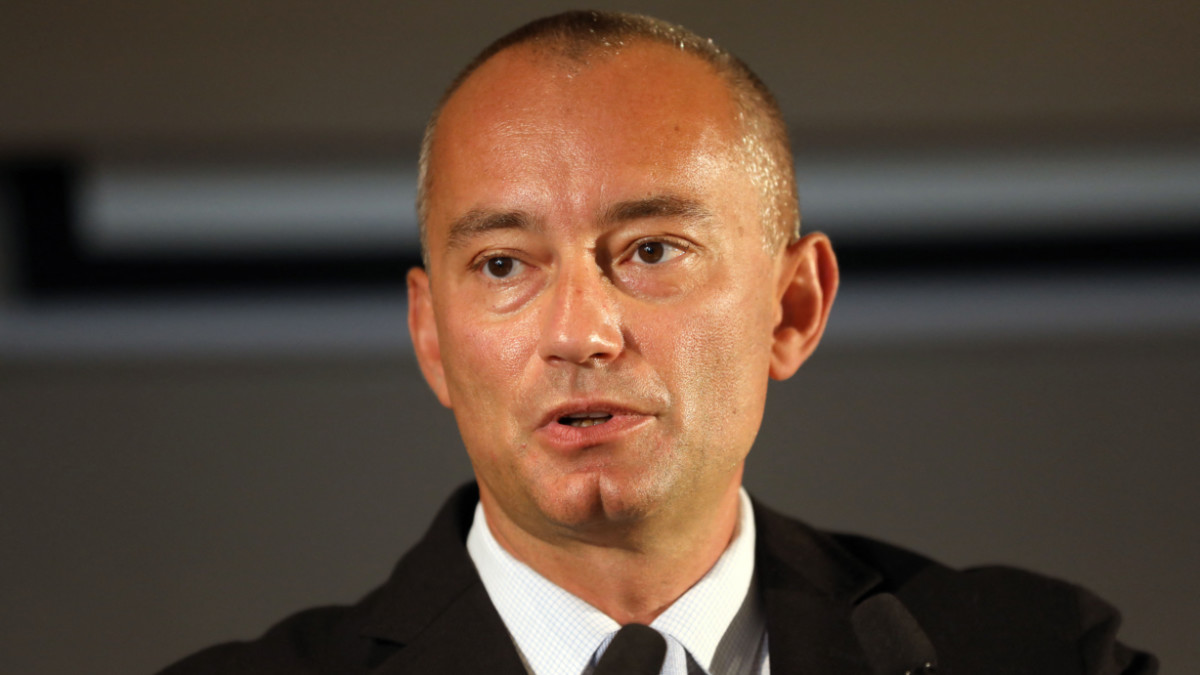
    While Bulgaria grappled with anti-government protests over corruption and economic hardship in November, former Bulgarian Foreign Minister Nickolay Mladenov was simultaneously facilitating high-level economic negotiations between the European Union and the United Arab Emirates in Abu Dhabi. This contrast highlights Mladenov’s remarkable transition from European politics to becoming a central figure in Middle Eastern diplomacy.

    Mladenov has now emerged as a leading candidate to oversee Gaza’s postwar reconstruction efforts on behalf of former President Donald Trump’s proposed ‘Board of Peace.’ His nomination represents a significant shift from earlier considerations of former UK Prime Minister Tony Blair, whose potential appointment faced substantial opposition.

    The Bulgarian diplomat’s journey from his communist-era family background to Middle East peacemaker reflects an unconventional career path. Born in 1972 to a family with ties to Bulgaria’s communist regime—his father served in the country’s KGB equivalent—Mladenov initially advocated for EU integration before serving as Bulgaria’s defense minister (2009-2010) and foreign minister (2010-2013).

    His diplomatic credentials were solidified during his nearly six-year tenure as UN Special Coordinator for the Middle East Peace Process, where he earned rare praise from all conflicting parties, including both the Palestinian Authority and Hamas. Senior Hamas official Khalil al-Hayya notably expressed pride in having known him, while Palestinian politicians described him as ‘a hell of a lot better than the alternative.’

    Mladenov’s effectiveness stems partly from his Balkan background. As he explained in a 2021 New York Times interview: ‘I come from the Balkans. We’ve changed borders. We’ve fought over holy places, languages, churches. When you carry that baggage, it does help you see things a bit differently.’

    The diplomat’s current considerations for the Gaza role follow his successful collaboration with Jared Kushner on the 2020 Abraham Accords, which normalized relations between Israel and several Arab states. Kushner confirmed that the Trump administration ‘confided in’ Mladenov during negotiations and valued his ‘constructive feedback.’

    However, Mladenov’s potential appointment comes amid complex regional dynamics. The UAE has emerged as Gaza’s largest donor among Gulf states, while Saudi Arabia and Qatar have expressed reservations about funding reconstruction without political solutions. The UN Security Council’s mandate for an international stabilization force faces challenges as Arab nations hesitate to deploy between Hamas and Israeli forces.

    Critics note that Mladenov’s strong ties to the UAE and Israel could influence his approach, with one Western official noting that ‘whoever is picked is going to get it on the neck, but Mladenov is very influenced by the UAE, and by extension Israel.’

    The postwar planning itself, currently managed from Tel Aviv by Kushner associates, proposes dividing Gaza into halves with screened Palestinians in Israeli-occupied zones—a controversial framework that would require delicate diplomatic navigation from any appointed envoy.

  • Warner Bros to reject $108bn Paramount bid, reports say

    Warner Bros to reject $108bn Paramount bid, reports say

    Warner Bros Discovery is preparing to formally recommend that its shareholders reject a monumental $108.4 billion acquisition proposal from Paramount Skydance, with an official announcement anticipated as early as Wednesday. This development follows Paramount’s assertion that its bid is financially superior to a separate $72 billion agreement Warner Bros recently finalized with Netflix for its film and streaming divisions.

    The acquisition landscape has grown increasingly complex with the reported withdrawal of a key financial supporter, Affinity Partners, from the Paramount-led bid. Founded by prominent US businessman Jared Kushner, son-in-law of former President Donald Trump, Affinity cited the emergence of ‘two strong competitors’ as the reason for its exit, though specifics were not disclosed.

    According to insights from the Financial Times, Warner Bros’ opposition to the Paramount offer is multifaceted, centering primarily on concerns regarding the feasibility and structure of the proposed financing. This corporate maneuvering began in October when Warner Bros Discovery initiated a formal sale process after attracting numerous expressions of interest from potential acquirers.

    The current situation presents a tale of two competing transactions. On December 5th, Warner Bros Discovery announced its agreement to transfer film and streaming assets to Netflix. Shortly thereafter, Paramount Skydance—backed by the billionaire Ellison family, which maintains close presidential connections—countered with a comprehensive bid for the entire company, including valuable television networks.

    Should any acquisition proceed, regulatory hurdles await. Both U.S. and European competition authorities are expected to subject a Warner Bros takeover to intense scrutiny. The successful acquirer would obtain a commanding position in the streaming marketplace, gaining control over an extensive content library featuring iconic franchises including Harry Potter, Friends, and the HBO Max streaming platform.

    The potential consolidation has drawn criticism from industry representatives. The Writers Guild of America East and West branches have jointly called for regulators to block the merger, warning that such market concentration would inevitably lead to reduced wages, significant job cuts, and diminished content variety for viewers.

    All involved parties—Warner Bros Discovery, Paramount Skydance, and Affinity Partners—have declined to comment publicly on these recent developments when contacted by news organizations.

  • In Senegal, climate change is adding to historic tension between farmers and herders

    In Senegal, climate change is adding to historic tension between farmers and herders

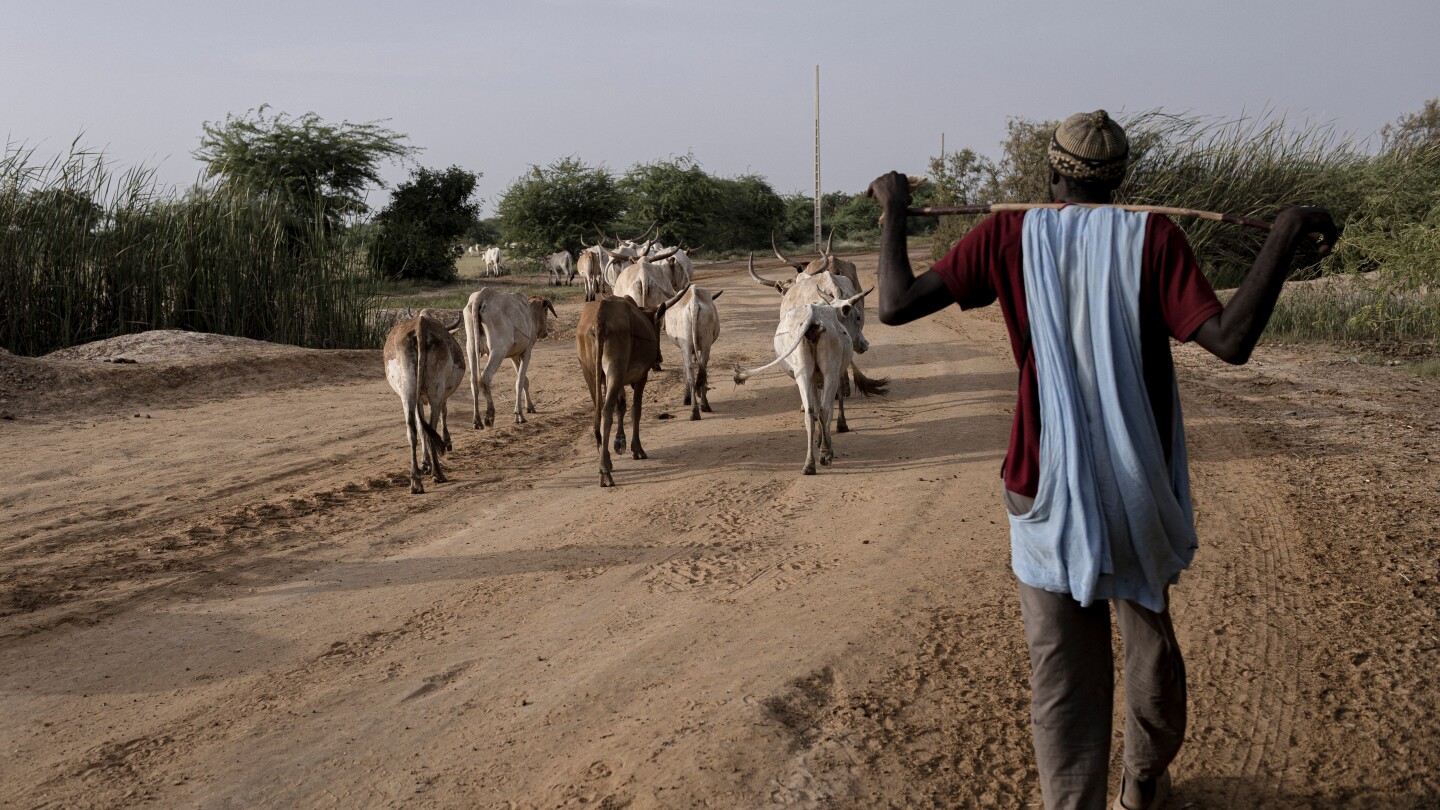
    In a tragic incident that underscores growing tensions across West Africa, 18-year-old Cheikh Diouf recounts the January day his father was brutally murdered by machete-wielding herders near their village in Senegal’s Thies region. The confrontation erupted when Moussa Diouf, a cassava farmer and mosque muezzin in his sixties, confronted herders whose animals had strayed into his cultivated fields. This personal tragedy reflects a broader pattern of escalating violence driven by environmental degradation and changing climate patterns.

    Historical tensions between agriculturalists and pastoralists have reached crisis levels as climate change dramatically alters West Africa’s landscape. According to Copernicus Climate Change Service data, Senegal has experienced a 27% reduction in annual rainfall over the past three decades compared to the 1951-1980 period. Simultaneously, unpredictable precipitation patterns have disrupted traditional farming calendars, while rising temperatures have decimated pasturelands essential for nomadic herders.

    The Peul (or Fulani) people, who have practiced transhumance across the Sahel region for centuries, now face unprecedented challenges. These pastoralists provide approximately two-thirds of the region’s meat and dairy products, yet their migratory routes have extended significantly as they search for diminishing grazing resources. The annual southward migration during October and November increasingly overlaps with harvest seasons, creating flashpoints for conflict.

    Medical professionals report treating increasingly severe injuries from these confrontations. Dr. Yawma Fall, deputy head of the Ndofane medical center, describes treating a 12-year-old shepherd struck with an ax and another herder who lost fingers to blade attacks. Farmers likewise suffer brutal injuries, with 39-year-old Mamadou Gueye losing his left hand during a 2022 confrontation over cattle incursions.

    Both communities express frustration with the deteriorating situation. Farmers like Fode Diome of Ndofane village acknowledge the necessity of animal migration but criticize herders for disregarding traditional schedules that previously minimized conflict. Herders such as 61-year-old Alioune Sow from Linguere counter that agricultural expansion has eliminated traditional grazing lands and cattle paths, forcing animals into cultivated areas.

    Senegal lacks a national framework for managing these conflicts, relying instead on local mediation through village chiefs and non-governmental organizations. In Labgar village, agricultural adviser Papa Khokhane Seydou Faye has implemented community workshops that bring both groups together to discuss solutions including clearer demarcation of grazing trails and field boundaries. However, the absence of comprehensive data collection on violent incidents hampers broader understanding and intervention efforts.

    As climate pressures intensify, the fundamental incompatibility between expanding agriculture and sustainable pastoralism threatens to exacerbate these deadly conflicts unless structural solutions addressing land use, climate adaptation, and conflict mediation can be implemented across the region.

  • Trump expands US travel ban to five more countries

    Trump expands US travel ban to five more countries

    The Trump administration has significantly expanded its controversial travel restrictions, adding five additional countries and Palestinian Authority document holders to the list of those facing entry prohibitions to the United States. Effective January 1st, the enhanced security measure will impose full entry restrictions on nationals from Burkina Faso, Mali, Niger, South Sudan, and Syria, alongside individuals traveling with Palestinian Authority-issued documentation.

    White House officials justified the expansion as a necessary precaution to safeguard national security, citing deficiencies in foreign screening systems, elevated visa overstay rates, unreliable civil documentation, corruption concerns, terrorist activities, and insufficient cooperation regarding deportation procedures. The policy revision follows recent security incidents, including the arrest of an Afghan national suspected of attacking National Guard personnel during the Thanksgiving weekend.

    This represents the third iteration of the travel ban since President Trump initially implemented the policy in 2017, which previously faced widespread protests and legal challenges before ultimately being upheld by the U.S. Supreme Court. The administration has now reclassified Laos and Sierra Leone from partial to full restrictions while implementing limited entry limitations for fifteen additional countries including Nigeria, Tanzania, and Zimbabwe.

    The restrictions will remain indefinitely until affected nations demonstrate measurable improvements in identity management protocols, information-sharing practices, and cooperation with U.S. immigration authorities. Exemptions apply for lawful permanent residents, current visa holders, diplomats, and athletes participating in major international sporting events, with case-by-case waivers available for travel deemed to serve national interests.

    Countries now facing full entry restrictions include Afghanistan, Burkina Faso, Burma, Chad, Equatorial Guinea, Eritrea, Haiti, Iran, Laos, Libya, Mali, Niger, Republic of the Congo, Sierra Leone, Somalia, South Sudan, Sudan, Syria, and Yemen, plus Palestinian Authority document holders. Partial restrictions apply to Angola, Antigua and Barbuda, Benin, Burundi, Côte d’Ivoire, Cuba, Dominica, Gabon, The Gambia, Malawi, Mauritania, Nigeria, Senegal, Tanzania, Togo, Tonga, Venezuela, Zambia, and Zimbabwe. Turkmenistan maintains restrictions for immigrants while having them lifted for non-immigrant visas.

  • IPL auction 2026 in Abu Dhabi ends after fierce contests, historic bids

    IPL auction 2026 in Abu Dhabi ends after fierce contests, historic bids

    The 2026 Indian Premier League (IPL) player auction concluded in Abu Dhabi on Tuesday, December 16th, marking a watershed moment in cricket’s financial landscape. The event, characterized by intense bidding wars among franchise owners, established new benchmarks for player valuations and underscored the league’s burgeoning economic power.

    Held internationally for the first time in several seasons, the Abu Dhabi venue provided a global backdrop for a fiercely competitive process. Franchise strategists engaged in protracted financial duels to secure both established international superstars and emerging domestic talent. The auction pool, comprising a diverse mix of seasoned veterans and promising newcomers, saw numerous records tumble as teams aggressively bolstered their squads for the upcoming season.

    Early bidding rounds set an aggressive tone, with multiple franchises demonstrating willingness to allocate substantial portions of their budgets to priority targets. The middle sessions witnessed strategic acquisitions of utility players capable of fulfilling multiple roles, while the final stages saw franchises engaging in tactical bidding to round out their rosters with value additions.

    This record-breaking auction not only reflects the IPL’s commercial dominance but also signals a significant shift in how cricket talent is valued globally. The unprecedented financial commitments demonstrate franchise confidence in the league’s continued growth and its ability to generate returns on these substantial investments. The outcomes of today’s auction are expected to reshape team dynamics and create new competitive hierarchies for IPL 2026.