博客

  • From schools to theatres, venison butts beef off menus at UK venues

    From schools to theatres, venison butts beef off menus at UK venues

    Across the United Kingdom, a culinary revolution is underway as educational institutions, sports arenas, and cultural venues increasingly replace traditional beef offerings with wild venison. This strategic shift responds to growing climate change concerns by introducing a lower-carbon protein alternative to conventionally farmed livestock.

    The movement has gained significant momentum through catering giant Levy UK, which now serves deer meat at more than 20 prominent venues including London’s O2 Arena, the National Theatre, and Twickenham Stadium. During the recent women’s Rugby World Cup final, the stadium sold approximately 5,500 wild venison burgers within a single month. Similarly, Brentford Football Club in west London has incorporated venison burgers sourced from professionally culled deer in England and Scotland.

    This transition addresses multiple environmental and economic concerns. Britain’s deer population has surged from 450,000 in 1970 to approximately two million today—the highest level in over a millennium. Without natural predators, these animals can damage local ecosystems, making controlled culling necessary. Wild venison presents a substantially lower carbon footprint compared to traditional meats, registering 38% fewer emissions than beef and 49% less than lamb according to conservation data.

    Levy UK CEO Jon Davies emphasized the dual benefits of this approach: ‘I was keen to find something that was good for the planet but also nutritionally beneficial.’ The company’s ‘Game On’ initiative aims to replace 54 tonnes of beef burgers with wild venison alternatives, potentially saving 1,182 tonnes of CO₂ annually. Economically, the shift proves practical as beef prices have experienced double-digit inflation over the past year.

    The trend has expanded beyond sports venues to include Imperial College London, which eliminated beef from most campus cafeterias two years ago. Hospitals in East Lancashire and London’s Guy’s and St Thomas’s NHS Foundation Trust have conducted similar trials, along with schools in Scotland’s Islay and Jura islands.

    Despite environmental advantages, consumer acceptance varies. Some students express ethical appreciation for venison, while others prefer traditional beef. Chef Atesh Luximon of Imperial College noted the psychological barrier: ‘The perspective of it being a reindeer, a Bambi, doesn’t really appeal to people.’

    Industry experts caution that venison alone cannot meet total meat demand. Peter Windsor of the Irish Deer Society warned against market saturation, noting that clients typically use only premium cuts while lesser portions often become pet food. Levy UK claims commitment to utilizing entire animals through burgers, curries, and pies.

    Phil Brooke of Compassion in World Farming offered measured support: ‘Regeneratively farmed beef and culled deer can both be part of the solution—if eaten in small quantities.’ This balanced perspective highlights that while venison provides a sustainable alternative, it represents one component within a broader strategy toward environmentally conscious food consumption.
  • Israeli forces kill Palestinian teenager near Jenin

    Israeli forces kill Palestinian teenager near Jenin

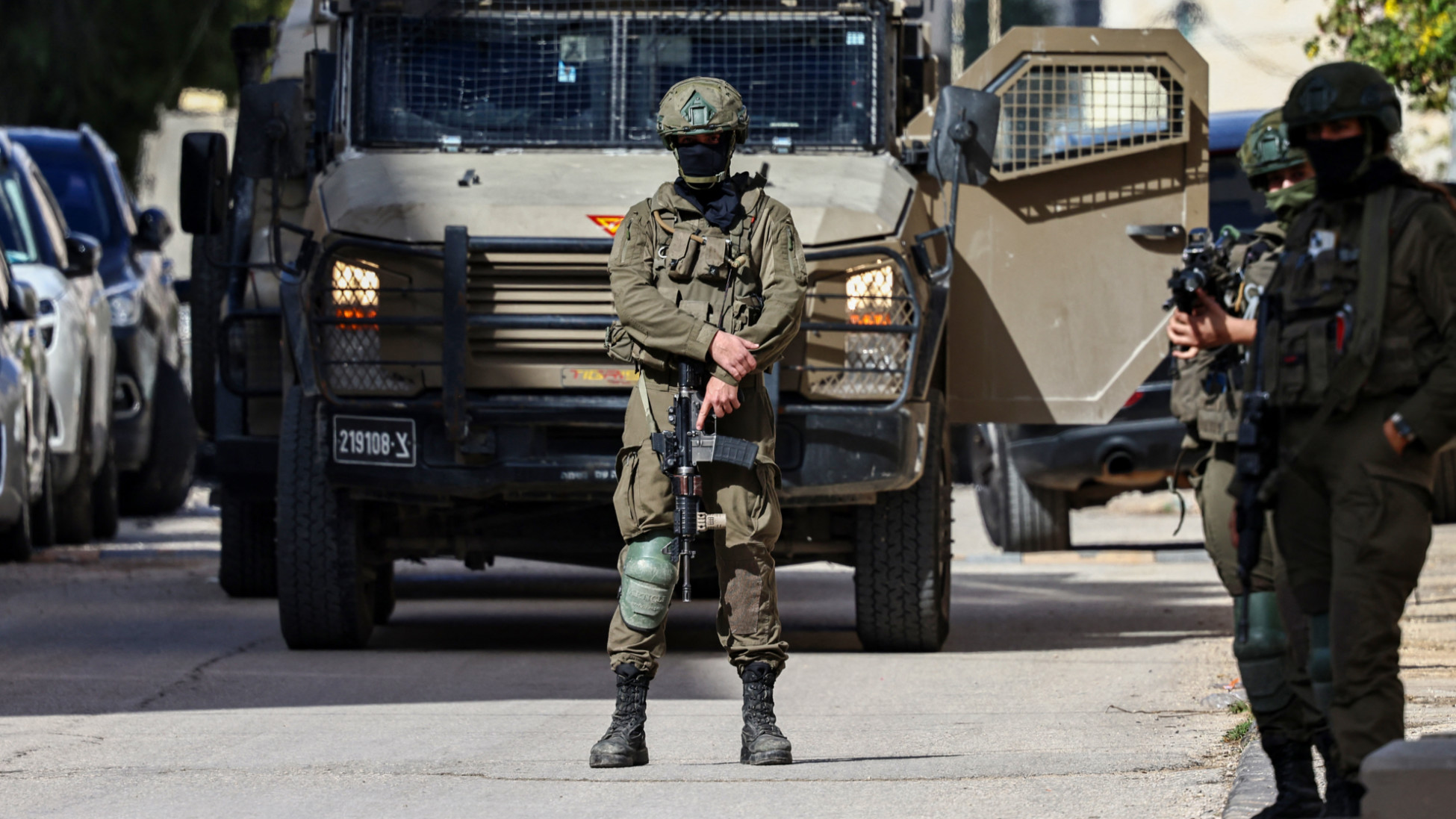
    Israeli military operations in the occupied West Bank resulted in the deaths of two Palestinian youths on Saturday, marking continued violence in the region despite the ongoing ceasefire in Gaza. The incidents occurred near the city of Jenin, with both fatalities involving controversial circumstances that have drawn international scrutiny.

    In the first incident, 16-year-old Rayyan Abu Mualla was fatally shot by Israeli soldiers in Qabatiya, south of Jenin. Palestinian authorities reported that the teenager was killed at close range after allegedly throwing a stone toward military personnel. Circulating video footage appears to show the moment of the shooting as Abu Mualla approached the soldiers. The Israeli military stated in an official communiqué that their forces responded after the youth “threw a brick” in their direction.

    Medical response teams faced significant obstacles during the aftermath, with Palestinian news agency Wafa reporting that Israeli soldiers blocked ambulance crews from reaching the wounded teenager, effectively leaving him to bleed to death. In a further controversial move, Israeli forces subsequently withheld the victim’s body from being returned to his family.

    Separately, in the town of Silat al-Harithiya west of Jenin, Israeli forces conducted a raid that resulted in the death of 22-year-old Ahmad Zyoud. Military officials claimed Zyoud was shot after “hurling an explosive device” toward security personnel during the operation.

    These latest fatalities occur within a broader context of escalating violence across the West Bank since the commencement of Israel’s military campaign in Gaza two years ago. According to statistics compiled from Palestinian health ministry figures by AFP, Israeli troops or settlers have killed more than 1,000 Palestinians in the West Bank since the start of the Gaza conflict.

    Disturbingly, the Palestinian health ministry has documented that 51 Palestinian minors have lost their lives to Israeli forces in the West Bank since January alone. November witnessed particularly severe violence, with the Colonisation and Wall Resistance Commission reporting approximately 2,144 attacks by Israeli forces and settlers against Palestinian civilians and their property—1,523 perpetrated by soldiers and 621 by settlers.

  • 3 killed in Taiwan metro stabbing; police rule out ‘terrorism’

    3 killed in Taiwan metro stabbing; police rule out ‘terrorism’

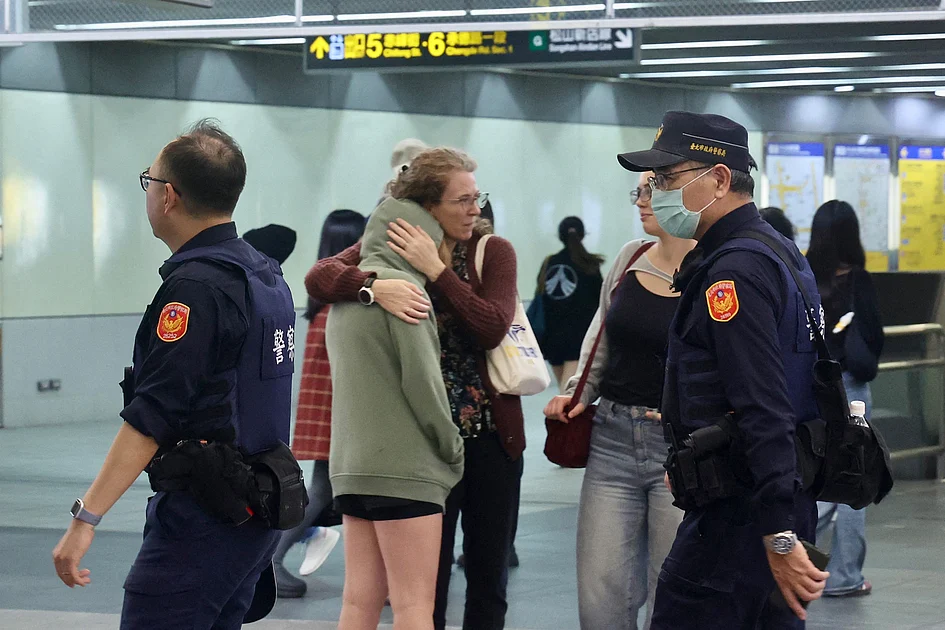
    Taiwanese authorities have confirmed that Friday’s violent stabbing incident at Taipei’s metro system, which resulted in three fatalities and eleven injuries, was not motivated by terrorism. The attack commenced when 27-year-old Chang, identified only by his surname, detonated smoke bombs within Taipei Main Station before embarking on a three-hour stabbing rampage that extended to the Zhongshan shopping district.

    According to an anonymous senior official from the Taipei City Police Department, comprehensive investigation revealed no evidence of political, religious, or ideological motivations behind Chang’s actions. ‘Terrorist attacks have specific defining characteristics that the suspect’s behavior does not satisfy,’ the official stated, emphasizing the preliminary exclusion of terrorism as a motive.

    Police investigation uncovered disturbing evidence on Chang’s personal device, including searches related to ‘random killings’ and historical metro attack methodologies. The suspect, who had been discharged from military service due to alcohol-related offenses, was additionally wanted for failing to report for mandatory reserve training—a legal requirement in Taiwan that carries serious consequences for non-compliance.

    Taipei Mayor Chiang Wan-an confirmed that Chang was found deceased after apparently jumping from a nearby building on the day of the attack. In response to the tragedy, city officials have implemented enhanced security measures, including doubled police presence for the Taipei Marathon and planned high-intensity drills at metro facilities ahead of New Year’s Eve celebrations.

    President Lai Ching-te has called for improved emergency protocols and counter-terrorism preparedness within law enforcement agencies. Meanwhile, Metro Taipei authorities have temporarily closed a Christmas market near Zhongshan station for three days as a memorial gesture to the victims.

  • Watch: Hundreds of fans gather for last rites of Malayalam film veteran Sreenivasan

    Watch: Hundreds of fans gather for last rites of Malayalam film veteran Sreenivasan

    The Malayalam film industry gathered in solemn tribute on Sunday as veteran actor, screenwriter, and director Sreenivasan was laid to rest in Kochi. The cinematic luminary, who passed away at age 89 on Saturday, was honored by hundreds of mourners including prominent film personalities, political leaders, and devoted fans.

    Emotional scenes unfolded at Sreenivasan’s Kandanad residence where crowds converged to pay their final respects. The funeral procession witnessed an outpouring of grief from across Kerala’s cultural and political spectrum. Among the notable attendees were actors Parvathy Thiruvothu, Renji Panicker, Sathyan Anthikkad, Jagadish, and Prithviraj Sukumaran, who joined collective mourning for the departed icon.

    Kerala Chief Minister Pinarayi Vijayan issued an official statement characterizing Sreenivasan’s demise as “an irreparable loss to Malayalam cinema.” The CM praised the multitalented artist’s unique ability to “bring the life of the common man to the silver screen” through his distinctive blend of humor and social commentary. “Very few filmmakers have succeeded, as he did, in guiding the audience through humor and reflection to levels of awareness he intended,” Vijayan noted.

    Governor Rajendra Vishwanath Arlekar joined the condolences, acknowledging Sreenivasan’s “iconic performances and timeless contributions” that would be “remembered forever.” The veteran artist’s passing has sparked widespread reflection on his groundbreaking career that challenged cinematic conventions and established new narrative standards in South Indian cinema.

    Social media platforms flooded with tributes from colleagues and admirers, documenting the profound impact of his work spanning acting, writing, and directing. The ceremony concluded with cremation proceedings attended by family members, colleagues, and representatives from state government offices.

  • Dubai: Sheikh Mohammed congratulates Lebanese economist for winning Great Arab Minds

    Dubai: Sheikh Mohammed congratulates Lebanese economist for winning Great Arab Minds

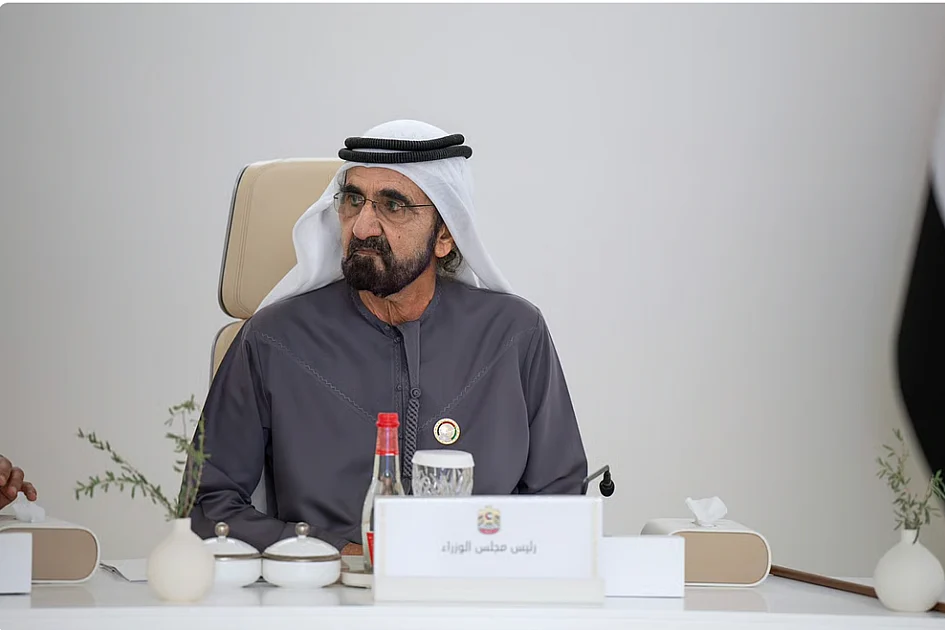
    His Highness Sheikh Mohammed bin Rashid Al Maktoum, Vice-President and Prime Minister of the UAE and Ruler of Dubai, has formally extended congratulations to Lebanese economist Professor Badi Hani for his remarkable achievement in securing the 2025 Great Arab Minds Award in the Economics category. The announcement was made via Sheikh Mohammed’s official social media channel on December 21.

    Professor Hani, a distinguished academic at Syracuse University, was recognized for his groundbreaking research that has established the fundamental theoretical and practical frameworks for panel data econometrics. His pioneering work has significantly advanced the field of economic data analysis, with substantial applications in critical areas including wage studies, public health economics, and macroeconomic forecasting.

    With an illustrious career marked by over 200 peer-reviewed scientific publications, Professor Hani has authored a seminal reference text on economic data model analysis that has become essential reading for researchers and economists worldwide. His contributions have provided the methodological tools necessary for more accurate and nuanced economic policymaking.

    In his statement, Sheikh Mohammed emphasized the vital role of expert economists in Arab societies, noting that effective national policies must be built upon rigorous scientific foundations and precise data analysis. The Dubai Ruler further articulated that the economic future of the Arab world is fundamentally shaped by its intellectual capital and the determination of its people to contribute to the ongoing development of Arab civilization.

    The Great Arab Minds initiative continues to identify and celebrate exceptional Arab intellectuals across various disciplines, highlighting their contributions to global knowledge and regional development.

  • ICC to decide by January if ex Philippine President Rodrigo Duterte is fit for trial

    ICC to decide by January if ex Philippine President Rodrigo Duterte is fit for trial

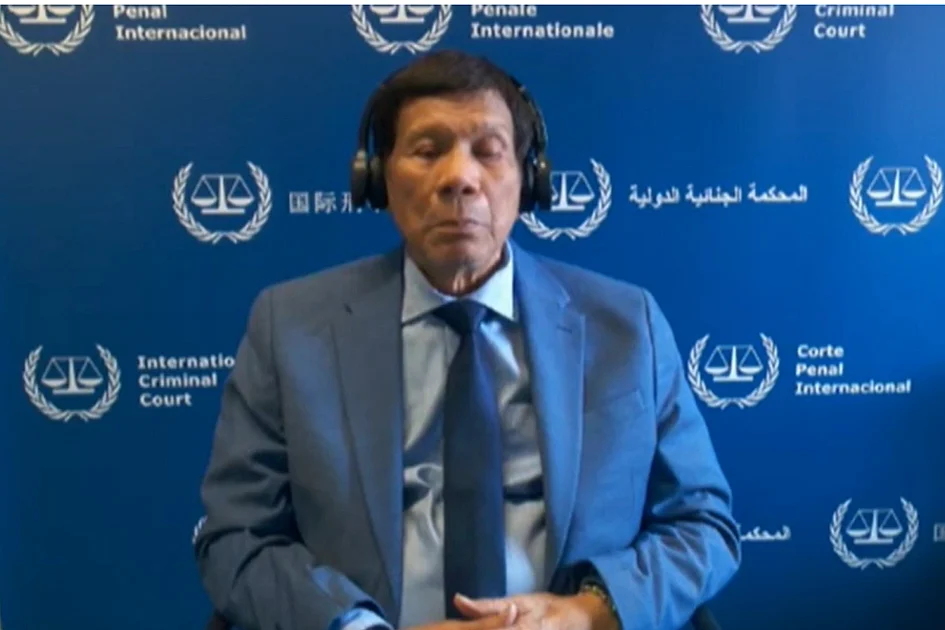
    The International Criminal Court (ICC) is poised to deliver a crucial determination regarding former Philippine President Rodrigo Duterte’s capacity to stand trial by January 2026. This development follows the completion of a comprehensive medical evaluation assessing his cognitive abilities.

    ICC assistant counsel Atty. Kristina Conti disclosed this timeline during a radio interview with Super Radyo DZBB on December 21, indicating the court’s systematic approach to addressing health concerns raised by the defense team. The medical assessment, submitted by a panel of experts by the December 5 deadline set by ICC Pre-Trial Chamber I, reportedly concluded that Duterte remains capable of meaningful participation in pre-trial proceedings.

    This evaluation directly contradicts claims presented by defense attorney Nicholas Kaufman, who asserted the 80-year-old former leader suffers from severe memory impairment affecting his recollection of events, timelines, and even family members. Kaufman had previously requested an indefinite adjournment based on these cognitive concerns.

    The impending fitness determination represents a critical juncture in the case against Duterte, who faces charges of crimes against humanity related to the violent anti-drug campaign he initiated during his tenure as Davao City mayor and later as Philippine president. Currently detained in The Hague, Netherlands, Duterte recently saw his appeal for interim release denied by the ICC Appeals Chamber on November 28.

    Conti emphasized the prosecution’s confidence in their evidence, noting that arrest warrants would not be pursued unless the case reached trial readiness. The January decision will therefore determine whether proceedings will advance or face further delays due to health considerations.

  • Trump did shock and awe in 2025. Reality may bite in 2026

    Trump did shock and awe in 2025. Reality may bite in 2026

    As President Donald Trump concludes his first year back in the Oval Office, his administration confronts mounting political challenges that threaten to undermine his disruptive agenda. The 79-year-old leader’s unconventional approach—symbolized by the physical demolition of part of the White House to construct a grand ballroom—has defined a presidency that began with what observers describe as a “political wrecking ball” strategy.

    Following an aggressive initial nine months marked by sweeping executive actions, immigration crackdowns, and confrontations with domestic institutions, the administration now faces the reality of governing beyond the shock-and-awe phase. Senior Fellow William Galston of the Brookings Institution notes that while Trump’s tactics initially sent opponents reeling, the effect appears to be diminishing as practical governing demands take precedence.

    The upcoming midterm elections in November 2026 represent a critical juncture for the Trump presidency, with Democrats poised to capitalize on growing discontent over cost-of-living pressures and the president’s declining approval ratings. White House officials indicate Trump is shifting focus toward economic concerns, planning increased domestic travel and campaign-style events to address voter anxieties about affordability and healthcare.

    Internationally, Trump continues his disruptive diplomacy, implementing tariffs that have created global economic uncertainty, engaging unpredictably with Russian and Chinese leaders, and achieving fragile peace in Gaza while potentially escalating tensions with Venezuela. The Supreme Court’s upcoming rulings on tariff legality and internal Republican tensions over the Jeffrey Epstein scandal further complicate the administration’s trajectory.

    Adding to the political landscape is the emerging battle for succession within the Republican Party, with Vice President JD Vance and MAGA figure Marjorie Taylor Greene positioning themselves for a post-Trump era. Speculation persists that Trump might test constitutional limits by hinting at a third-term bid despite explicit prohibitions, setting the stage for what experts predict could be an “explosive” political confrontation following the midterms.

  • President Trump: A year of ruling by executive order

    President Trump: A year of ruling by executive order

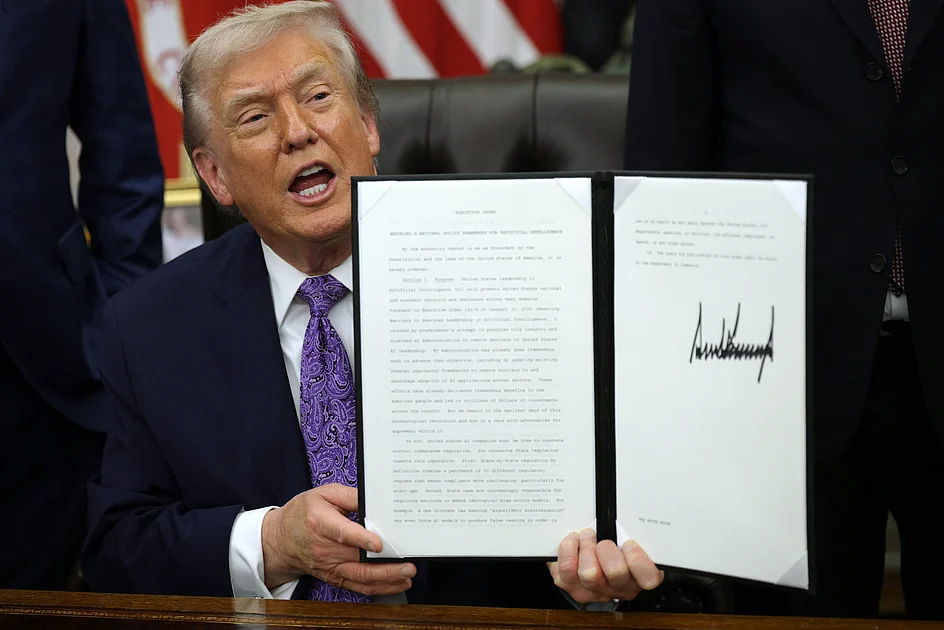
    In an extraordinary demonstration of presidential authority, Donald Trump has now signed more executive orders during his current term’s first year than throughout his entire previous presidency. The 221st executive order, designating fentanyl as a weapon of mass destruction, marks the latest in a rapid succession of presidential directives that analysts describe as one of the most significant displays of executive power in modern American history.

    According to Federal Register data analyzed by AFP, Trump’s current pace of executive actions exceeds the annual averages of his immediate predecessors—Joe Biden, Barack Obama, and George W. Bush—by approximately five to seven times. Only Franklin D. Roosevelt, who governed during the Great Depression and World War II, maintained a comparable rate of executive orders across his four terms.

    Political science professor John Woolley of the University of California, Santa Barbara, characterizes these orders as strategic communication tools. “They serve as signals to crucial constituent groups that the administration is actively advancing their causes,” noted Woolley, who co-directs the American Presidency Project.

    An analysis of the orders reveals distinctive patterns: nearly 60% address domestic matters, while fewer than 10% focus exclusively on foreign policy. Social issues—encompassing culture, civil rights, education, and health—constitute approximately 30% of all orders, surpassing economic matters (20%) and government reform (18%). Immigration and security, central to Trump’s 2024 campaign, account for roughly 10%.

    The content frequently reflects ideological positions, including an July directive prohibiting AI models that emphasize diversity and inclusion, and an August order establishing classical architecture as the preferred style for federal buildings.

    However, the efficiency of governing through executive orders remains questionable. Just Security, a legal analysis website affiliated with New York University, reports that over 20% of Trump’s orders have faced legal challenges, with more than 20 being partially or fully blocked by courts. Recent appellate rulings have deemed significant portions of Trump’s tariff policies illegal, and the Supreme Court has shown skepticism regarding the legality of certain trade measures during November hearings.

    Despite these challenges, Woolley suggests Trump is deliberately testing legal boundaries: “He’s wagering that the Supreme Court, with its conservative majority strengthened during his first term, will largely endorse his interpretation of executive power.”

    The language within these orders also distinguishes Trump’s approach. Analysis reveals he employs the verb “impose” five times more frequently than his predecessors and references the “nation” and “American people” at notably higher rates. Additionally, over 15% of orders contain elements of political retaliation, explicitly criticizing previous administrations and opponents—a departure from historical norms according to presidential scholars.

  • Dubai: Man jailed, fined Dh130,000 for stealing 18 AC units from a villa

    Dubai: Man jailed, fined Dh130,000 for stealing 18 AC units from a villa

    A Dubai criminal court has delivered a comprehensive verdict against a repeat offender convicted of stealing multiple air-conditioning units from a residential property, highlighting the emirate’s stringent approach to property crimes. The defendant received a one-year prison sentence, a substantial fine of Dh130,000, and mandatory deportation following incarceration.

    The case originated when a Gulf national property owner discovered the disappearance of 18 AC units from his villa in Al Muhaisnah during a routine inspection. The owner had visited the premises after authorities ordered its closure due to rental regulation violations and unauthorized use as shared accommodation. Upon arrival, he observed clear evidence of forced entry, including a compromised main entrance and interior disarray, prompting an immediate police report.

    Law enforcement authorities conducted a thorough investigation, collecting forensic evidence from the crime scene that proved crucial to the case. The investigation revealed that the suspect was already serving a sentence for similar theft offenses, establishing a pattern of criminal behavior. A forensic laboratory analysis confirmed the defendant’s fingerprints on the external casing of one stolen unit, providing irrefutable physical evidence connecting him to the crime.

    During judicial proceedings, the defendant admitted to stealing the air-conditioning units and confessed to involvement in comparable criminal activities. His voluntary confession, supported by forensic evidence and witness testimonies, strengthened the prosecution’s case significantly. The court determined the fine amount based on the exact market value of the stolen property, ensuring appropriate financial restitution.

    The verdict demonstrates Dubai’s judicial system’s firm stance against recidivism and property violations, particularly emphasizing the protection of private ownership rights. The deportation order underscores the emirate’s zero-tolerance policy toward repeat offenders who threaten community security and property safety.

  • Desert Vipers edge past Sharjah Warriorz with 4-wicket win

    Desert Vipers edge past Sharjah Warriorz with 4-wicket win

    In a commanding display of cricketing prowess, the Desert Vipers solidified their championship credentials with a decisive four-wicket triumph over the Sharjah Warriorz during Saturday’s DP World ILT20 Season 4 encounter at Dubai International Stadium. The victory propels the Vipers to an unassailable position atop the league standings with 14 points from eight fixtures, mathematically ensuring their qualification for the playoff stages.

    The match witnessed a spectacular bowling performance headlined by David Payne’s devastating spell of 3/14, which systematically dismantled the Warriorz batting lineup. Payne’s precision bowling during the powerplay removed key opponents Johnson Charles and Tom Kohler-Cadmore, setting the tone for a comprehensive team effort. Supported by Khuzaima Tanveer and Naseem Shah, the Vipers restricted their opponents to a meager 90 runs despite Tom Abell’s resilient unbeaten 35 from 36 deliveries.

    Chasing a modest target, the Vipers demonstrated professional composure despite early setbacks. Sam Curran’s anchoring innings of 37 from 31 balls, featuring five boundaries, provided the foundation for victory. Though Taskin Ahmed struck early blows for the Warriorz, the Vipers maintained control throughout their chase, ultimately reaching their target with 37 deliveries remaining. Tom Bruce and Vriitya Aravind provided the finishing touches to secure the comfortable win.

    Post-match reflections highlighted the strategic mastery behind the victory. Player of the Game David Payne emphasized team cohesion: ‘Our bowling unit communicates exceptionally well, and having world-class performers throughout the attack allows each of us to play our specific roles with confidence.’ Meanwhile, Warriorz captain Sikandar Raza remained optimistic despite the setback, stating, ‘Every match now represents a final for us. If we achieve three consecutive victories, no team will be better prepared for the playoffs.’