博客

  • Offering flexible pathways to both undergraduate students and professionals

    Offering flexible pathways to both undergraduate students and professionals

    Heriot-Watt University Dubai, celebrating two decades of operations in the UAE, has unveiled comprehensive academic pathway options for its January and September 2026 intakes. The institution, which pioneered as the first British university campus in Dubai, continues to enhance its educational offerings with industry-aligned programmes designed for both traditional undergraduates and working professionals.

    The university provides accelerated undergraduate pathways enabling direct entry into Year 2 studies by September 2026, alongside specialized Foundation programmes preparing students for degrees in Design, Business, Engineering and Computing disciplines. Working professionals benefit from evening classes and part-time study options at the Dubai Knowledge Park campus, allowing career advancement without interrupting employment commitments.

    Postgraduate offerings span multiple high-demand sectors including Business, Finance, Marketing, Human Resource Management, Engineering, Data Analytics, Artificial Intelligence, Logistics, Construction, Energy and Design. These programmes are delivered by internationally recognized faculty with strong industry connections and professional accreditation.

    Notable programme introductions include a new Doctor of Business Administration (DBA) for senior executives seeking to enhance strategic leadership capabilities, and an MA (Hons) in Professional Accountancy launching in September 2026, providing specialized pathways into accounting professions with global recognition.

    The institution distinguishes itself through several unique attributes: over 72 CAA-accredited programmes delivering UK degrees recognized internationally; exclusive inter-campus study opportunities at UK and Malaysia campuses through the Go Global Programme; exceptionally diverse student body representing 120+ nationalities; and future-focused curriculum covering emerging fields including Renewable Energy, Robotics, Autonomous Vehicles, Data Science, AI, Sustainable Fashion & Textiles, and Smart Construction.

    Heriot-Watt demonstrates strong employment outcomes with a Five-Star Employability Rating from KHDA and 95% of graduates securing employment or further study within six months of completion. The university supports students through substantial scholarship opportunities ranging from 10% to 100% coverage, plus fee reductions up to Dh5,000 for the 2026 intakes.

    According to university representatives, the educational philosophy emphasizes practical, cross-disciplinary learning through industry-sourced challenges, balanced individual and group projects, and dedicated career development services. This approach cultivates not only technical expertise but also essential soft skills including collaboration, conflict resolution, and cultural intelligence.

    Prospective students can contact the admissions office via DubaiEnquiries@hw.ac.uk or +971 4 571 7000 to schedule individual consultations with academic advisors.


  • Beautiful dawn redwood forests protect environment in Kunming

    Beautiful dawn redwood forests protect environment in Kunming

    In the highlands of Yunnan province, an extraordinary ecological transformation is underway as dawn redwood forests create a stunning natural tapestry while serving critical environmental functions. The Dianwei village wetland, located upstream of Dianchi Lake within the Songhua Dam Water Protection Zone, has become the centerpiece of this remarkable conservation success story.

    As early winter descends upon the region, the Metasequoia glyptostroboides forests undergo a spectacular chromatic transformation. The canopy erupts in vibrant hues of crimson and gold, creating a visual spectacle that merges poetically with the morning mist and low-lying clouds. This breathtaking panorama, captured through aerial photography, reveals a landscape where nature’s beauty intersects with purposeful ecological engineering.

    The strategic planting initiative represents a sophisticated approach to watershed management. Local environmental authorities have systematically cultivated dawn redwood trees alongside complementary vegetation to establish robust forest and grassland buffer zones. These carefully designed ecosystems function as natural water filtration systems, significantly enhancing the wetland’s capacity for water purification while simultaneously supporting regional biodiversity.

    Positioned within a critical water protection zone, the project demonstrates how aesthetic environmental enhancements can coincide with functional ecological benefits. The dawn redwood species, known for its rapid growth and adaptive qualities, has proven particularly effective in stabilizing soil structures and improving water quality through natural filtration processes.

    This conservation model showcases how strategic reforestation can address multiple environmental objectives simultaneously—from water resource protection and habitat creation to carbon sequestration and landscape beautification. The success in Dianwei village offers valuable insights for similar ecological restoration projects throughout China and other regions facing water conservation challenges.

  • Ukraine’s own ‘Dancing with the Stars’ is back on for a special episode with wartime heroes

    Ukraine’s own ‘Dancing with the Stars’ is back on for a special episode with wartime heroes

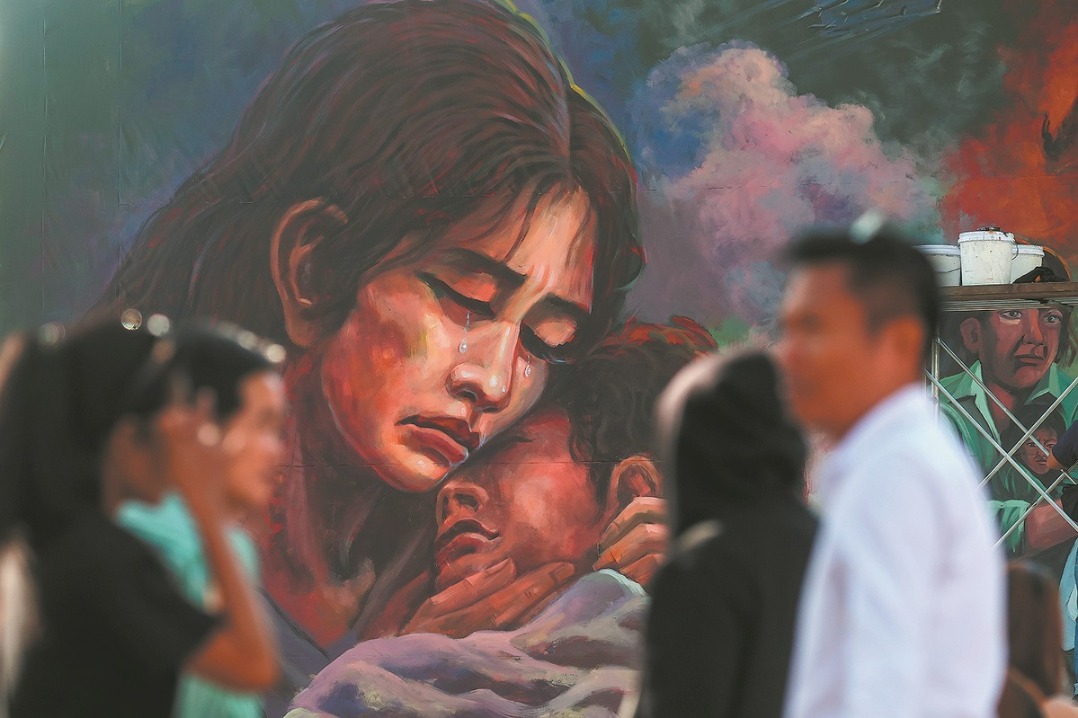
    In a powerful display of national fortitude, Ukraine’s beloved television franchise ‘Dancing with the Stars’ has returned for a special episode featuring military veterans and heroes who have sustained life-altering injuries during Russia’s ongoing invasion. The production, known locally as ‘Tantsi z zirkamy’, has transformed from celebrity entertainment into a profound testament to human resilience, with performers incorporating prosthetic limbs into their choreography.

    The episode marks a significant evolution for the show that once catapulted actor Volodymyr Zelenskyy to victory in 2006. Now in its wartime iteration, the program showcases public figures who have gained prominence since February 2022, dancing under extraordinary circumstances that include frequent power outages and potential air raid alerts.

    Creative producer Volodymyr Zavadiuk described the production as both a celebration of resilience and a statement about Ukraine’s future. The filming process encountered numerous logistical challenges, including malfunctioning generators and security concerns that prevented live broadcasting. Despite these obstacles, participants delivered emotionally charged performances that addressed themes of self-acceptance and reclaiming identity after traumatic injury.

    Among the standout performers was Ruslana Danilkina, a war veteran who lost her leg in combat in 2022 and now works at the Superhumans Center, a specialized rehabilitation clinic that will receive all proceeds from the broadcast. Her performance focused on the journey toward self-love and accepting affection after physical trauma.

    The episode also featured emotional moments such as veteran Ivan Voinov and his wife Solomiia sharing their second dance since his injury—their first having occurred at their wedding three months prior. Their story, along with others, underscored the program’s deeper message about maintaining human connection and hope amid adversity.

    Ukrainian rock musician Yevhen Halych, another participant, articulated the collective sentiment driving the production: a genuine desire to live fully regardless of circumstances. The special episode will air with audience voting mechanisms intact, maintaining the show’s competitive spirit while serving a humanitarian purpose.

  • Bolivian Indigenous women carry history and pride in the traditional ‘pollera’ skirt

    Bolivian Indigenous women carry history and pride in the traditional ‘pollera’ skirt

    LA PAZ, Bolivia — Against the breathtaking backdrop of Bolivia’s snow-capped Andean peaks, a powerful cultural revolution is unfolding. Indigenous women known as ‘cholitas’ are shattering stereotypes by performing extraordinary physical feats while proudly wearing their traditional pollera skirts—a garment once imposed by Spanish colonizers but now reclaimed as a symbol of identity and strength.

    These vibrant, multilayered skirts have become unlikely uniforms of empowerment in male-dominated fields. From the 6,000-meter summit of Huayna Potosi where climber Ana Lia González Maguiña scales icy heights, to the dust-choked mines of Oruro where miner Macaria Alejandro labors underground, the pollera represents both cultural heritage and contemporary capability.

    ‘Our sport is demanding, it’s super tough. So doing it in pollera represents that strength, it’s about valuing our roots,’ explained González Maguiña, a 40-year-old professional mountaineer. ‘It’s not for show.’

    This cultural reclamation gained significant momentum during the administration of Evo Morales (2006-2019), Bolivia’s first Indigenous president. His government elevated Indigenous symbolism through constitutional changes—renaming the country the Plurinational State of Bolivia and granting the wiphala Indigenous flag equal status. For the first time, pollera-clad ministers walked the halls of power.

    However, the recent political shift has sparked uncertainty among Indigenous communities. The election of center-right President Rodrigo Paz and the subsequent removal of Indigenous symbols from military logos and government buildings has many cholitas concerned about backsliding on hard-won rights.

    ‘We needed a change. The economy must get better. But it’s sad to see there are no powerful people wearing polleras,’ said Alejandro, her pollera smeared with mine dust. ‘I see it as discrimination.’

    Despite these concerns, the cholita spirit remains unbroken. From wrestlers to soccer players, skaters to climbers, these women continue to demonstrate that cultural tradition and modern achievement need not be mutually exclusive—proving that empowerment often comes in the most unexpected forms.

  • ASEAN steps in to ease border tensions

    ASEAN steps in to ease border tensions

    In a critical diplomatic intervention, foreign ministers from the Association of Southeast Asian Nations (ASEAN) convened in Kuala Lumpur on Monday to address the escalating military conflict along the Thailand-Cambodia border. The emergency session focused on rebuilding mutual trust between the two member states and establishing a sustainable ceasefire mechanism.

    This marks the second time in 2025 that ASEAN has served as a mediation platform for the neighboring nations, following a joint declaration signed during the 47th ASEAN Summit last October. The current border hostilities, reignited on December 7, have resulted in significant civilian casualties and mass displacement on both sides.

    Thai Foreign Minister Sihasak Phuangketkeow emphasized that any ceasefire must be demonstrated through concrete actions rather than formal announcements alone. He confirmed that Thai and Cambodian defense officials would meet Wednesday under the Joint Boundary Commission framework, while acknowledging China’s role as an important regional partner.

    The humanitarian toll continues to mount dramatically. Cambodian authorities report approximately 510,000 displaced civilians and 19 civilian fatalities, while Thai officials cite 38 civilian deaths and over 167,000 people relocated to safer shelters. Both nations have exchanged accusations of instigating hostilities and targeting civilian populations.

    China has actively supported ASEAN’s mediation efforts, with Foreign Ministry spokesman Lin Jian expressing Beijing’s appreciation for Malaysia’s leadership as current ASEAN chair. “As a friend and close neighbor to both countries, China sincerely hopes that Cambodia and Thailand will, based on safeguarding peace and stability along their borders and the fundamental interests of their peoples, quickly achieve a ceasefire and restore peace,” Lin stated during a regular press briefing.

    Beijing has deployed Special Envoy for Asian Affairs Deng Xijun to the region, with promises to disclose further details about diplomatic efforts in due course. China committed to continuing its active promotion of peace talks and constructive role in de-escalation.

    Malaysian Foreign Minister Mohamad Hasan, presiding over the talks, emphasized that regional stability remains a collective responsibility. “Our goal goes beyond de-escalating the tensions,” he stated in opening remarks, noting that ASEAN must intensify trust-building measures despite prevailing differences.

    Academic experts remain cautiously optimistic about the mediation efforts. University of Malaya associate professor Khoo Ying Hooi noted that Malaysia’s consensus-based approach as ASEAN chair, while methodical and cautious, may struggle to achieve dramatic breakthroughs given the conflict’s complex historical, nationalistic, and military sensitivities.

  • India’s Delhi Airport warns of flight delays, cancellations amid dense fog

    India’s Delhi Airport warns of flight delays, cancellations amid dense fog

    Delhi’s Indira Gandhi International Airport has issued formal advisories regarding significant disruptions to flight operations due to persistent dense fog conditions severely limiting visibility. Airport authorities confirmed that all flight activities are presently operating under CAT II Instrument Landing System protocols, which permit landings with runway visual range reduced to approximately 300-549 meters.

    The aviation hub has activated comprehensive passenger assistance protocols to mitigate travel inconveniences, strongly recommending that travelers verify their flight status directly with their respective airlines before proceeding to the terminal facilities. The airport’s official communication channels, including social media platform X, have conveyed sincere regrets for any travel disruptions caused by these unavoidable meteorological conditions.

    This weather-related disruption echoes similar challenges experienced on December 15th, when multiple airports across northern India faced comparable operational constraints due to reduced visibility. Aviation meteorologists note that while winter fog represents a natural seasonal phenomenon, deteriorating air quality conditions in the Delhi National Capital Region have exacerbated these events, frequently transforming them into persistent smog episodes.

    The current aviation crisis coincides with heightened environmental concerns, as Delhi recently recorded its worst air quality readings of the season. The Central Pollution Control Board documented air quality index measurements exceeding 450 at multiple monitoring stations, prompting the Commission for Air Quality Management to implement Stage Four restrictions under the Graded Response Action Plan. These emergency measures include suspended construction activities, hybrid education models, and restricted entry for older diesel vehicles into the capital region.

    Aviation experts emphasize that such weather-related disruptions underscore the critical intersection of environmental policy and transportation infrastructure management in one of Asia’s busiest aviation markets.

  • Three dead after Russia launches ‘massive’ attack across Ukraine

    Three dead after Russia launches ‘massive’ attack across Ukraine

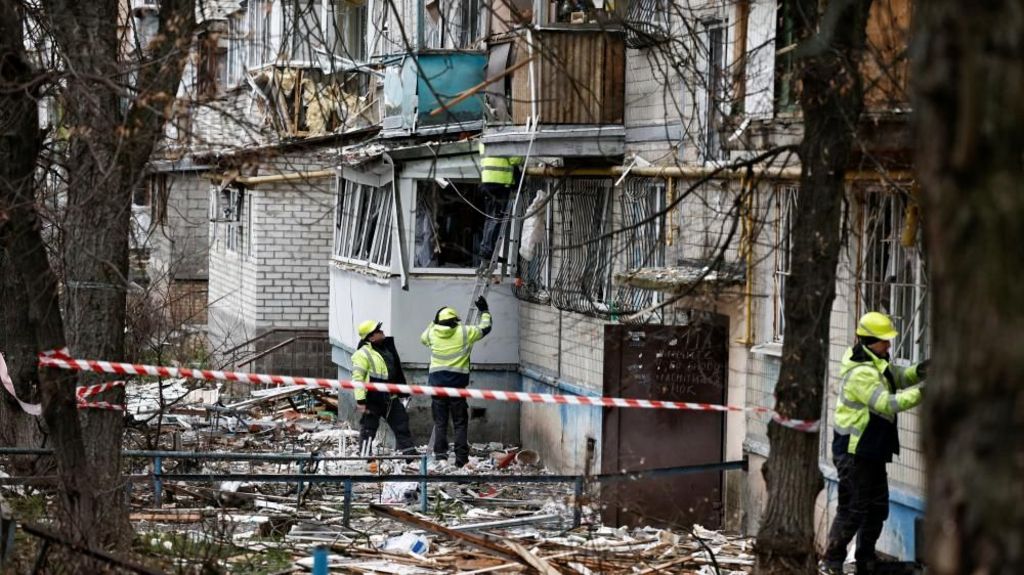
    In a devastating pre-Christmas offensive, Russian forces unleashed what Ukrainian President Volodymyr Zelensky characterized as a ‘massive’ coordinated attack across multiple Ukrainian cities overnight Monday. The assault represents one of the most significant aerial bombardments in recent months, coming precisely as Zelensky had previously warned might occur during the holiday period.

    The human toll was immediate and tragic. Ukrainian authorities confirmed at least three civilian fatalities, including a four-year-old girl in the central Zhytomyr region who succumbed to her injuries despite emergency medical intervention. Local official Vitaly Bunechko reported five additional injuries from the same strike. Separate attacks claimed the lives of a 76-year-old woman in the Kyiv region and a 72-year-old in western Khmelnytskyy, with several others wounded across these locations.

    Military analysts noted the unprecedented scale of the drone offensive, with Ukraine reporting over 600 drones and 30 missiles deployed in the coordinated strikes. The Russian defense ministry, through state news agency Tass, acknowledged targeting energy facilities and transport infrastructure. The consequences were immediately felt across Ukraine’s power grid, with energy operator warnings of emergency shutdowns ‘in all regions’ as temperatures were forecast to drop to -7°C.

    Acting Energy Minister Artem Nekrasov revealed this marked the ninth major assault on Ukraine’s energy infrastructure this year, with the Rivne, Ternopil and Khmelnytsky regions experiencing near-total power loss. Ukrainian MP Oleksandr Merezhko warned some areas might remain without electricity ‘for days,’ creating a humanitarian crisis amid freezing conditions.

    The attack shattered a period of relative calm in Kyiv, where residents had grown unaccustomed to the ominous sound of low-flying Shahed drones. Many in the capital speculated the timing was connected to Monday’s car bomb assassination in Moscow that killed Lt Gen Fanil Sarvarov, a top Russian general, though Kyiv maintained silence on the incident.

    President Zelensky framed the Christmas-season assault as revealing ‘an extremely clear signal about Russia’s priorities’ despite ongoing peace negotiations. He noted that the United States had proposed a Christmas truce that Russia rejected, adding that ‘Putin still cannot accept that he must stop killing’ and suggesting insufficient international pressure on Moscow.

    The geographical scope of attacks appeared strategically significant, with particular focus on the southern port city of Odesa following Vladimir Putin’s recent threats to sever Ukraine’s Black Sea access. This retaliation was reportedly prompted by Ukrainian drone attacks on Russian ‘shadow fleet’ tankers evading Western sanctions.

    Simultaneously, Ukraine demonstrated its capacity to strike back, reportedly hitting a petrochemical plant in Stavropol, southern Russia. Online footage showed substantial flames erupting from the facility, though regional governor Vladimir Vladimirov reported no casualties or residential damage.

    The offensive occurred against the backdrop of ongoing diplomatic efforts, with US-led talks in Miami reportedly producing ‘several draft documents’ addressing conflict resolution, security guarantees, and post-war recovery. Both Zelensky and Putin were expected to receive briefings on these developments Tuesday.

  • Greta Thunberg arrested in London while supporting hunger-striking pro-Palestinian activists

    Greta Thunberg arrested in London while supporting hunger-striking pro-Palestinian activists

    Swedish environmental activist Greta Thunberg, 22, was taken into custody by London authorities on Tuesday during a demonstration supporting Palestinian causes. The arrest occurred as Thunberg participated in a solidarity action with hunger-striking activists detained on protest-related charges.

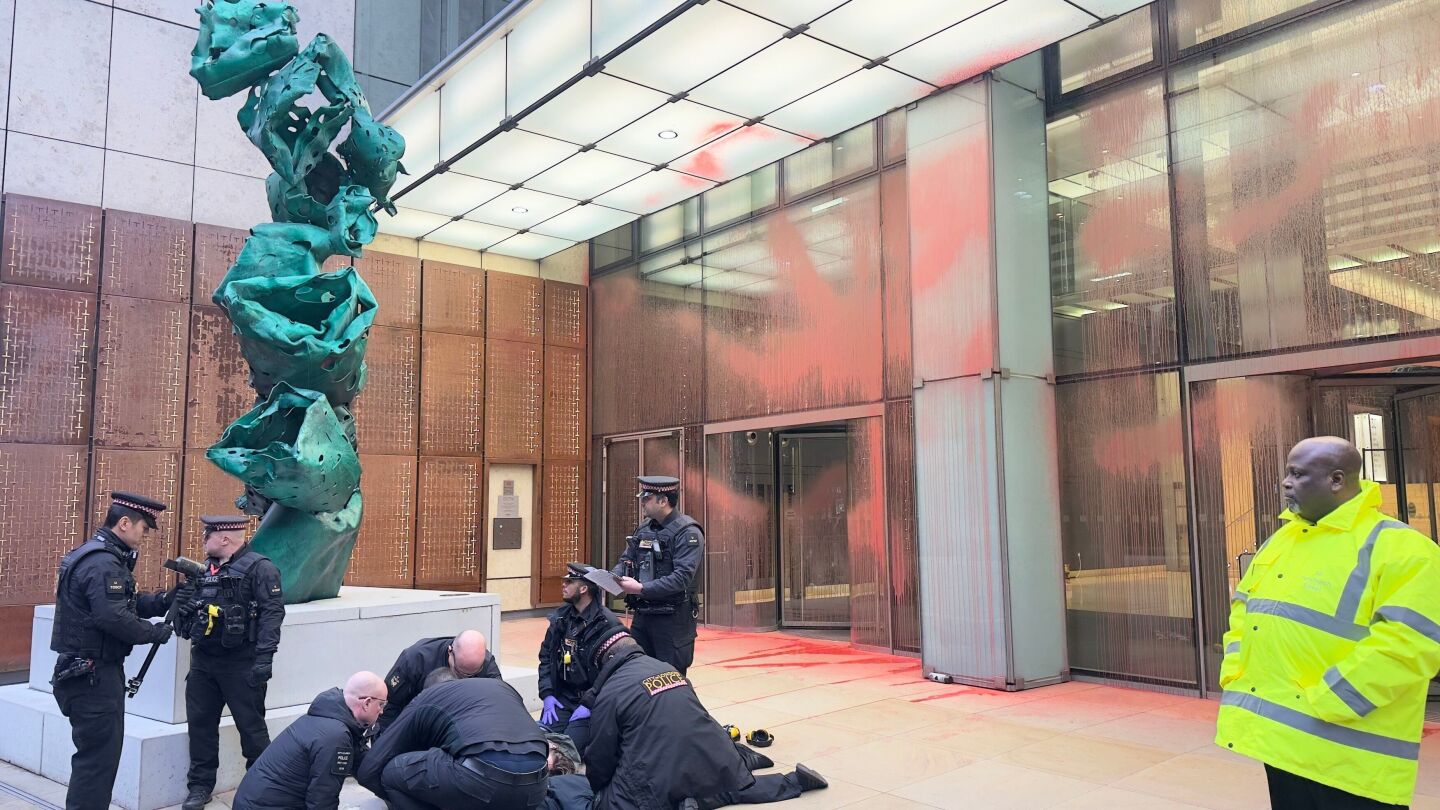
    Video evidence disseminated by the protest collective Prisoners for Palestine captured Thunberg holding signage endorsing both the fasting detainees and Palestine Action—an organization proscribed by UK authorities as terrorist earlier this year. The demonstration formed part of broader activism that included two individuals spraying red paint outside a City of London insurance firm. Protest organizers stated this company was targeted due to its commercial connections with Elbit Systems, an Israeli defense contractor.

    Metropolitan Police confirmed three arrests: one male and one female detained on suspicion of criminal damage, plus an additional woman (identified as Thunberg) apprehended for allegedly supporting a banned organization. Standard British policing protocol prevents naming suspects before formal charges are filed.

    Eight members of Palestine Action have initiated hunger strikes to contest their remand without bail while awaiting trial for various protest offenses. According to Prisoners for Palestine, two pioneering hunger strikers have now refused nourishment for 52 days and face potentially fatal health deterioration. UK governmental authorities maintain that judicial decisions regarding detention and bail fall exclusively within court jurisdiction, declining to intervene in ongoing legal proceedings.

  • China launches Long March 12A Y1 rocket, second stage enters planned orbit

    China launches Long March 12A Y1 rocket, second stage enters planned orbit

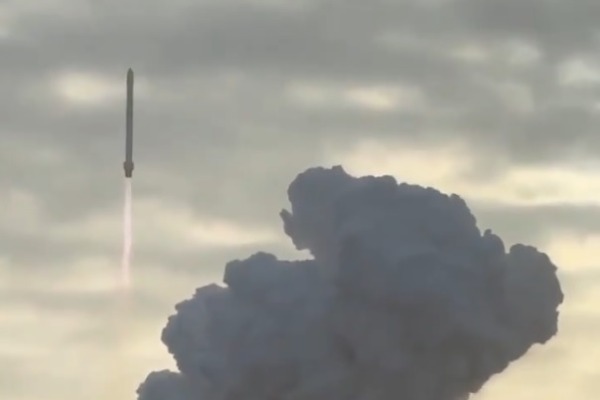
    China’s aerospace program marked another milestone on December 23, 2025, with the inaugural launch of the Long March 12A carrier rocket from the Jiuquan Satellite Launch Center in Northwest China. The mission demonstrated partial success as the rocket’s second stage successfully achieved its planned orbital insertion, while the first stage recovery attempt ended in failure.

    The Long March 12A represents China’s latest advancement in space launch technology, featuring reusable components designed to reduce mission costs and increase launch frequency. This launch was particularly significant as it tested critical technologies for rocket reusability – a key focus area for China’s ambitious space program.

    Despite the first stage recovery setback, mission controllers confirmed that the primary objective of delivering payloads to designated orbit was accomplished successfully. The rocket’s performance during ascent and second stage separation met all technical parameters, according to the China Aerospace Science and Technology Corporation (CASC).

    This launch occurs amid China’s accelerated space program that has recently included lunar missions, space station construction, and satellite constellation deployments. Aerospace engineers will analyze the first stage recovery failure data to improve future reusability attempts, with additional Long March 12A launches already scheduled for 2026.

  • At least five killed after Mexican Navy plane crashes off US coast

    At least five killed after Mexican Navy plane crashes off US coast

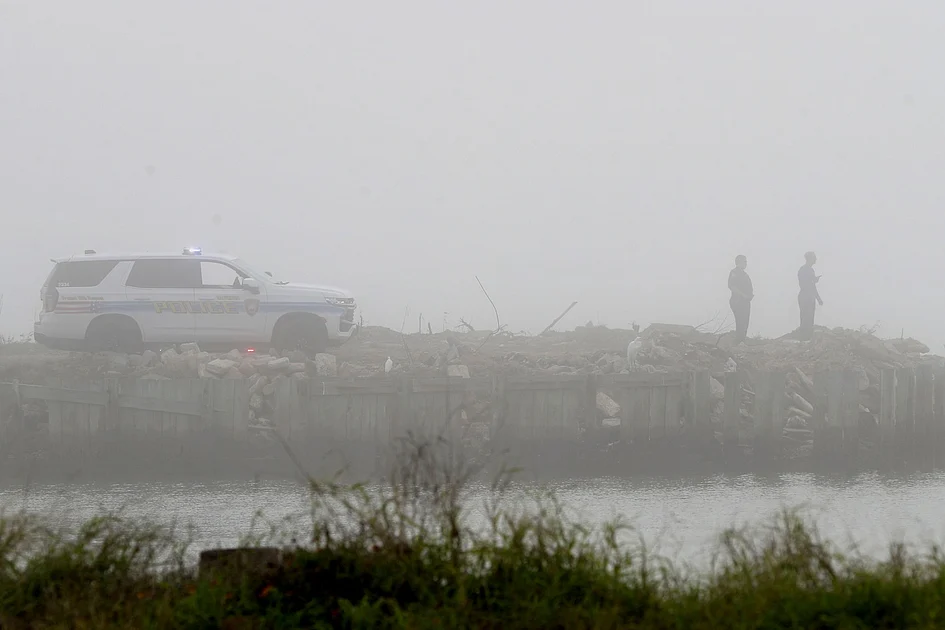
    A Mexican Navy aircraft engaged in a humanitarian medical mission crashed into the waters off the coast of Galveston, Texas, on Monday, resulting in five fatalities and leaving one individual missing. The US Coast Guard has initiated extensive search operations for the missing person.

    The aircraft, which departed from Merida in Mexico’s Yucatan state, was transporting eight individuals. It was performing a specialized medical evacuation coordinated with a Mexican foundation dedicated to providing care for children suffering from severe burns. The flight was approaching its destination near Scholes International Airport in Galveston when the accident occurred.

    Initial reports from the Mexican Navy Secretariat confirmed two survivors and two fatalities. However, the death toll was later revised upward to five. The precise cause of the crash remains under investigation. The incident underscores the inherent risks associated with aerial medical transport missions, even those conducted by military personnel for humanitarian purposes. The international collaboration between Mexican and US authorities highlights the cross-border efforts in emergency response and tragedy management.