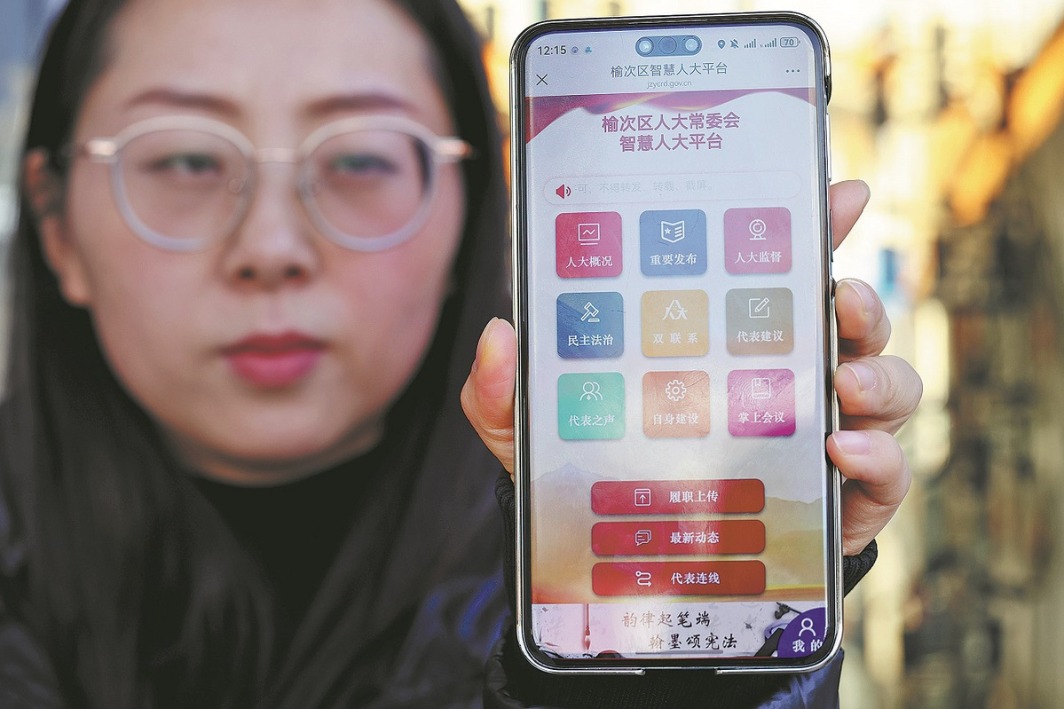
In Yuci District of Jinzhong City, Shanxi Province, a technological innovation is transforming how local representatives address community concerns. The ‘Smart People’s Congress’ platform, launched in 2021 after three years of development, has become a cornerstone of digital governance, enabling unprecedented connectivity between deputies and constituents.
The platform’s effectiveness was demonstrated during recent winter months when heating inadequacies emerged as a primary concern. Resident Feng Jingkai reported uncomfortably low indoor temperatures through the system after failing to reach customer service via traditional channels. Deputy Cao Xinsheng, 52, immediately coordinated with community officials and heating company representatives to address the issue comprehensively.
Rather than treating this as an isolated complaint, Cao leveraged the platform to identify systemic patterns. ‘Serving the public isn’t about solving individual issues in isolation,’ Cao explained. ‘It’s about integrating common demands to extend services to broader populations.’
The resulting solution involved comprehensive optimization measures: the heating company implemented grid-based service coverage with employees joining residential WeChat groups, while establishing a dedicated hotline guaranteeing two-hour response times for heating concerns.
Technologically, the platform features ten core sections including supervision mechanisms and deputy suggestion management. Each representative receives a unique QR code that citizens can scan to leave messages directly, creating what deputy Chen Liyuan describes as ‘all-time, zero-distance contact’ between officials and community members.
The data speaks to its success: deputies have uploaded over 21,000 performance records, interacted with citizens more than 600 times, and resolved 606 civil issues through the system. The platform also generates electronic performance files for each deputy, enhancing accountability and service tracking.
Beyond immediate problem-solving, the technology has facilitated policy development. Deputy Chen Liyuan utilized gathered public opinions to propose elderly care initiatives that resulted in four municipal government documents strengthening senior service development.
Platform manager Duan Wenyan emphasizes the transformation from ‘scheduled offline meetings to all-time availability,’ while Deputy Cao sees the technology as essential for modern governance: ‘By leveraging digital convenience, we build bridges between the public and government.’