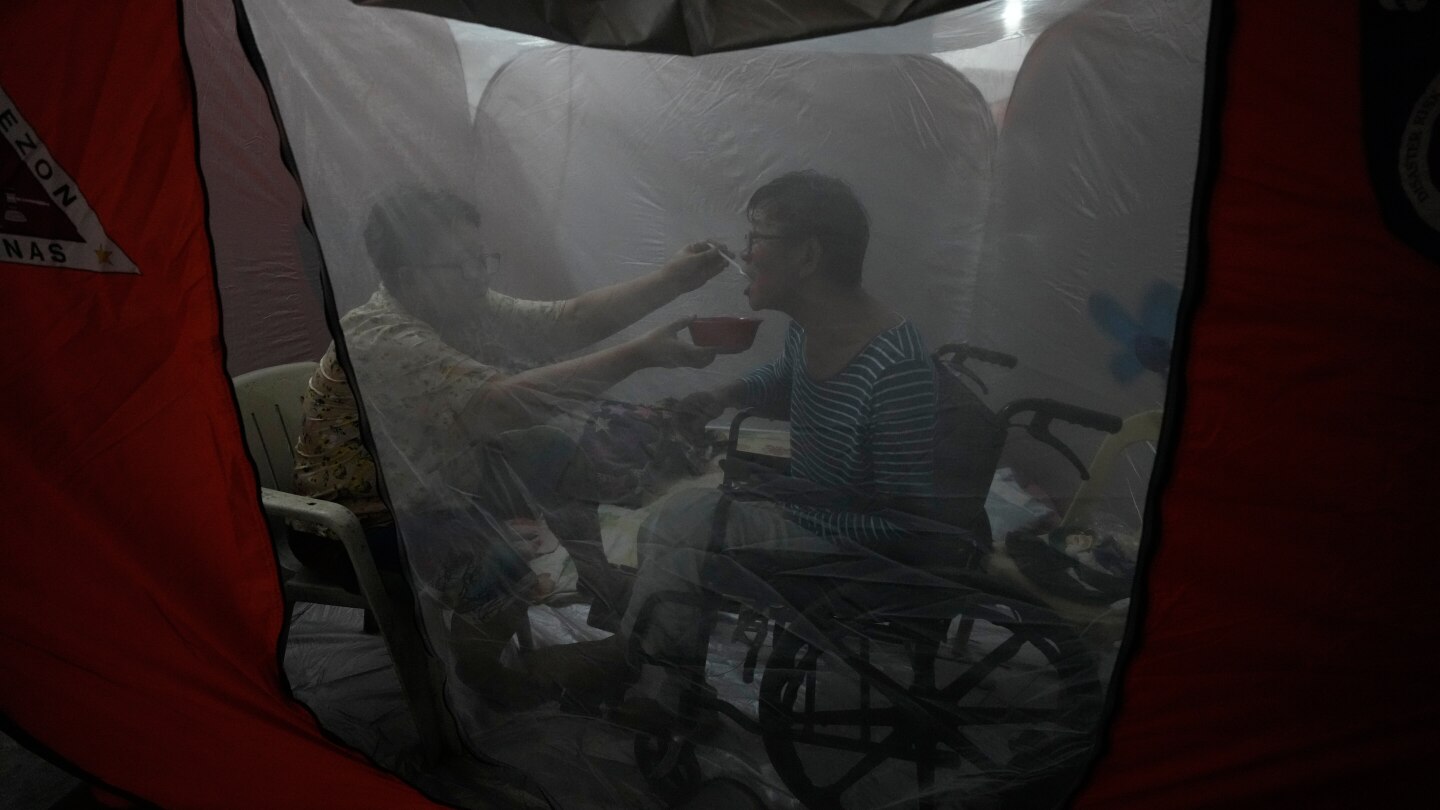
In the midst of the chaos brought by Super Typhoon Fung-wong, Judy Bertuso, 63, sits inside a bright orange tent on the floor of a basketball court in Quezon City, Philippines. With deliberate tenderness, she feeds porridge to her 65-year-old husband, Apollo, who is recovering from a stroke. The translucent plastic walls of the tent frame his frail figure as he sits in a wheelchair. Judy, dressed in a wrinkled T-shirt and shorts, moves with a quiet exhaustion, her actions reflecting a lifetime of mutual care and devotion. The couple had evacuated their creekside home the day before, fearing a repeat of the flooding they experienced during heavy rains in October. When warnings urged residents to seek higher ground ahead of the storm, they heeded the call without hesitation. Fung-wong, the most powerful typhoon to threaten the Philippines this year, unleashed winds of up to 185 kilometers per hour (115 mph) and gusts reaching 230 kph (143 mph), battering the northeastern coast and displacing over a million people. Inside the shelter, rows of bright tents house dozens of families. The wind howls outside, but within the walls, the hum of quiet conversations and the laughter of children create a semblance of normalcy. Amid the uncertainty, Judy’s steady hand trembles slightly as she feeds Apollo, a silent testament to the enduring power of care and resilience in the face of nature’s fury.
One photo that captures tenderness amid chaos in the Philippines as Typhoon Fung-wong hits