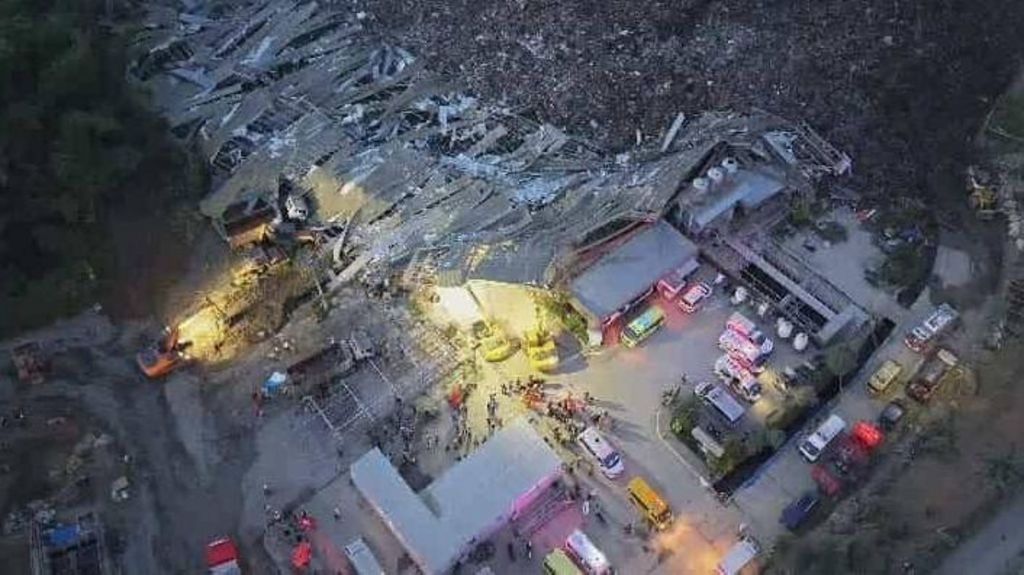
Emergency response teams are engaged in a critical search operation following a catastrophic garbage landslide at a Philippine landfill that has left dozens missing and claimed at least one life. The incident occurred Thursday at the privately-operated Binaliw Landfill in Cebu City, where a massive section of waste suddenly gave way, burying workers beneath tons of debris.
Authorities confirmed the death of a 22-year-old woman while 12 injured sanitation workers were successfully extracted from the rubble and hospitalized. Thirty-eight individuals remain unaccounted for as rescue efforts intensify, with approximately 300 personnel from multiple government agencies and civilian groups deployed to the scene. Heavy machinery including excavators, alongside ambulances and fire trucks, are visible throughout the operational area.
Cebu City Councillor Joel Garganera pointed to fundamental flaws in waste management practices as the likely cause, revealing to local publication The Freeman that operators had been engaged in dangerous soil mining operations. “They’ve been cutting into the mountain, mining the soil, and then piling garbage to form another mountain of waste,” Garganera stated, adding that the facility had degenerated from a sanitary landfill into “an open dumpsite.”
The 10-hectare (25-acre) Binaliw facility serves as a crucial waste management site for Cebu, the primary trading hub and transportation gateway for the Visayas region in the central Philippines. Such landfills represent common infrastructure across major Philippine urban centers, though questions about operational safety standards have emerged following this tragedy.
Cebu Mayor Nestor Archival confirmed via social media that all response teams “remain fully engaged in search and retrieval efforts” as the operation enters its most critical phase. While the exact trigger mechanism for the collapse remains under investigation, the incident has highlighted persistent challenges in waste management infrastructure across rapidly developing urban centers in the Philippines.