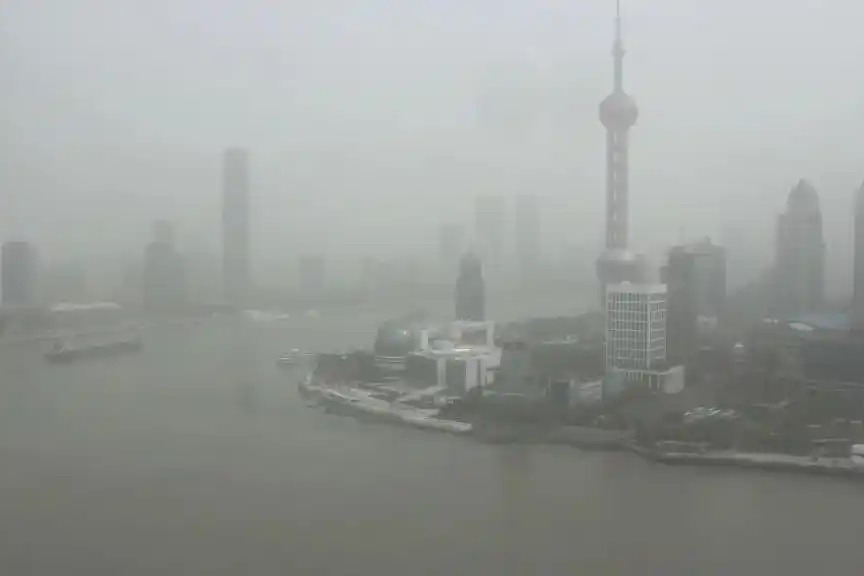
China has initiated trial operations for an innovative artificial intelligence system that dramatically enhances sand and dust storm forecasting capabilities. Developed by researchers at the Chinese Academy of Meteorological Sciences’ Lanzhou Institute of Arid Meteorology, the advanced model commenced testing in Gansu province during late November 2025.
The groundbreaking system represents a quantum leap in meteorological technology, improving spatial resolution from 50 kilometers to just 5 kilometers through sophisticated downscaling techniques. This enhancement addresses critical limitations in previous AI models that, while effective for large-scale regional tracking, lacked the precision necessary for localized forecasting and public safety applications in Northwest China’s vulnerable regions.
Beyond precision, the system delivers unprecedented processing speed. Unlike traditional physics-based models that require supercomputers and extensive processing times, this AI-powered solution operates on standard GPU hardware, generating comprehensive global five-day predictions in under sixty seconds. With eight daily updates, meteorologists now possess significantly more opportunities to monitor and respond to developing storm events.
Dr. Che Huizheng, a researcher at the academy, emphasized the transformative nature of this development: “This represents a paradigm shift not merely in velocity but in accessibility. We can now execute sophisticated dust forecasts using conventional desktop computing equipment.”
The system’s capabilities were demonstrated during a late November dust event originating in the southern Xinjiang basin. The AI model successfully detected warning signals two to three days in advance and provided near real-time updates on November 22nd that closely correlated with ground observations as the plume expanded across Ningxia Hui Autonomous Region, Qinghai, Gansu, and other northern territories.
According to researcher Yue Ping, spring remains the most active period for sandstorm formation due to exposed soil conditions and frequent cold-air activity. Summer and autumn events, primarily driven by long-range transport, present continued forecasting challenges that the new system aims to address through higher-resolution optical data, mass concentration metrics for multiple aerosol types, and dozens of continuously refreshed environmental indicators.
Meteorological experts suggest the technology could establish a template for international cooperation in regions where dust storms regularly cross national boundaries. The reduced hardware requirements may enable meteorological agencies across Central Asia, North Africa, and the Middle East to implement similar early-warning systems, potentially transforming regional environmental monitoring capabilities.