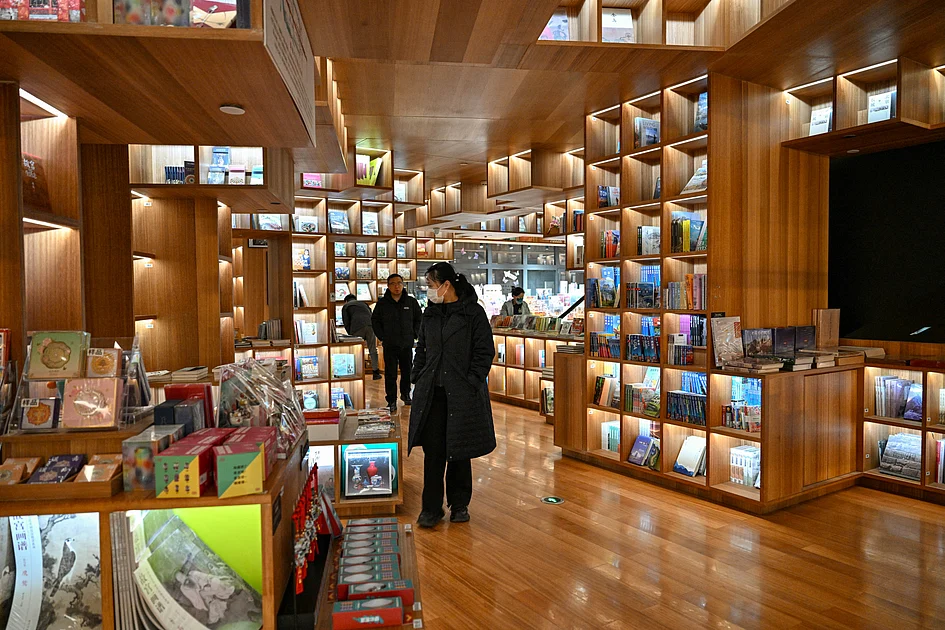
Across China, a new generation of architecturally spectacular bookstores is drawing crowds more interested in Instagrammable moments than literary discoveries. Despite persistent challenges in print book sales that continue to lag behind pre-pandemic levels, these visually striking establishments are experiencing remarkable growth through their transformation into cultural landmarks and social media hotspots.
In Tianjin, the recently opened Zhongshuge location has become a sensation with its dramatic design featuring towering accordion-style steps and a fantastical spiral staircase that evokes comparisons to Harry Potter’s Hogwarts. The store regularly fills with visitors wielding selfie sticks and tripods, all competing to capture the perfect shot against its cobalt-colored architectural marvels. So intense is the photography activity that faded prints marking ‘The Best Spot for Photos’ dot the floor.
This phenomenon represents a strategic shift in China’s bookstore industry. According to industry experts, many establishments now deliberately invest in creating photogenic interiors specifically designed to attract social media users. Beijing-based architect Zheng Shiwei notes that this approach has become ‘relatively mainstream’ as bookstores seek new revenue streams beyond traditional book sales.
The trend has sparked both enthusiasm and concern within cultural circles. While these visually striking spaces successfully draw public engagement with literary venues, some establishments have implemented restrictions on professional photography equipment and flash photography due to disruptions to actual readers. The famous Librairie Avant-Garde in Nanjing notably banned tripods and unauthorized photoshoots after customer complaints about interference with reading experiences.
Despite these challenges, many bookstore owners embrace the photographic trend. Juli Hu, founder of a Beijing bookstore converted from a former Taoist temple, acknowledges that ‘books bring in relatively low profit’ and actively welcomes social media exposure. Her establishment frequently refreshes cultural displays to maintain photographic appeal while integrating tea service and trinket sales to sustain operations.
Industry representative Ai Limin confirmed that physical bookshops have ‘maintained steady growth’ through this wave of uniquely characteristic establishments that blend cultural preservation with modern consumer behavior. The phenomenon demonstrates how traditional bookselling is adapting to contemporary digital culture while creating spaces that serve multiple purposes beyond mere commerce.