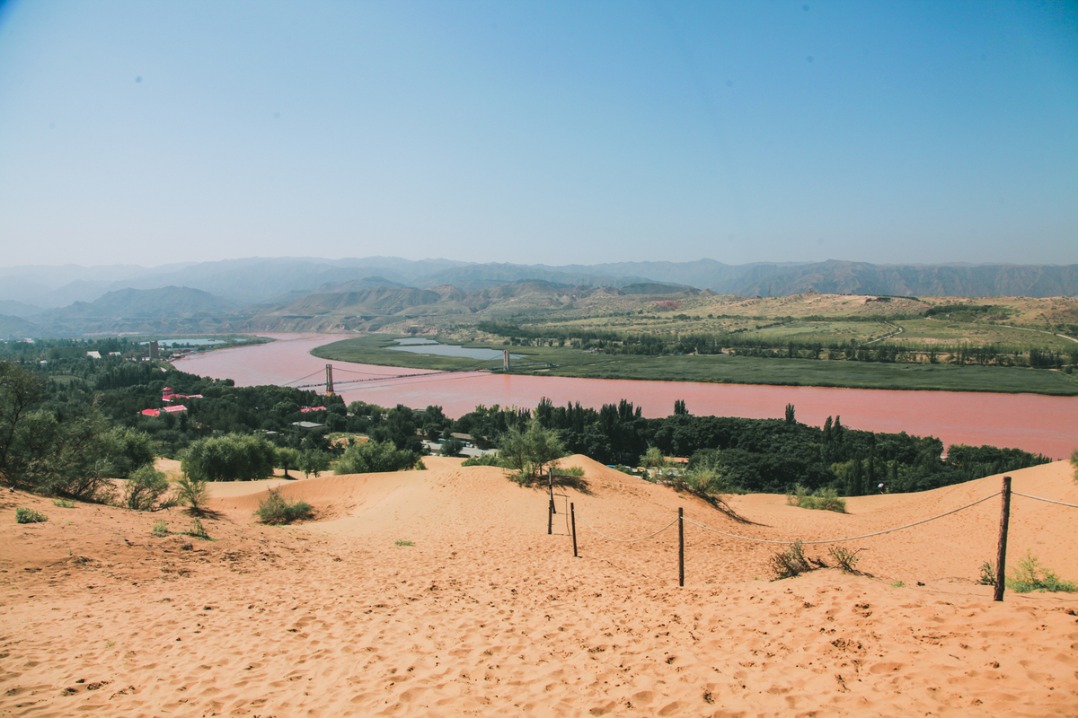
A groundbreaking study conducted by Chinese and German researchers has unveiled the critical relationship between groundwater balance and plant water-use efficiency in desert ecosystems. Published in the journal *Water Resources Research*, the research provides essential insights for ecological restoration and desertification control. The study, led by Zhang Zhishan from the Northwest Institute of Eco-environment and Resources (NIEER) under the Chinese Academy of Sciences, emphasizes that vegetation restoration in arid drylands is a viable strategy to prevent desertification. Drylands, characterized by low rainfall and high evapotranspiration, often face a negative water balance, making water the primary limiting factor for plant survival. Groundwater, a vital resource in desert ecosystems, plays a pivotal role in plant growth and the sustainability of ecological restoration efforts. The research was conducted at the Shapotou desert research station in Ningxia Hui Autonomous Region, using 12 Lysimeter units to measure evapotranspiration and quantify water balance components from 2019 to 2023. The findings revealed that groundwater recharge transforms soil water storage, increasing actual evapotranspiration and seepage. Groundwater-dependent ecosystems exhibited higher evapotranspiration rates, and semi-shrubs were identified as crucial for plant configuration strategies. Zhang highlighted that vegetation reconstruction, coupled with appropriate plant configuration methods, is key to ensuring long-term ecological sustainability and combating desertification.