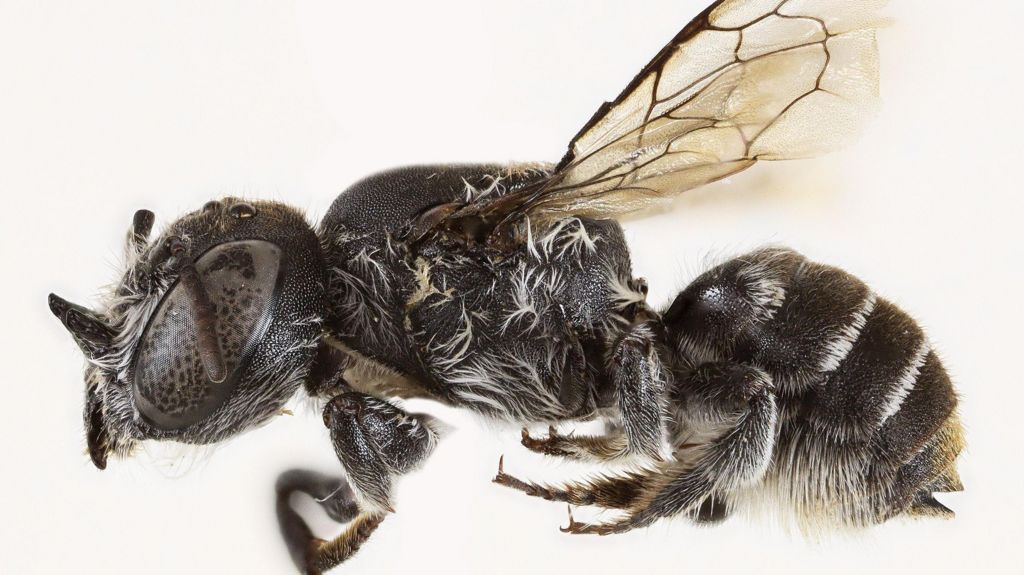
Australian researchers have unveiled a fascinating new native bee species, distinguished by its tiny, devil-like horns, earning it the name Megachile Lucifer. The discovery was made during a study of a rare wildflower endemic to the Bremer Ranges in Western Australia’s Goldfields region, located 470 kilometers east of Perth. The unique horns, found exclusively on female bees, are believed to serve multiple purposes, including defense, pollen collection, and nest-building material gathering. Dr. Kit Prendergast from Curtin University, the lead scientist of the study, revealed that the name Lucifer was inspired by the Netflix series she was watching at the time. She emphasized that this is the first new addition to this bee group in two decades. The name Lucifer, meaning ‘light bringer’ in Latin, also symbolizes the urgent need for enhanced conservation efforts for native bee species and a deeper understanding of their role in pollinating endangered plants. The findings, published in the Journal of Hymenoptera Research, advocate for the formal protection of the area where the bee and wildflower were discovered, highlighting the risks posed by habitat disturbance and climate change. Dr. Prendergast warned that many mining operations overlook native bees in environmental impact assessments, potentially leading to the loss of undiscovered species critical to ecosystem health. ‘Without knowing which native bees exist and their plant dependencies, we risk losing both before we even realize their presence,’ she concluded.