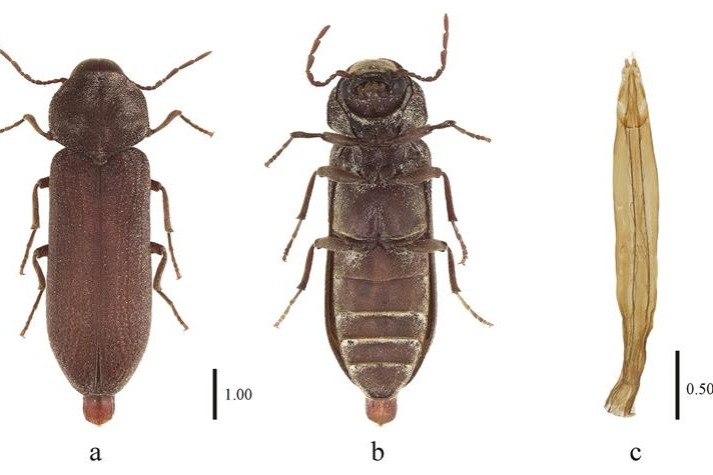
Scientists have made a significant entomological discovery within the ancient wooden structures of Tibet’s Potala Palace, identifying a previously unknown genus and species of beetle. The finding, detailed in an international zoological taxonomy journal, represents a major advancement in Coleoptera research with important implications for cultural heritage preservation.
The insect, named Lhasella potala, measures between 4.8 to 6.9 millimeters and exhibits a distinctive reddish-brown coloration. Research team member Zhou Xuan, a PhD student, confirmed the species’ unique taxonomic status through comprehensive morphological analysis, anatomical examination, and DNA barcoding techniques.
This discovery has revealed potential conservation challenges, as the beetle’s wood-boring larvae may pose structural risks to the UNESCO World Heritage site. Subsequent investigations have detected the species in multiple historical locations throughout Lhasa, indicating a broader distribution than initially presumed.
Kunga Tashi, deputy director of the Potala Palace Management Office, emphasized the critical importance of integrating ecological research with cultural conservation methodologies. This interdisciplinary approach aims to simultaneously protect both biodiversity and invaluable heritage structures.
The research collaboration brought together experts from Peking University, the Xizang Plateau Institute of Biology, and the Potala Palace Management Office. Scientists now plan to conduct further studies on the beetle’s biology and behavior to develop more effective management strategies for historical preservation sites across the region.