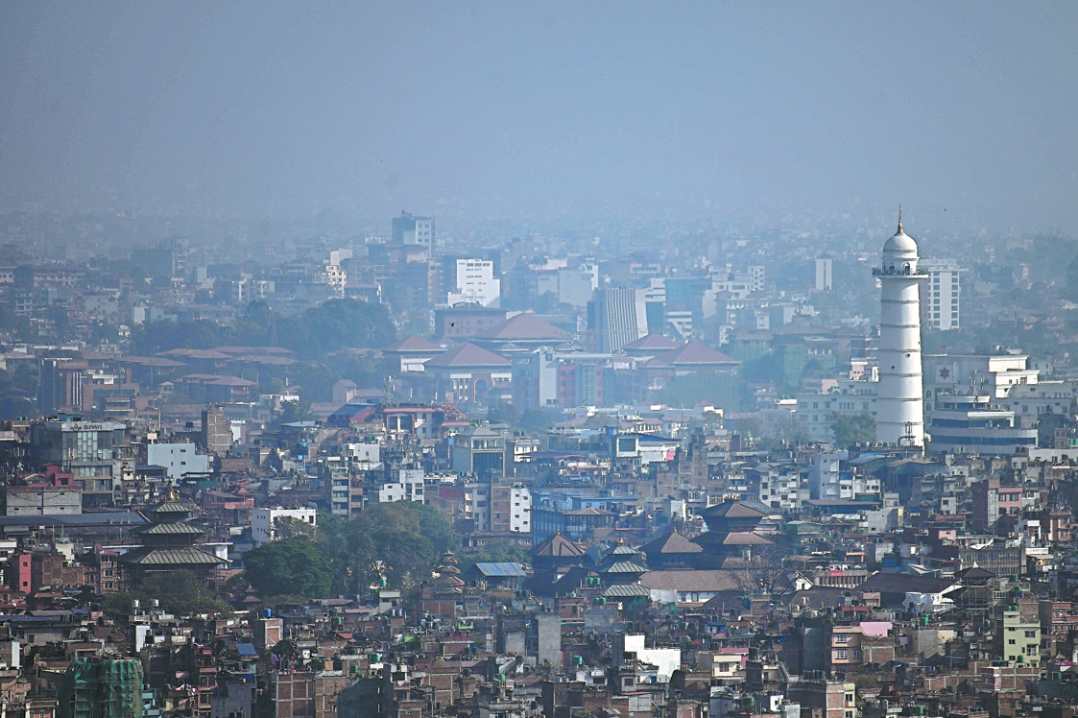
Kathmandu Valley’s iconic mountain vistas have vanished beneath a thick haze as winter air pollution reaches critical levels. The seasonal combination of dry winds, agricultural burning, and urban emissions has transformed Nepal’s capital into one of Asia’s most polluted urban environments, with PM2.5 and PM10 concentrations soaring to hazardous levels.
Local residents like Dinesh Lal Shrestha from Tarakeshwar Municipality report confronting farmers engaged in open burning of agricultural waste, though these individual efforts prove largely ineffective. Municipal authorities have implemented measures including public notices and potential fines of up to 10,000 rupees ($70) for waste burning violations, yet acknowledge the limitations of their jurisdiction.
Environmental experts emphasize that fragmented approaches cannot solve what is fundamentally a regional crisis. Bhushan Tuladhar, a prominent environmentalist, states that current measures remain insufficient to produce meaningful results. The problem intensifies during winter months when temperature inversions trap pollutants, compounded by agricultural burning practices in surrounding regions.
Air quality specialist Bhupendra Das warns that the situation will deteriorate further as harvesting season progresses in the Tarai region, where stubble burning remains common practice. The economic implications are severe: the World Bank estimates air pollution costs Nepal over 6% of its GDP annually through reduced labor productivity, tourism impacts, and healthcare burdens.
Most alarmingly, air pollution has emerged as Nepal’s leading risk factor for death and disability, surpassing both malnutrition and tobacco use. The World Bank reports approximately 26,000 premature deaths annually attributable to poor air quality, reducing average life expectancy by over three years.
Experts unanimously call for coordinated action across all municipal boundaries, including strict enforcement against waste burning, public awareness campaigns, regulation of industrial emissions, and specialized equipment for forest fire management. Without unified regional cooperation, Kathmandu’s air quality crisis will continue to escalate with devastating human and economic consequences.