On the coastal frontier of Pingtan Island in Fujian province, where terrestrial landscapes merge with oceanic expanses, an unassuming four-story crimson structure houses China’s premier Underwater Archaeology Training Base. This facility represents the vanguard of the nation’s systematic efforts to reclaim its submerged cultural heritage from oceanic depths.
The discipline of underwater archaeology has evolved from specialized pursuit to established scientific practice in China, with veteran practitioners like retired archaeologist Cui Yong—among the nation’s pioneering figures in submerged cultural exploration—witnessing its transformative journey. As former deputy director of the Guangdong Institute of Cultural Relics and Archaeology, Cui embodies the dedication driving China’s maritime preservation initiatives.
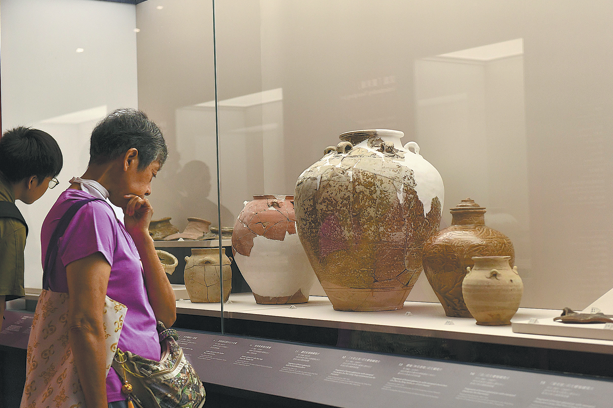
Recent exhibitions, including the display of salvaged relics from the renowned Nanhai One shipwreck at Hong Kong’s Heritage Discovery Centre in August 2024, demonstrate the growing public engagement with these archaeological recoveries. The fourteenth-century merchant vessel, discovered in 1987 and meticulously excavated from the South China Sea, has become a symbolic representation of China’s maritime historical legacy, yielding over 180,000 cultural artifacts that illuminate ancient trade networks.
China’s methodological approach combines advanced sonar mapping, remotely operated vehicles, and specialized diver training to investigate shipwrecks spanning from the Song Dynasty (960-1279) to the Qing Dynasty (1644-1911). These scientific endeavors not only recover physical artifacts but reconstruct historical narratives of maritime commerce, technological exchange, and cultural interaction along ancient trade routes.
The national investment in underwater archaeology reflects broader recognition of oceanic heritage as an integral component of cultural preservation, with training programs developing new generations of archaeologists equipped to handle the unique challenges of submerged excavation and conservation.