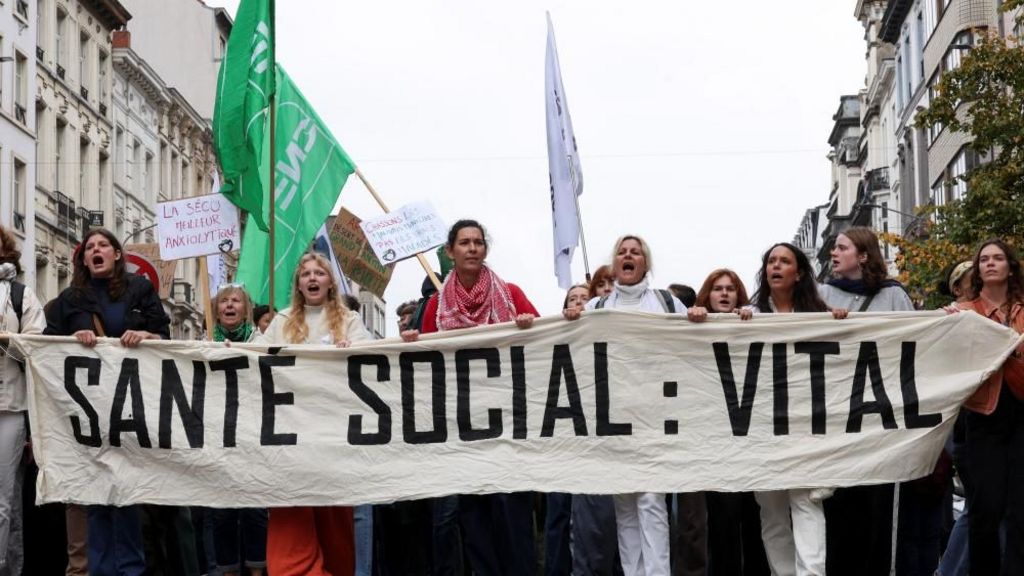
Tens of thousands of Belgians flooded the streets of Brussels in a nationwide strike, protesting against sweeping government reforms and austerity measures. The demonstrations, organized by Belgium’s three major unions, brought significant disruptions to public transport, halted flights, and suspended operations at Europe’s second-largest port in Antwerp. The protests targeted Prime Minister Bart de Wever’s center-right government, which has introduced controversial measures to reduce the budget deficit, including pension reforms and cuts to unemployment benefits. At Brussels Airport, all departures and many arrivals were canceled, while Charleroi Airport saw a complete shutdown of services. Public transport in the capital was severely affected, with most buses, trams, and underground trains coming to a standstill. The unions are particularly opposed to the government’s plan to increase the number of working days required to qualify for pensions and the elimination of special schemes for sectors like the military and railway workers. Demonstrators, many clad in the red and green colors of the unions, voiced their frustrations over what they perceive as unfair burdens on the working class. ‘It’s always the same part of the population that has to tighten their belts,’ said 29-year-old Anaïs, who criticized the reforms for disproportionately affecting lower-income Belgians. The protests also highlighted broader concerns about the future, with many participants expressing fears for their children’s prospects. Despite the largely peaceful nature of the demonstrations, isolated incidents of vandalism and clashes with police were reported. The strike underscores the growing discontent with the government’s austerity agenda, which includes proposed cuts to child benefits and potential VAT increases. As Belgium grapples with its fiscal challenges, the protests signal a deepening divide between the government and its citizens.
National strike by Belgium’s big unions hits public transport, airports and ships