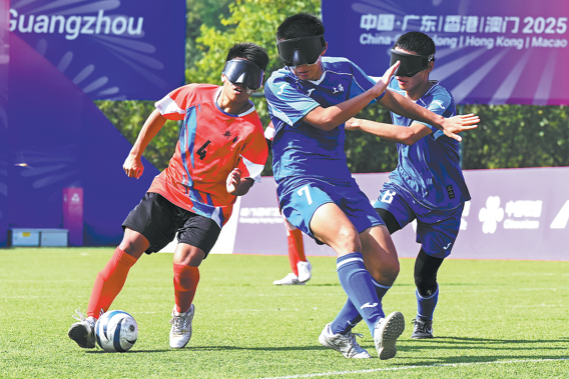
In an unprecedented demonstration of regional collaboration, the Guangdong-Hong Kong-Macao Greater Bay Area has launched the 12th National Games for Persons with Disabilities alongside the 9th National Special Olympic Games. This landmark event, which commenced on Monday, represents the first joint hosting of China’s premier disability sports competitions across multiple administrative regions, signaling a new era of coordinated development and social inclusion.
The games feature an extensive competitive program comprising 46 major sporting categories and 1,876 subevents, blending 11 mass participation sports with nine Paralympic disciplines. A record-breaking contingent of 7,824 athletes from 34 national delegations has registered for the events, supported by over 11,000 participants including technical officials, coaches, and support staff—marking a substantial 30 percent increase from previous editions.
Executive deputy-general Yong Zhijun emphasized the event’s significance beyond athletic competition, noting it showcases China’s advancements in disability support during the 14th Five-Year Plan period while strengthening regional integration. ‘This collaboration powerfully demonstrates the strengths of the “one country, two systems” framework while promoting coordinated growth throughout the Greater Bay Area,’ Yong stated at a Guangzhou press conference.
Infrastructure preparation has been comprehensive, with Guangdong utilizing 36 competition venues—22 repurposed from last month’s 15th National Games and 14 specifically configured for disability sports. All facilities meet rigorous national accessibility standards, featuring ramps, tactile paving, adapted toilets, wheelchair seating, sign language interpretation systems, and smart information services to ensure full participation.
Regional cooperation extends beyond Guangdong, with Hong Kong hosting four events including boccia, wheelchair fencing, and Paralympic table tennis, while Macao oversees badminton competitions. Both special administrative regions have implemented specialized support systems, with Macao establishing green channels at border ports for expedited clearance and Hong Kong emphasizing the games’ role in breaking down physical and administrative barriers through resource sharing.
The human dimension remains central to the event, with approximately 1,500 volunteers receiving specialized training in sign language communication and assistance techniques for participants with varying disabilities. These volunteers will provide comprehensive support across competition services, venue logistics, and hospitality functions throughout the games period.