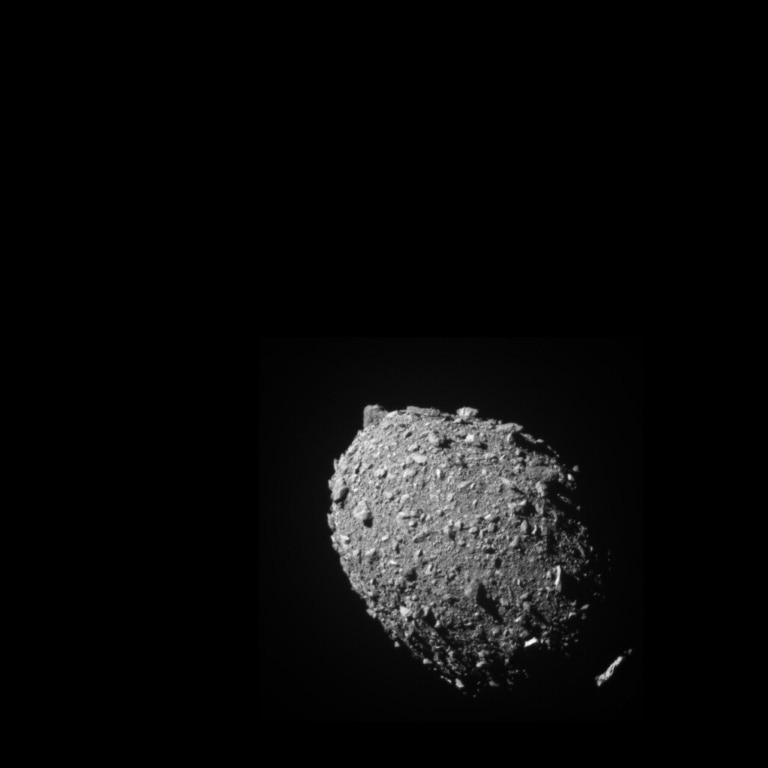
In a groundbreaking demonstration of planetary defense capability, NASA’s intentional collision with a distant asteroid has yielded unprecedented results that extend beyond initial projections. The Double Asteroid Redirection Test (DART), conducted four years ago, has not only successfully altered the orbital dynamics between asteroid Dimorphos and its larger companion Didymos but has fundamentally changed their collective path around the Sun.
According to new research published in Science Advances, the September 2022 mission represents humanity’s first measurable alteration of a celestial body’s solar orbit. The study involved an international team of researchers who employed sophisticated observation techniques, including stellar occultation tracking—monitoring momentary dimming of stars as asteroids passed before them—to obtain hyper-precise measurements of the binary system’s new trajectory.
The research effort leveraged contributions from volunteer astronomers worldwide who recorded 22 stellar occultation events. Combined with years of additional observational data, the team achieved unprecedented precision in measuring the orbital modifications. While the change appears minute—a mere 0.15-second adjustment—scientists emphasize its profound implications for future planetary defense strategies.
NASA’s Thomas Statler noted that ‘given enough time, even a tiny change can grow to a significant deflection,’ validating kinetic impact as a viable technique for Earth protection against asteroid hazards. The mission specifically demonstrated that impacting one member of a binary asteroid system can effectively deflect the entire pair.
The successful experiment provides crucial data for developing defense protocols against potential future asteroid threats, marking a pivotal advancement in humanity’s capacity to safeguard our planet from cosmic impacts.