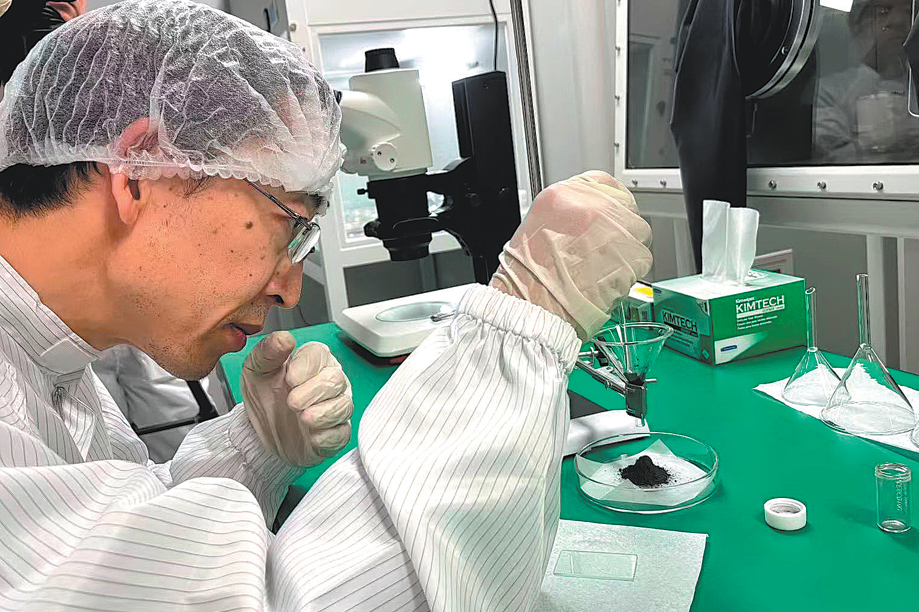
A recent study published in *Nature Astronomy* has unraveled the mystery behind the unexpectedly sticky lunar soil collected from the far side of the moon by China’s Chang’e 6 robotic probe. Unlike the loose, sandy regolith from the moon’s near side, the far side samples were clumpy and cohesive, a phenomenon now attributed to space weathering and the unique geometry of the soil particles. The research, led by Qi Shengwen from the Chinese Academy of Sciences’ Institute of Geology and Geophysics, reveals that the far side regolith consists of extremely small, jagged, and sharp particles, averaging 48.4 microns in diameter. These properties, combined with the effects of prolonged exposure to micrometeoroid bombardment and solar winds, create a cohesive environment. The study highlights the violent history of the lunar far side, which has been subjected to intense space weathering, resulting in the formation of irregular-shaped globs. The findings are not only of scientific interest but also have practical implications for future lunar exploration and base construction. Understanding the soil’s texture is crucial for designing equipment and infrastructure that can withstand the abrasive and sticky nature of the regolith. China’s ambitious space program, which aims to land astronauts on the moon before 2030, will benefit from these insights as engineers develop new technologies for lunar exploration.