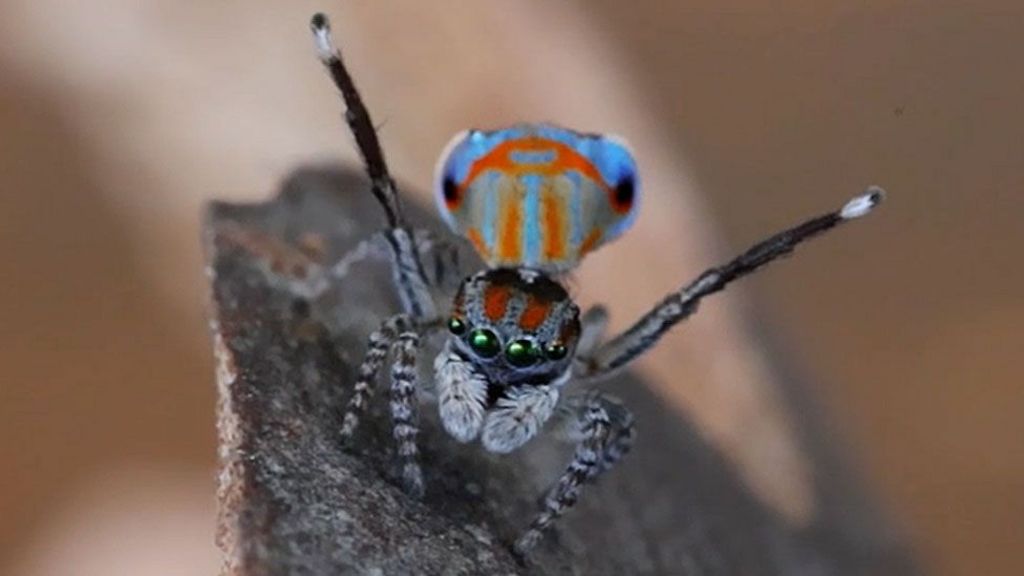
Australia’s peacock spiders, known for their dazzling colors and intricate mating dances, are more than just a visual spectacle. With over 100 distinct species, these tiny arachnids, each no larger than a pinhead, exhibit an extraordinary level of diversity that has captivated scientists. Researchers are now delving into the genetic mysteries behind this phenomenon, focusing on a little-understood component of their DNA known as ‘dark DNA.’ This enigmatic part of the genetic code, which makes up a significant portion of the spiders’ genome, may hold the key to their rapid adaptation and speciation. Jonah Walker, a researcher at the Sanger Institute, explains that studying these spiders could shed light on the broader processes that drive variation in the natural world. ‘Peacock spiders are at the extreme end of diversity,’ he says. ‘By studying them, we can understand the mechanisms that produce such variation in general.’ The spiders’ unique mating rituals, which include rhythmic drumming sounds and vibrant abdominal displays, vary widely across species. Walker, who overcame his own arachnophobia to study these creatures, collaborated with Dr. Joana Meier and an international team to catalog each species’ behavior, movement, and songs. By cross-referencing this data with their DNA, the team aims to identify the genetic factors responsible for their traits. Early findings suggest that ‘dark DNA,’ which is three times more abundant in peacock spiders than in humans, may play a crucial role in their evolution. This research is part of the broader Earth BioGenome Project, which aims to decode the genetic sequences of all 1.8 million known species within the next decade. Dr. Meier emphasizes that understanding the DNA of diverse organisms, including spiders, butterflies, and moths, will provide unprecedented insights into the principles of genetics and evolution. ‘By studying the DNA of all living things, we not only learn about them but also about ourselves,’ she says. The project has already decoded 3,000 species, with plans to complete 10,000 more next year. The ultimate goal is to unravel the intricate web of life, offering a deeper understanding of how all organisms are interconnected.
Mystery of dancing spiders’ DNA could explain how they develop into new species