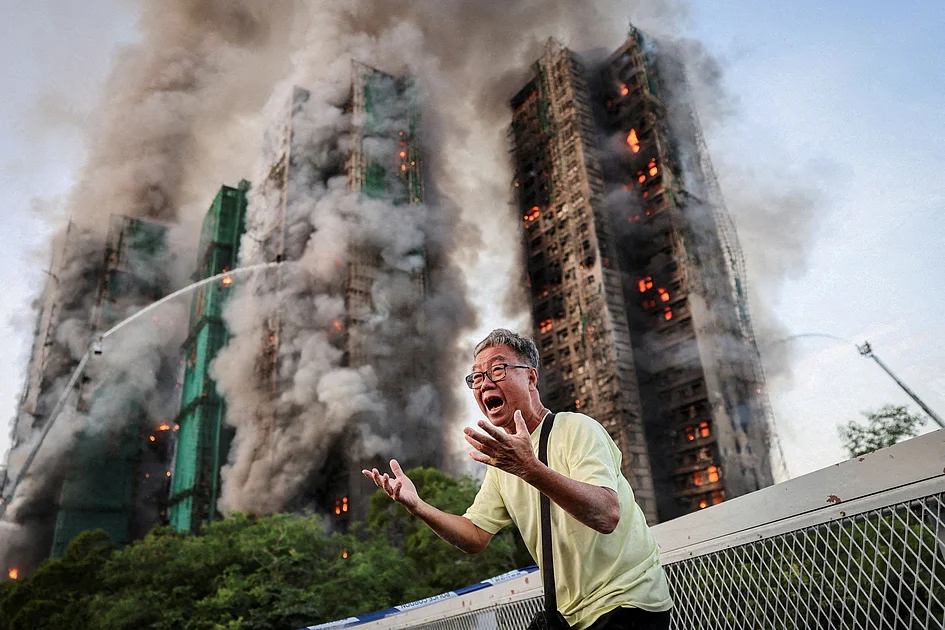
A single photograph has come to embody the profound human tragedy of Hong Kong’s most devastating fire in over seven decades. The image, captured by Reuters photographer Tyrone Siu, shows 71-year-old Wong standing helpless before the inferno that consumed his residential complex, crying out ‘My wife is inside.’
One week after the catastrophic blaze at the Wang Fuk Court housing estate in Tai Po district, Wong’s wife remains among the 30 individuals officially listed as missing. The fire, which rapidly engulfed seven high-rise towers housing approximately 4,000 residents, has claimed at least 156 lives, marking Hong Kong’s deadliest structural fire since 1948.
The tragedy unfolded on what began as an ordinary Wednesday afternoon in autumn. Wong had departed his apartment to collect his granddaughter from school, leaving his wife behind. Returning to find flames erupting from the middle floors of his residential tower, Wong immediately recognized the grave danger his spouse faced.
Authorities have identified substandard plastic mesh and flammable insulation foam used in ongoing renovation work as primary factors contributing to the fire’s rapid spread. Ironically, Wong, a retired building maintenance foreman with certifications in electrical and plumbing work, had previously expressed concerns about these exact safety hazards.
His son, who asked to be identified as J Wong, revealed that his father had taken preventive measures, replacing styrofoam window coverings with fire-retardant plastic film and regularly moistening the external green mesh surrounding their apartment. ‘Despite knowing the risks, no matter what he did, he couldn’t change what happened,’ the son stated.
In a heartbreaking final connection, Wong’s wife managed to place a brief telephone call to her husband as the fire intensified. Their conversation lasted approximately one minute before communication ceased permanently. ‘Soon after that chat, she disappeared,’ J Wong recounted.
As recovery teams in protective hazmat suits continue their grim search through the charred remains, the Wong family represents just one of countless stories of loss emerging from the catastrophe. The photographic depiction of Wong’s anguish serves as a powerful symbol of both personal devastation and collective mourning for a city grappling with unprecedented tragedy.