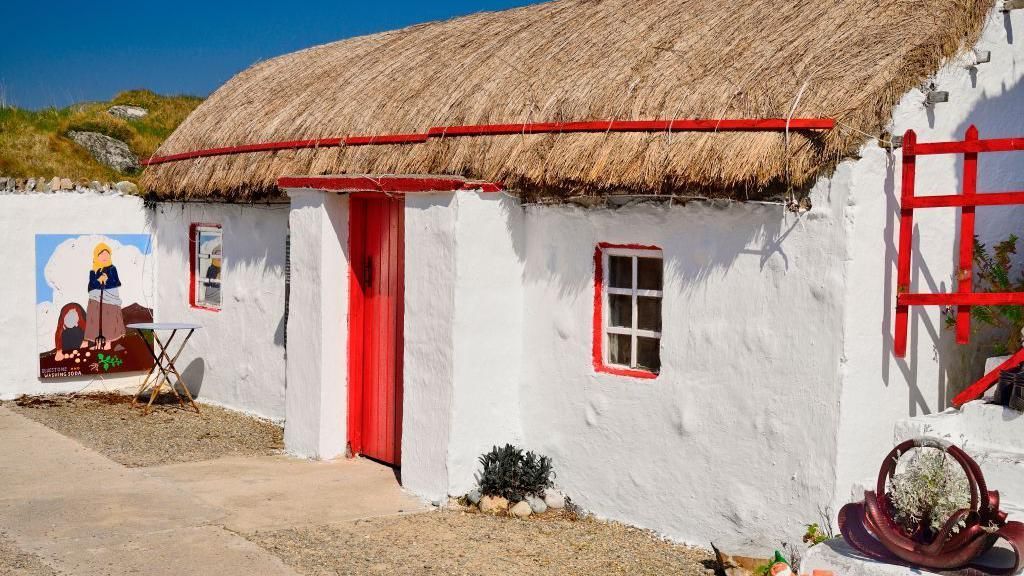
The Doagh Famine Village, an acclaimed open-air museum in Ireland’s County Donegal, has triumphantly reopened its doors nearly a year after a catastrophic fire ravaged its historical exhibits. This unique heritage site, which chronicles the journey of an Irish family from the Great Famine era to modern times, resumed operations on St. Patrick’s Day following an extensive 10-month restoration effort.
The devastating blaze erupted on May 3 last year at the Ballyliffin site on the Inishowen Peninsula, requiring immediate response from Gardaí and fire services. With assistance from local residents, emergency personnel successfully contained the inferno, with authorities subsequently ruling out arson as a possible cause.
Founder Pat Doherty, who previously inhabited one of the museum’s thatched cottages until 1984 before establishing the attraction in 1997, expressed profound gratitude for the overwhelming community support that facilitated the museum’s rebirth. ‘More than half of the village was destroyed in the fire,’ Doherty revealed to BBC Radio Foyle’s North West Today. ‘People just kept donating and donating – we actually had to turn items away at one point because we simply had too many.’
The reconstruction required complete rebuilding of several key exhibits, including a replica Orange Hall and a safe house displaying historical information about the Northern Ireland peace process. Additionally, exhibits related to Ireland’s Travelling community, including traditional caravans, were entirely consumed by flames and required replacement.
Doherty’s personal resilience mirrored that of his museum’s recovery – having suffered a stroke just weeks before the fire, he acknowledged moments when permanent closure seemed inevitable. ‘At one point I thought that was it – that it would be the end of it but people really drove us on,’ he confessed.
The revived museum now offers enhanced exhibits while maintaining its educational mission, including demonstrations of traditional poitín distillation and multifaceted perspectives on Northern Ireland’s peace process. As a family-owned institution, its successful restoration stands as a testament to community solidarity and cultural preservation efforts across Ireland.