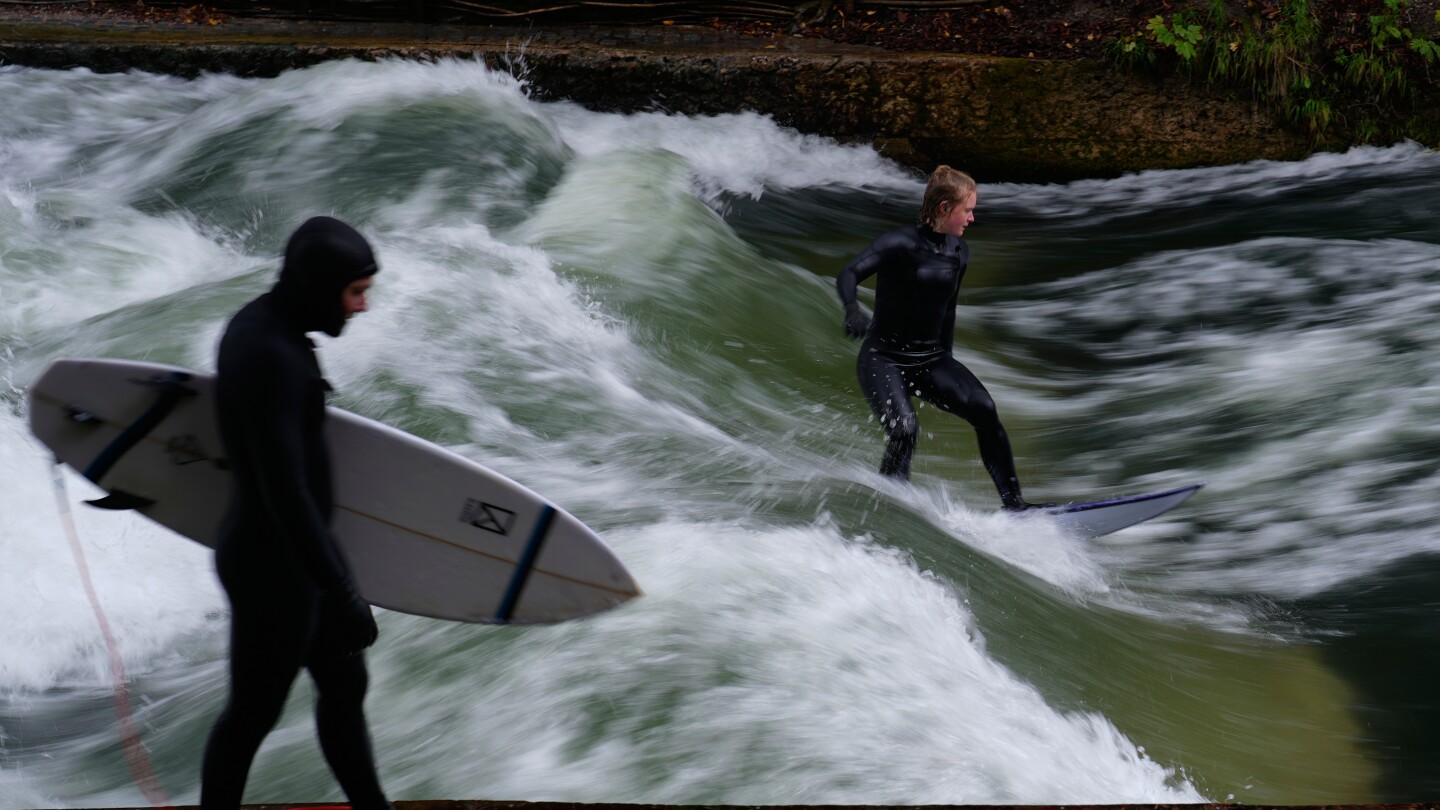
The iconic Eisbach wave in Munich, Germany, a renowned man-made river-surfing spot, has mysteriously disappeared following the city’s annual river cleaning operation. This unexpected event has left the local surfing community in dismay, marking the first time in decades that the wave has failed to return. The Eisbach wave, created in 1972 by strategically placed concrete blocks in the Isar River canal, has been a magnet for surfers worldwide, earning the title of ‘the mother of all river waves’ from SurferToday.com. Known for its formidable height of up to 4 feet (1.22 meters), the wave offers thrilling but brief rides, typically lasting less than a minute. Surfers and spectators alike have long cherished the site, with enthusiasts taking turns to brave the frigid waters while onlookers gather on a nearby bridge. The wave’s sudden disappearance has sparked confusion and concern. Munich’s mayor’s office has confirmed that surfers are collaborating with the building department to investigate the cause and explore potential solutions for its restoration. In the interim, surfers have turned to a secondary wave within the same park, though it lacks the power and prestige of the Eisbach. Munich, globally celebrated for its Oktoberfest festivities, only legalized surfing at the Eisbach in 2010. The sport has faced challenges, including a tragic fatality in April when an experienced surfer’s leash became entangled in the riverbed, leading to her drowning. This incident prompted stricter safety measures, including a ban on nighttime surfing. River surfing remains popular in other regions, such as the United Kingdom and Hawaii, but the loss of the Eisbach wave is a significant blow to Munich’s unique surfing culture. Local resident Lena Stillner, a seven-year veteran of the Eisbach wave, expressed her disappointment and hope for a swift resolution to restore this cherished landmark.
Munich’s famous river wave has vanished after a cleanup. Surfers hope it will return soon