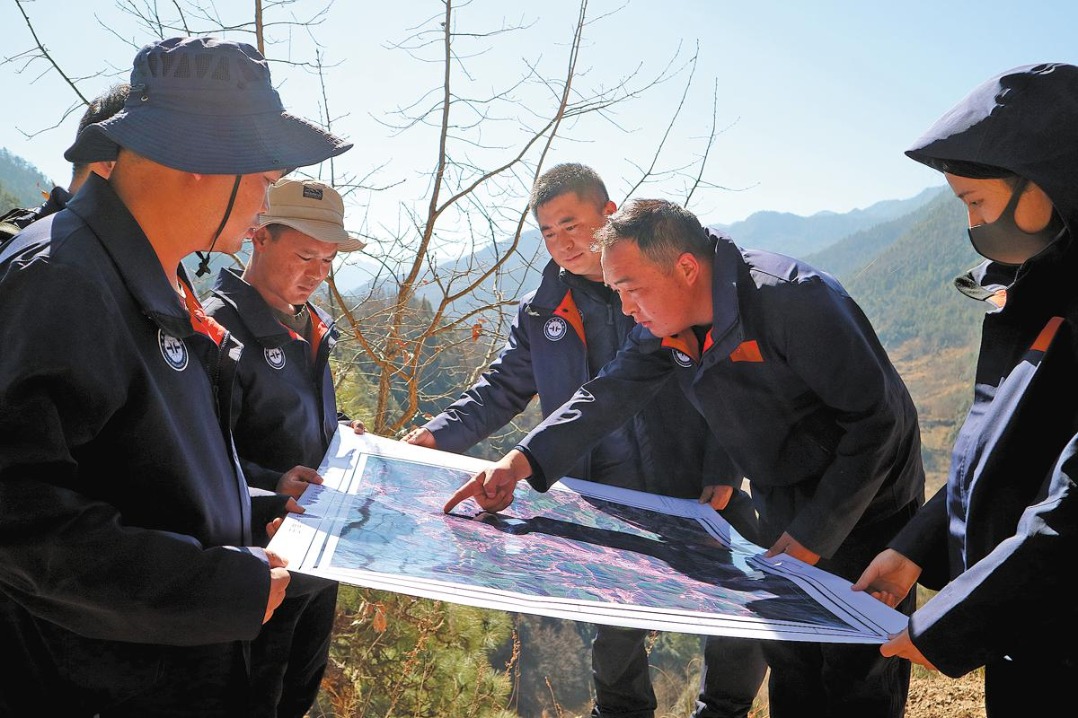
In the formidable terrain of Yunnan’s Nujiang Lisu Autonomous Prefecture, a team of 33 geological specialists from the Kunming General Survey of Natural Resources Center is conducting a groundbreaking mineral mapping initiative. Their mission: to systematically analyze a 44-square-kilometer radius surrounding China’s largest open-pit lead-zinc mine in Lanping.
The expedition, launched in early January, represents the critical first phase of mineral exploration. Team members like Wang Tianyi navigate treacherous slopes and freezing conditions while executing precise sampling protocols. Their methodology involves collecting soil samples at precise 40×100 meter intervals, followed by solar drying, mechanical pulverization, and sophisticated geochemical composition testing.
Wang recently described an unexpected January 28th encounter where his team gently relocated a stray calf blocking mountain access roads—a comparatively benign interruption compared to previous wildlife encounters with bears and wild boars. With 90% of their massive survey already completed, the team has now turned to the most challenging sector: the rugged northern central zone.
‘This is physically demanding work, but each sample brings us closer to discovering new mineral deposits,’ noted the 35-year-old geologist. ‘That makes every hardship worthwhile.’
These scientific efforts provide invaluable data about the region’s mineral potential, enabling strategic planning for future resource exploration and sustainable extraction operations. The team’s findings could significantly impact China’s mineral resource management and economic development planning.