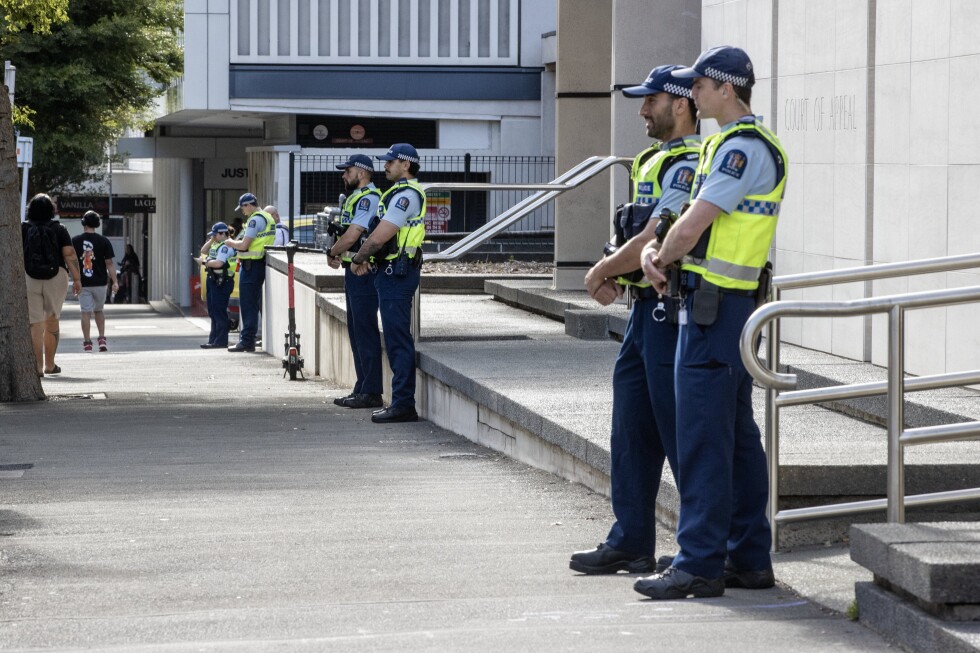
WELLINGTON, New Zealand — New Zealand’s judicial system conducted a deliberately subdued hearing this week for the nation’s most notorious criminal, Brenton Tarrant, who sought to retract his guilty pleas for the 2019 Christchurch mosque massacres that claimed 51 Muslim worshippers’ lives.
The Australian white supremacist’s appeal proceedings unfolded with remarkable restraint at the Court of Appeal in Wellington. Only nine journalists, nine lawyers, and essential court staff were present in the near-empty courtroom, with the public gallery deliberately kept vacant. This calculated minimalism reflects New Zealand’s systematic approach to denying Tarrant the platform and notoriety he previously sought through his racially motivated violence.
Tarrant, 35, currently serving life imprisonment without parole, claimed through video conference from Auckland Prison that his 2020 guilty pleas to charges of terrorism, murder, and attempted murder were “irrational” admissions made during a “nervous breakdown” induced by his solitary confinement conditions.
Crown lawyers Barnaby Hawes and Madeleine Laracy presented compelling counterarguments, emphasizing that multiple mental health experts had previously determined Tarrant fit to enter pleas. They characterized the defendant as “an unreliable witness” whose narrative should be “treated with caution.” The prosecution highlighted the overwhelming evidence against Tarrant, including his own livestreamed recording of the attacks, which made a guilty verdict inevitable regardless of trial proceedings.
Notably absent from the weeklong hearing was any substantive discussion of Tarrant’s white supremacist ideology or the detailed motivations behind his attacks. This omission reflects New Zealand’s broader strategy of suppressing the dissemination of his hateful manifesto and violent imagery, which remain legally prohibited throughout the country.
The judicial approach stands in stark contrast to other high-profile trials of racist murderers, such as Norway’s extensive coverage of Anders Breivik, whom Tarrant cited as an inspiration. New Zealand’s justice system has implemented measures to minimize public exposure to the shooter, with even news organizations practicing restrained reporting by limiting mentions of his name.
Crown lawyers emphasized that continuing legal proceedings cause “immense distress” to survivors and victims’ families, hindering their healing process. A three-judge panel will deliver its decision within the coming months, with 90% of appeals court judgments typically issued within three months of hearing conclusion.
If unsuccessful in revoking his guilty pleas, Tarrant’s case will return to the appeals court for a separate hearing challenging his life sentence without parole.